·
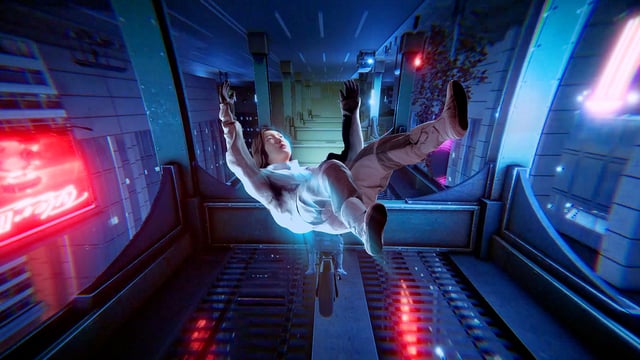
Read Parker Ito and Alex Estorick’s conversation with great interest today. “Dumb Art” is a fun place to begin theorizing what happens to visual knowledge after machine-generated content. It’s a very Benjaminian question; what happens to images under our current technological means of reproduction (which, today, is less mechanical reproduction and more algorithmic sorting and smoothing). If an AI image is an aesthetic average, then Ito’s work is a very visible manifestation of what is being smoothed over.
I don’t think Ito fully agrees with that framing; he seems to mean “Dumb Art” in a more populist sense (perhaps that term is reductive, at least in connotation; but I’m gesturing more at the idea of entry-level accessibility). Funny enough, I don’t think Horses?7 is entry-level at all, you have to understand internet culture, how algorithms work, machine vision, aesthetic homogenization, and various schools of art history to appreciate it; you must have trained eyes to see the work’s plural meanings. Is dumb not perhaps a bit tongue-in-cheek? As it relates to images and knowledge, Dumb Art is very much not dumb.
I’m also curious about this sense of “Dumb Art” as an obstruction of AI’s aesthetic flatness (and the pulverized forms of visual knowledge which comprise an AI-generated image). Pushing the visual machine to the limit might be the way to go. What is rendered visible when we use technology in unexpected ways? Or perhaps, is there a “wrong” way to use technology? Who decides what the “right” way is? Maybe we’re all using printers wrong, who knows.
No comments yet. Be the first to share your thoughts.