A Connected Art World Works Both Ways
Charlotte Kent wonders whether the digital art scene welcomed by Art Basel’s establishment returned the favor
Charlotte Kent wonders whether the digital art scene welcomed by Art Basel’s establishment returned the favor
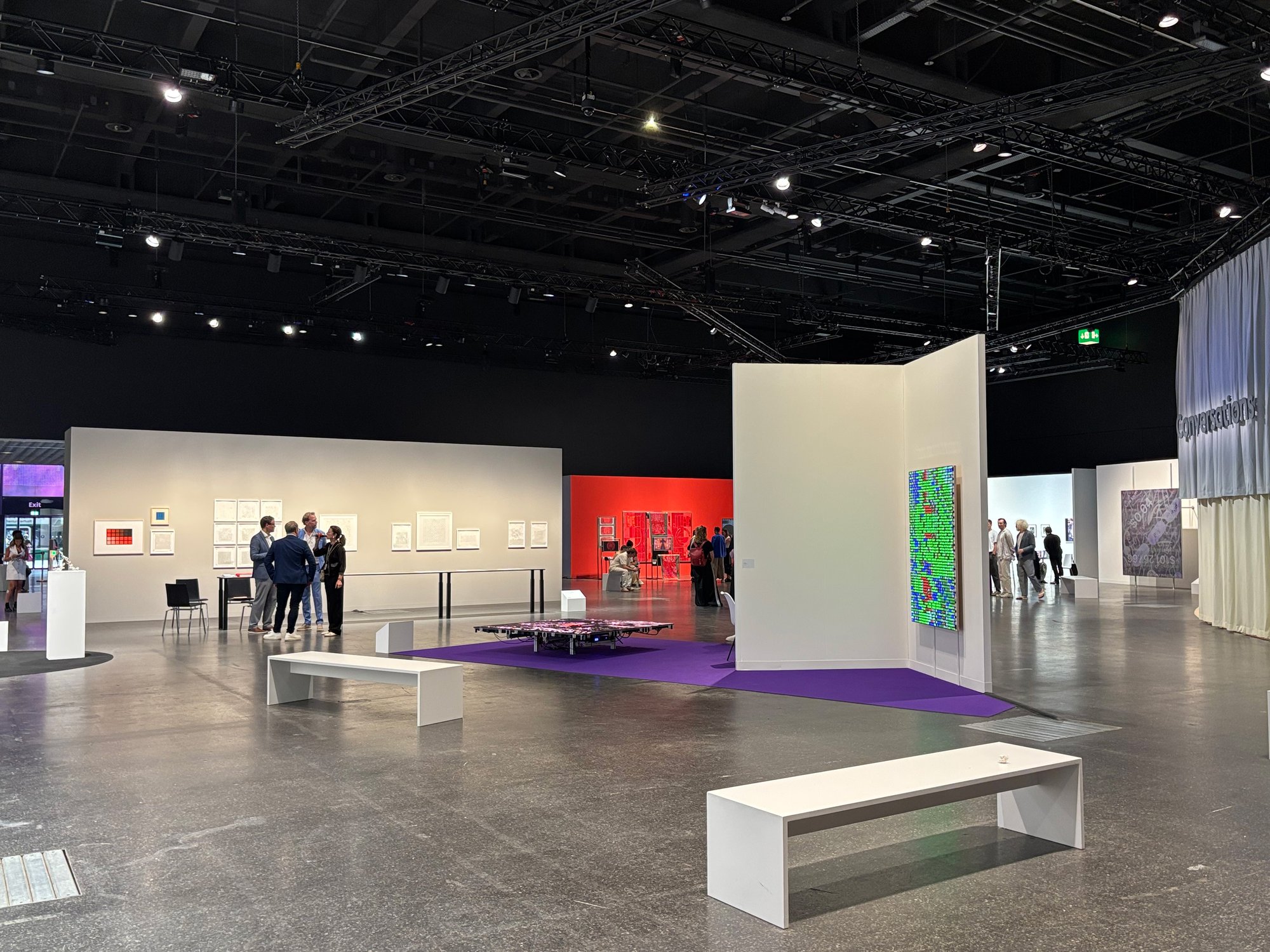
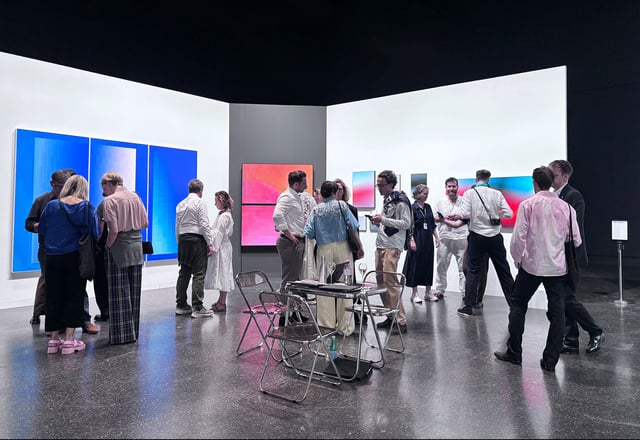
If you are reading this, I find it likely that you either attended Basel’s art convening or were inundated with social media postings and emails about it. The city hosted Basel Social Club, a locally produced free fair with a dynamic approach to cultivating art audiences, as well as 0xCollection’s three light art works at Franck Areal Silos, where augmented reality (AR) and other immersive experiences were also on view; an assortment of exhibitions at HEK; Cao Fei at Kunstmuseum; Shuang Li at Kunsthalle; and of course Zero 10, the digital sector curated by Trevor Paglen and Eli Scheinman in the space formerly showing design works at Art Basel.
The digital scene seemed to have arrived. After all, Arab Bank Switzerland, backers of the ABS Digital Art Prize, hosted a fête at Les Trois Rois, taking over the luxurious main bar, long associated with the highest echelons of the mega art market. For many, there was a sense of “the gang’s all here”.
The crypto art scene of a few years back had reunited in a moment otherwise overwhelmed by a discourse around “AI” (and not merely because of the annual Digital Art Summit). I was surprised by that. As most of the world’s markets juggle distress about fossil fuel blockades and the impact of this emergent set of technologies’ impact on labor and economies, those subjects did not appear in the Zero 10 conversation series — or really much at all. Have we become inured or merely silenced by our own perplexity?
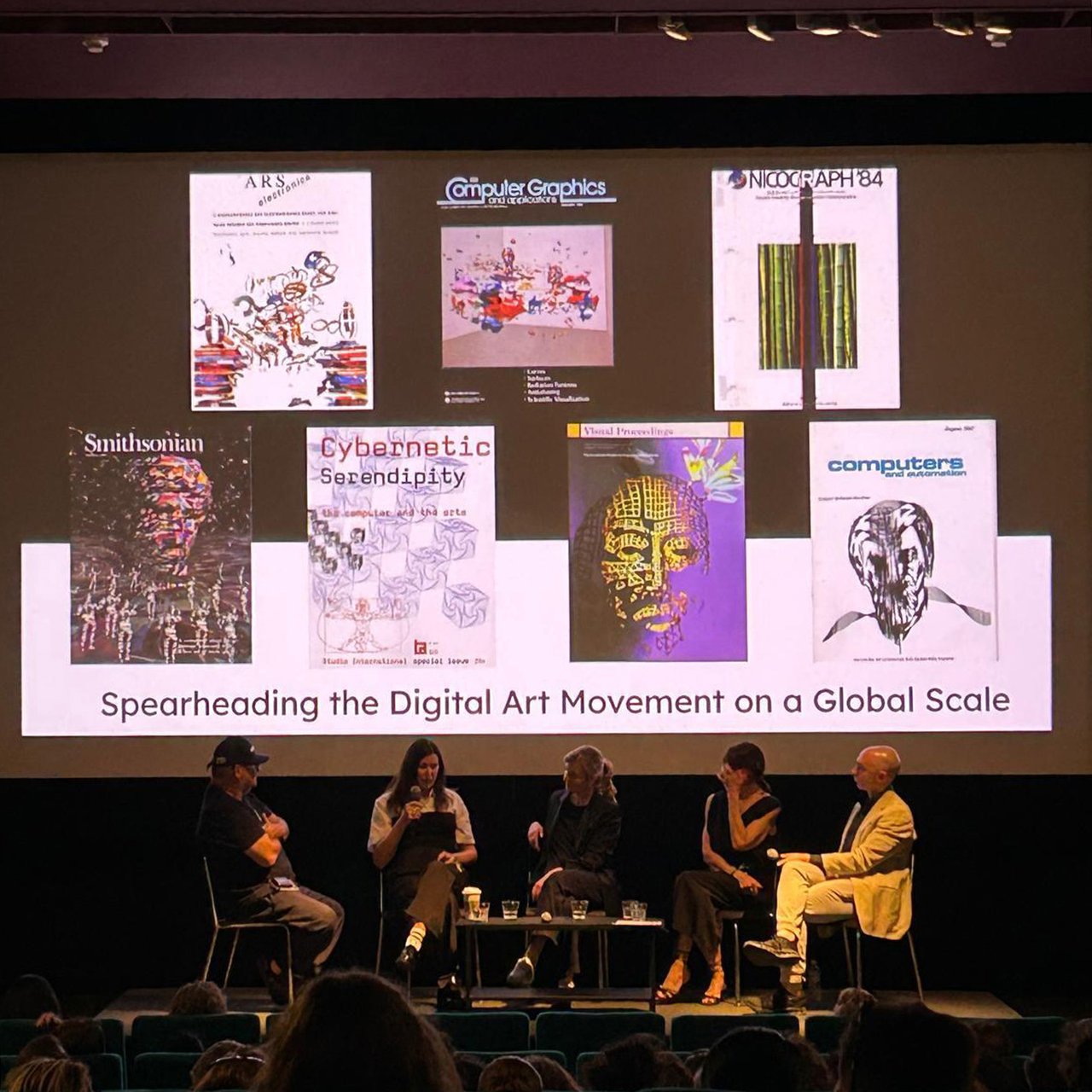
Conversations day after day focused instead on the “silo-ing” of digital art apart from Art Basel’s main pavilion. People had to cross literal tracks to get to the other section. Some countered by emphasizing the breathing room that the adjacent hall provided for such diverse works, though Christiane Paul, Curator of Digital Art at the Whitney Museum of American Art, dryly remarked that the fair didn’t have that layout difficulty in making room for Unlimited.
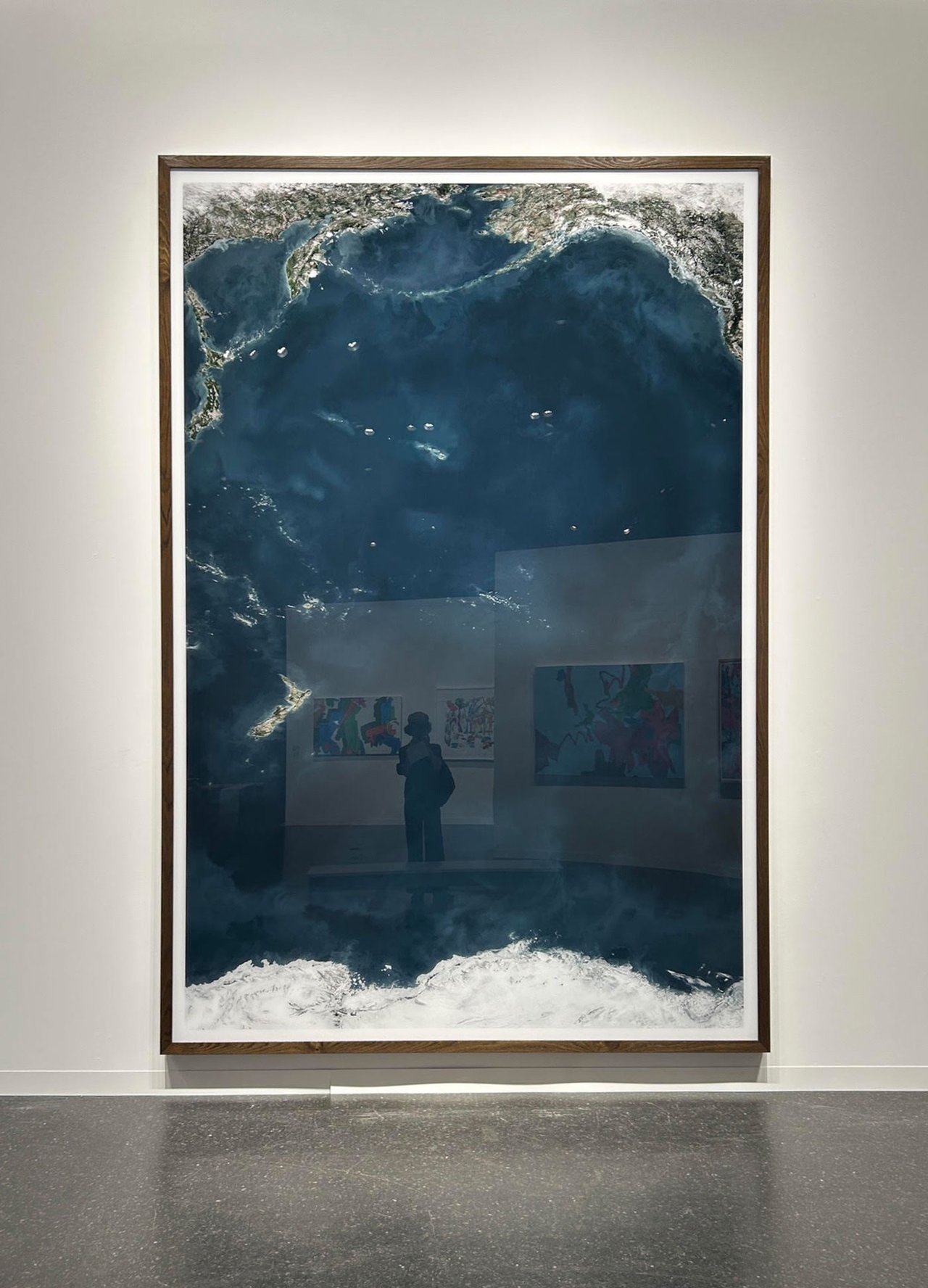
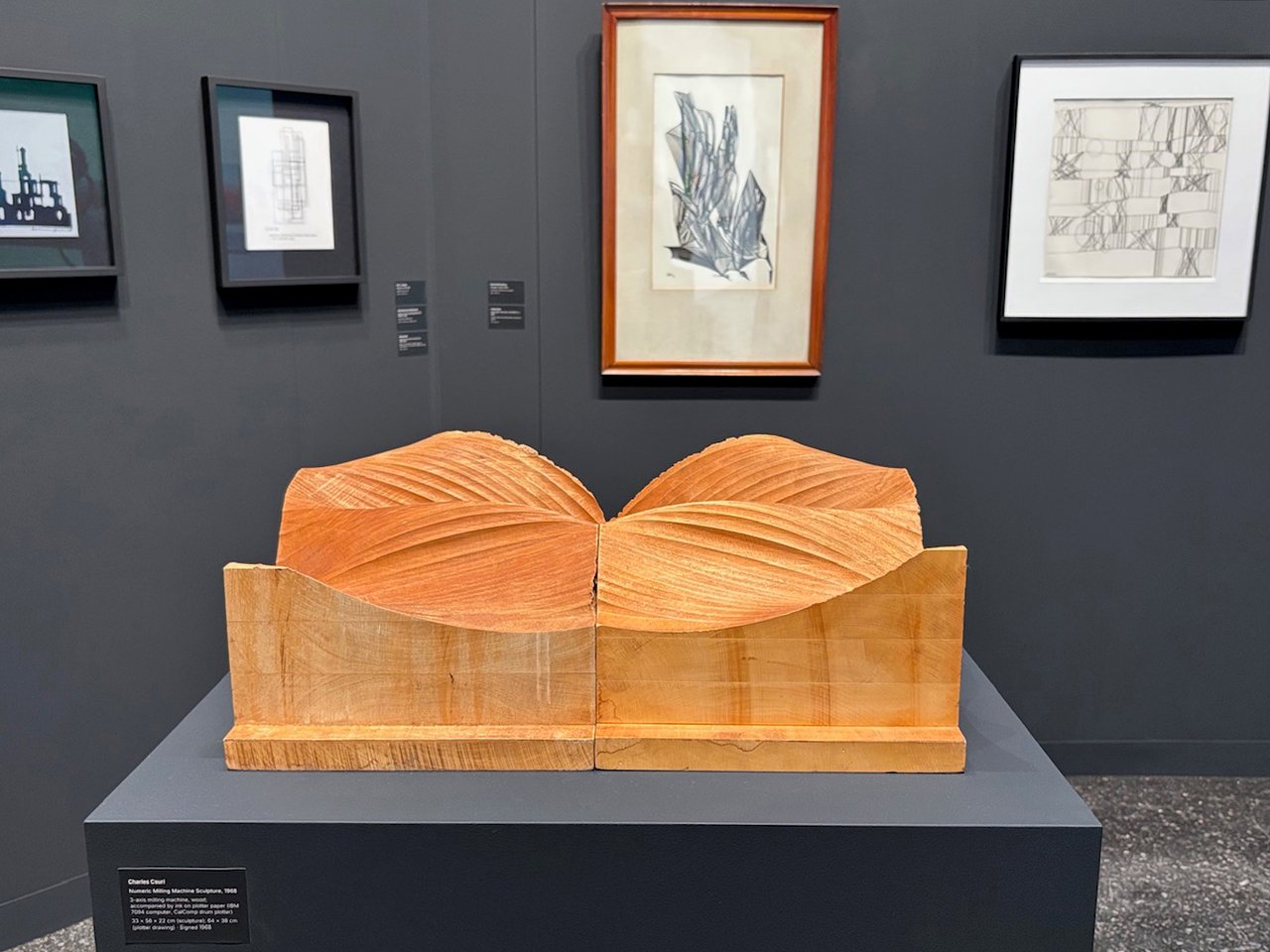
Over and over again, people wondered if those at the main fair would peek into the historical narrative that Paglen offered; the inclusion of Andreas Gursky was precisely to a point I made earlier this year about the confusion surrounding who or what the moniker digital art references. If the show was obvious for some of us, that was also its success, as the artist Michael Mandiberg chided me, because we were there to celebrate the moment not to learn from it.
There was a careful selection of galleries with artists who represented anchors (canons?!) to our particular moment (and could, hopefully, afford or expect to recoup the cost of the booth).
Sales were good and so what did the audiences and collectors do after that? Go to the other events and fairs? Did they look at the broader field into which they had been placed?
I was startled that no one mentioned how the movement of interest might go both ways. Despite nods to the art world’s desire for a new collector base, no one mentioned the population “over here” perusing the mall of possibilities “over there”.
I’d like to emphasize that the experiment, if we can imagine it as such, doesn’t simply represent the mainstream contemporary art world’s tentative embrace of the “Barbarians at the Gates” (as one of the Zero 10 panels was titled), but also offers a test case for the degree to which those arrivistes might peek into the stronghold. I can only assume (even hope?) that Art Basel was indeed collecting that data with every QR scan. I’d certainly be keen to know what the data shows.
The success of Zero 10 therefore may have less to do with questions of aesthetics and histories. Ideals after all don’t pay for that abundant space.
Early in the week, I found myself in conversation with a quartet of financiers who were reflecting on recent market tremors and fluctuations, including that of currencies. Nothing like a neutral and trilingual country, bank for a portion of the world’s money, to keep that dollar bill in mind.
The funny — or mysterious or crass — thing about art is how some artists’ works retain or even increase in value in such moments.
They are few. How or why that may be is for another time or writer, but to sustain value over market shifts — as certain galleries, platforms, and artists broadly or specifically associated with NFTs can now show — is not insignificant.
For those who imagine these works being assimilated into the main fair booth spaces (and, as we know, some have been), the question is probably not how many of them came over to Zero 10, but how many Zero 10 audiences (and especially collectors) crossed the tracks to deposit their interest into those coffers.
Charlotte Kent is an arts writer and assistant professor of visual culture at Montclair State University. With a background in philosophy and literature, as well as in ophthalmic publishing, she brings an interdisciplinary approach to visual art and digital culture with a current research focus on the absurd. She is an Editor-at-Large for The Brooklyn Rail, and contributes to peer review journals and international magazines.
2 comments
This is a really interesting observation @kentc ...My take is that crypto art has spent years building institutional legibility (provenance, scarcity, the smart contract as artistic material, etc.) and Basel knows how to absorb that language now. "AI" is so loaded right now that institutions seem almost allergic to it, or at least unsure how to deploy it without it becoming the only story.
Mentioned in this article
People: Andreas Gursky, Charlotte Kent, Christiane Paul, Trevor Paglen|Events: Zero 10, Art Basel, Digital Art Summit|Organizations: ArtMeta, Right Click Save, Whitney Museum of American Art|
In the article, I mention my surprise at the relative sidelining of the otherwise plentiful discourse surrounding “AI” and am wondering if others noticed that as well? Anyone have any thoughts on why? It’s odd, if only because the Christie’s auction last year, Augmented Intelligence, had a plethora of artworks with associated smart contracts that were largely minimized in preference of highlighting “AI” and the two spheres of art and tech are not unrelated. Would be curious for input on the why the crypto art scene got more recognition at Basel, without nodding to the role of “AI” in some of the artists’ practices. To be clear, I don’t think they have to go together, at all, but it does seem as if there is a difficulty in discussing the two at the same time?