·
One of the most encouraging things about spending time in the Right Click Save forum has been seeing how many women are present, contributing, questioning, writing, and shaping the conversation around digital art.
It feels alive. It feels plural. It feels closer to the cultural space many of us say we want Web3 to become.
But then I look at exhibition lineups, platform releases, curated drops, artist spotlights, and major announcements, and that presence becomes much harder to find.
The contrast is rather difficult to ignore.
Women are clearly here. They are making work, building communities, writing criticism, collecting, curating, researching, and participating in the intellectual life of the space. Yet when visibility, institutional support, capital, and prestige are distributed, the same names and demographics continue to dominate.
This is not simply a question of representation for representation’s sake. It is a question of what kinds of histories are being written in real time.
Exhibitions and platforms do more than showcase work, they create legitimacy, as well as shaping the canon. They determine which artists are documented, collected, discussed, and remembered. When women are repeatedly absent from these structures, the consequences extend far beyond a single release calendar.
The usual response is that selections are based on merit, quality, or relevance. But merit does not emerge in a vacuum: visibility produces opportunity, opportunity produces recognition, and recognition is often mistaken for inevitability.
If the same networks continue to recommend, fund, collect, and exhibit one another, exclusion can reproduce itself while appearing neutral.
The answer is not to place women into one annual group show, a themed panel, or a commemorative campaign. Women should not only become visible when gender itself is the subject.
They should be present in generative art exhibitions, photography releases, conceptual projects, platform commissions, historical retrospectives, and major institutional conversations. They should be invited because their work matters, not because a calendar moment requires diversity.
The RCS forum is evidence that the supposed absence is not an absence of participation or talent. The women are already here.
The question is whether the platforms, curators, collectors, and institutions shaping Web3 culture are actually looking.
And, perhaps more importantly, whether they are willing to examine the systems through which they decide who deserves to be seen.
5 comments
Completely agree, Joana. One of the loveliest things about this forum has been discovering how many women are not simply present, but actively driving the quality and generosity of the conversation. It makes the gap you describe feel especially strange, because there is clearly no shortage of work, ideas or people to look toward.
Perhaps we could make this thread practical too: who are the women making, writing about or curating digital art right now whose work everyone here should know? I would love to discover some new names through this community.
I've been thinking the same thing, and at times it feels as though the situation is actually worsening as our circle gets smaller.
There are, of course, notable exceptions, women who are "still making it" in terms of sales, visibility, and institutional recognition. But what worries me is that any of us would likely name the same small handful of successful names.
Ouch this touches a nerve, I really thought things were better in Web3 cause I do hear a lot of female voices, but I haven’t investigated how many of these voices I hear have a real resonance outside my bubble. I know right now things are hard for everybody but I do not feel heard myself and I had not thought it might still depend, at least partly, on gender...
sigh.
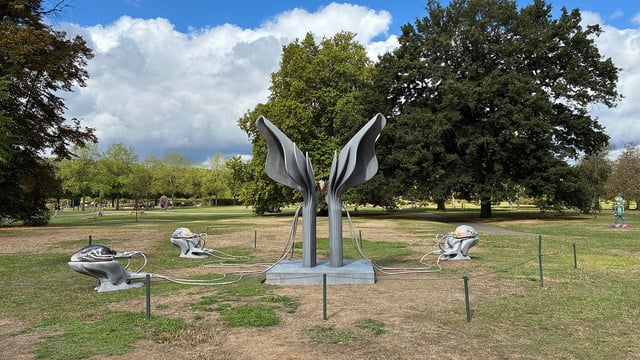
This is precisely why Micol Ap and I developed FEMGEN — to rebalance the discourse on digital art:
https://www.rightclicksave.com/article/femgen-the-conversation-paris-interview-gretchen-andrew-hermine-bourdin-saeko-ehara-jake-elwes