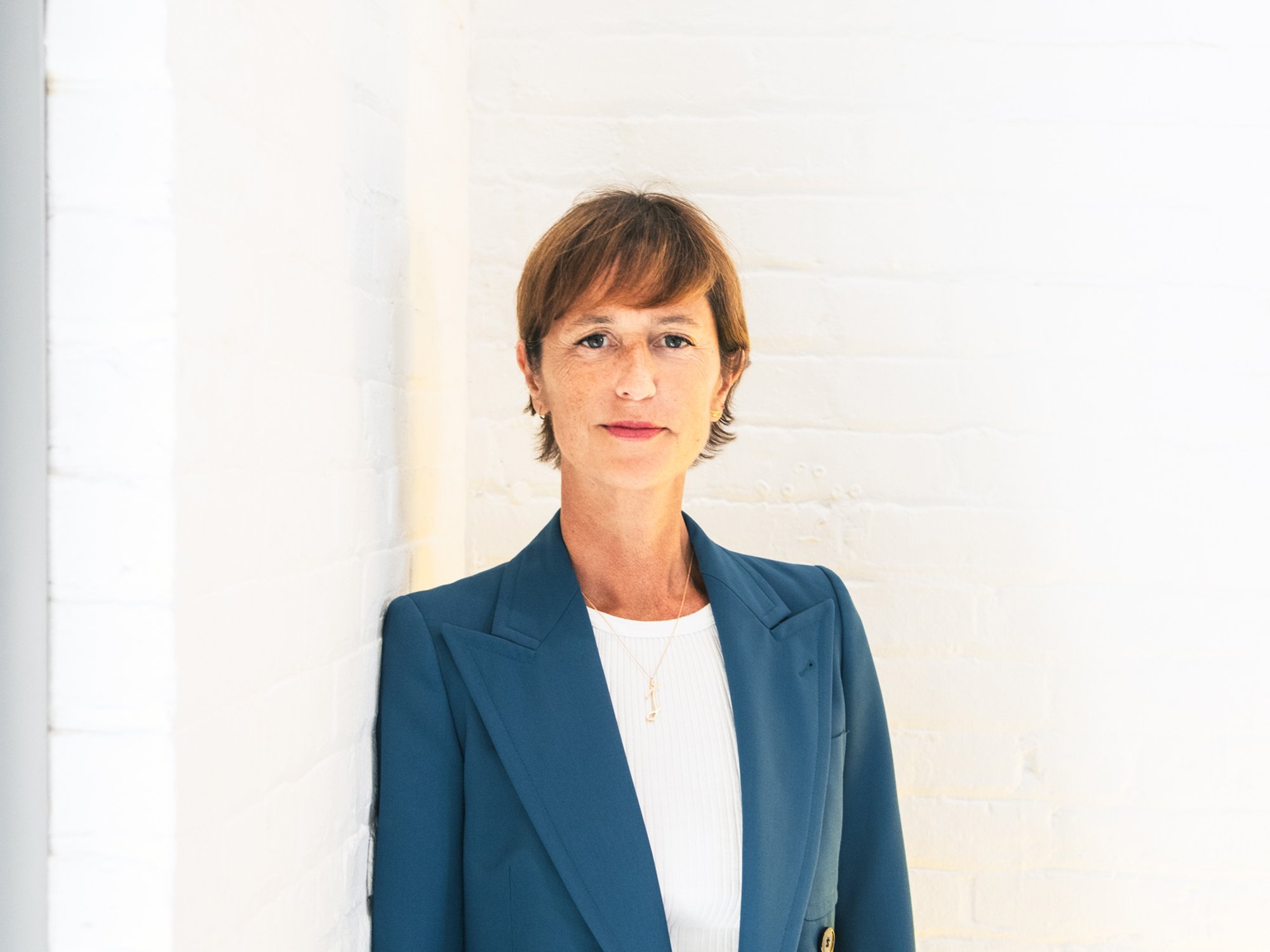
Jessica Morgan. Photography by Gabriela Herman
Jessica Morgan Appointed Director of Tate
Morgan, at present Director of Dia Art Foundation, New York, takes over as head of the UK museum network in January 2027
Jessica Morgan. Photography by Gabriela Herman
Morgan, at present Director of Dia Art Foundation, New York, takes over as head of the UK museum network in January 2027
Jessica Morgan, Director of the New York-based Dia Art Foundation, has been appointed the new Director of the Tate network of museums, home to the UK’s national collections of contemporary and British art. “It is an immense privilege to be asked by the Trustees to become the new Director,” Morgan said in a press statement.
“Tate is undoubtedly the world’s foremost institution for international modern and contemporary art and for British art, leading the field through its collection and exhibition programme. My time as a curator at Tate deeply informed my work in the last 11 years steering Dia Art Foundation, with artists and our public always at the centre of what we do.” (Jessica Morgan)
Morgan, who was previously Curator at Tate from 2002 to 2010, and Daskalopoulos Curator, International Art, at Tate Modern from 2010 to 2014, returns to London to take up her new role on January 1, 2027. She succeeds Maria Balshaw, who stepped down as Director in December 2025. Until Morgan takes over, Karin Hindsbo (Deputy Director of Tate and Director of Tate Modern) serves as Interim Director.
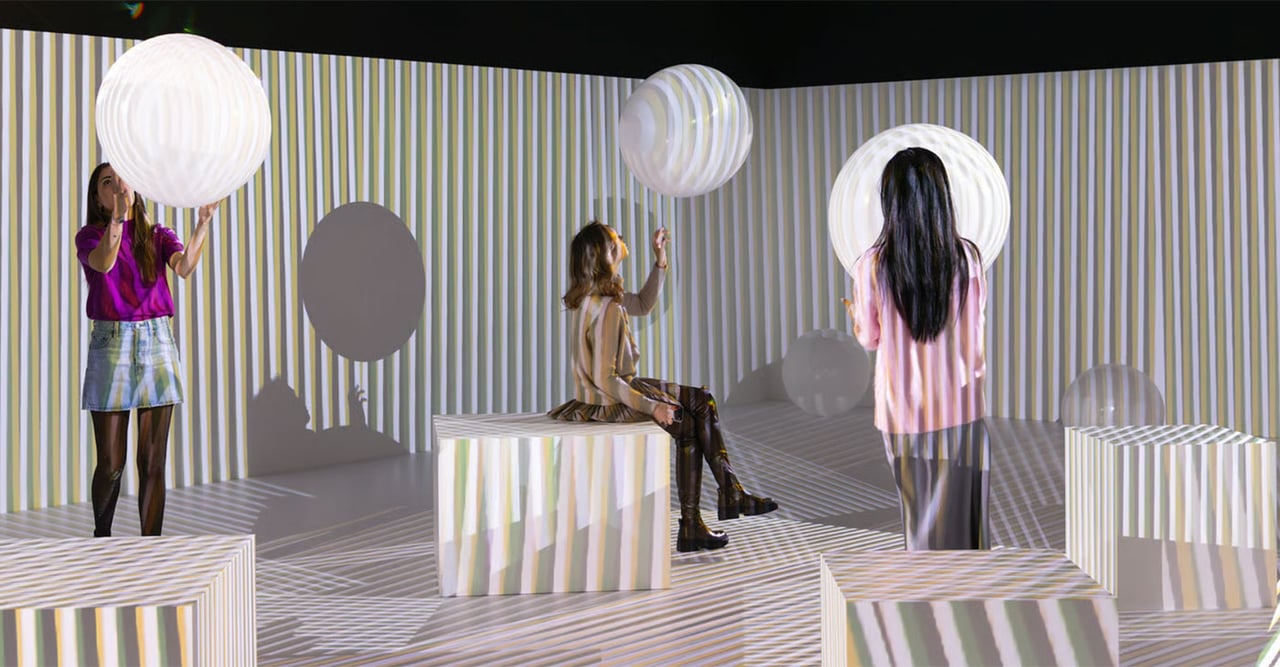
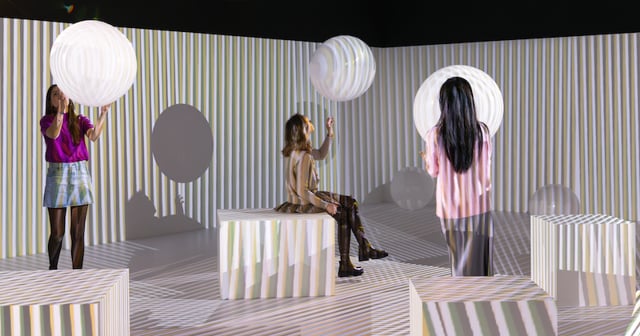
Credit: Installation view of Environnement Chromointerférent, Paris (1974/2018) by Carlos-Cruz-Diez at “Electric Dreams”, Tate Modern, 2024-25. © Carlos Cruz-Diez / Bridgeman Images, Paris 2024. Photo © Tate (Lucy Green)
The appointment of a new Director of Tate is of great consequence to the curation and collection of contemporary art in today’s expanded art world, where art of the digital age is more than ever intertwined with contemporary art. Tate’s collection and its loan exhibition program has been central in recent decades to discourse on an entangled international art ecosystem. The genealogies of art of the digital era have solidified through such exhibitions as “Electric Dreams: Art and Technology Before the Internet” (2024-25) and “Julio Le Parc | Light. Colour. Action” (until May 3, 2027) at Tate Modern.
The conversations started by these exhibitions are extended through Tate’s public program, with workshops, conferences, and discussion panels, while the museum’s curators act as witnesses contributing to the wider art ecosystem. Tate is a central node in the borderless art ecosystem that Right Click Save has sought to document since its foundation in 2022.
After working as Chief Curator at the Institute of Contemporary Art, Boston, and as curator at the Museum of Contemporary Art, Chicago, Morgan joined Tate in 2002 during the early transformational years of Tate Modern, the monumental home to international contemporary and modern art, with its massive Turbine Hall, carved out of a former power station and opened in 2000.
The advent of Tate Modern transformed the UK into a global hub for contemporary art, setting the scene for the opening of Frieze art fair in 2003 along with a proliferation of new London-based galleries. It also updated Tate’s role as a space for cultural sense-making alongside the city’s ecosystem of universities, foundations, and art schools — a community that will be celebrated, at institutional and grassroots level, at the Creative Intelligence festival at Southbank Centre in September 2026.
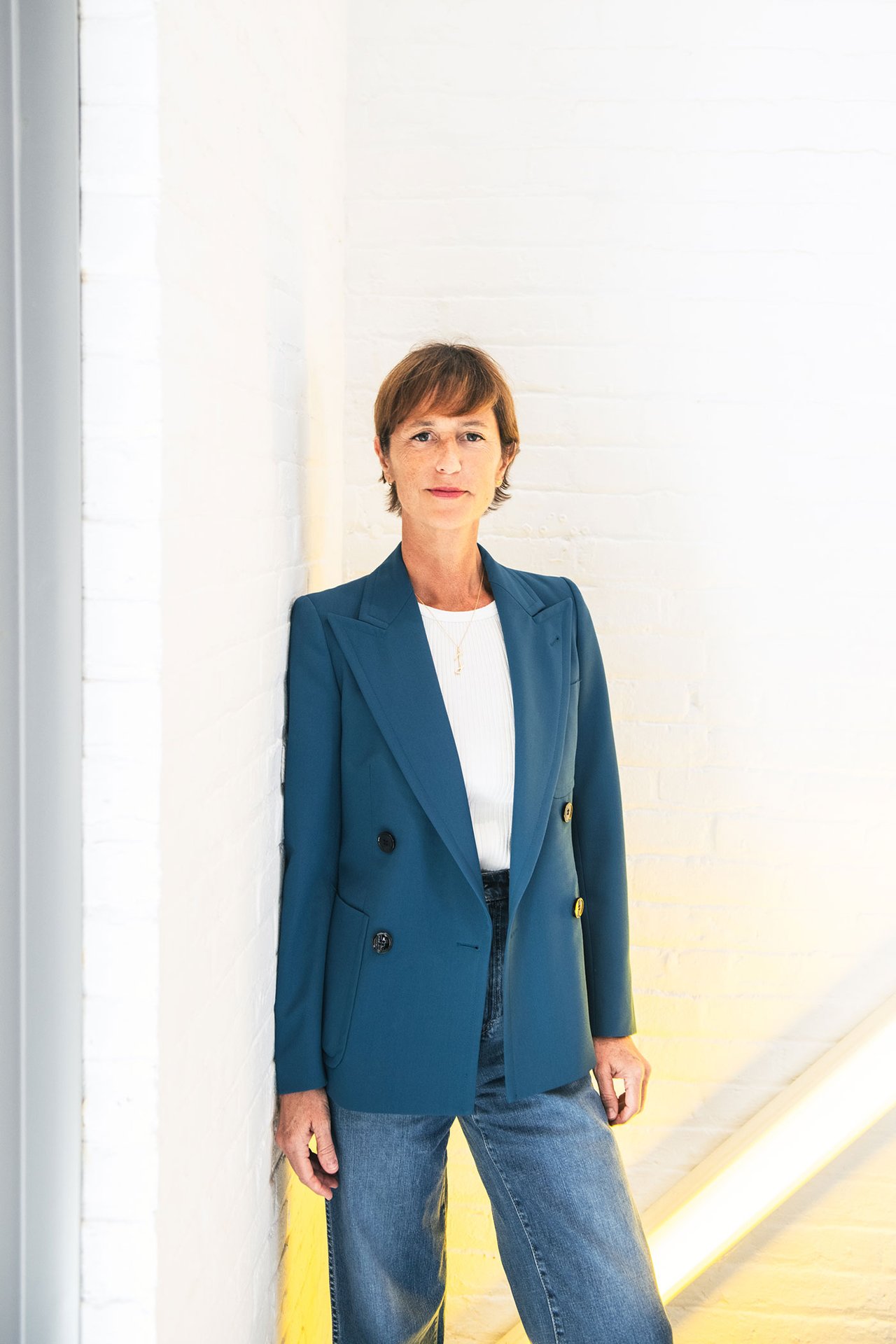
Jessica Morgan. Photography by Gabriela Herman
In her first stint at Tate, Morgan was at the heart of collecting and curating on an international level, something she has built on in her time at Dia. Part of the challenge she faces is to maintain an international outlook in acquisitions and loan exhibitions given the institutional and financial constraints faced by Tate and cultural institutions around the globe with the cumulative disruption wrought by the 2008 banking crisis, the UK’s departure from the European Community after the 2016 Brexit vote, and the global Covid-19 pandemic of 2020-21.
Tate cut around 7% of its workforce in March 2025 having announced a £5 million operating deficit for the 2024–25 financial year, and reporting a funding shortfall of nearly £9 million. The museum group then launched an endowment fund campaign to raise £150m by 2030. According to a Tate press statement, Morgan has been responsible for “Dia’s multivalent programme, including its pioneering Land art projects, site-specific commissions, and collections and programming across its constellation of twelve sites”. She also built up a successful track record for fundraising in a very different US context.
There will be interest in how Morgan responds to the National Gallery’s announcement in October 2025 that it would be collecting 20th- and 21st-century paintings for the first time, a sector previously reserved for Tate.
As for those anticipating where Morgan might take Tate’s acquisition and curatorial policy, her record at Dia makes for interesting reading. At Dia she revived the use of its Dia Chelsea site in Downtown New York (let out at the time of her appointment at 2015), ran an acquisitions policy that increased markedly the representation of women artists at Dia, and included a more consistent engagement with sound art that preceded the acquisition of the artist and film-maker Steve McQueen’s Bass (2024), a work made up solely of light, color, and sound.
“If I look back to when I first started, we could never have jumped straight into showing Steve,” Morgan said of that acquisition, speaking to The Art Newspaper in 2024. “But now that we’ve had a consistent engagement with sound, and have been commissioning and thinking about the contemporary artists who engage and respond to Dia, I couldn’t think of a better artist. It couldn’t be more in our language but also, at the same time, is completely in his language.”

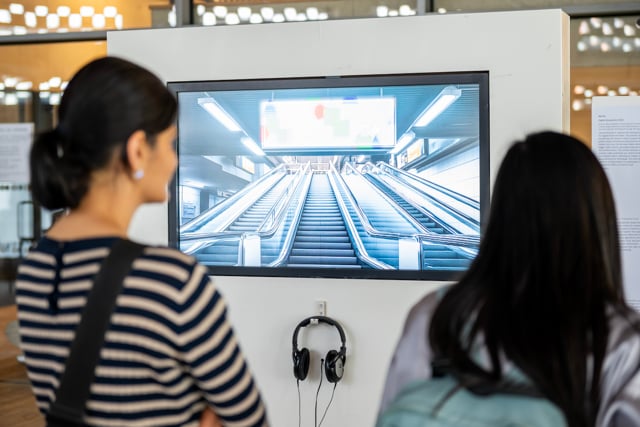
Students participating in Tea, Tech + Exchange at Tate Modern, 2025. Photography by Ariel Haviland
The exhibition “Electric Dreams” distilled Tate’s collaborative, international character as well as its public-facing and educational mission.
That remit is physically represented at the four Tate sites: Tate Modern, on London’s South Bank, in many ways the network’s flagship and for many years one of the most visited museum in the world; Tate St Ives, focused on the modern art movements of southwest England; Tate Liverpool, which reopens after refurbishment in 2027; and Tate Britain, in the original Tate Gallery building on Millbank, Westminster.
The Millbank site is home to much of the core collection of British Art, to the Taylor Studio of Digital Art (a public space) as well as to the monumental Turner Bequest of paintings and drawings, left to the national collection by the visionary landscape artist JMW Turner at his death in 1851. The Turner collection was moved from the National Gallery in Trafalgar Square in 1910 to join what had opened in 1897 as the National Gallery of British Art.
The institution changed its name in 1932 to Tate Gallery to honor its founder and benefactor, the sugar magnate Sir Henry Tate, and to mark its new focus on acquiring and showing modern art.
“Electric Dreams” was organized by Tate Modern and OGR Torino, curated by Val Ravaglia and Samuele Piazza, and shown at the London institution in 2024-25 and at OGR in 2025-26. The exhibition fed into “Digital Intimacies”, a series of events supported by the AI giant Anthropic that saw curators and students from Goldsmiths and the University of the Arts London creating with AI. Tate Modern also hosted a conversation between the sociologist and theorist of digital culture Ramon Amaro and the artist and writer Hito Steyerl about her latest book, Medium Hot (2025).
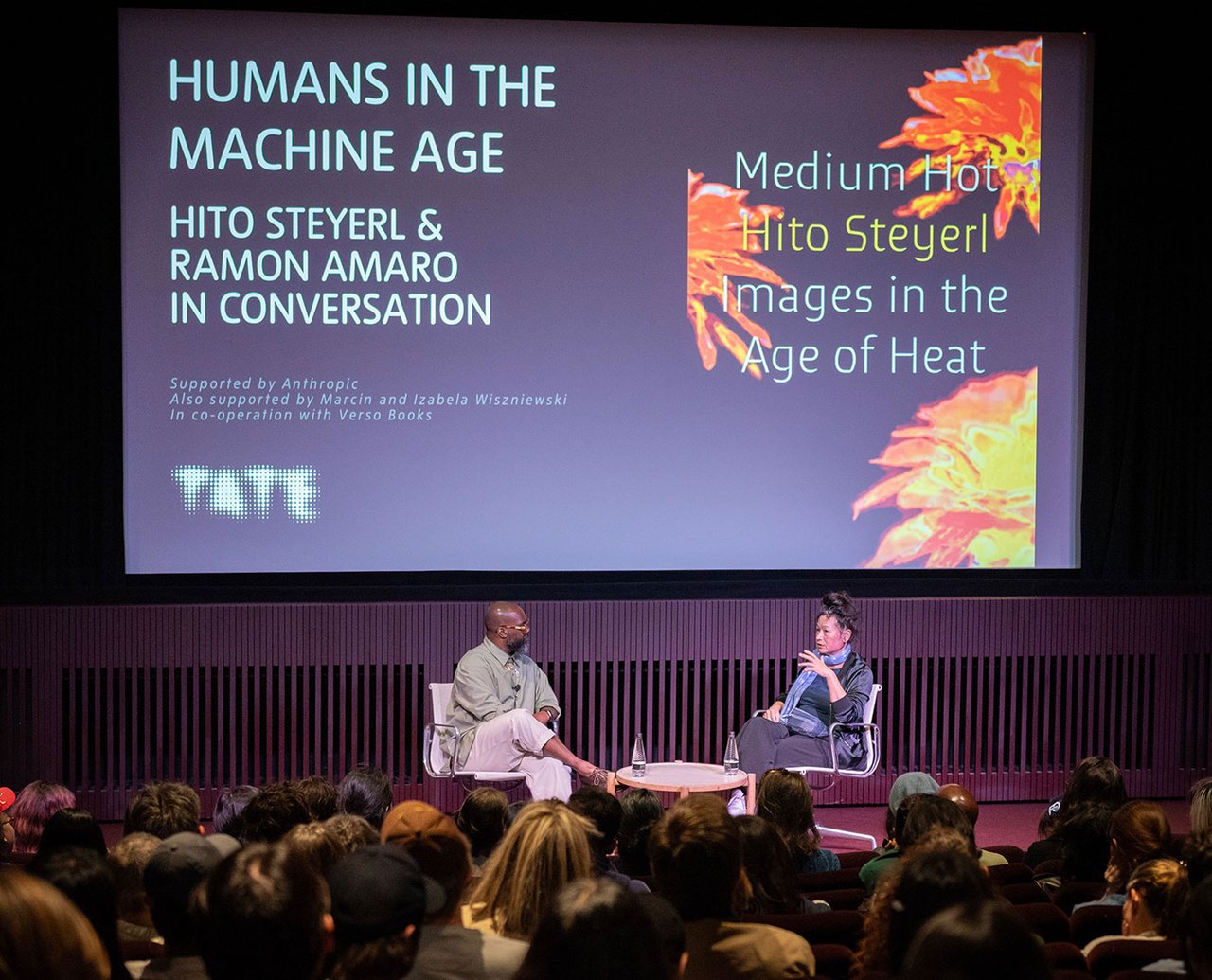
Ramon Amaro and the artist and writer Hito Steyerl in conversation at Tate Modern, May 2025. Photography by Ariel Haviland
That conversation led in turn to Amaro producing a meditation for Right Click Save’s newsletter in October 2025 addressing the limits of art and technology and the distribution of images in the age of AI and climate change.
Amaro’s meditation and Tate’s connected world of creating, collecting, and curating that led to his exchanges with Steyerl — the mix of experiment, profundity and delight — highlight the complexity, and grand possibility, of the challenge that faces Morgan when she takes the reins at one of the world’s leading art institutions in five months’ time.
No comments yet. Be the first to share your thoughts.
Mentioned in this article
People: Jessica Morgan, Hito Steyerl, Ramon Amaro, Steve McQueen|Events: Electric Dreams: Art and Technology Before the Internet|Organizations: Dia Art Foundation, Tate, Tate Modern, National Gallery, Right Click Save|