A New Technology and Creativity Festival Comes to London | Creative Intelligence - Right Click Save
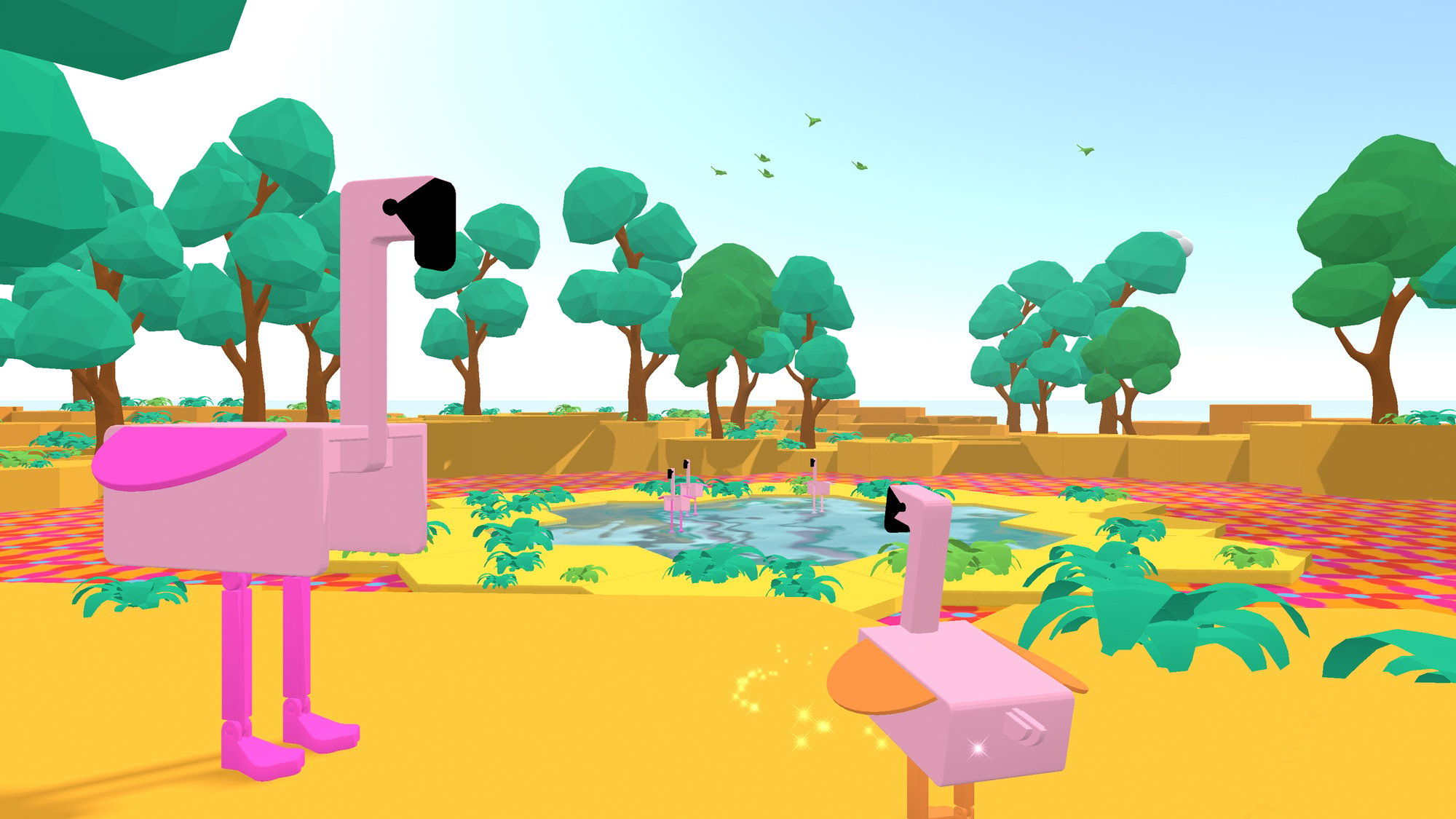
Yinka Ilori, Dreaming with Flamingos (2026) is the artist’s first digital interactive work. It was created in collaboration with Google Arts & Culture Lab, and will be presented at Creative Intelligence. Users play as a young flamingo tasked with restoring a park’s lost song and help the elder flamingos remember their lost wisdom. Courtesy of the artist and Google Arts & Culture Lab
A New Technology and Creativity Festival Comes to London | Creative Intelligence
Digital innovation and AI’s role in reshaping global society is the subject of an inaugural three-day event that also marks the 75th anniversary of the Festival of Britain
The artists Alexandra Daisy Ginsberg, Holly Herndon, Danielle Brathwaite-Shirley, Ayoung Kim, Andrew Thomas Huang, Liam Young, Kate Crawford, Vladan Joler, and Sougwen Chung are among the participants in Creative Intelligence, a new London-based festival exploring how art and technologies, including AI, are combining to shape the future.
The event, which will be rich in music as well as visual art and public discussion, is inspired by the 75th anniversary of the Festival of Britain, the utopian, post-austerity artist and scientist-led celebration of the future which was the Centre’s foundational moment in 1951.
Creative Intelligence was commissioned and produced by the Centre and is curated with PACT (Planetary Art Culture Technology). Keri Elmsly, founder of PACT, was invited by Mark Ball, the artistic director of Southbank Centre, to curate the first festival.
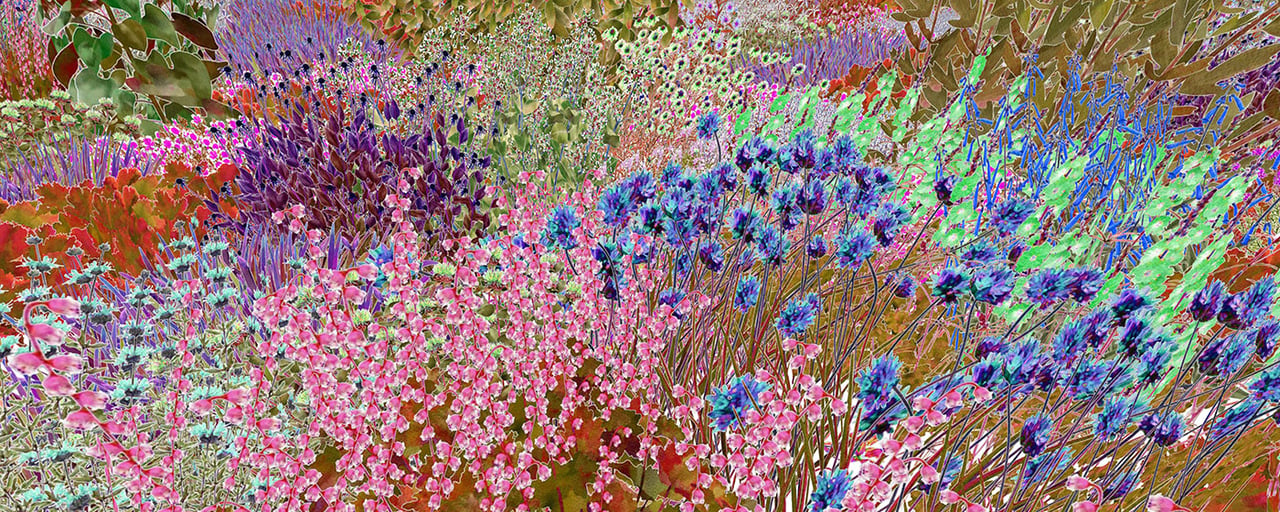
Alexandra Daisy Ginsberg, Pollinator Pathmaker, 2021-present. Creative Intelligence will present an iteration of this digital artwork and experiment in designing gardens algorithmically for pollinating insects rather than for humans. Courtesy of the artist and Creative Intelligence
“The fundamental engagement with our own power and agency and imagination is what I want people to come away with,” Elmsly tells Right Click Save, “in whatever form that speaks to them. Because this is for everybody.”
Peckham Digital — the annual, community-led festival and creative technology organization in south-east London — will present the city’s grassroots creative computing communities in the foyer of the Queen Elizabeth Hall during Creative Intelligence. The festival also includes a one-day Creative Intelligence Summit, involving discussions and performances led by many of the featured artists. It includes a deep listening exercise, led by Herndon, and a discussion of “The Image After AI” with Sougwen Chung, K Allado-McDowell, and Andrew Thomas Huang, hosted by Alex Estorick, the Founding Editor of Right Click Save.
Here, Elmsly, Ball, and Peckham Digital’s co-founder Bea Taylor Searle outline for Right Click Save their plans for the festival, a gathering designed to offer an institutional, educational, and grassroots prism on digital innovation at one of London’s central public spaces for arts and creativity.
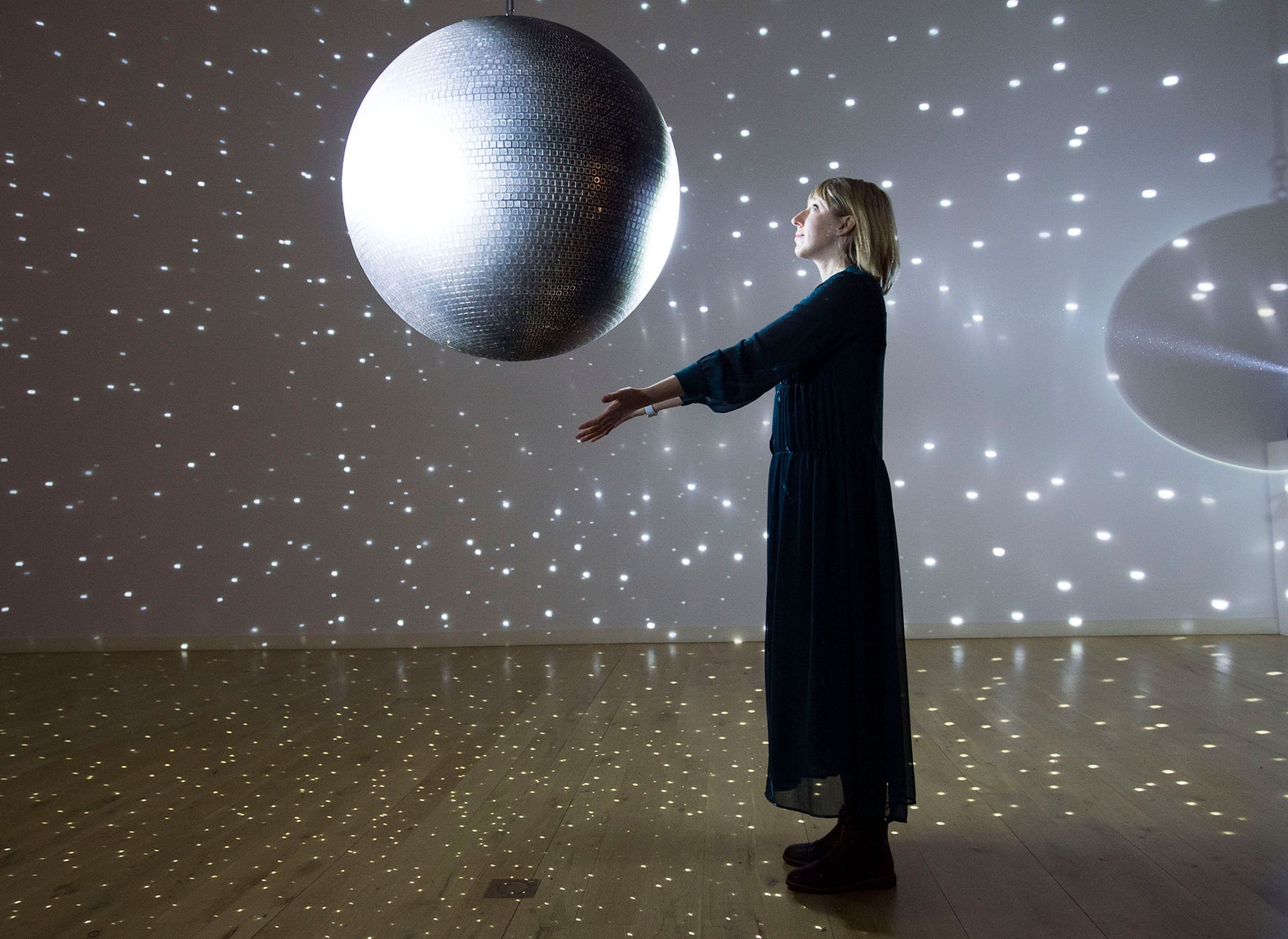
The artist Katie Paterson will present a new work from “Ideas” (2015-present) her series of haiku-like sentences: a sound installation voiced by the broadcaster Mary Anne Hobbs. Courtesy of the artist and Creative Intelligence
A quest to discover the art center of the future
Keri Elmsly: When I returned to London in 2025, after 11 years away working on Sphere Las Vegas’s development and at ACMI, Australia’s national museum of screen culture, I found that the city’s rich ecosystem for critically informed art and creative computing had continued to thrive in DIY communities, collectives, and institutional programs. What was missing in the UK was an institutionally-backed annual festival to prototype, exchange, and showcase ambitious ideas, with a focus on human agency, imagination, infrastructure, and process.
Creative Intelligence, commissioned by Southbank Centre, is designed to fill that gap. Conceived as a home to “art for all”, and presented as a public prototype, the festival is a three-day takeover of the Southbank’s site.
Our aim is to be audacious and collaborative, and to create a festival that invites experimentation and learning; to curate with an open mind, allowing the messy and imperfect, while simultaneously presenting refined installations and concepts by leading artists.
When so many conversations frame the tsunami of artificial intelligence as something inevitable, we are looking to allow complexity on the subject; to admit the need for explanation, for the assertion of ownership and agency; and to bring the debate to the stage and the floor.
I believe there is an incredible amount of existing work that deserves to be presented to new audiences, rather than always asking artists to make something new when there is rarely the capital to support it.
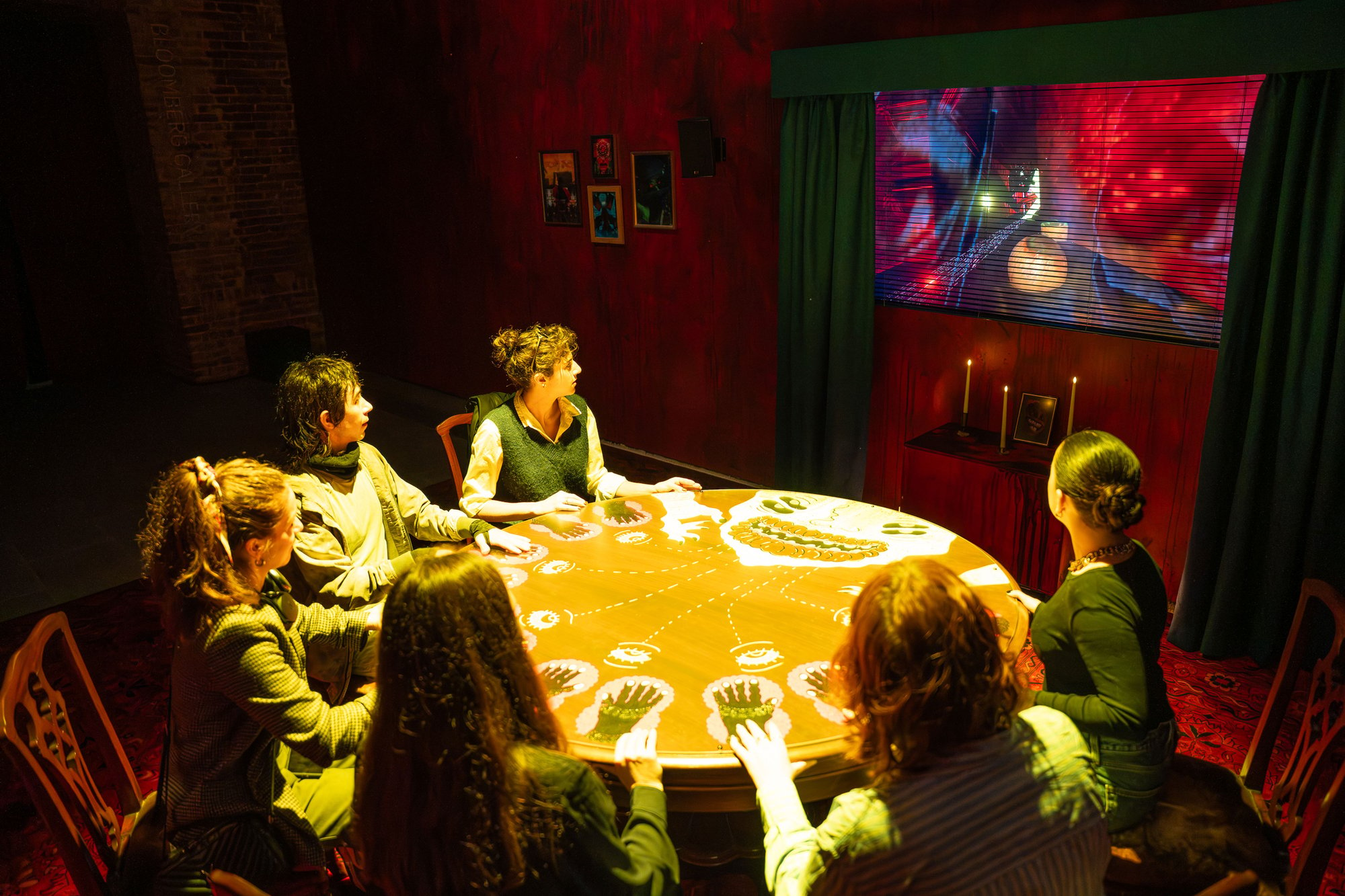
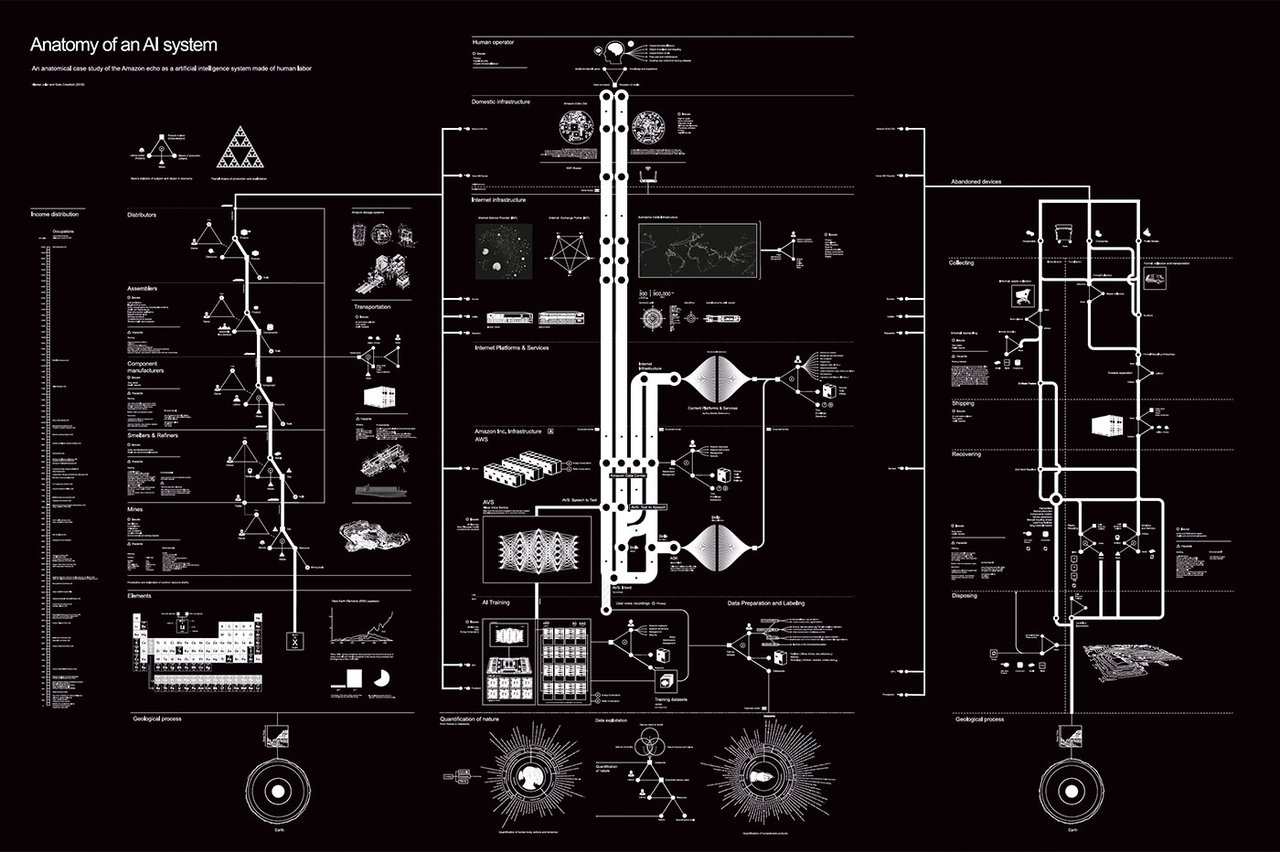
That is one of the reasons we are working with Serpentine Arts Technologies to present Danielle Brathwaite-Shirley's exhibition “The Delusion” after its successful run at the Serpentine in 2025-26, and Kate Crawford and Vladan Joler's work Anatomy of an AI System (2018), a map of the supply chains, labor, power, capital, and environmental cost behind a single consumer object.
Kate Crawford, Vladan Joler, Anatomy of an AI System, 2018. Courtesy of the artists
The festival’s program architecture opens with the “Glossary of Creative Intelligence” section, where the artist Love Ssega and the creative technologist Razik Darji are producing a visual and textual work offering a living vocabulary for the ideas the festival holds.
In “Algorithmic Ecosystems”, nature is the main character and entanglement between nature and technology feels inevitable.
We are presenting an installation by Alexandra Daisy Ginsberg, Pollinator Pathmaker, and the premiere of a new sound work from Katie Paterson, Ideas, narrated by Mary Anne Hobbs — an expansive recital of the planetary-scale ideas, materials, and systems we are all part of. At the Creative Intelligence Summit, Anab Jain of the design and experiential futures company Superflux, gives a keynote on ecology and interdependence, while new platforms for artist-led products and invention are presented with the business accelerator Restless Egg and quantum computing company MOTH.
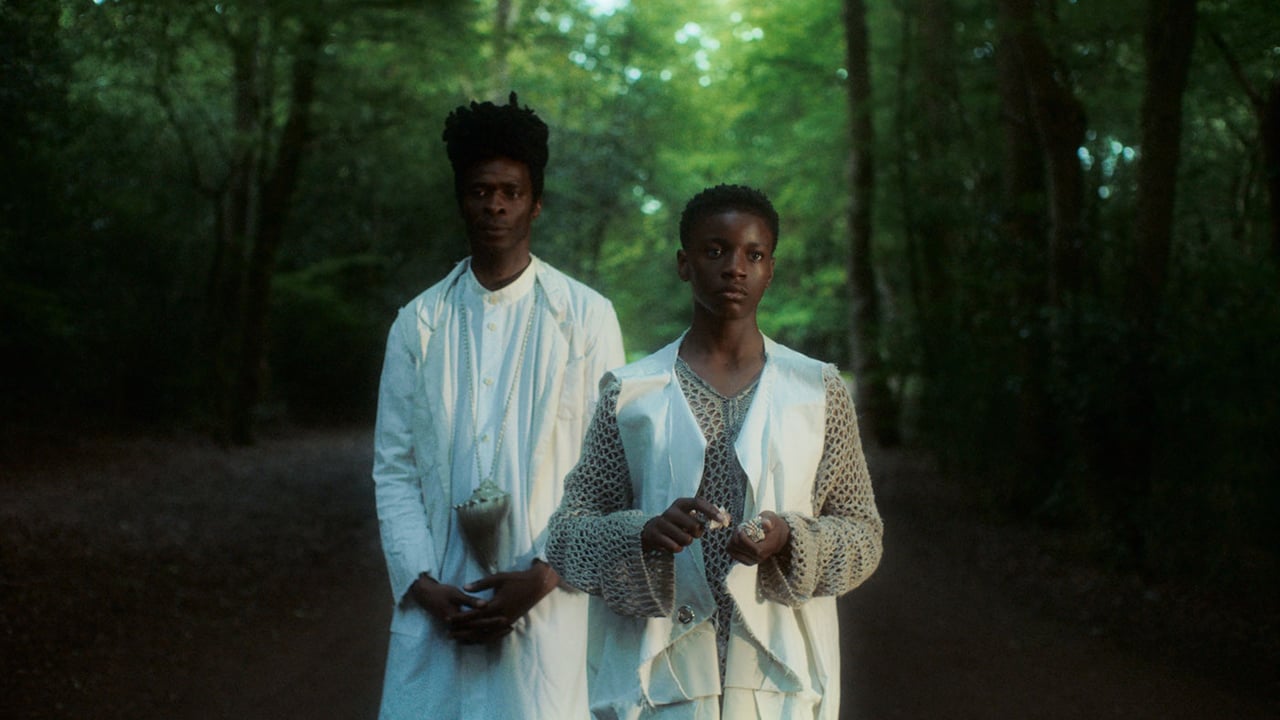
Bantutronic, Finding 15. The poet, artist, and filmmaker Julianknxx and the musician and composer THABO will perform live as Bantutronic, reimagining their short film. Courtesy of the artists and Creative Intelligence
At the “Exploration Bazaar”, curated by the digital strategist Justin Spooner and the expert on AI in education Professor Rose Luckin, students, researchers, and creative technologists from London’s universities will present works-in-progress and live experiments, accompanied by a rolling program of pop-up debates on how we want AI to inform our lives.
The live performance program uses the stage as a testing ground for creative technology, born of poetry and movement, while tackling entanglement and embodiment.
I’m thrilled we are presenting a program of London firsts: Holly Herndon leading a Listening Session; and Bantutronic – Finding 15Live, directed by Julianknxx, performed by THABO, guiding the audience into the world of Bantutronic philosophy, accompanied by live composition from the pianist Aron Kyne, a meeting of ancestral voice and contemporary technology that is made to resonate not just today and tomorrow but 500 years from now.
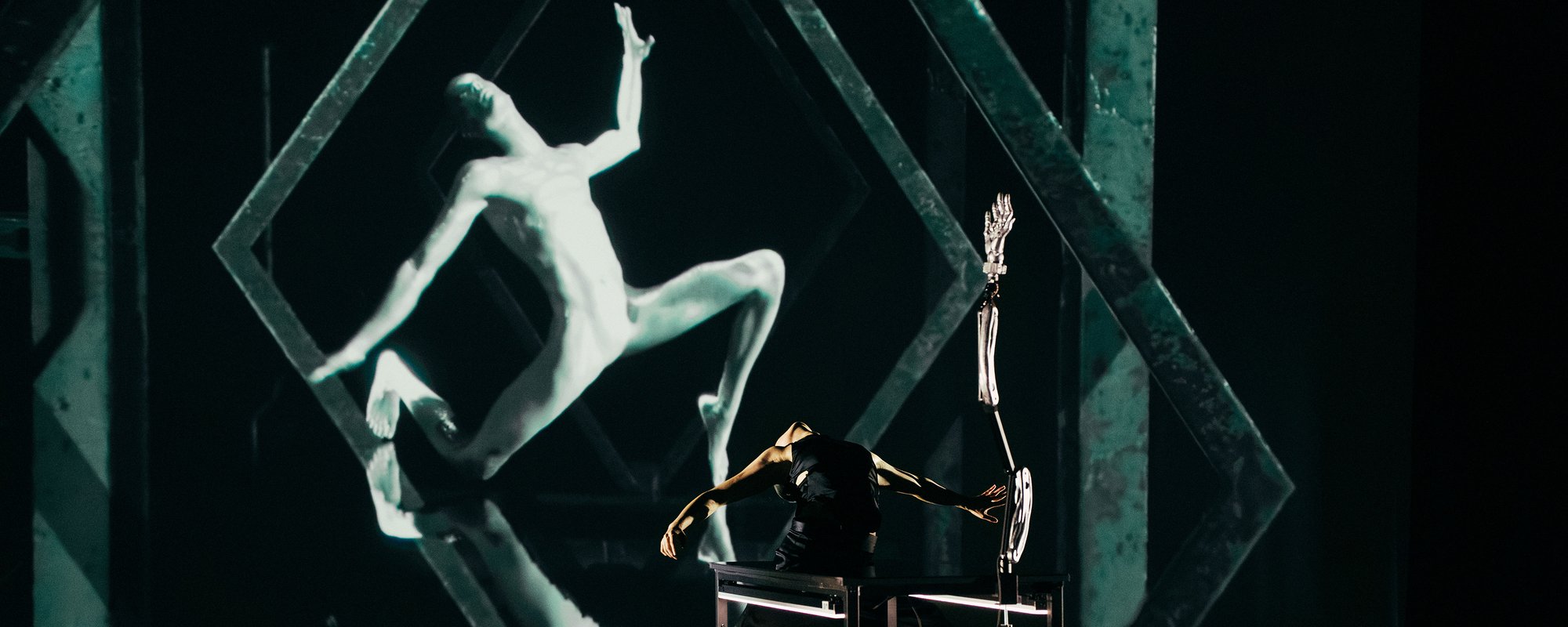
Jazia Hammoudi, a member of PACT, has led the curation in bringing US projects, co-produced by Onassis ONX, to have their UK premieres at Creative Intelligence. Making his UK debut, fresh from the Lincoln Center’s Collider Fellowship, Kevin Peter He asks what becomes of touch when bodies are separated, extended and remade through technology, in his kinetic performance Vestige.
Kevin Peter He, Vestige, 2026. The kinetic performance at Creative Intelligence will mark the artist’s UK debut. Courtesy of the artist and Creative Intelligence
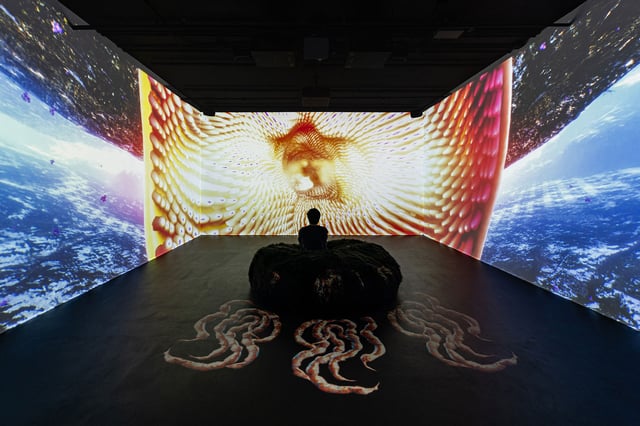
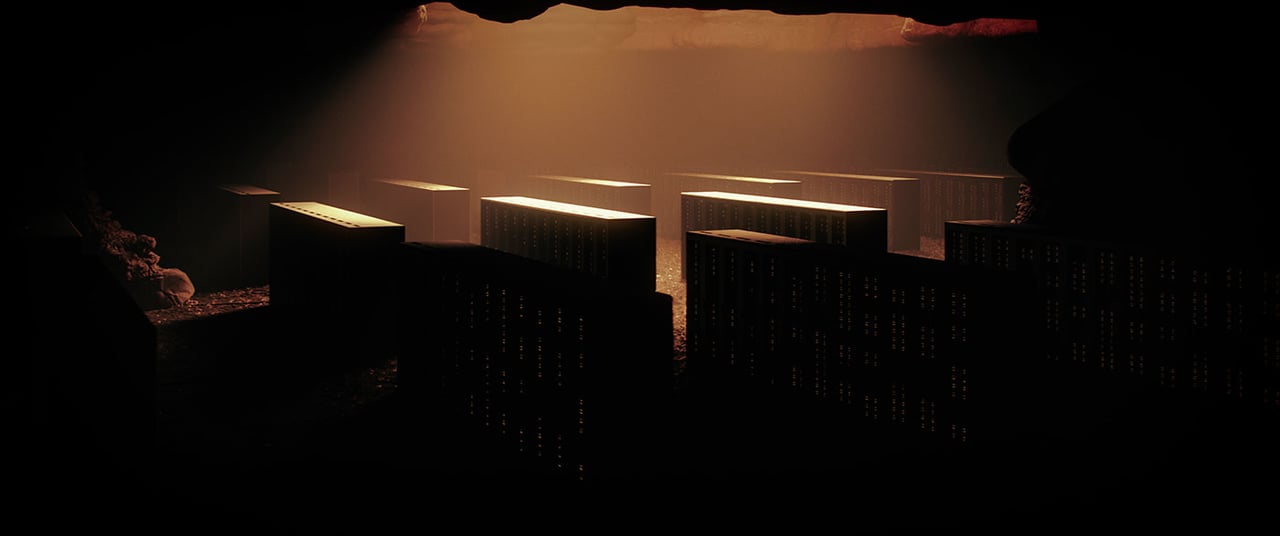
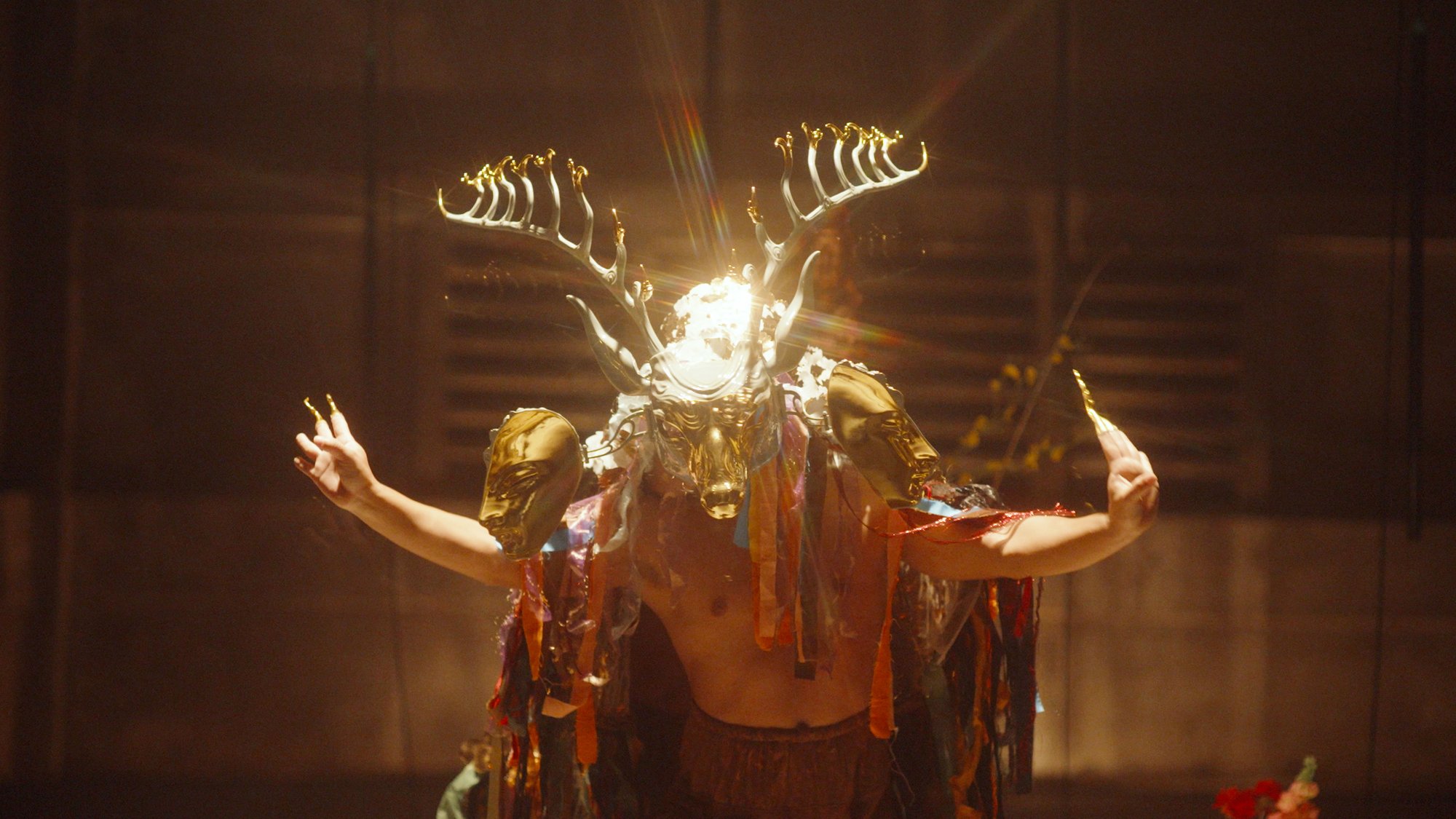
“Living Mythologies” draws together four large-scale installations across the site, each constructing a world with its own proposition about what transformation, and belonging, require. The UK premiere of the LA artist Andrew Thomas Huang’s The Deer of Nine Colors (2025) speaks to transcendence, and transformation. Liam Young’s World Machine (2026) imagines a future where a planetary supercomputer emerges, in a work that asks if we can reshape the planet for new technologies without repeating the destruction of the past.
Our ambition is that Creative Intelligence should offer an invitation to future-facing artistic and creative practices that actively shape and challenge technology, placing human agency at the center.
It is a privilege to be working at an historic site, one of such protopian civic ambition, and to be asking, with this festival, what the art center of the future can be.
— Keri Elmsly
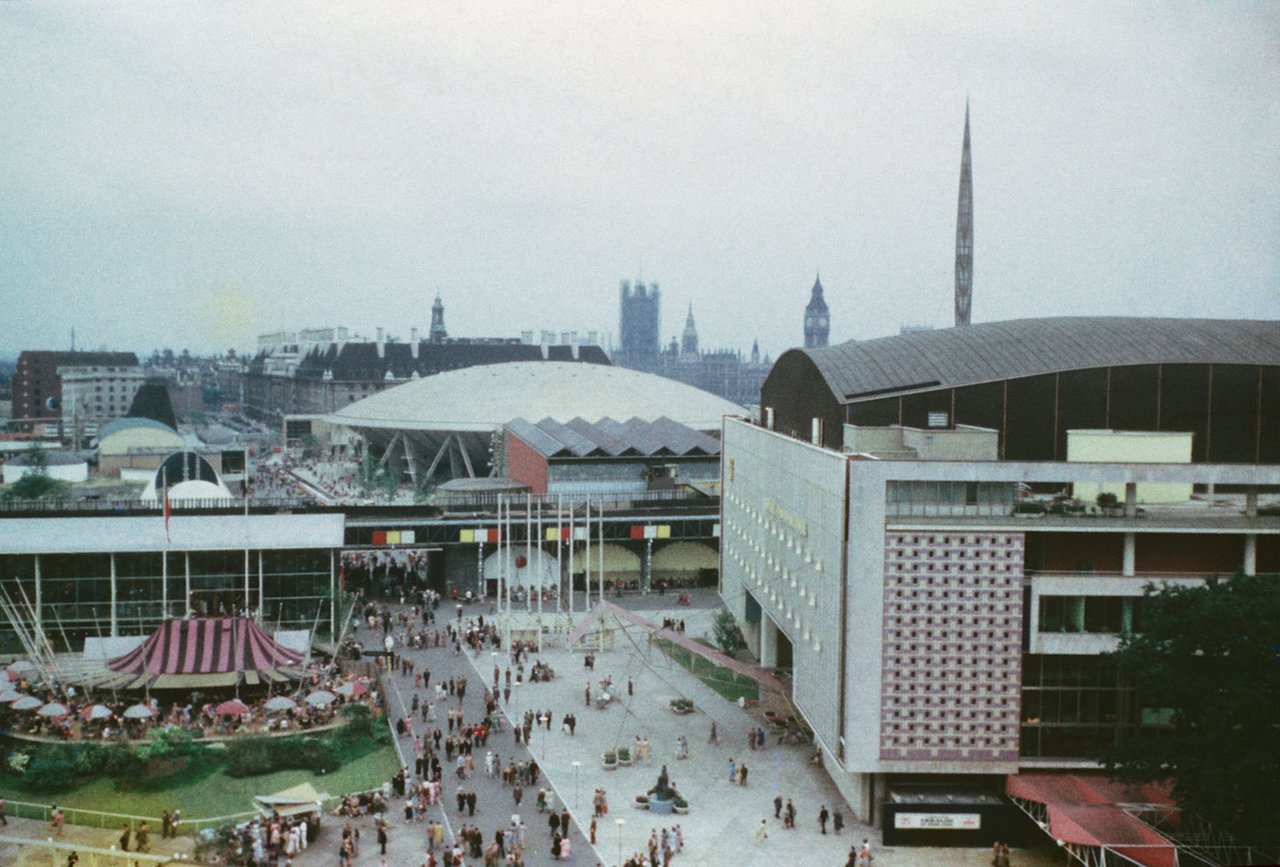
An aerial view of the Festival of Britain, London, 1951, featuring the Royal Festival Hall, right, and two temporary structures, the aluminum Dome of Discovery, and the 300-foot-tall spike-like Skylon. Courtesy of the Southbank Centre Archive
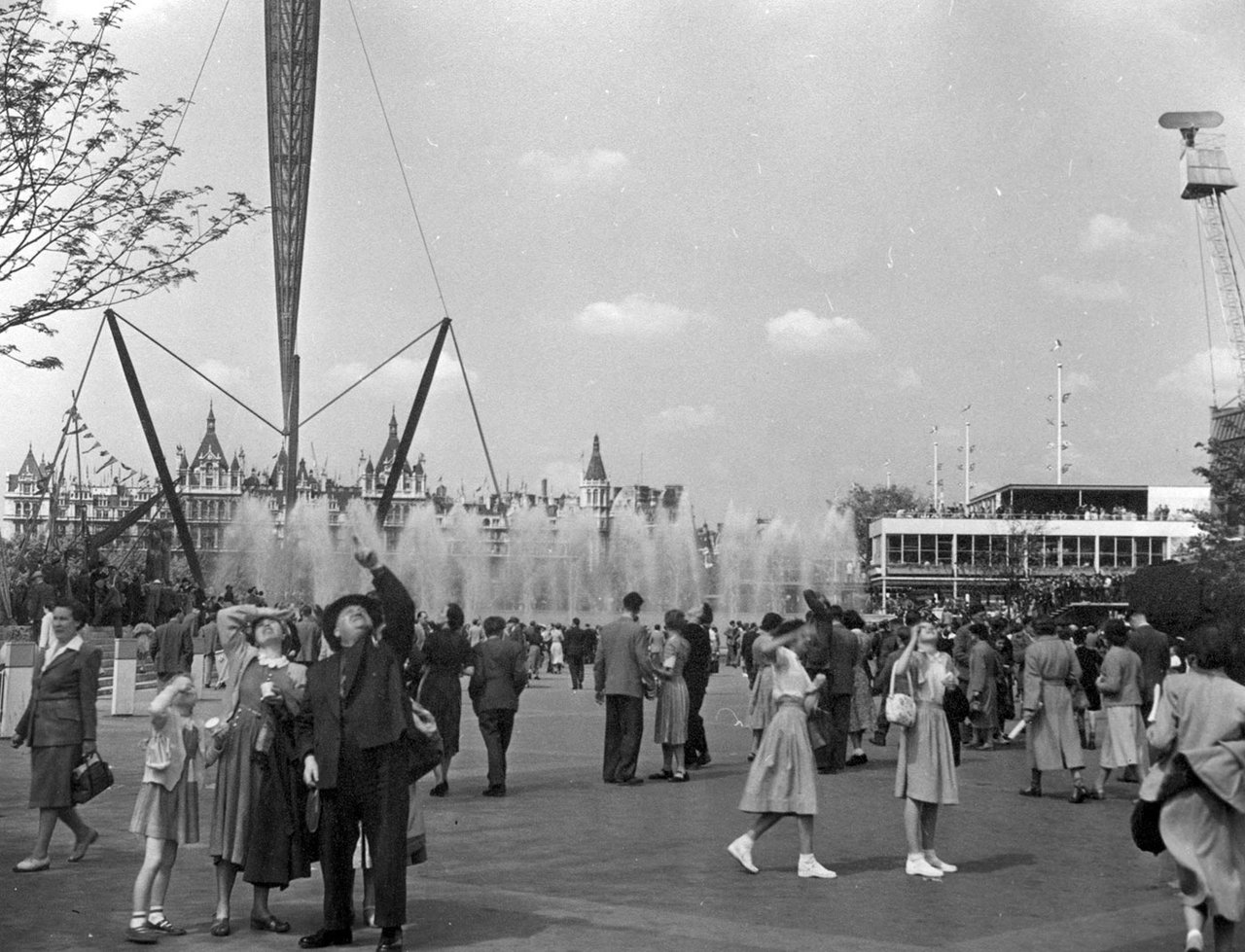
Visitors to the Festival of Britain, London, in 1951, watch a balloon being released from the Skylon. Courtesy of the Southbank Centre Archive
Lessons from the radical optimism of the Festival of Britain
Mark Ball: Picture this. A crowd of people in the summer of 1951, still living under the shadow of post-war rationing, huddled in absolute fascination around a massive metal structure. They are playing Nim, a simple game of mathematical strategy, against Nimrod, the first digital computer designed specifically to play a game, built by the engineers John Bennett and Raymond Stuart-Williams at the electrical engineering company Ferranti.
There were no pixels or video screens. Just rows of lightbulbs on a raised stand flashing to represent the moves. Visitors took turns pressing buttons on an illuminated control panel to play against the machine, watching the blinking lights demonstrate its actual calculation process.
For those visitors to the 1951 Festival of Britain, it was a total revelation. They probably did not fully realize it at the time, but as they tried their hand at the controls, they were on the cusp of history. They were witnessing a world-changing moment when the public could directly see, touch, and interact with a digital machine. It completely reframed the boundary between human agency and technology, 75 years ago.
That incredible post-war summer festival was defined by these glimpses of tomorrow. Down on the South Bank, right by the Royal Festival Hall, crowds were also queuing up at the futuristic Telekinema to put on special glasses and witness the world’s first public showcase of 3D film and stereophonic sound.
Liam Young, World Machine, 2026. Young’s science-fiction film, in which a supercomputer has transformed earth into a machine, was premiered at the exhibition “Other Worlds” at the Barbican Centre, London. Courtesy of the artist and Creative Intelligence
The Festival of Britain wasn’t just an exhibition. It was a radical blueprint for the future. Its masterminds used art, science, and design as a “tonic for the nation”, a glorious burst of full Technicolor that snapped the country out of its monochrome post-war gloom.
This year, as the Southbank Centre celebrates 75 years since the first chapter of its story, that same spirit of restless innovation and optimism is precisely what we are channeling.
Our site was built to be a democratic testing ground for big ideas. Today, we find ourselves at another historical crossroads. The rise of rapidly accelerating technologies, including of course AI, is fundamentally reshaping how we live, work, and express ourselves.
That is why we are launching Creative Intelligence, a festival that transforms our 11-acre site into a playground of human imagination. We need to get back into communal spaces. This is about creating an open, collaborative forum where artists, technologists, and the public can figure out the future together.
This isn’t about just sitting back and watching. Just as those curious festival-goers did in 1951, we are inviting everyone to get hands-on with the world-changing possibilities of tomorrow. It’s an invitation to dream, to play, and to assert that human creativity is at the absolute heart of the machine age.
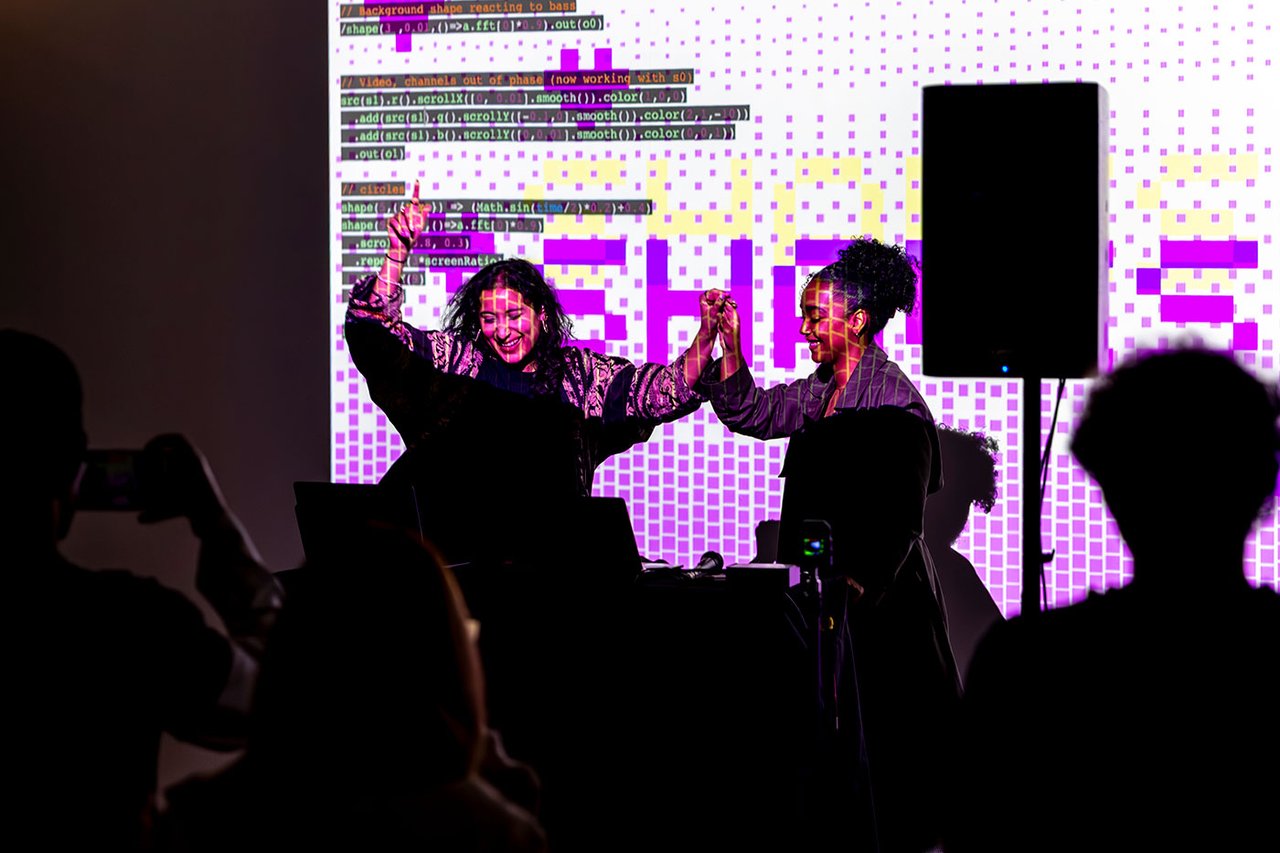
AlgoRhythms is one of multiple creative computing groups that Peckham Digital will present in the foyer of the Queen Elizabeth Hall during Creative Intelligence. Courtesy of AlgoRhythms, Peckham Digital, and Creative Intelligence
Peckham Digital brings creative computing to the festival
Bea Taylor Searle: Peckham Digital’s origin story starts on a gloomy day on Zoom in November 2020. Amid the isolation of lockdown, the London Creative Coding Meetup hosted an evening of bite-sized talks. Right at the end, the artist and entrepreneur Matt McDonnell put out a call for people interested in establishing a new digital arts festival in Peckham, south-east London.
Looking back, it feels like a synchronicity. At the time, I was writing a dissertation exploring the relationship between physical and Web-based art, while Matt was imagining a place where digital art communities could step away from their screens and meet in person. The idea immediately felt exciting and necessary. I sent him an email and, by March 2021, we had established Peckham Digital as a Community Interest Company (despite still not having met in person).
From day one, our focus with Peckham Digital has been on expanding access to creative computing. We want people to leave feeling that technology is something they can shape rather than simply consume.
Alongside that, we offer emerging artists their first paid exhibition opportunities while creating space for more experienced practitioners to share their knowledge.
Andrew Thomas Huang, The Deer of Nine Colors, 2025. The work receives its UK premiere at Creative Intelligence. Courtesy of the artist and Creative Intelligence
Over the last four years, I have developed what I call “hands-dirty” programming. It aims to shift audiences away from passive consumption and toward active, embodied engagement with digital systems.
Creative Intelligence marks Peckham Digital’s first major commission outside our annual festival. In the foyer of the Queen Elizabeth Hall, at the Southbank Centre, we will be celebrating London’s creative computing communities, bringing them into view for audiences who may never have encountered them before.
The program will reveal just how many forms creative computing can take. Audiences will experience Lady Ludd playing the electronic loom, discover work-in-progress projects through Phreaking Collective’s Open Projector talks featuring Ubeboobey’s cyberdecks, and witness Rock & Robots transform the space into a battleground for antweight robots.
What excites me about bringing these projects together is how they reveal creative computing as an ecosystem rather than a discipline. Threads from weaving, engineering, hacking, and art become tangled together, creating unexpected routes into the subject.
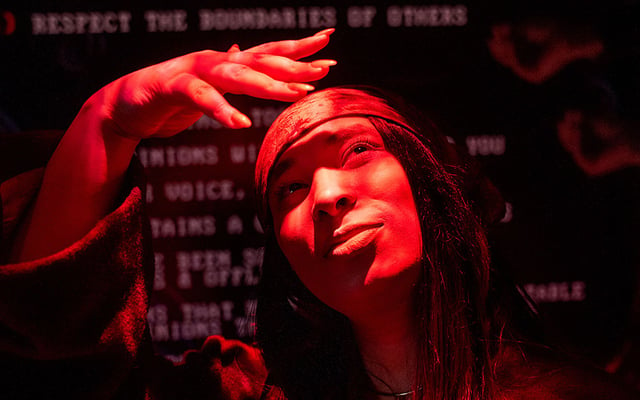
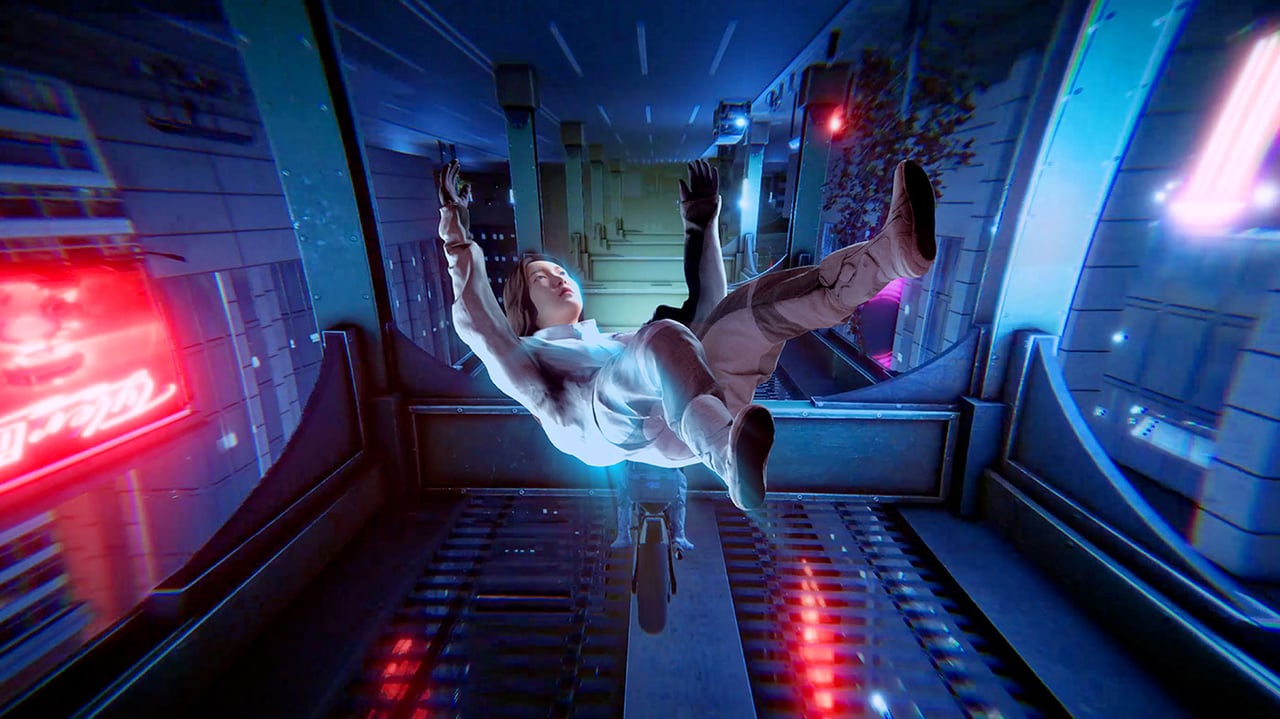
Ayoung Kim, Delivery Dancer, 2023. The Seoul-based artist’s video work, presenting a labyrinth of regenerating delivery routes where drivers pursue endless work controlled by a master algorithm, will be presented at Creative Intelligence. Courtesy of the artist
Creative Intelligence matters because it builds on a long and often overlooked history of digital arts in London. Communities such as Furtherfield, Backspace, andnode.London have provided spaces where artists and technologists can test new ideas in public. Furtherfield’s concept of DIWO (Do It With Others) recognized that some of the most important developments in digital culture emerge collectively rather than individually. Their influence can still be felt in today’s meetups, maker spaces, and independent cultural projects.
To me, Creative Intelligence continues that lineage. It shines a light on the communities doing this work right now and reminds us that innovation doesn’t belong exclusively to Big Tech.
Some of the most interesting ideas emerge around folding tables, in workshop spaces, and at meetups where people build strange things simply because they are curious.
For London, the festival strengthens the connections between these communities. For the wider art world, it demonstrates that the UK remains home to a rich culture of creative technology. Creative Intelligence is not only a snapshot of what is happening now; it is a meeting point for the people shaping what comes next.
Keri Elmsly is a global curator and producer whose collaborative practice builds institutional programs, cultural infrastructure, and the work of artists operating at planetary scales and worldbuilding. In 2025 she founded PACT (Planetary Art Culture Technology), a collective championing artists’ unique utility as engines for imagination, agency, and change. Keri recently served as Senior Vice President at Sphere Studios (Sphere, Las Vegas) and Executive Director of Programming at ACMI (Australia’s Museum of Screen Culture). Grounded in her formative years with DIY underground collectives Mutoid Waste Company and Spiral Tribe, she has consistently produced and curated ambitious, technologically-demanding works, including producing the first live drone orchestra with John Cale (Velvet Underground) and Liam Young at the Barbican in 2014. As commissioner and executive producer, credits include: Ayoung Kim, Alexandra Daisy Ginsberg, Katie Paterson, Liam Young, Marshmallow Laser Feast, Quayola, Serwah Attafuah, United Visual Artists, and Universal Everything. She also mentors at New Inc at the New Museum (New York), and with Serpentine Arts Technologies’ new Future Art Ecosystems R&D Fellowship (London).
Mark Ball is Artistic Director, Southbank Centre. Joining the Southbank Centre as Artistic Director in 2021, Ball is responsible for the delivery of the entire artistic program, working with the Southbank Centre’s talented artistic team and extensive creative network to produce a dynamic and world-class program in the heart of London. Prior to the Southbank Centre, Mark was Creative Director at Factory International, where he led the artistic program for The Factory. He has also held positions as Artistic Director and Chief Executive of the London International Festival of Theatre (LIFT), Head of Events and Exhibitions at the Royal Shakespeare Company, and Artistic Director of Fierce!.
Bea Taylor Searle is a cultural producer and co-founder of Peckham Digital CIC, a Community Interest Company dedicated to widening access to creative technology within the arts. Through its annual festival and year-round programming, it platforms emerging computational artists, champions open-source tools, and builds inclusive spaces for communities to engage with digital art. She is currently pursuing a PhD at London South Bank University, exploring how computational arts can expand digital literacy.