On Collecting | thefunnyguys on How Interfaces Shape Digital Art
Pauline Foessel, founder of 100 collectors, speaks with Jan, aka thefunnyguys, the collector and co-founder of the digital art marketplace Raster, about discovery, data, and how the infrastructure surrounding digital art affects the way we collect
Pauline Foessel
In partnership with
This article is produced by Right Click Save in partnership with 100 collectors. It is one of a series in which 100 collectors, the global network for digital art collectors, contributes collector-focused perspectives, conversations, and editorial formats to the magazine.
Digital art promised collectors unprecedented access. Yet abundance has not necessarily made discovery easier.
Artists work across chains, platforms and marketplaces. Their works circulate through wallets and social media while information about their practice, provenance and market exists somewhere else entirely. For experienced collectors, navigating this landscape can become almost instinctive: one artist leads to another, one collection opens on to the next. For someone arriving today, knowing where to start remains surprisingly difficult.
Jan, better known as thefunnyguys, has experienced this evolution as both collector and builder. Since he began collecting in 2020, he estimates that he has acquired works by more than 1,000 artists. He went on to co-found Le Random, dedicated to collecting and contextualizing generative art, and more recently Raster, an aggregator and marketplace bringing together artworks and information otherwise dispersed across the digital art ecosystem.
thefunnyguys’ trajectory raises a question: if interfaces determine what we see, how much do they also determine how we collect?
Pauline Foessel, founder of 100 collectors, speaks to thefunnyguys about discovery, the uneasy relationship between art and data, and what better infrastructure for digital collecting might look like.
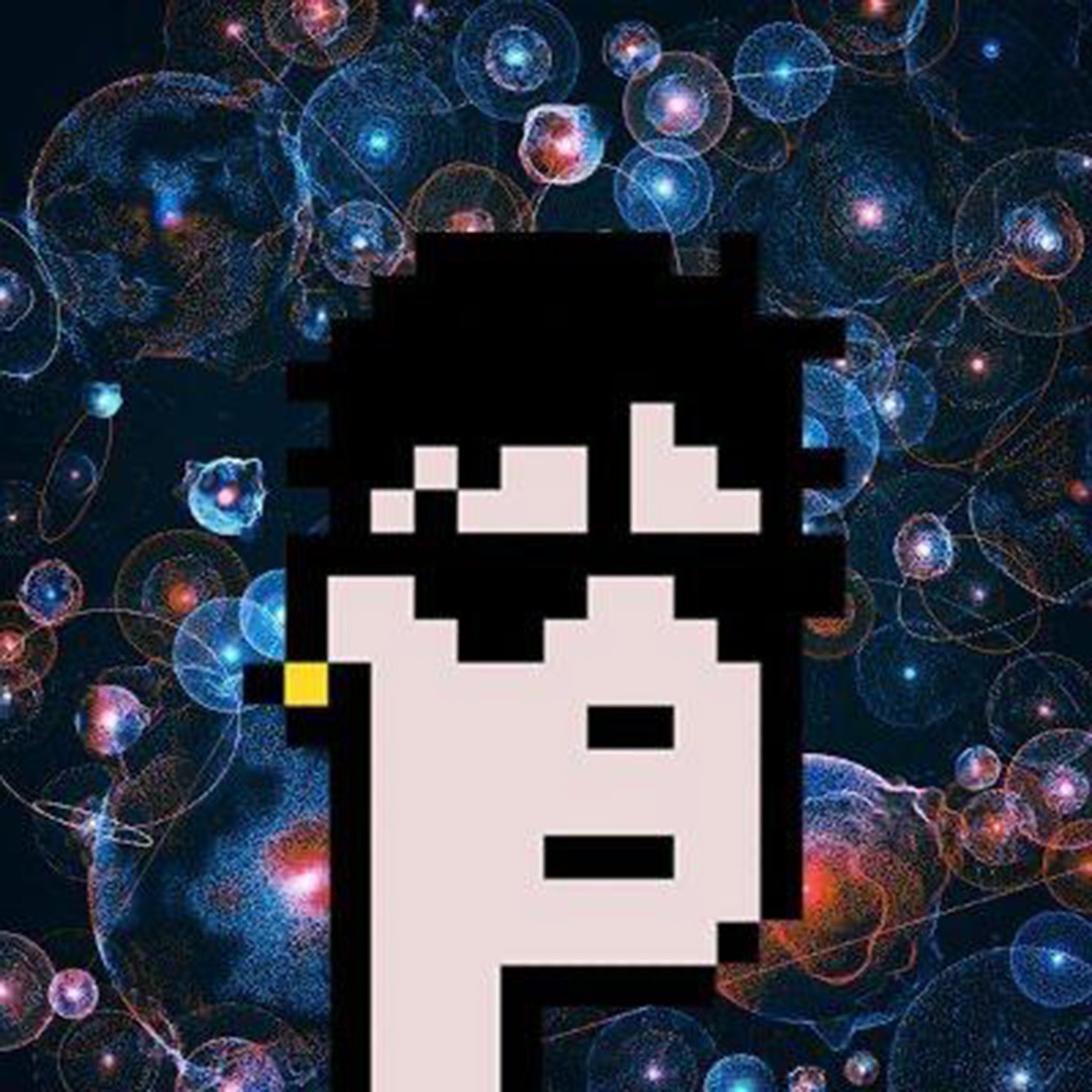
thefunnyguys, profile picture portrait. Private collection of thefunnyguys
Pauline Foessel: You’ve collected works by more than 1,000 artists. When you discover someone today, what happens? Is collecting still instinctive for you, or do you need to understand the wider practice first?
thefunnyguys: For my personal collection, it’s quite spontaneous. I make a lot of smaller acquisitions. If I come across something interesting, I might simply collect it. I’m not going to spend a day researching an artist beforehand. But if I want to collect more from that artist, or spend more, then I go deeper. I try to understand what they’re doing, what their practice is about and what else they have created. I’ve probably collected more than 1,000 artists since 2020, but there are maybe only 10, 20 or 30 whom I really follow and continue collecting over time. For those artists, I read interviews, visit their websites, look at their other work and their references. If all of that continues to connect with me, I keep supporting them.
I also really value having a direct relationship with artists. When I travel, I like meeting them and visiting their studios when possible. I find it frustrating when there is friction around that, when, for example, a gallery doesn’t want a collector speaking directly to the artist. For me, that personal relationship matters.
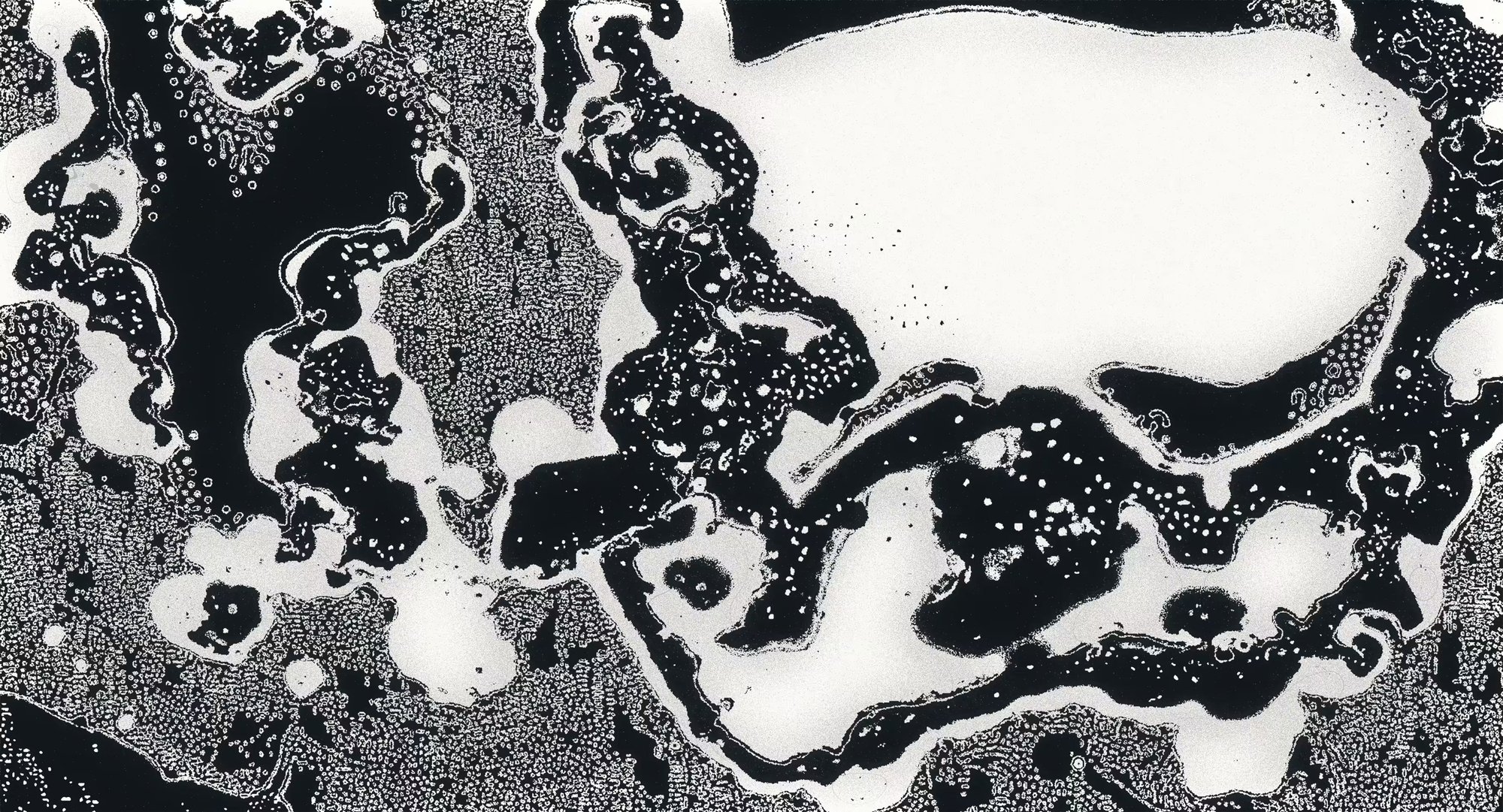
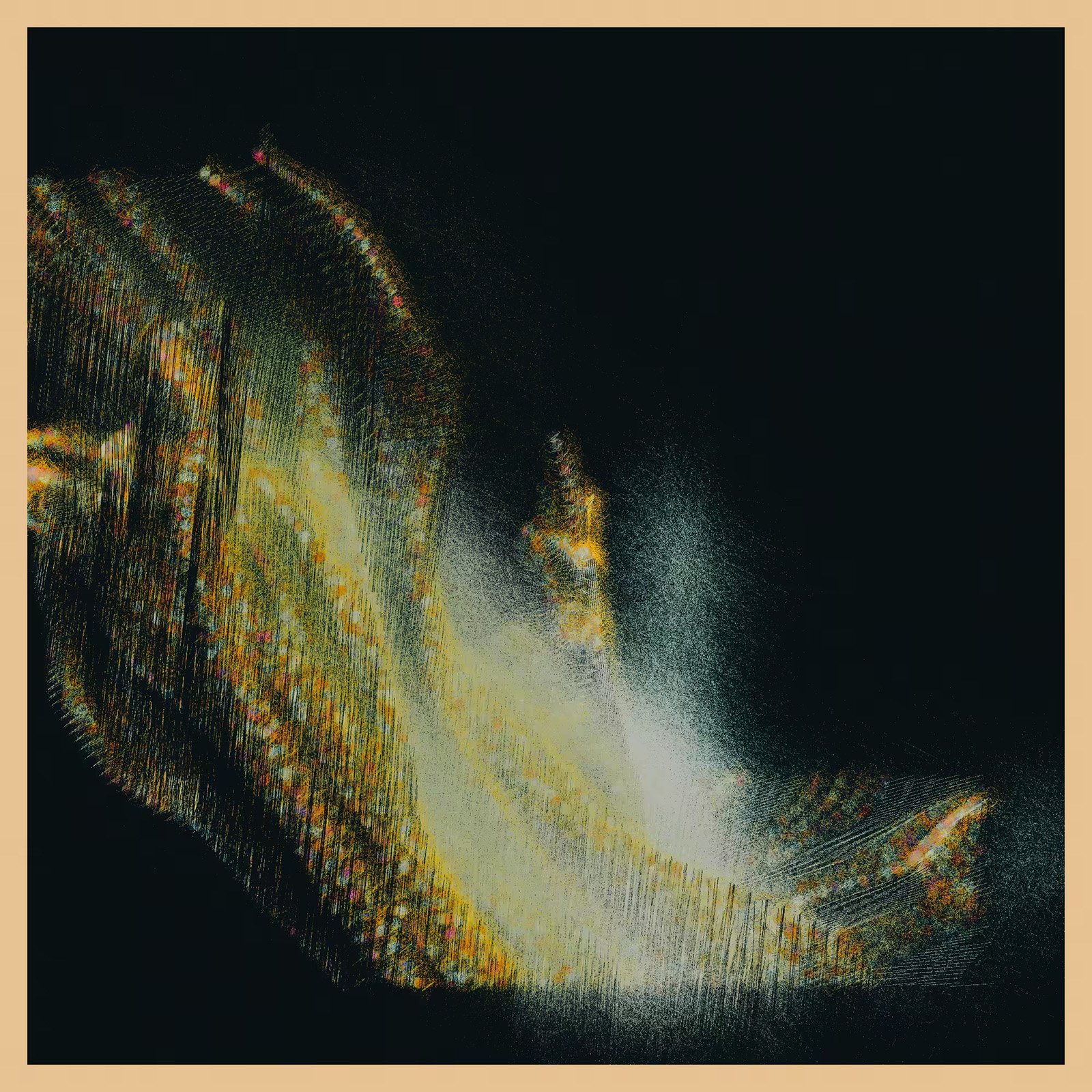
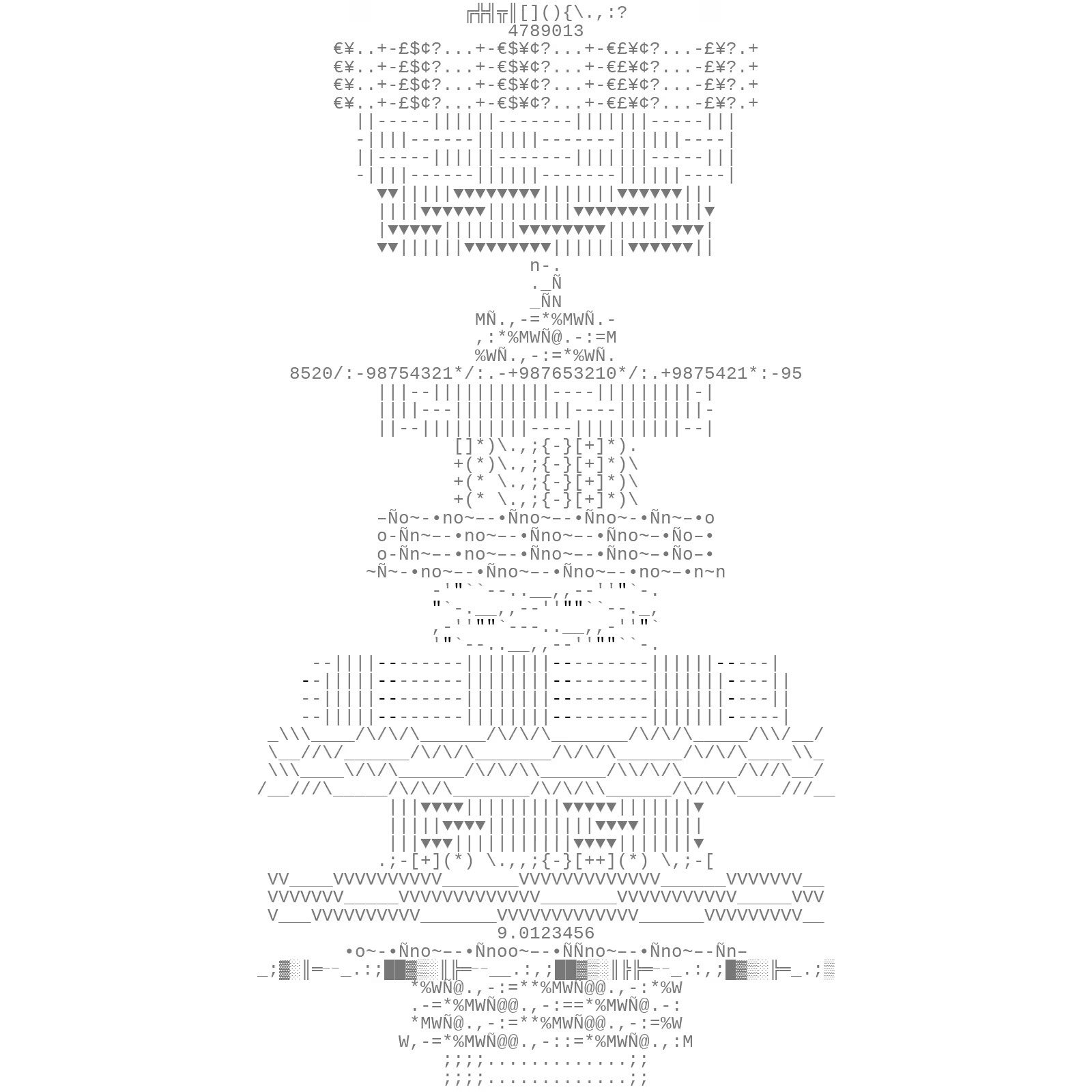
Kim Asendorf, Aefkl Ior A, 2022. Courtesy of the artist. Private collection of thefunnyguys
PF: For experienced collectors, discovery becomes almost a network. You follow an artist, then another collector, then what that collector is looking at. But I speak to many people who are genuinely interested in collecting and simply don’t know where to start. We have this incredible abundance of art and yet discovery still feels strangely difficult. Has the way you discover artists changed?
tfg: It used to be much more platform-centric for me. I spent a lot of time on Art Blocks and fxhash and discovered many artists that way. Platforms don’t play quite the same role anymore. Galleries have become more important to me: which galleries are participating in fairs, which artists they bring, who they include in group exhibitions and which artists they place alongside one another. Then there is browsing other collectors’ collections. I might go to someone’s profile on Raster, see what they recently collected, look at the other artists in their collection and use that as a jumping-off point. But I think we can do much better.
It’s surprising that we don’t have better recommendation systems for digital art. There isn’t really somewhere you can connect your wallet and be recommended other artists you might like, areas you might want to explore or collectors you should follow. Discovery is still a problem to solve.
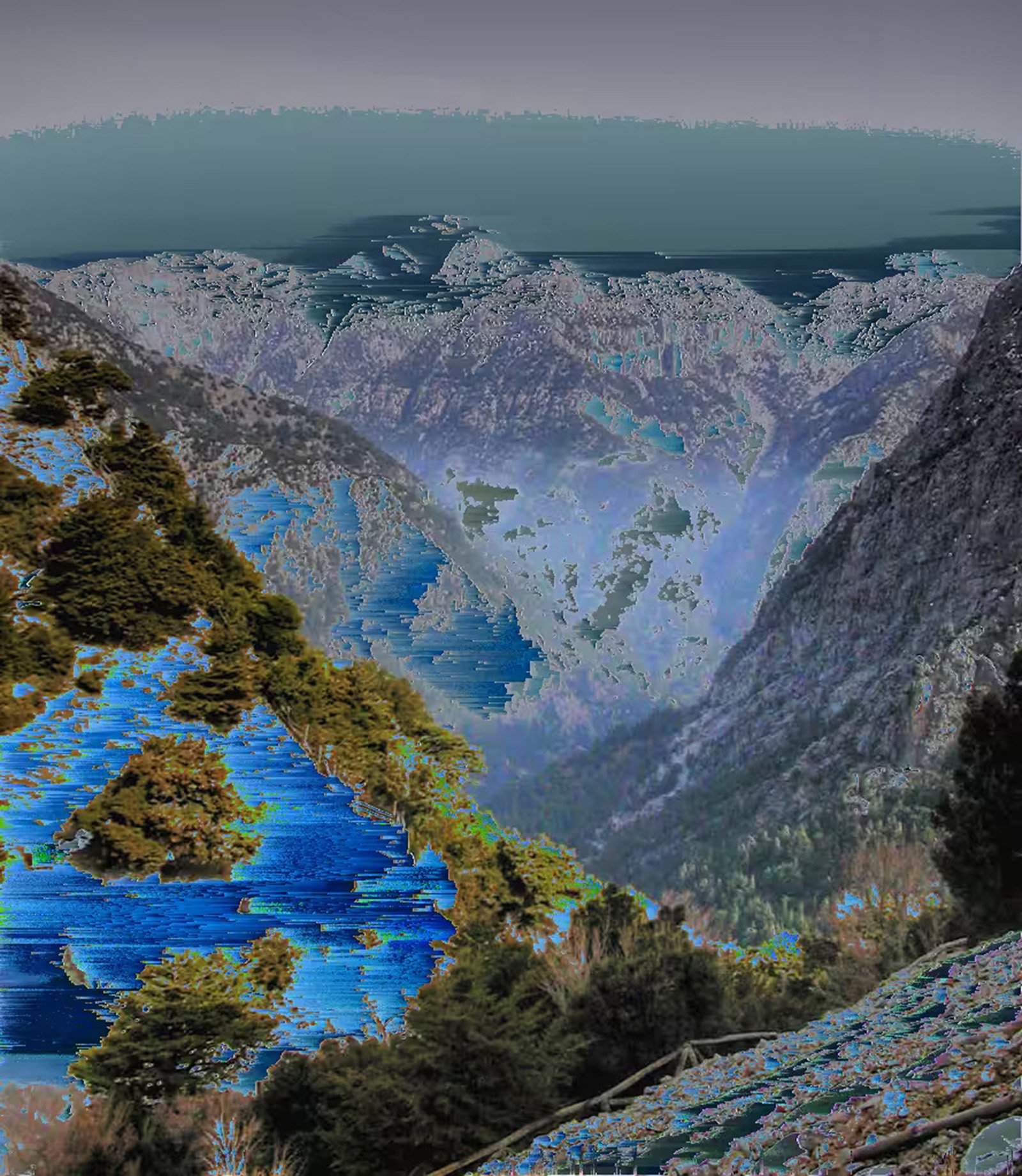
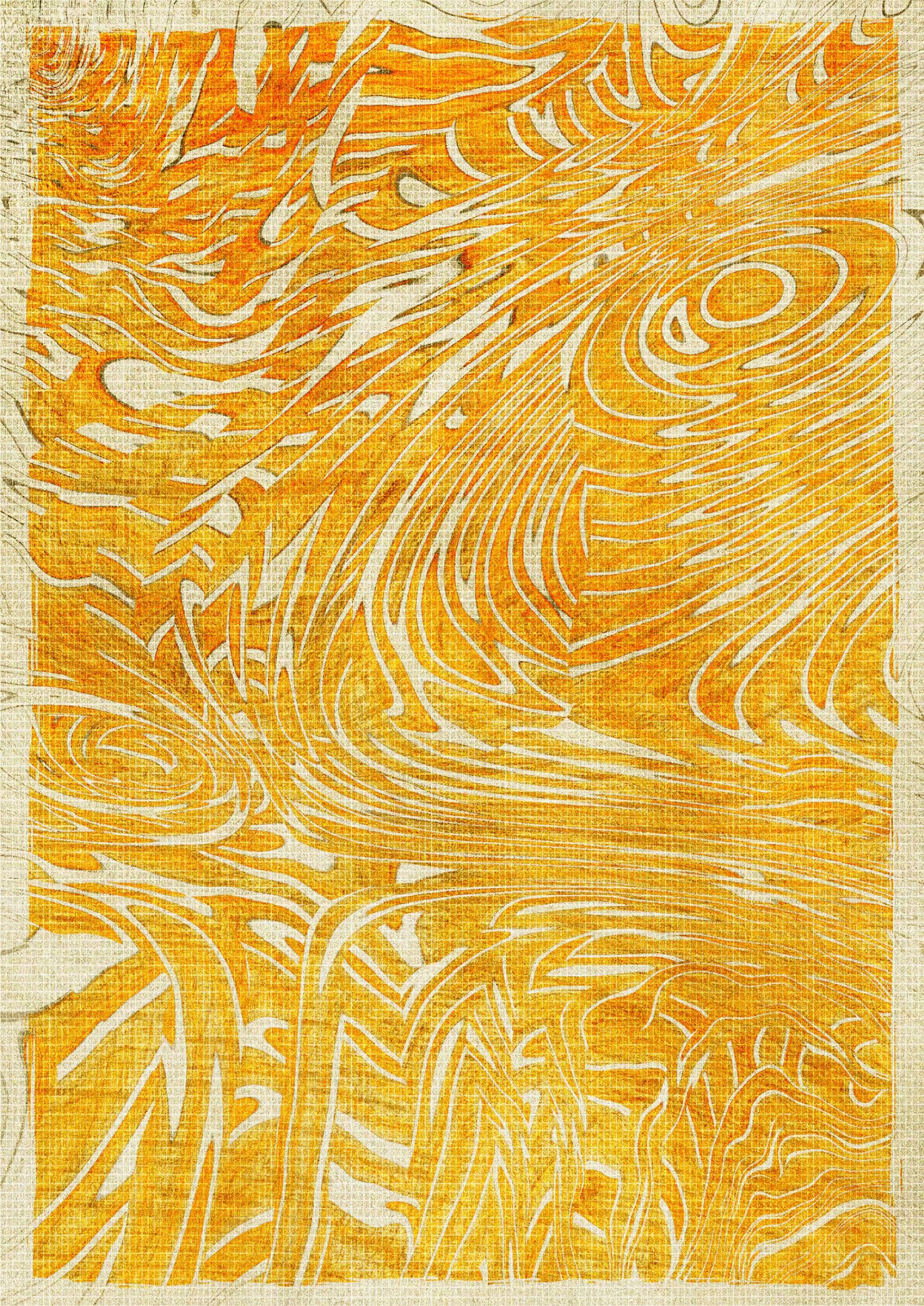
Travess Smalley, 11_05_22_Pixel_Rug_01_TFG_100, 2022. Courtesy of the artist. Private collection of thefunnyguys
Manolo Gamboa Naon, bababa, 2021. Courtesy of the artist. Private collection of thefunnyguys
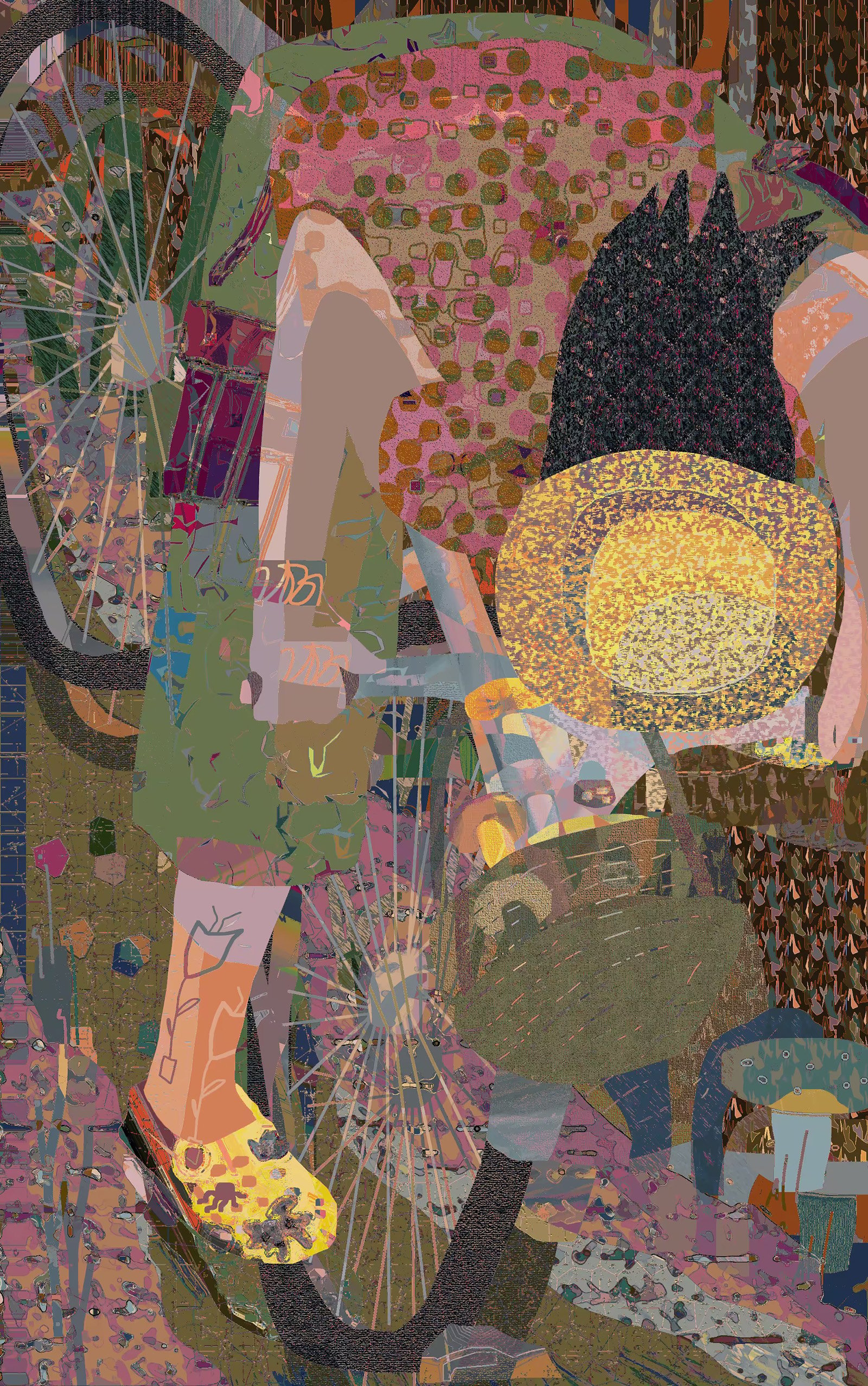
Iskra Velitchkova, CASTAWAY, 2025. Courtesy of the artist. Private collection of thefunnyguys
PF: And maybe that’s the paradox. You can arrive on a marketplace and have everything in front of you, but without context it can feel like nothing. Raster brings together the ecosystem, but you also put a lot of effort into contextualizing it. Then there is the data. Digital art gives us access to provenance and market information in a way that traditional art often doesn’t. How do you put all those numbers next to something we still want to experience emotionally?
tfg: It’s a balance. We want to offer a beautiful experience for looking at art and discovering artists, but we also want to be pragmatic. If you want to be a functioning marketplace, collectors need provenance, active offers, listings and sales information.
If the market doesn’t function efficiently, I don’t think it can grow very much. Ultimately that means less art and fewer artists able to make a living from it.
What we try to do differently is not lead with the data. We don’t put all the information on screen first and then give the art whatever space is left. We start with the art and sculpt the information around it.
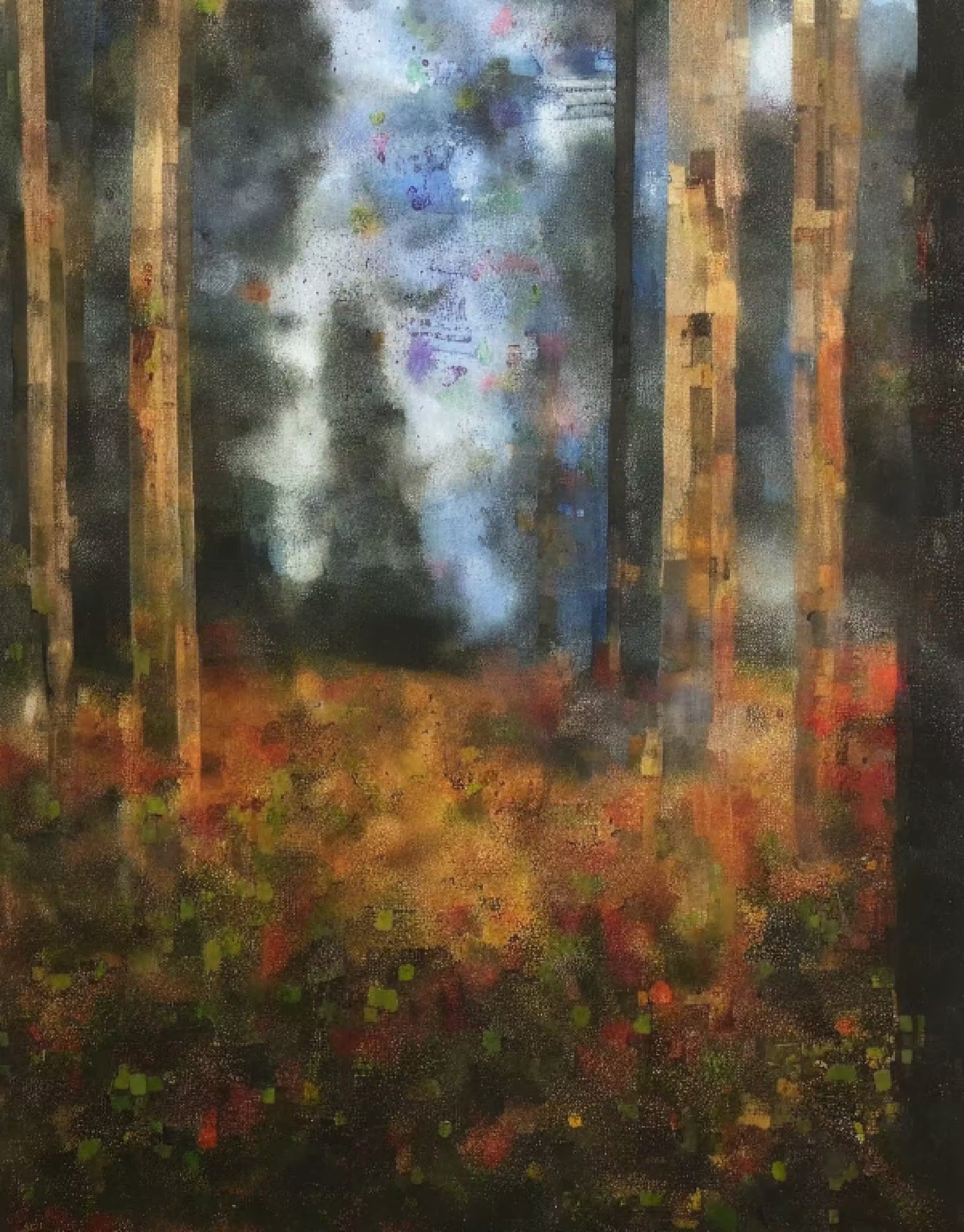
William Mapan, Anticyclone #303, 2022. Courtesy of the artist. Private collection of thefunnyguys
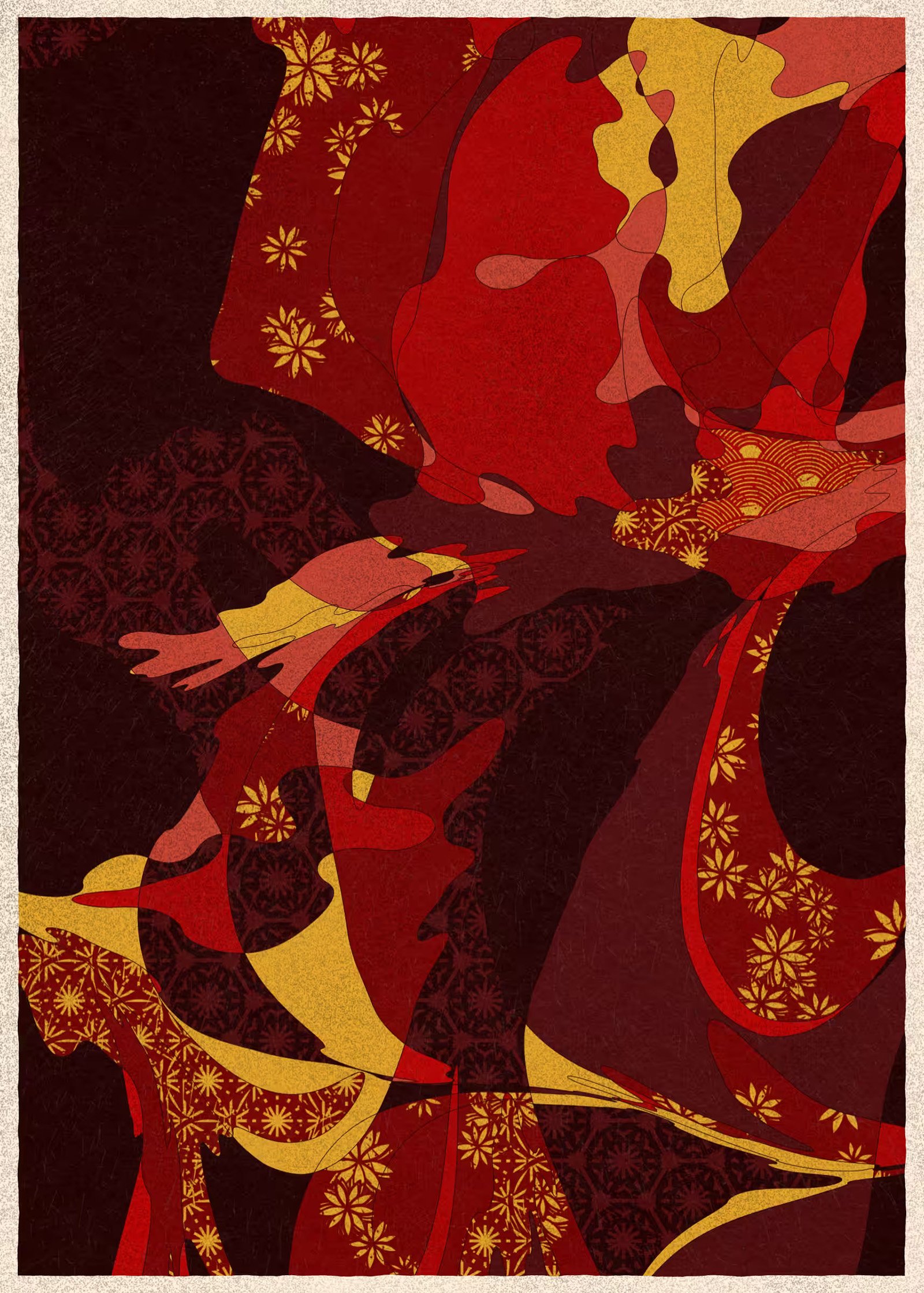
Yuri jjjj, Thoreau in the forest throwing his mushrooms away, 2025. Courtesy of the artist. Private collection of thefunnyguys
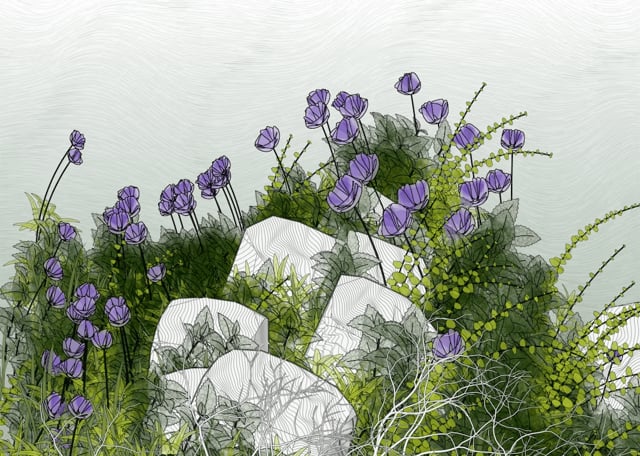
Andreas Gysin, Towers #163, 2022. Courtesy of the artist. Private collection of thefunnyguys
PF: Because interfaces aren’t neutral. The information you foreground can change how somebody looks at an artwork. What data genuinely helps us collect, and when does it become noise?
tfg: Ownership history is always interesting. Offers, listings and recent sales can help you understand what something might be worth, so that you neither overpay nor make an offer completely disconnected from the market. But there are other metrics I’m less convinced by. Volume is one example. A collection might have enormous historical volume because of what happened in 2021, but that doesn’t necessarily tell you much in 2026. Rarity is another.
Some marketplaces calculate the rarity of individual tokens based on particular traits. I’m not sure how useful that is for art collectors today. And these systems don’t only influence collectors. They can influence the way artists make work.
If artists know marketplaces will use certain traits to calculate rarity, they might stop defining those traits, even when they would otherwise help collectors understand the work. Artists can also start thinking about edition sizes according to what they believe will perform better on a marketplace. So we need to get this right. Interfaces influence the way people value art and potentially the way artists produce it.
Linda Dounia, F4 GNS05 Fourth Generation, 2024. Courtesy of the artist. Private collection of thefunnyguys
PF: That’s where I think digital art becomes particularly interesting. It can be owned, but it can also be streamed, circulated and experienced almost infinitely. Yet we often continue to present it through models inherited from physical art: scarcity, uniqueness, keeping the valuable object protected somewhere. Maybe what we actually need isn’t one perfect interface, but many different ones: for buying, discovering, researching or simply experiencing art.
tfg: That’s something I find really exciting. One of the amazing things about digital art and blockchain is that the data is publicly accessible. I would love a future where there aren’t one or two interfaces through which we experience digital art, but hundreds or thousands. Some might be optimized for collecting, buying and selling. Others could be purely viewing experiences. Raster will never be the perfect viewing experience because we’re also building a marketplace. Someone will always be able to make something more beautiful by removing certain information. That’s fine. There is so much left to build. This is also why we make our data available through an API.
We’ve spent a huge amount of time building this aggregated database. Other people shouldn’t have to repeat that work. They can use the data and focus on a new interface, experience or business model.
Frances Skomra, skomra comes undone, 2026. Courtesy of the artist. Private collection of thefunnyguys
PF: There’s also something interesting about who is building this infrastructure. You didn’t enter the space thinking, “I’m going to build a marketplace.” You entered as a collector. At what point did collecting turn into building?
tfg: In a funny way, becoming a full-time collector was actually the unexpected part. I always knew I wanted to go into business and be an entrepreneur. What surprised me was becoming a full-time collector when I was around 23.
I had always imagined that being a full-time collector was something you did when you retired at 65 or 70. I basically rolled into it by accident. But I knew I would eventually build a company and a product. I love art, technology and business, and a digital art marketplace sits at the intersection of those things.
More importantly, there was a real problem to solve. For a long time Raster almost felt too obvious as an idea. I kept thinking: someone else must be building this. Surely they’re going to release it soon. Then it was 2024 and nobody had. So we thought: we’ll do it ourselves.
Emily Xie, Memories of Qilin #595, 2022. Courtesy of the artist. Private collection of thefunnyguys
PF: I keep coming back to discovery because I think this is where technology meets something much harder to scale. I can look inside another collector’s wallet and discover an artist. But it’s different if that collector tells me: these are five artists I’m looking at, and this is why. The “why” gives you a way in.
tfg: Definitely. The question for us is how you make something like that work at scale. How difficult is it for people to contribute? How do you keep it updated? But there is clearly much more we can do there. And I think the collector base itself needs to grow. Raster was initially built for people who already understood digital art. We assumed they knew what crypto was and already had a wallet. That has to change.
We want people to be able to sign up with an email address and pay without first having to buy ETH. Growing the collector base is teamwork. There are many different actors who have a role to play.
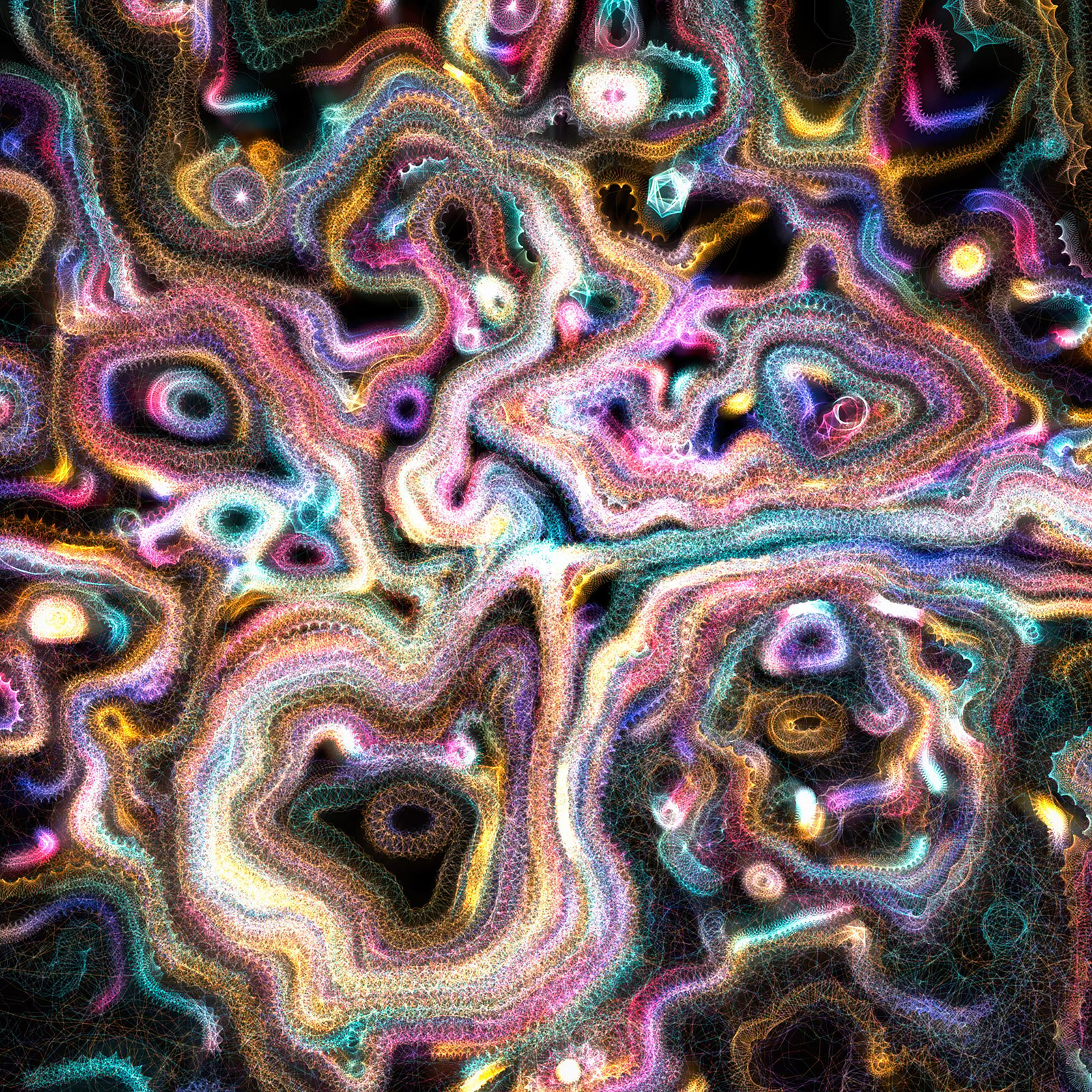
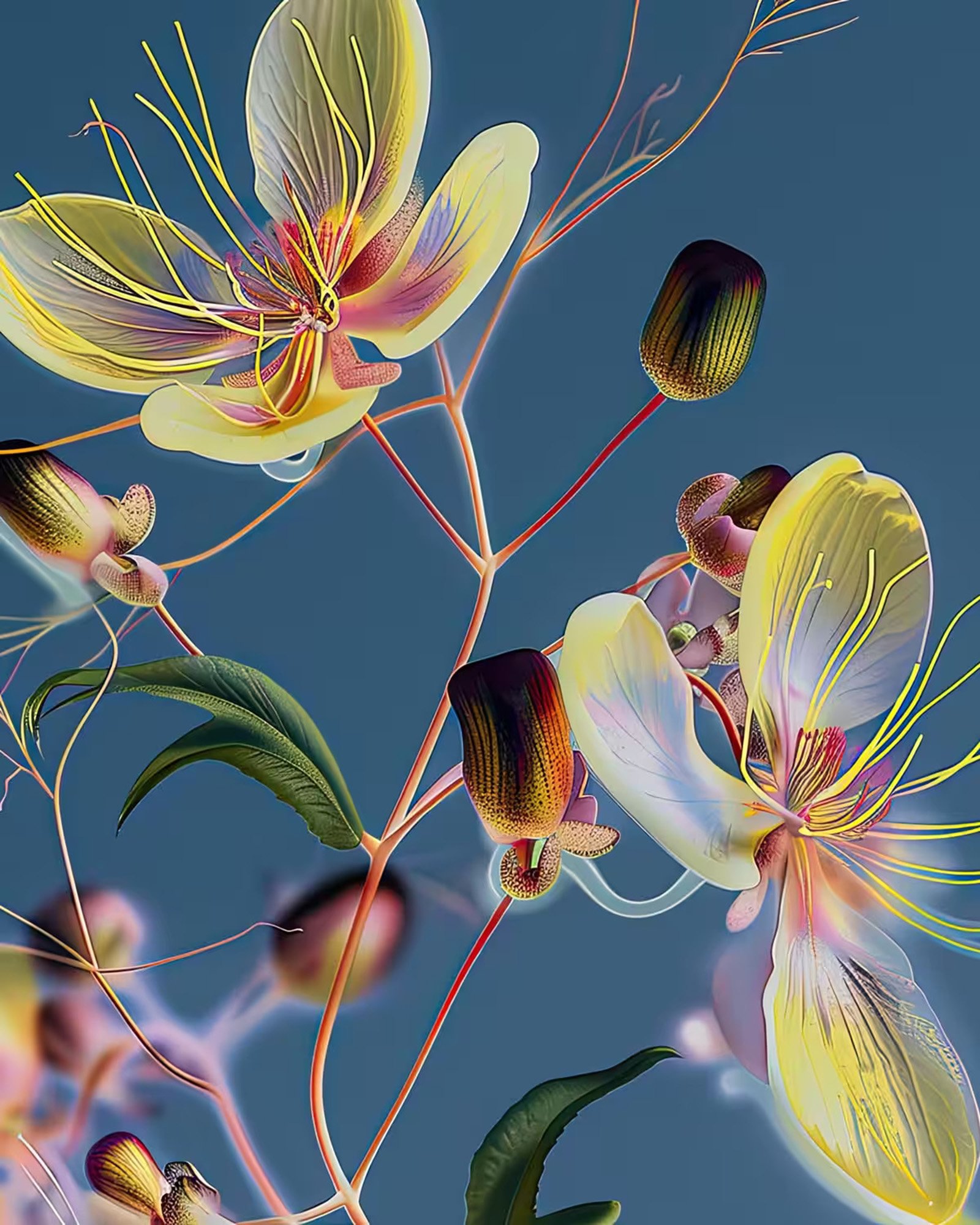
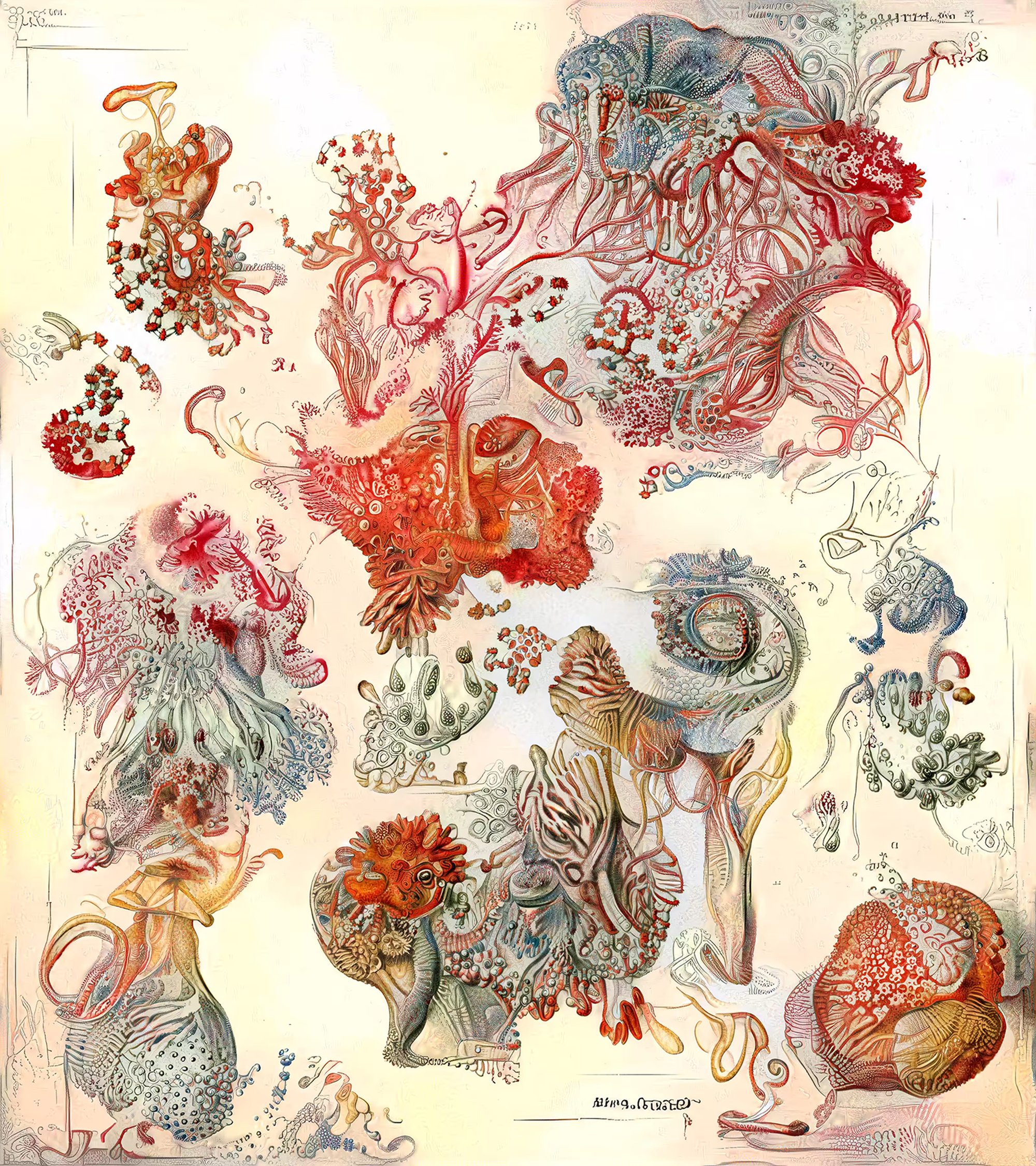
Sofia Crespo, soft_colonies_1898, 2022. Courtesy of the artist. Courtesy of the artist. Private collection of thefunnyguys
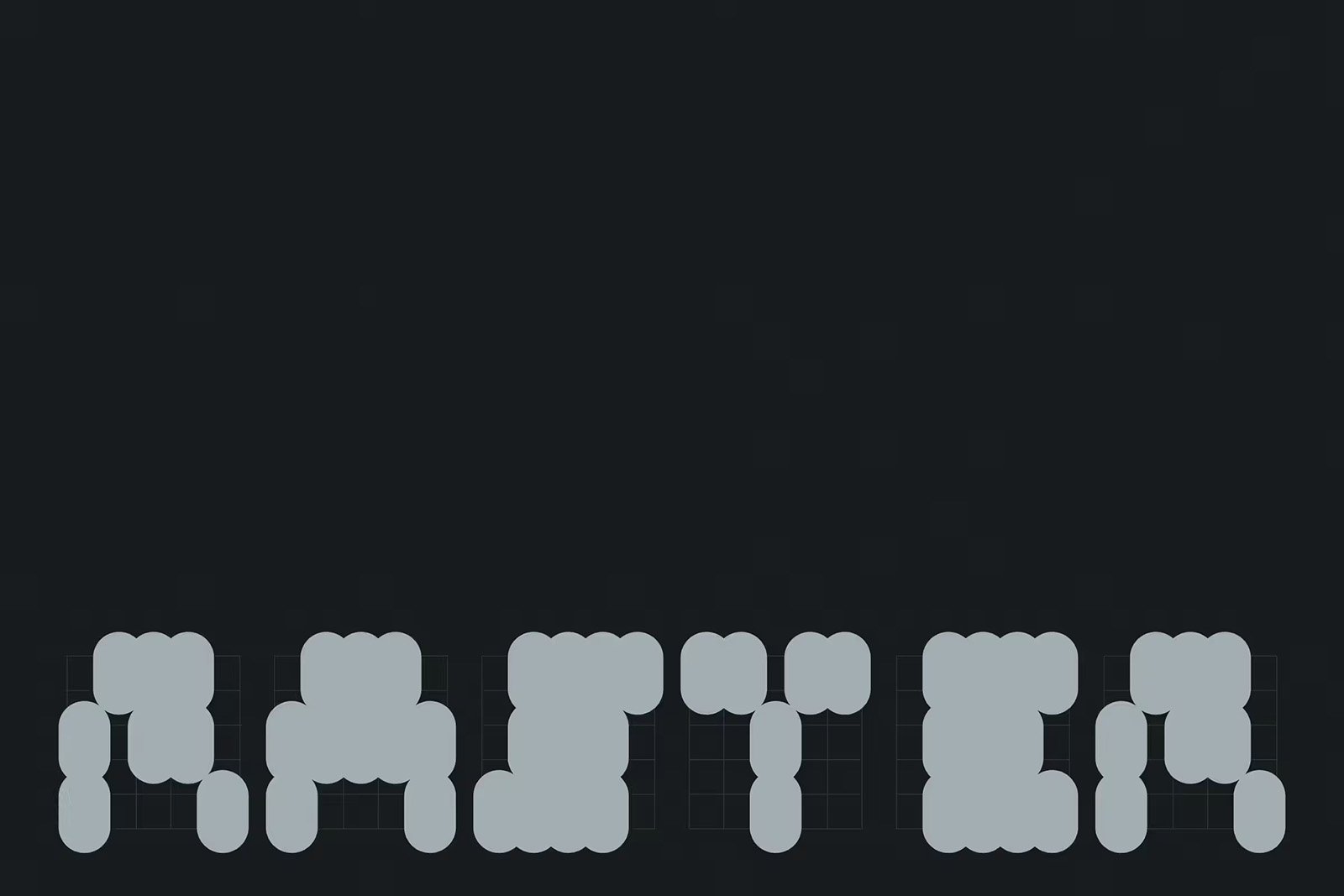
John Provencher, RASTER LOGO #449, 2026. Courtesy of the artist. Private collection of thefunnyguys
PF: I’m not sure collecting itself can ever fully scale. Technology can make access, information and transactions infinitely more efficient. But collecting is still about relationships: with an artist, with an artwork, with other collectors, and with a particular moment in your own life. Maybe the infrastructure needs to scale without losing that.
tfg: I agree. And that’s also why I’m optimistic about art more broadly. With AI changing knowledge work so quickly, it’s difficult to know what many jobs will look like in the future.
What I find hard to imagine is a world in which art disappears, because art is ultimately about human relationships. If automation means we eventually spend less of our lives doing purely productive work, perhaps there is actually more room for art.
I think more people will find meaning in culture, and the digital and global nature of this medium gives it the possibility of reaching many more of them. How long that takes, I don’t know. But I’m going to try to stick around for it.
thefunnyguys is co-founder and CEO of Le Random and Raster.
Pauline Foessel is a curator and entrepreneur based in Dubai, and the Founder & CEO of 100 collectors, the global network for digital art collectors. Through curated experiences, exclusive content, and a trusted network, she is shaping a new approach to collecting—bridging the worlds of traditional and digital art. She also serves as Head Curator at Cultural Affairs in Lisbon, where she has helped redefine how urban art is experienced in the city’s public spaces and elevated Lisbon’s standing as a global hub for contemporary urban art. Previously, Pauline founded Artpool, a private social network for professional curators, and held leadership roles including Director of Development at the Hong Kong Contemporary Art Foundation, Studio Director for artist Vhils, Co-Director and Co-Founder of Underdogs Gallery, and Gallery Manager at Magda Danysz Gallery in Shanghai. Across all her projects, she works to connect communities, challenge conventions, and expand how art is shared and valued today.