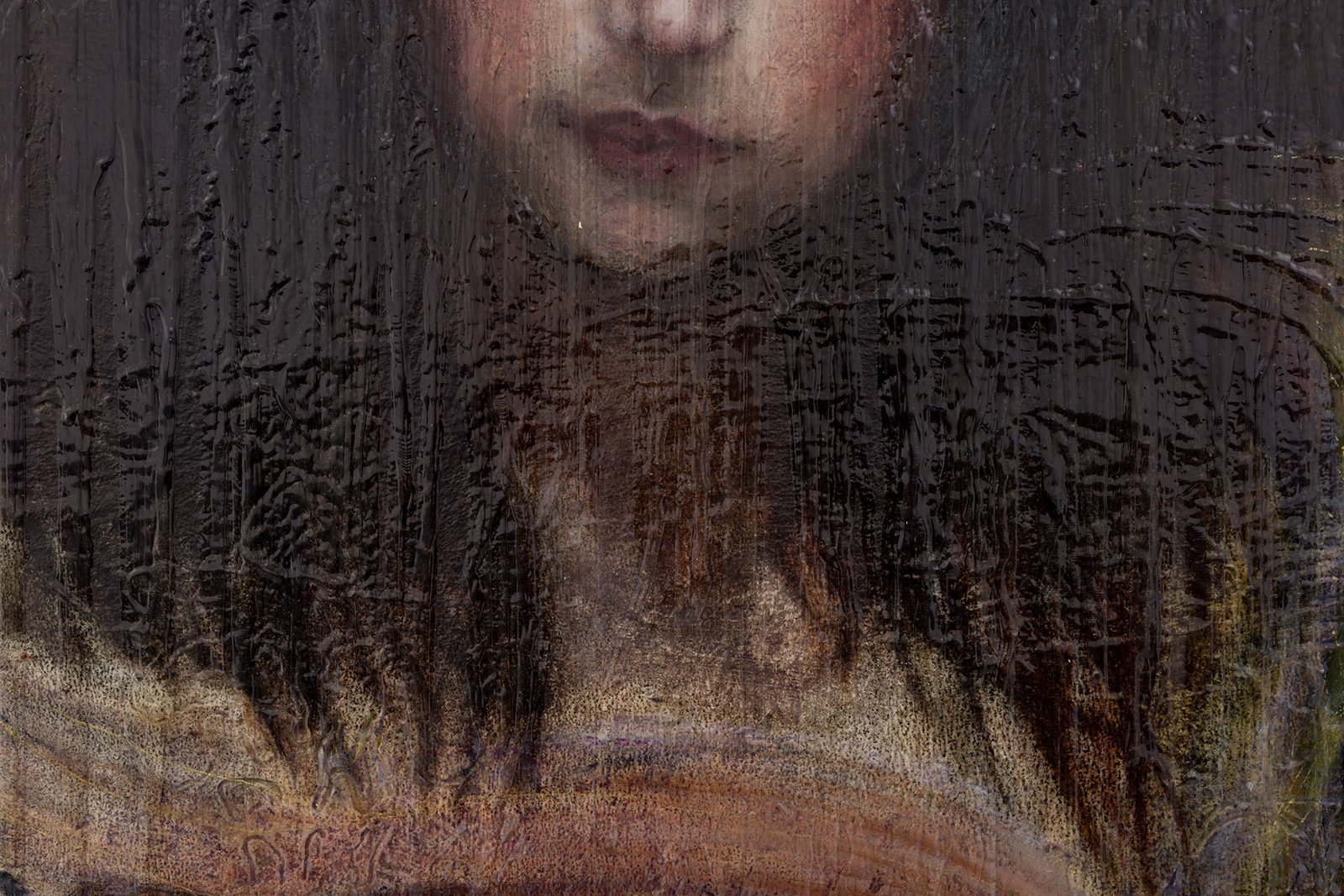
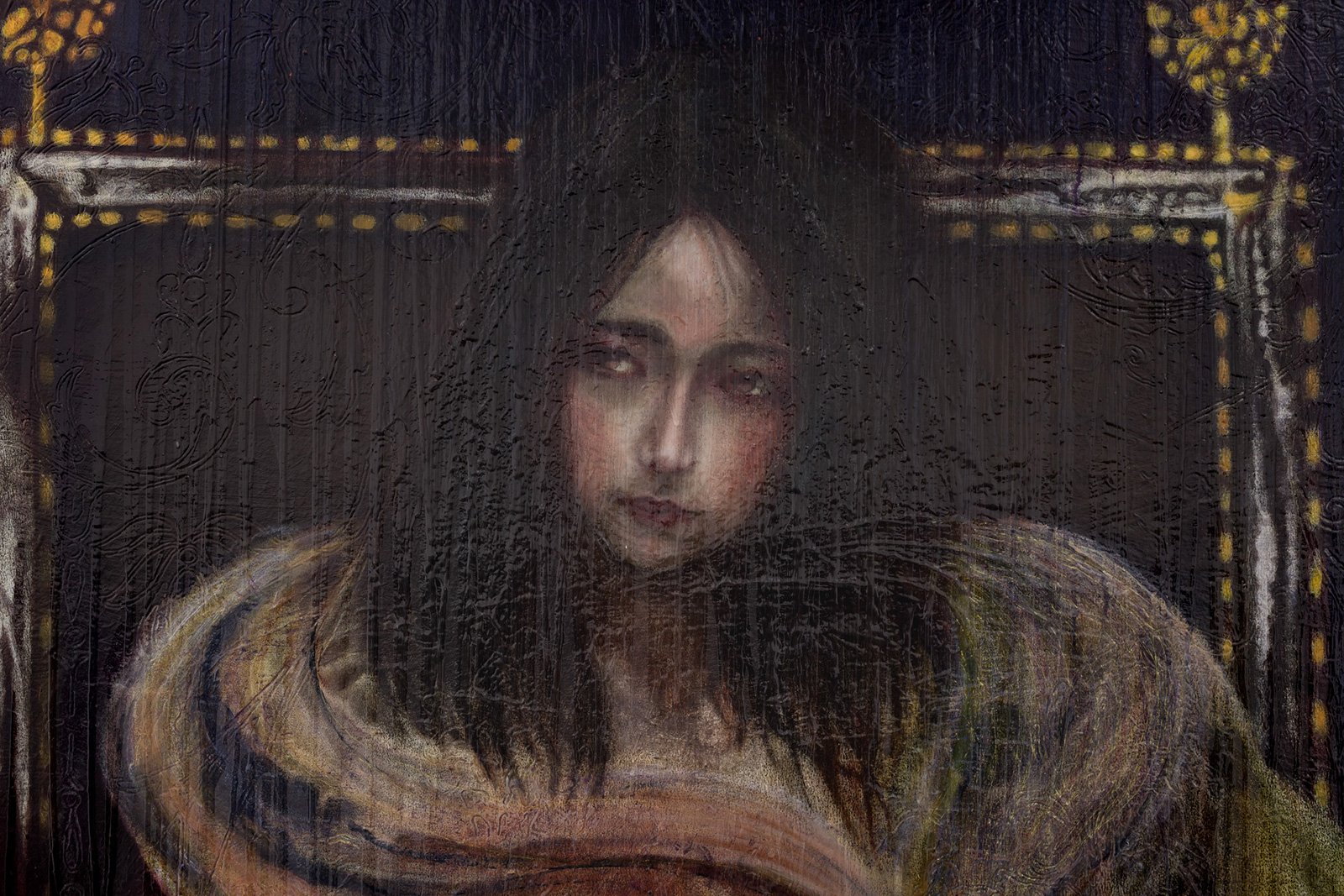
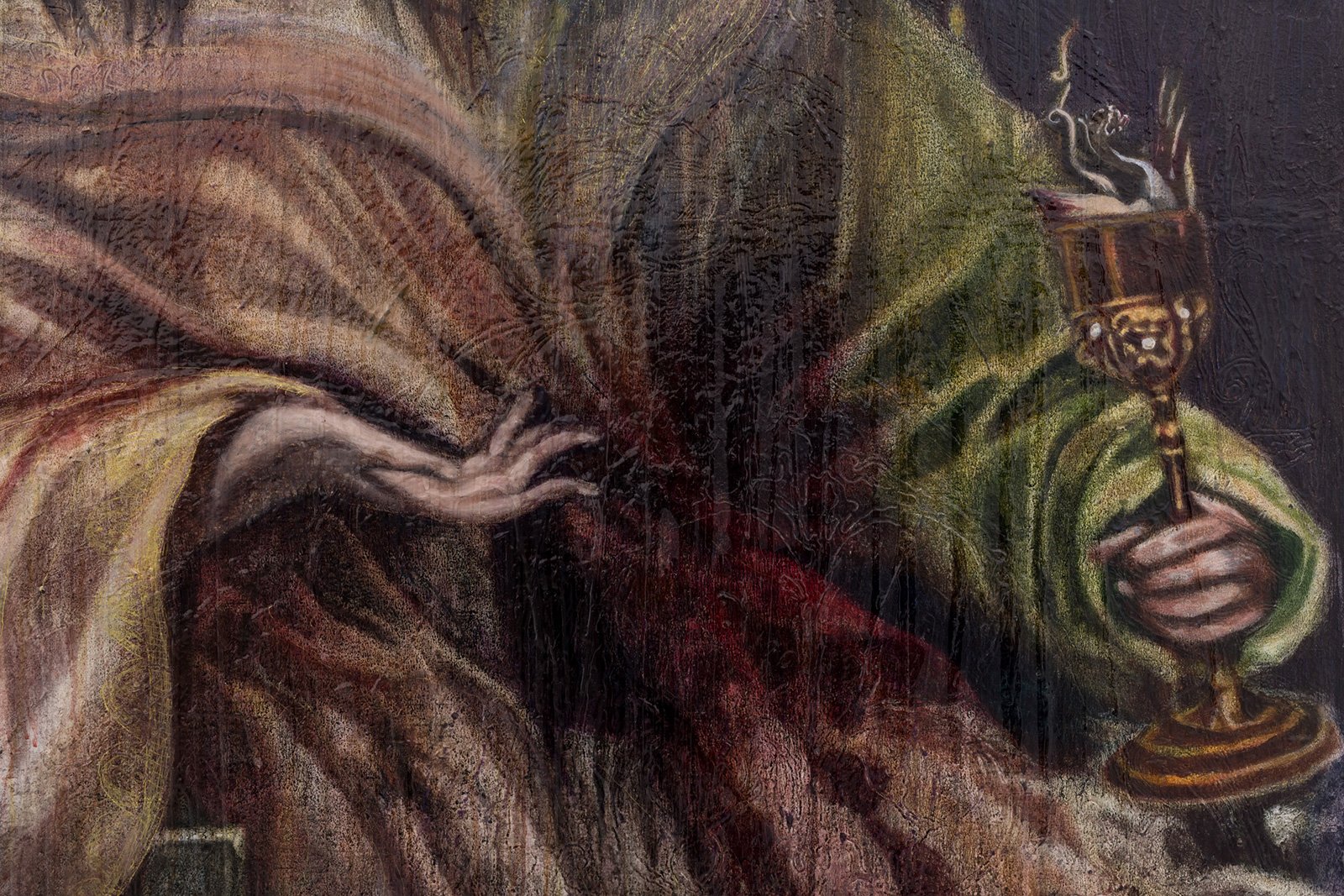
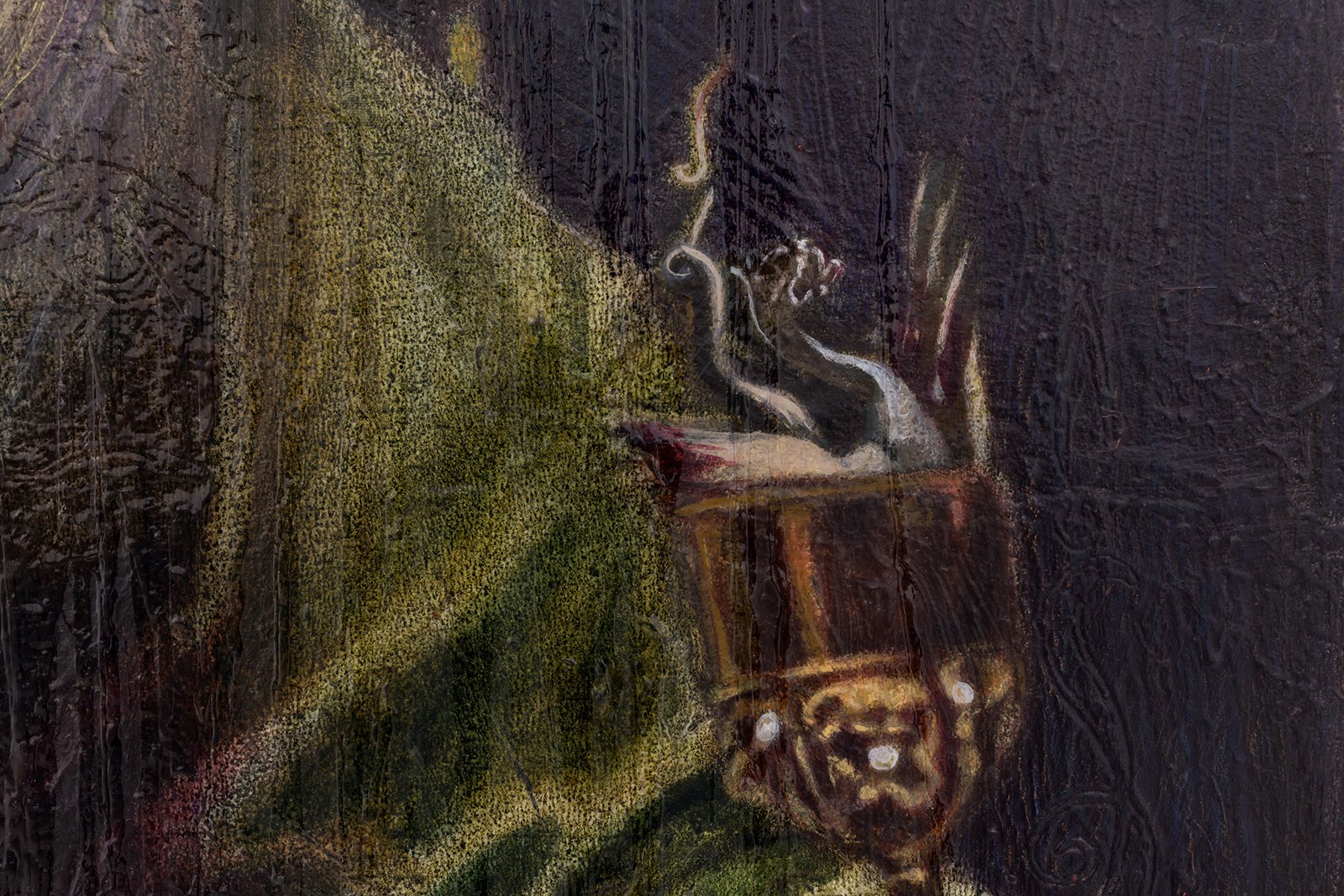
Installation view of Parker Ito, “Happiness is a Butterfly, Full Metal Bunny” at Rose Easton, London, 2026, with work: Full Metal Bunny (detail) (2026). Photography by Jack Elliot Edwards. Courtesy of the artist and Rose Easton, London
There are rare moments in the life of a publication when the observations of a writer and the practice of an artist converge on a shared, but previously unexpressed, viewpoint. The following conversation between Parker Ito and Right Click Save’s Founding Editor, Alex Estorick, contains just such a moment of mutual realization: that painting and other traditional art forms have been rendered in some sense dumb by the digital condition, stripped of their historically privileged status as uniquely human by being placed on the same informational plane as machine-generated content.
Few contemporary artists carry the authority to preside over such historical determinations as Ito, who has spent nearly two decades accumulating identities that most artists would spend a career trying to shed. An outlying figure from the postinternet movement who was, for a time, the lead image on its Wikipedia page, he is also closely associated with the lofty ascent and subsequent market collapse of Zombie Formalism. Most recently, he has found kinship with the “Avant Gay NFT” scene, a loosely organized community centering on the Solana blockchain whose derivative-driven, trait-maxed imagery Ito recognized as a continuation of collage strategies he has been developing since art school.
Rather than disavowing any of these lineages, Ito treats them as inputs into a single recursive system — one that includes an inkjet printer he has broken twice in a week by feeding it textures it was never built to accept.
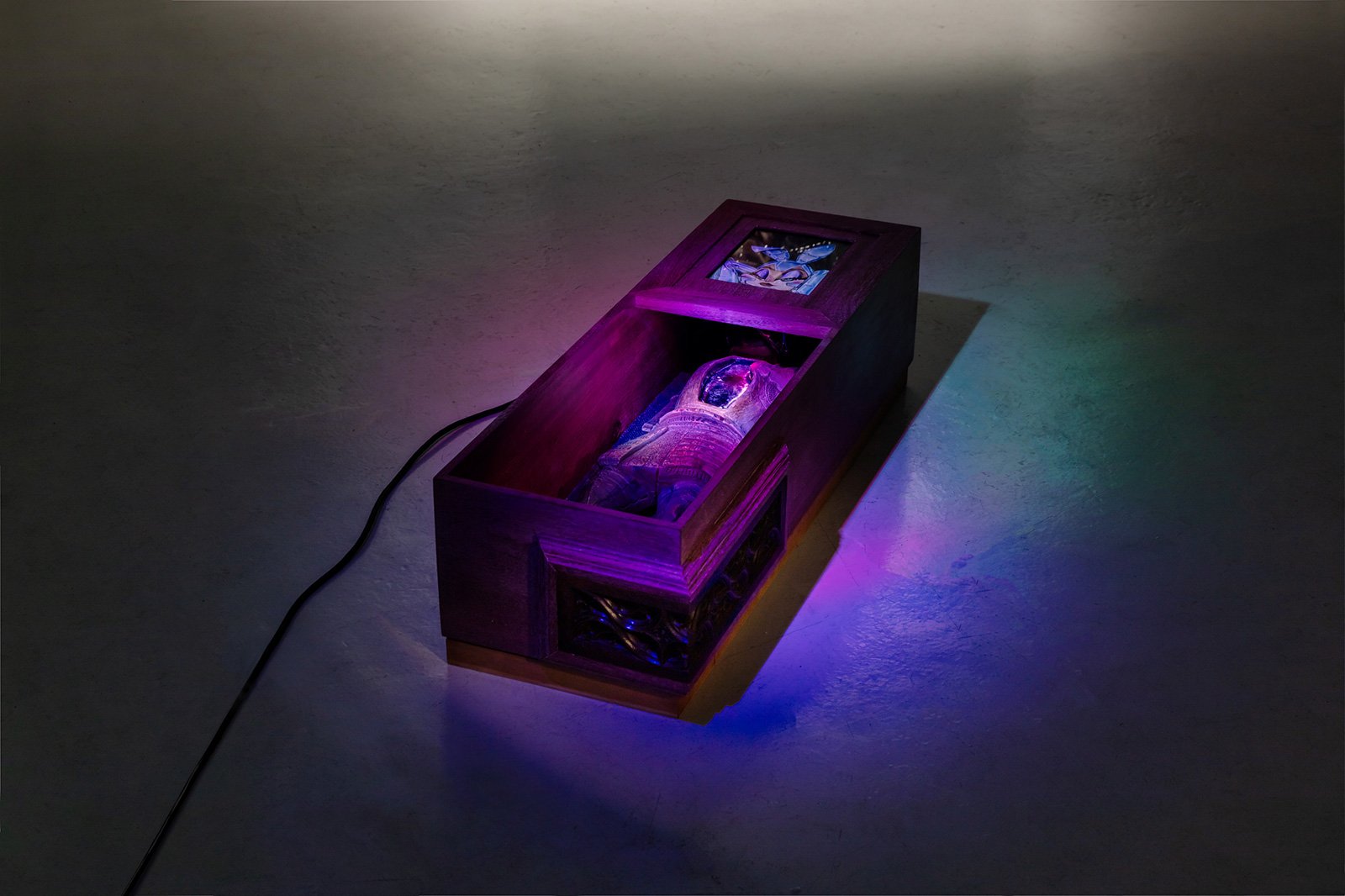
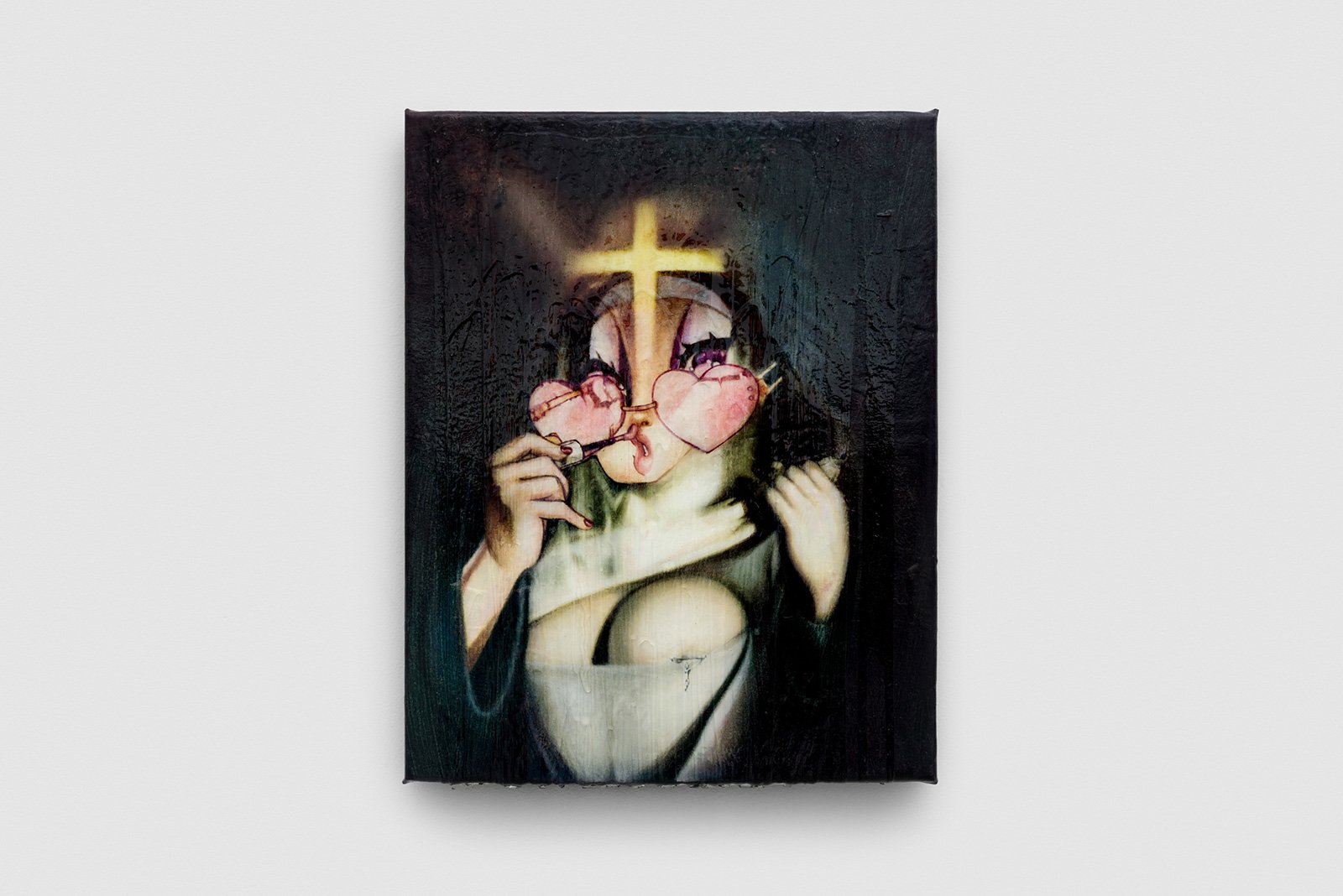
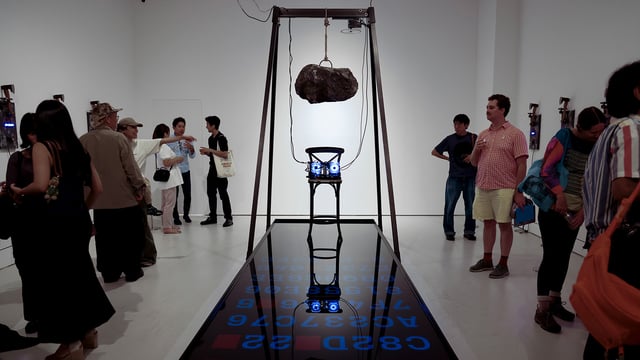
That system is on full display in “Happiness is a Butterfly, Full Metal Bunny”, the artist’s new show at Rose Easton, London, where large-format portrait paintings — developed by printing into unprimed canvas so that the ink stays wet long enough to be painted — sit alongside a carved antique sculpture containing gallium, a metal with a melting point low enough to be held in liquid stasis.
Tracing a lineage from Raphael to Velázquez to Bacon’s screaming popes, Ito’s new works manifest in physical space the digital grandeur of his well-known NFT collections Horses?7 (2026) and Drilady (2025). This expansive reach invites comparison with Marcel Broodthaers, whose wingspan inspired Rosalind Krauss to develop her original theory of the “post-medium condition”.1 That essay began by riffing on the familiar trope: “Dumb like a painter”. Here, for the first time, Ito charts the ascent of Dumb Art.
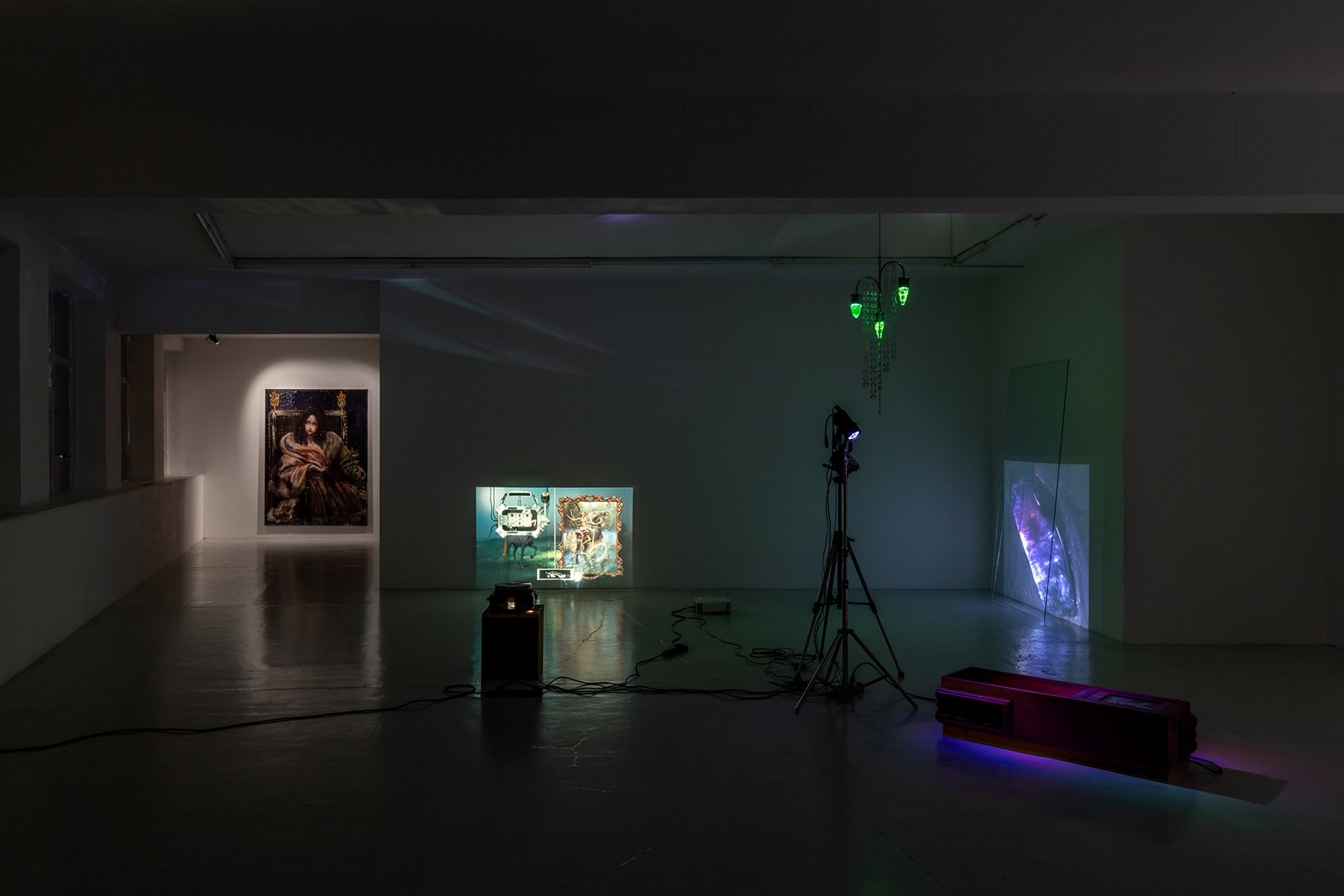
Installation view of Parker Ito, “Happiness is a Butterfly, Full Metal Bunny” at Rose Easton, London, 2026. Photography by Jack Elliot Edwards. Courtesy of the artist and Rose Easton, London
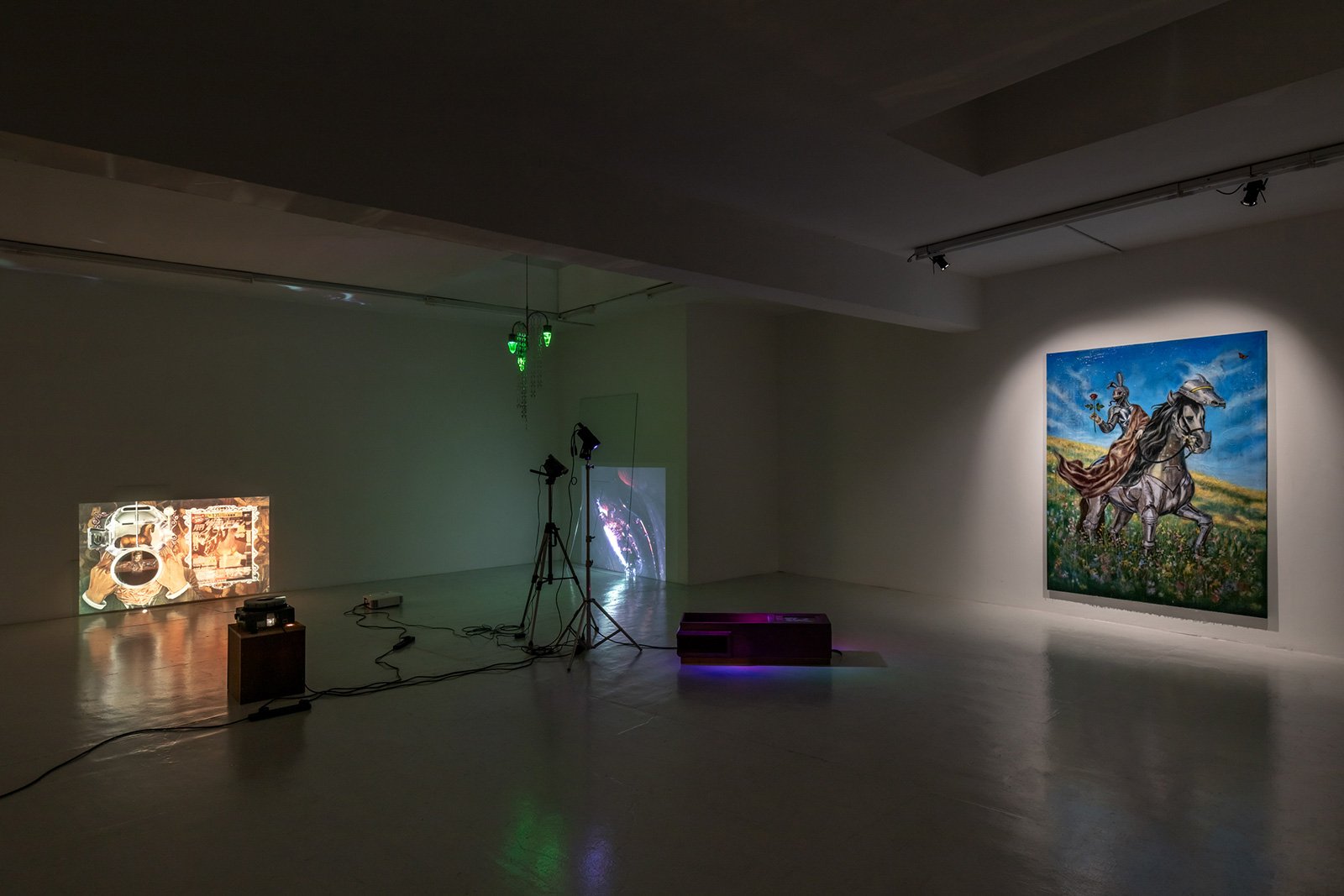
Installation view of Parker Ito, “Happiness is a Butterfly, Full Metal Bunny” at Rose Easton, London, 2026. Photography by Jack Elliot Edwards. Courtesy of the artist and Rose Easton, London
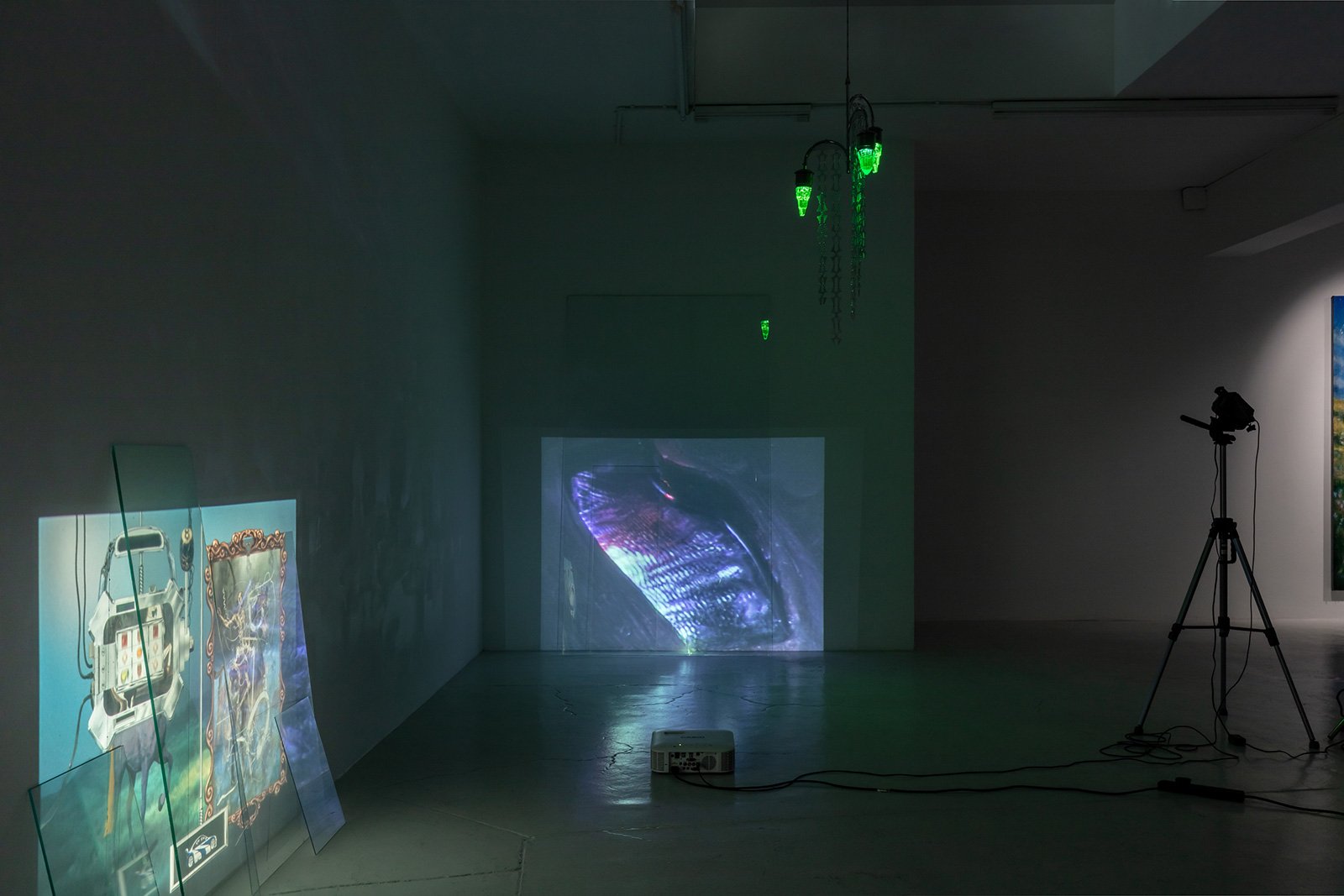
Installation view of Parker Ito, “Happiness is a Butterfly, Full Metal Bunny” at Rose Easton, London, 2026. Photography by Jack Elliot Edwards. Courtesy of the artist and Rose Easton, London
Alex Estorick: I’d love to start, if I may, with your longevity and apparent innate capacity to stay relevant. To my knowledge, no one else is associated with Zombie Formalism, postinternet, and the Avant NFT scene.
Parker Ito: I wasn’t in any of the major curated postinternet shows. But I was the image on the Wikipedia page for a long time, before someone took that down.
The best description I ever heard of the postinternet aesthetic was that it looks like a frozen-yogurt shop — this sort of corporate vernacular that became associated with it. What was meaningful to me about postinternet was much broader: how the internet changed the making, experience, and circulation of art.
It was a group of people that gathered organically around those things. You could encounter someone through an image before you ever met them. My work doesn’t share the classic postinternet aesthetics, and when postinternet got absorbed by the mainstream art world, Zombie Formalism was also happening, and I got lumped a lot more into the latter.
I wasn’t in dialog with other “Zombie Formalists”. It was a market term to group an aesthetic together — very art-world specific. Honestly, a lot of that art doesn’t do much for me. It feels like familiar moves from modernist abstraction being repeated. There was never really any critical engagement with it; a couple of things written ten years later looking back, but most of the coverage was about how much things cost and then didn’t cost.
Installation view of Parker Ito, “Happiness is a Butterfly, Full Metal Bunny” at Rose Easton, London, 2026. Photography by Jack Elliot Edwards. Courtesy of the artist and Rose Easton, London
Installation view of Parker Ito, “Happiness is a Butterfly, Full Metal Bunny” at Rose Easton, London, 2026. Photography by Jack Elliot Edwards. Courtesy of the artist and Rose Easton, London
Installation view of Parker Ito, “Happiness is a Butterfly, Full Metal Bunny” at Rose Easton, London, 2026. Photography by Jack Elliot Edwards. Courtesy of the artist and Rose Easton, London
With my work, you could pull out a painting and put it in that category, but you’d be leaving out all the things the painting was connected to: photographs, websites, other objects, and images of those objects. Those connections weren’t necessarily visible in an auction image. So the part of the work that was easiest to sell also became the part that stood in for everything else.
There had been speculative waves in art before, but this felt different because all of a sudden artists in their twenties were making a lot of money, which wasn’t common at the time. All of the auction shit was crazy. Coming into the art world, I was pretty naive; I thought, “Oh, this is typical”. Now I look back and it was really fucking crazy.
I didn’t feel like I was in control at the time. Some group of people decided they were going to pump and dump this shit. When you’re hot, everyone’s asking you for things, and then the auction prices start to fall and you’re humiliated.
The market gives you this very simple story about yourself, and then when that story falls apart it’s supposed to mean something about the work. But I was still working through things that hadn’t really been addressed in the first place.
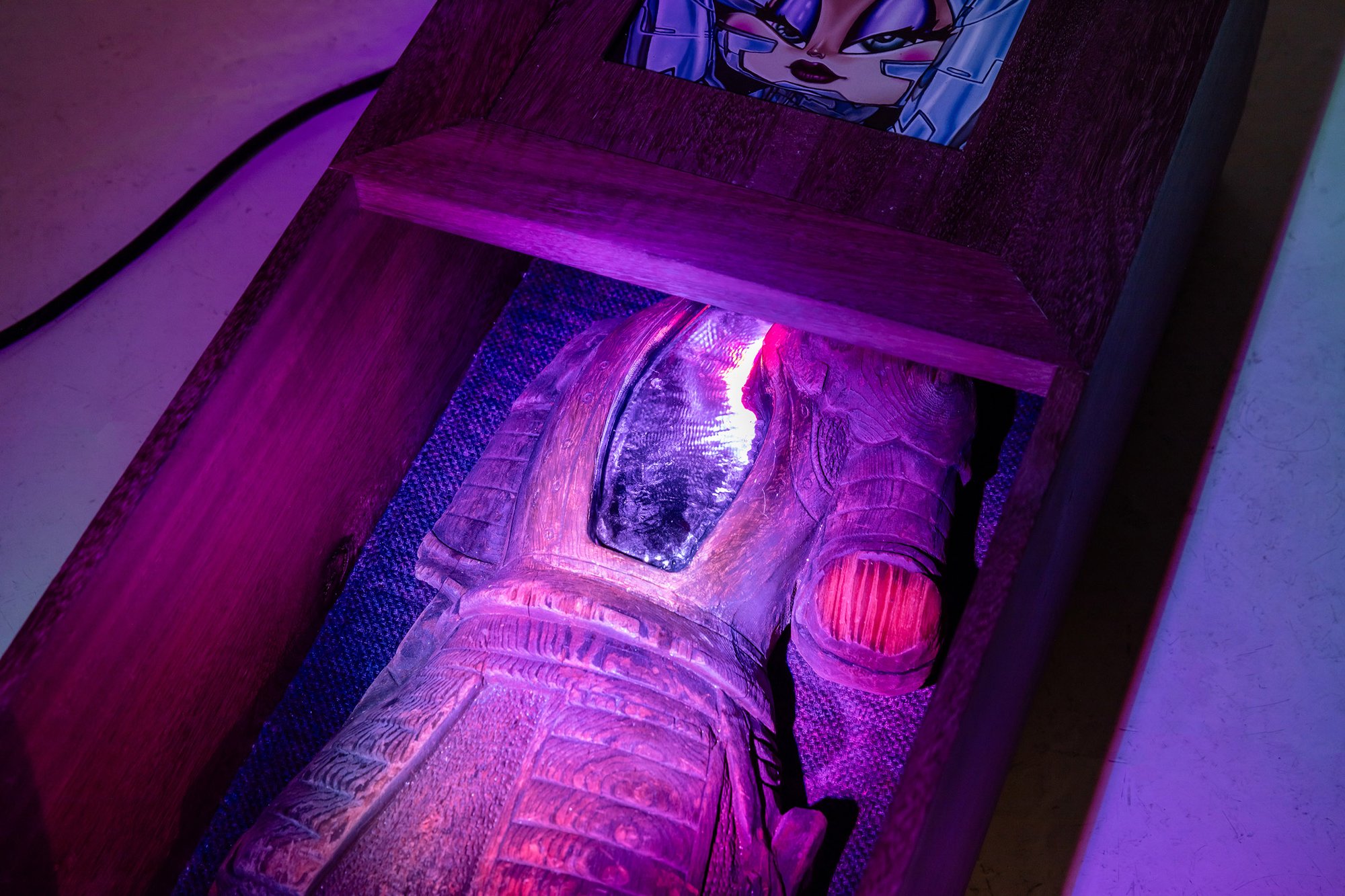
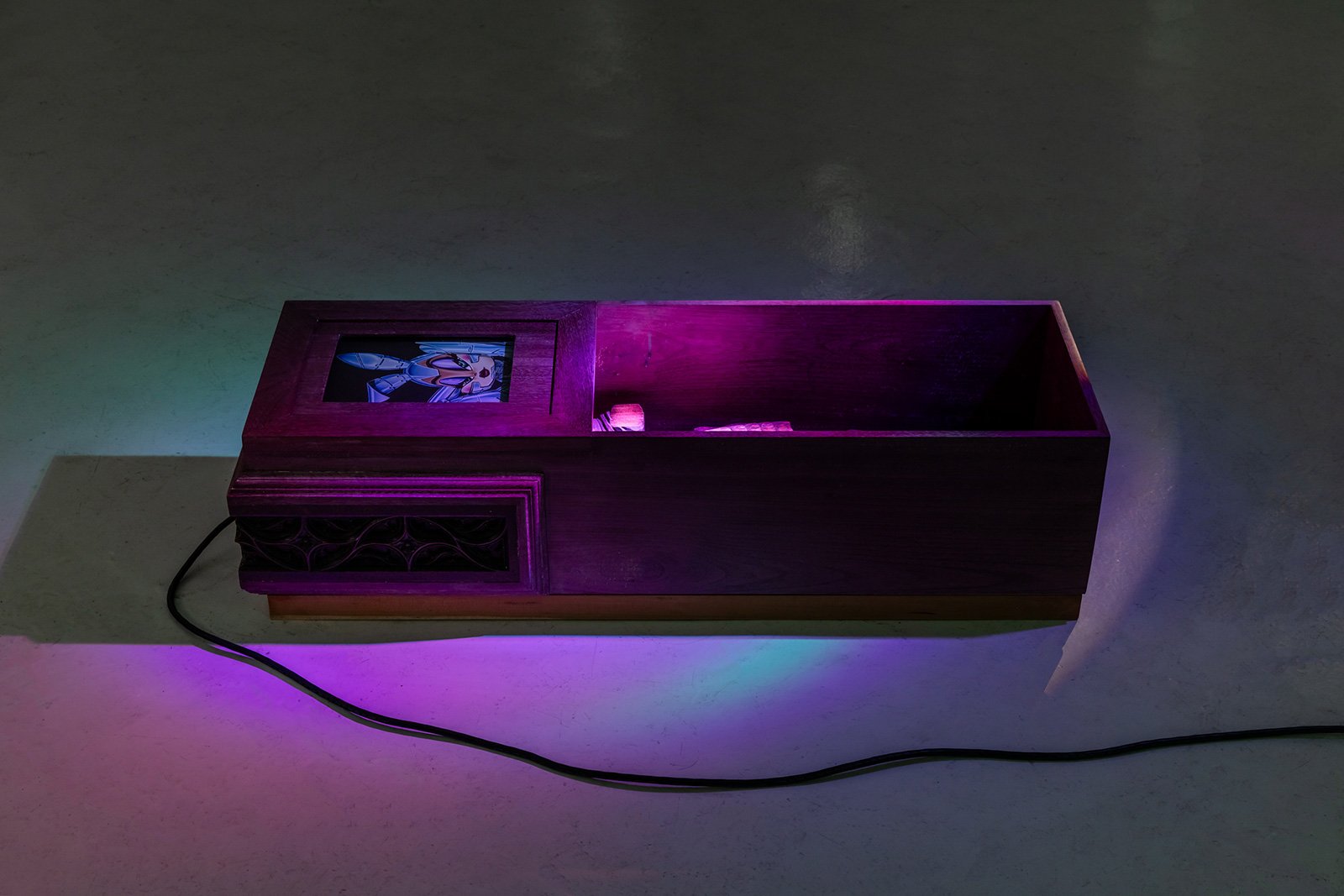
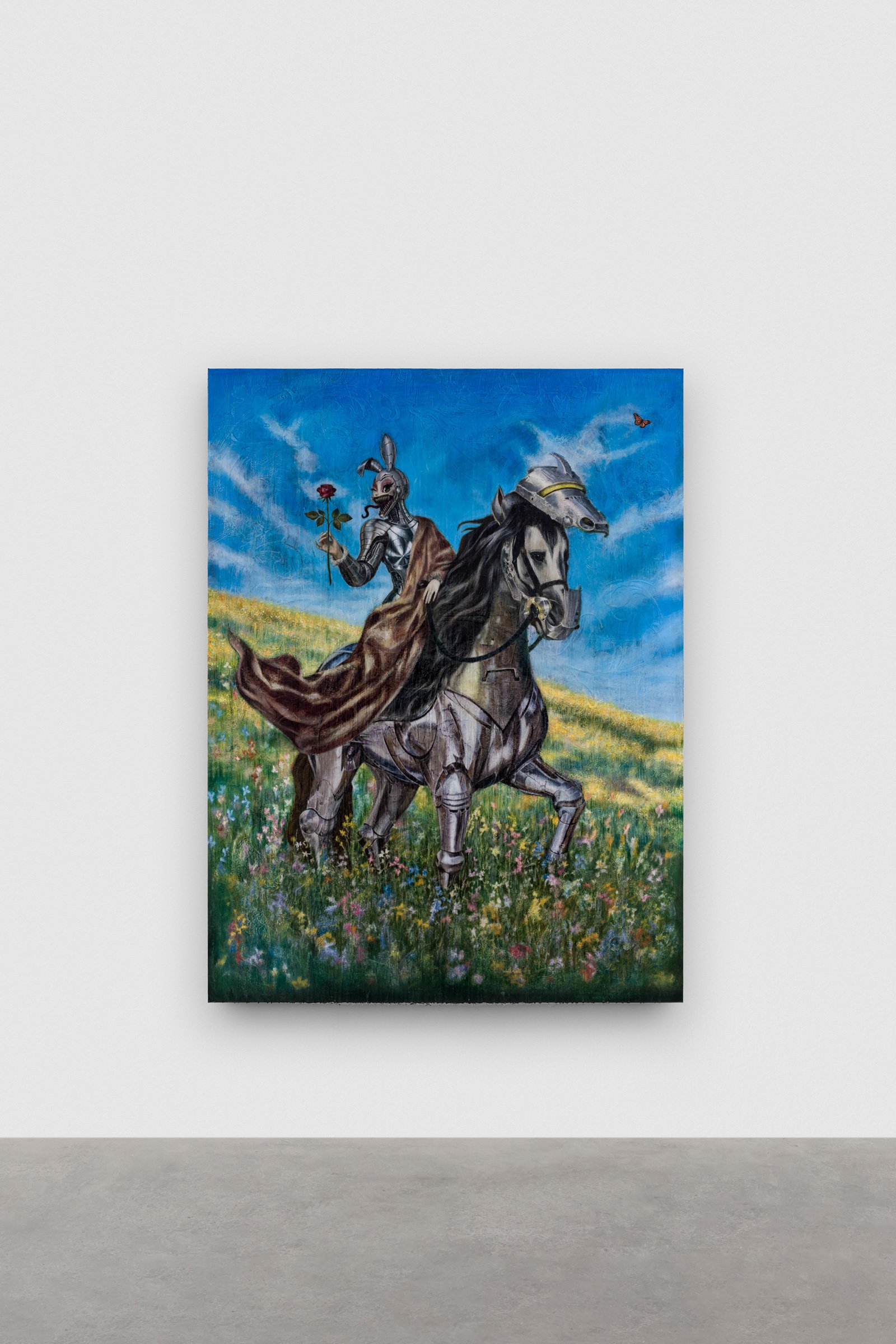
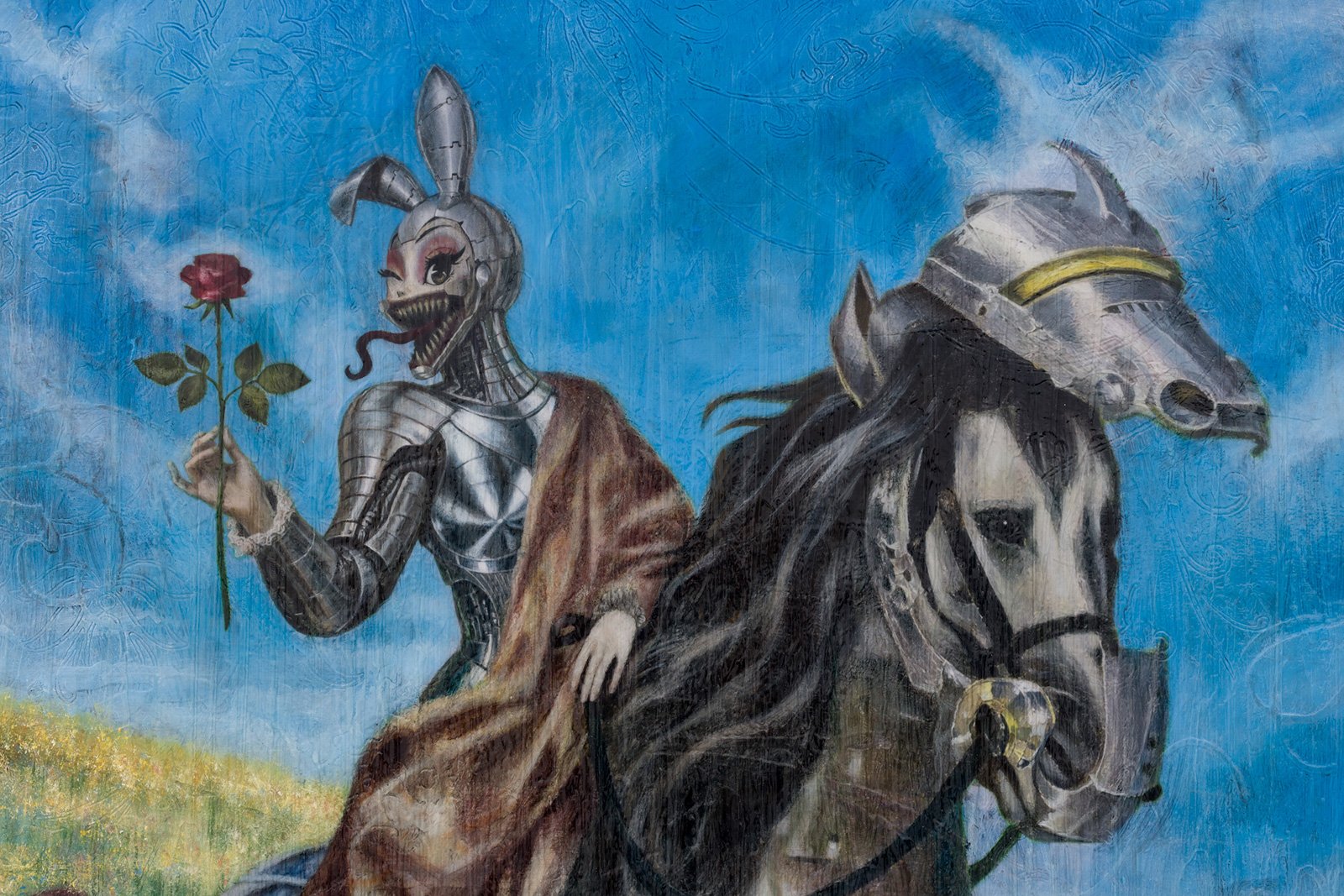
Parker Ito, Full Metal Bunny (detail), 2026. Photography by Jack Elliot Edwards. Courtesy of the artist and Rose Easton, London
Parker Ito, Full Metal Bunny, 2026. Photography by Jack Elliot Edwards. Courtesy of the artist and Rose Easton, London
Parker Ito, Full Metal Bunny, 2026. Photography by Jack Elliot Edwards. Courtesy of the artist and Rose Easton, London
AE: I often find that successful artist brands have an identifiable look, but with you the coherence seems to derive from your interest in the instability of media: JPEGs, PNGs, paintings, sculptures, and the interflow between them.
PI: I think of what I do as kind of a Rube Goldberg machine. If you follow it from start to finish, you can understand how you got from point A to B to C to D, and you can make the connection between A and F. But if you’re just looking at individual sections without the context of the whole project, it becomes less legible.
AE: You make it sound like a neural network.
PI: There’s the hardware and the software.
The physical and the digital are inseparable for me. I don’t even like the term digital art. The word digital means nothing to me because that’s our whole reality, and the binary between digital and analog also means nothing because those are just different forms of data flowing in and out of each other.
I’ve always tried to have fluency in both — making compelling objects as well as these super complex NFT collections that are another kind of experience of a thing.
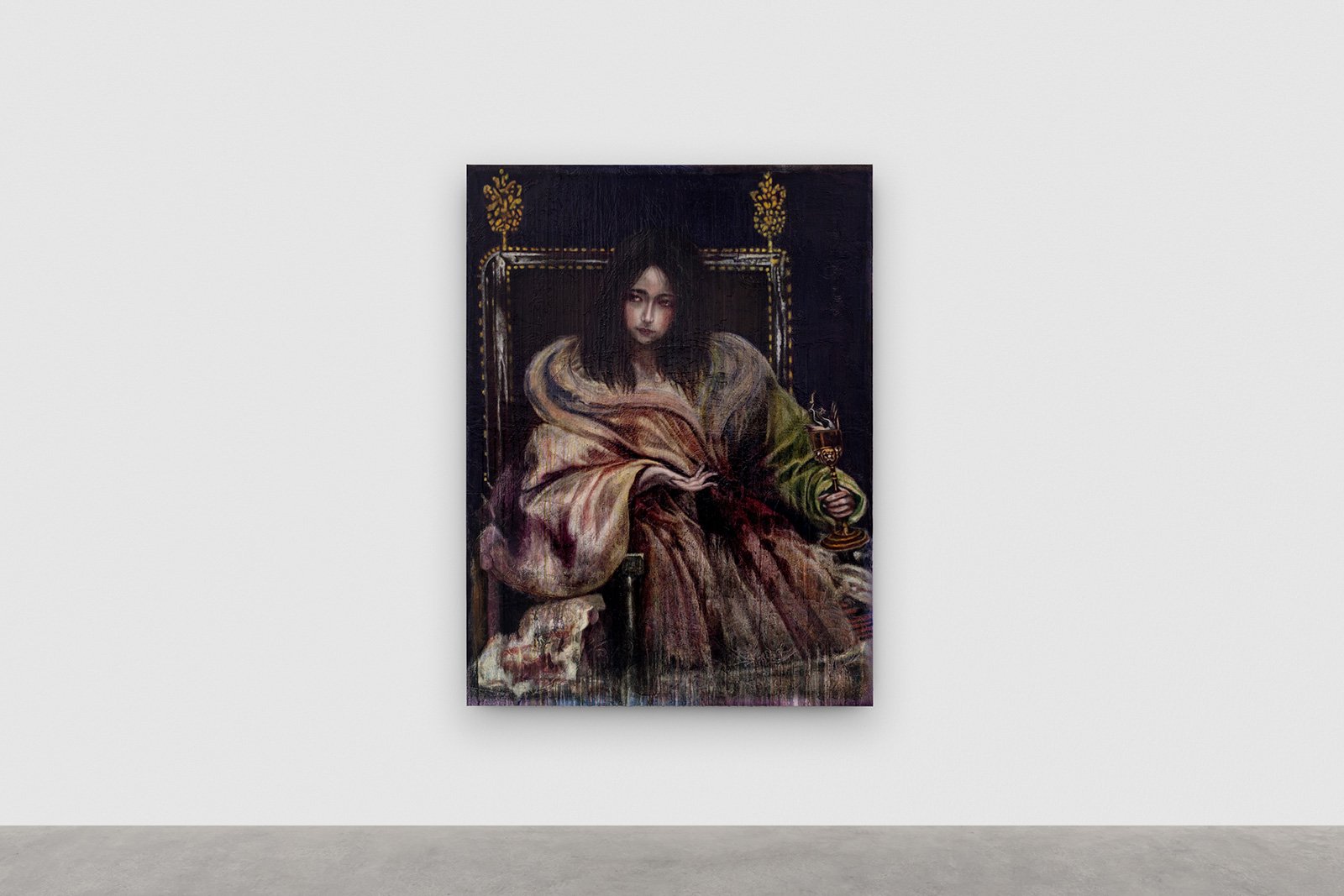
Parker Ito, The Ecstasy of Saint Drilady, 2026. Photography by Jack Elliot Edwards. Courtesy of the artist and Rose Easton, London
AE: As someone who has written a fair bit about crypto art, I regard the Avant NFT scene as an iteration of that movement that innovated aesthetically in a way the original didn’t. Artists such as yourself as well as Evil Biscuit and Mifella have used “trait maxing” to layer up digital objects to the point of saturation. To me, your project Drilady makes clear the difference between Avant NFTs and the early crypto art of Rare Pepe Wallet.
PI:Drilady is probably my favorite NFT collection that I’ve made, Although I regard Horses?7 as my most important artwork. Drilady was made with [the open-source tool] Hashlips, which was designed for PFP [profile picture] collections, and riffed on Drifella by Evil Biscuit; it’s derivatives of derivatives of derivatives. A lot of the Solana people started doing crazy shit with Hashlips, pushing it into this kind of Dadaesque territory, which is called “trait maxing”.
I have basically no knowledge of NFTs outside of the Avant Gay scene. I always thought the premise of NFTs was interesting, but there wasn’t a lot of art I related to that I saw myself in. Avant Gay was the first art that was NFT where I was like, “Holy shit, I really fuck with this”.
It also had a lot of formal ties to stuff I was making in 2014 and 2015 — I’d always worked in Photoshop, and a lot of the paintings I was making then were these super layered, collaged images with a big team of assistants, trying to make things that felt like a bunch of different things at once — without a singular point where it settled. Then I saw Avant Gay and felt it had a lot of ties to the work I had been making.
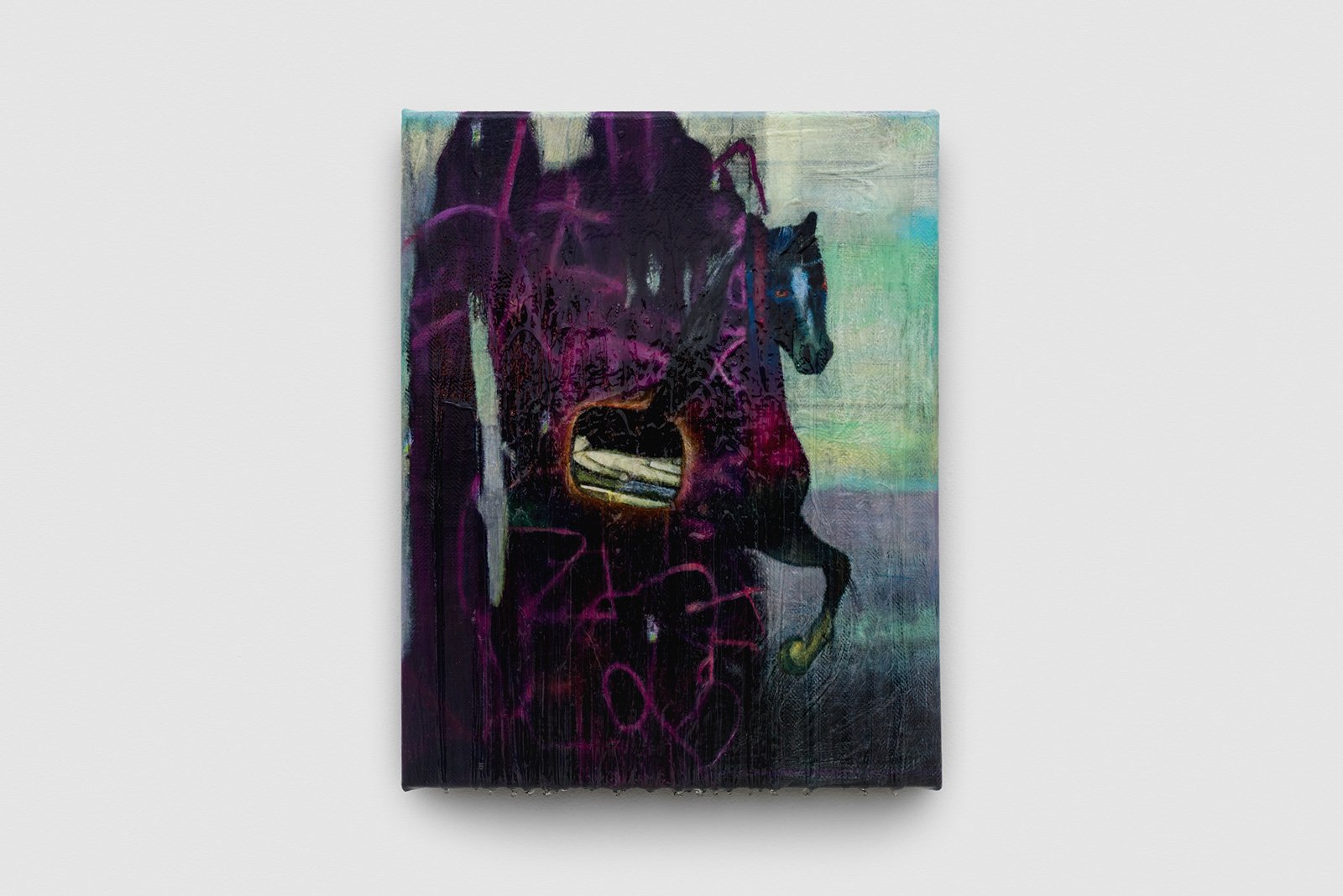
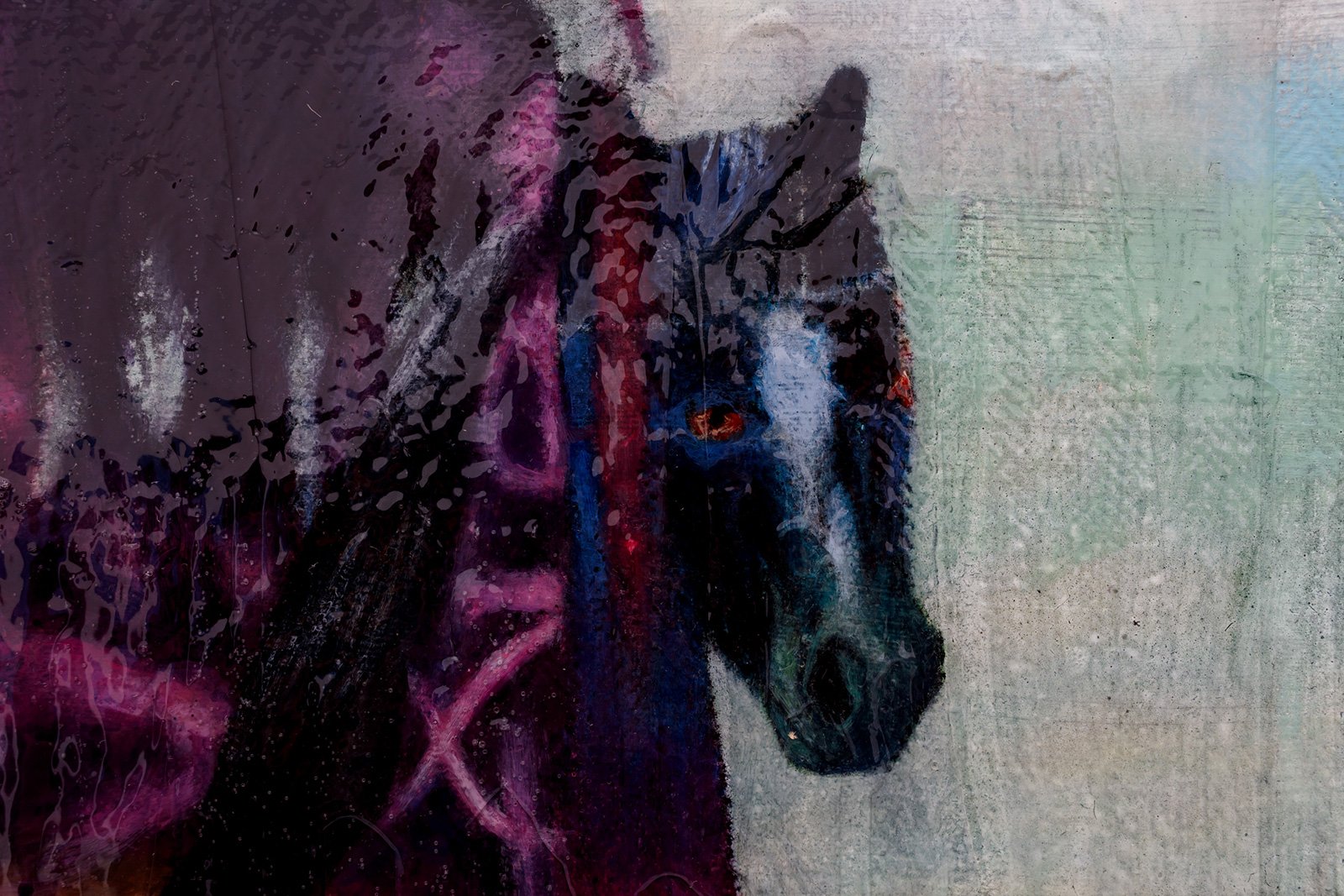
Parker Ito, Horses?7, 2026. Photography by Jack Elliot Edwards. Courtesy of the artist and Rose Easton, London
AE: Tell me about Horses?7.
PI: It’s even hard to talk about — I don’t know how to explain it. The way it’s programmed into Hashlips is pretty insane.
I’d always used Hashlips for basically every NFT project, but you have to program it, and I don’t know how to program; there were a lot of barriers. Then AI coding tools meant none of that mattered anymore, and I could program it to do crazy shit.
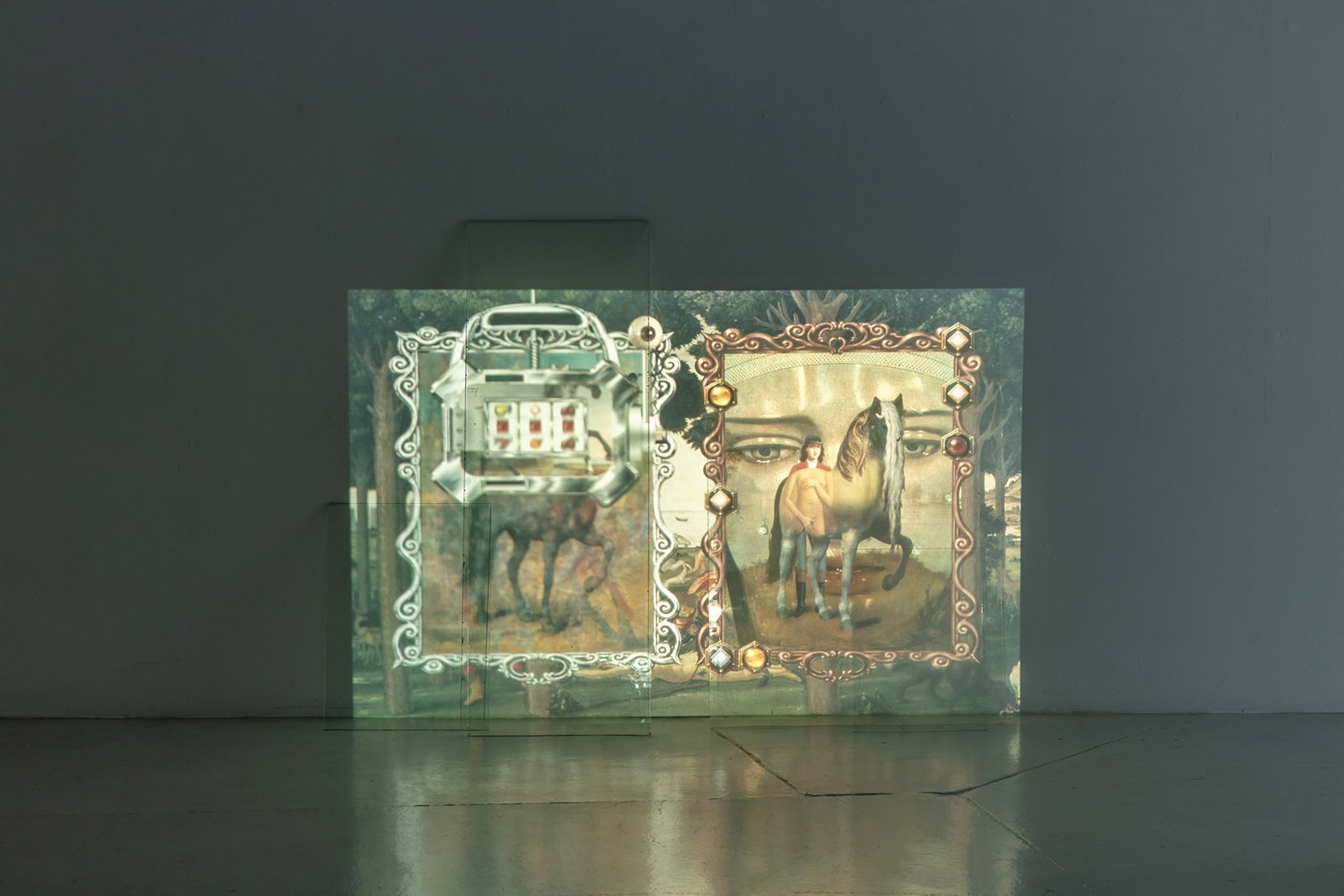
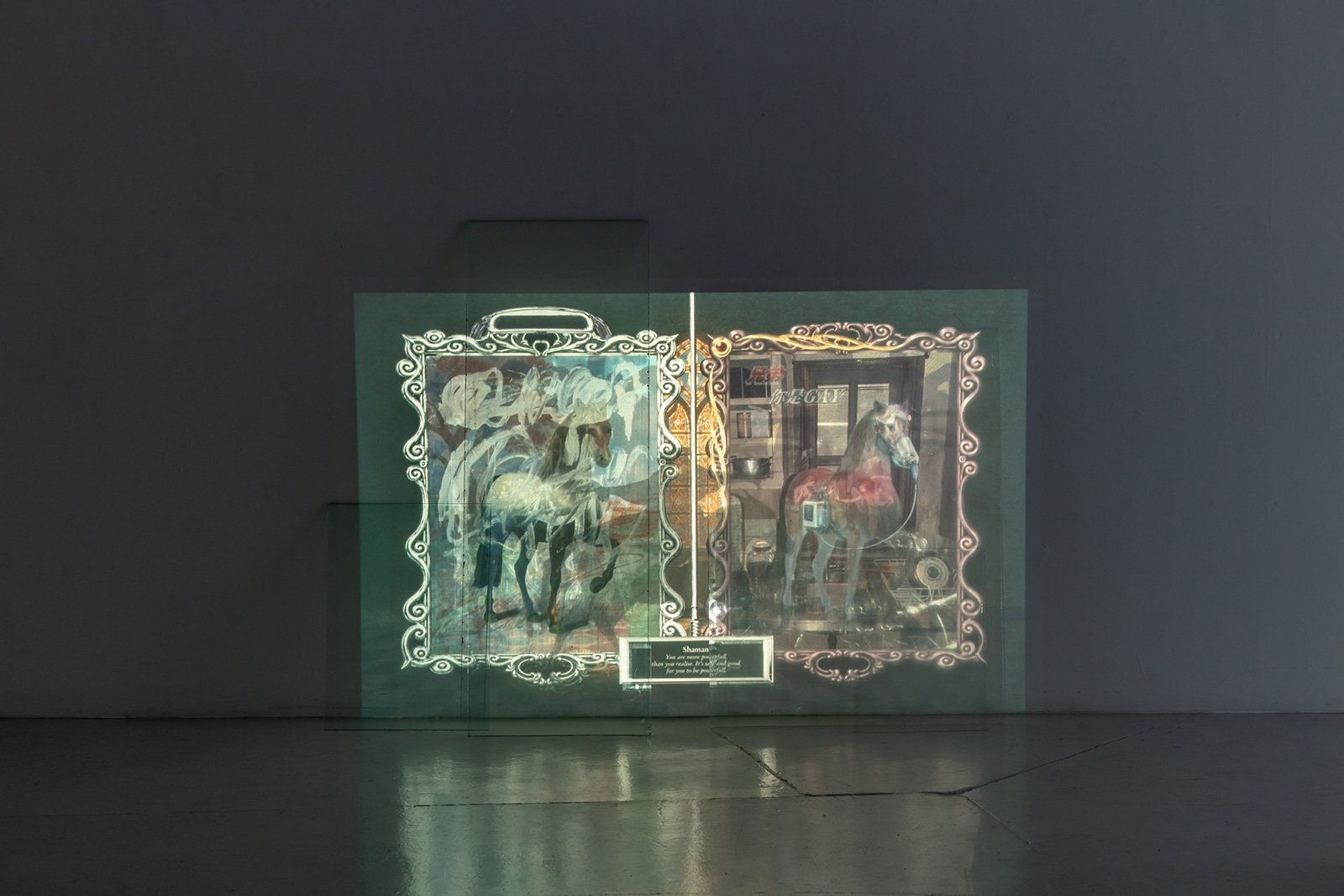
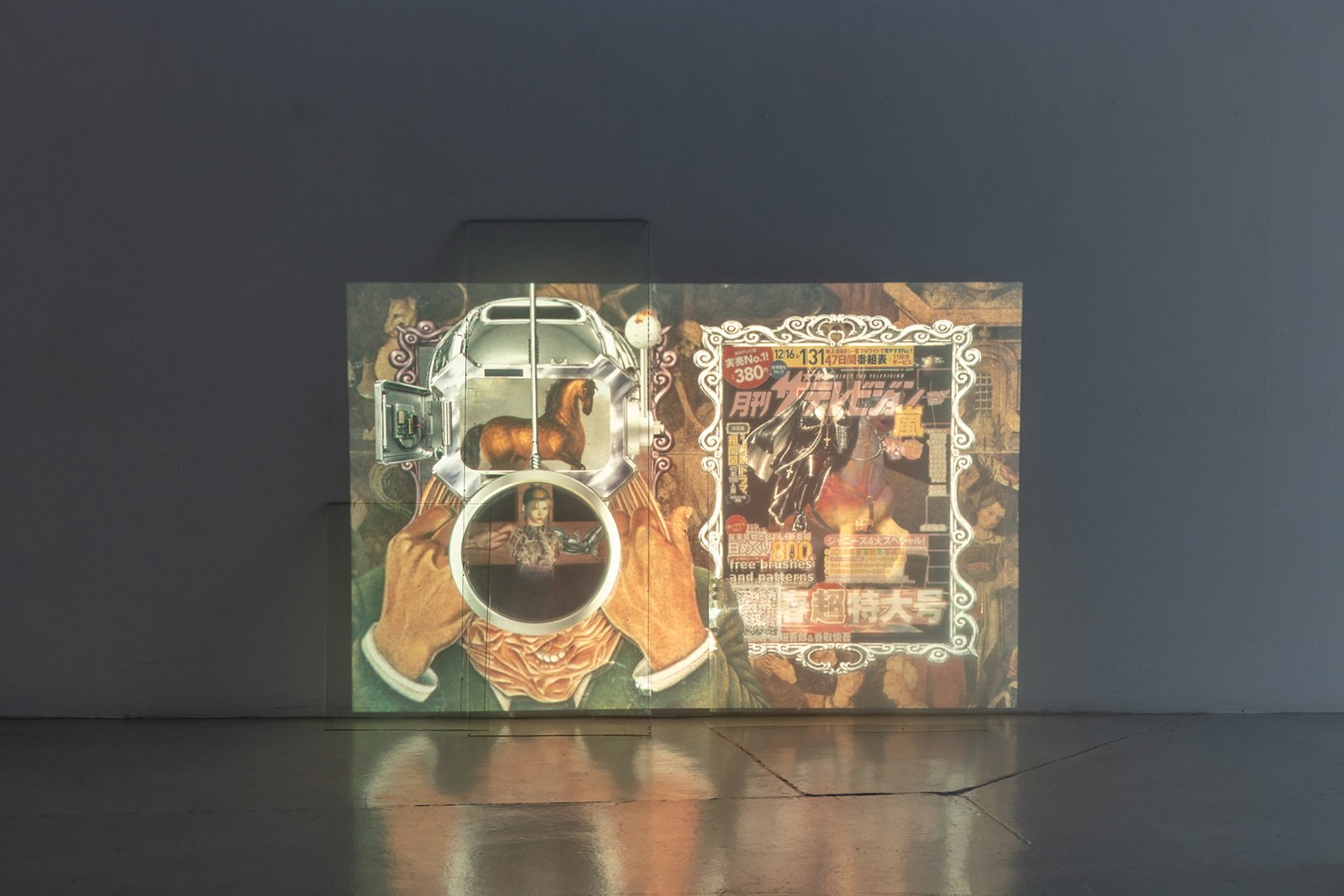
It’s a follow-up to a collection called Horses?2 (2025), which is derivative of a collection called Horses? (2023) by Tojiba Brand Manager. Horses?2 is pretty straightforward in terms of programming and assets. In Horses?7 I started with the horse and then expanded beyond the frame of the horse to create an infinitely complex system. There’s a fully functioning slot machine that triggers different assets, winners and losers, and ejects blood or coins out of the slot machine when you hit a win — those are the rare NFTs.
The premise of Horses?2 was: can a horse be an abstract painting? With Horses?7 it is: can a horse be a slot machine? At times, one of the horses just becomes an abstract painting with painted overlays that move around with different transparencies and blend modes. It’s a really complex image-generating system that, at a certain point, is basically one NFT collection nested inside another, nested inside another. I’m going to be making a Horses?7-themed painting for Art Basel Miami Beach, which is going to be hard because it’s so complicated.
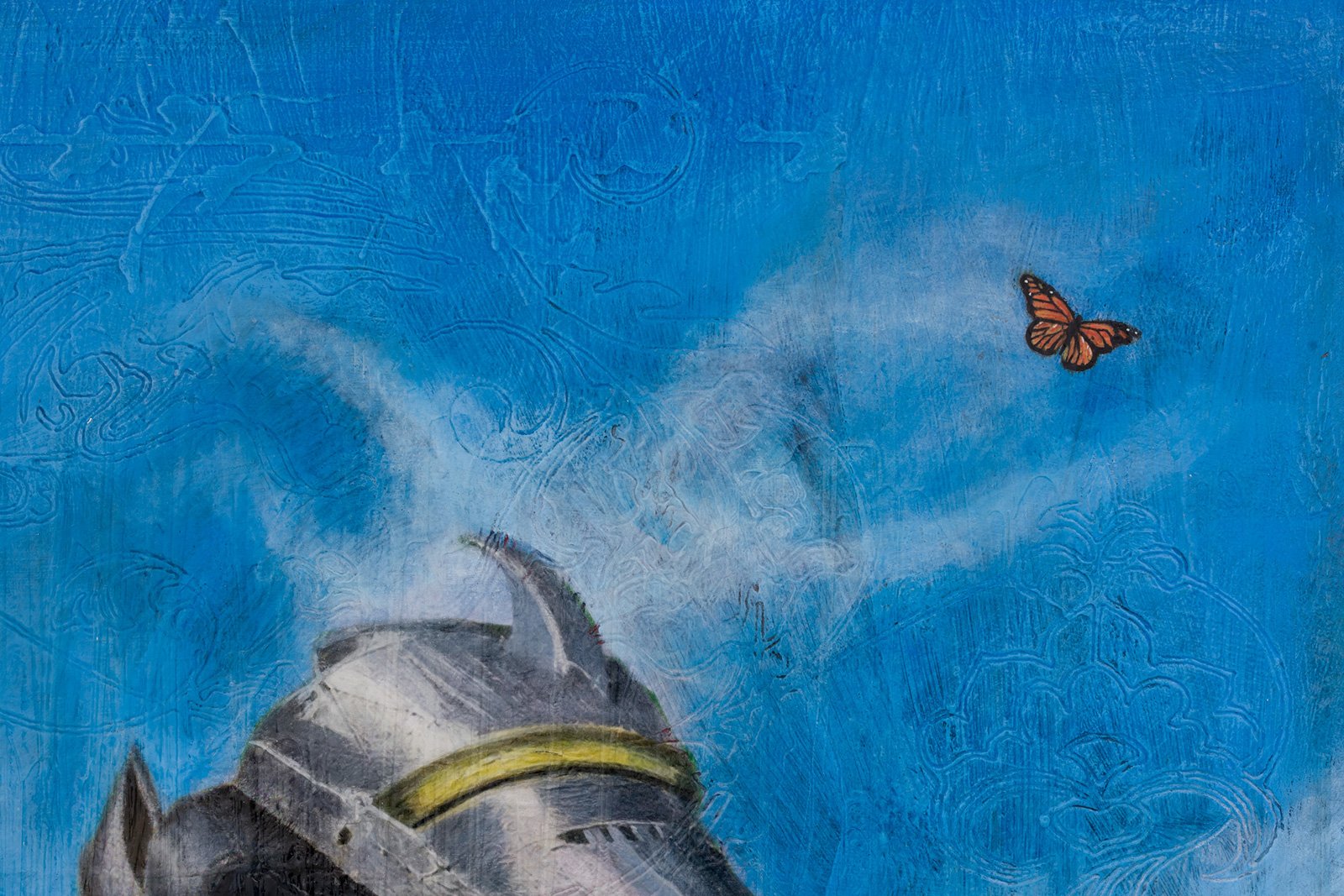
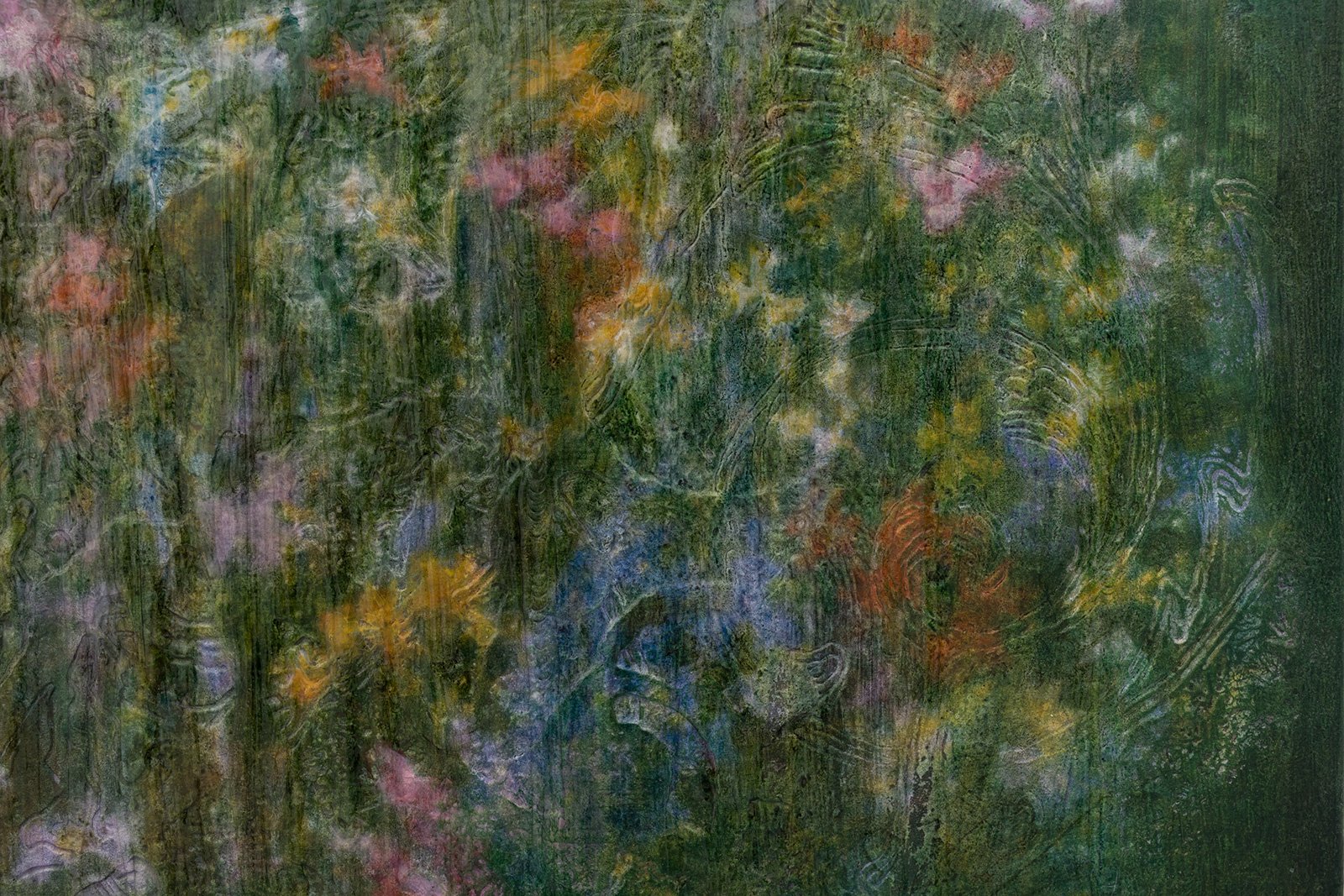
Parker Ito, Happiness is a Butterfly, 2026. Photography by Jack Elliot Edwards. Courtesy of the artist and Rose Easton, London
AE: All the large-scale canvases that you’re showing at Rose Easton in London seem equally layered up. Can you talk about the process of making these?
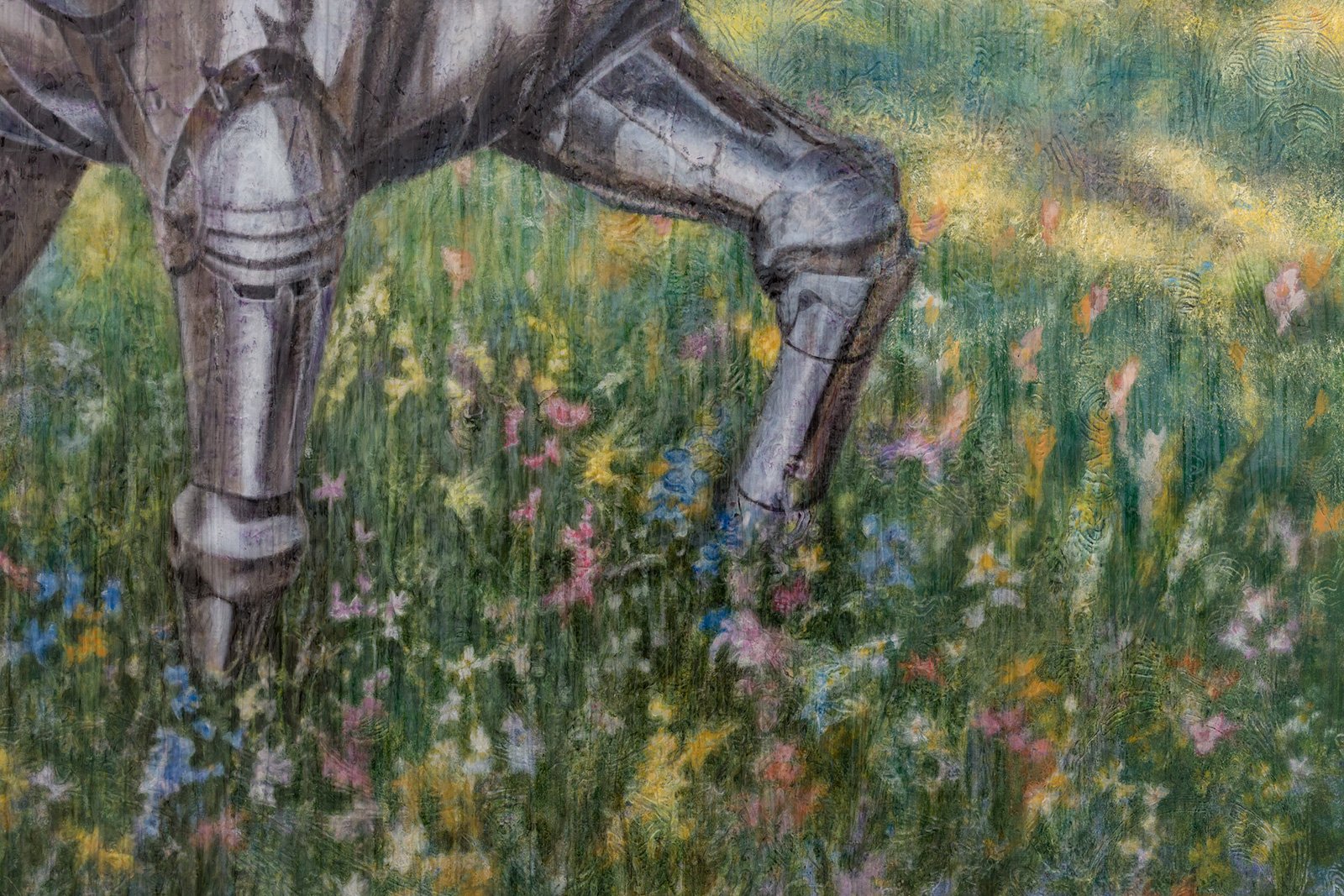
PI: This is a dumb process that I’ve been refining. The basic premise is that substrates put through inkjet printers are coated with an inkjet-absorbent surface. I realized that if I got rid of that coating, I could run things through and they’d come out wet, so I could manipulate the inks after printing. I’ve broken several large-format inkjet printers misusing them like this.
Then I realized I could add textures to the canvases, usually two layers: an intaglio layer put on with modeling paste that I inscribe with a large-format plotter; and a relief layer done with vinyl stencils. Then I run the thing through the printer.
My printer-repair guy told me he wasn’t going to find the parts for my Epson 11880 anymore, so I had to move to a newer printer; now I’m trying to figure out how to hack that printer. A lot of the work is about outsmarting the printer because these printers are so smart that they’re actually dumb. There’s something called the “platen gap” — the maximum space between the print head and the base of the printer — and if you send anything through that is thicker than that, it jams.
There are also dispersion settings that dictate how much ink the printer spurts, so I can turn that way up and get it dripping everywhere. It also depends on how the surface is prepared — how toothy the gesso is versus a matte medium — you sacrifice photographic quality but get a more painterly image. A lot of what I try to do is blend in and out of these photographic moments into abstraction and back.
AE: Why do you use the word “dumb” to describe your practice?
PI: What I mean is that I’m using a tool completely incorrectly to the point where it breaks. With this process, I’m fighting with the machine.
Parker Ito, Happiness is a Butterfly (detail), 2026. Photography by Jack Elliot Edwards. Courtesy of the artist and Rose Easton, London
Parker Ito, Happiness is a Butterfly (detail), 2026. Photography by Jack Elliot Edwards. Courtesy of the artist and Rose Easton, London
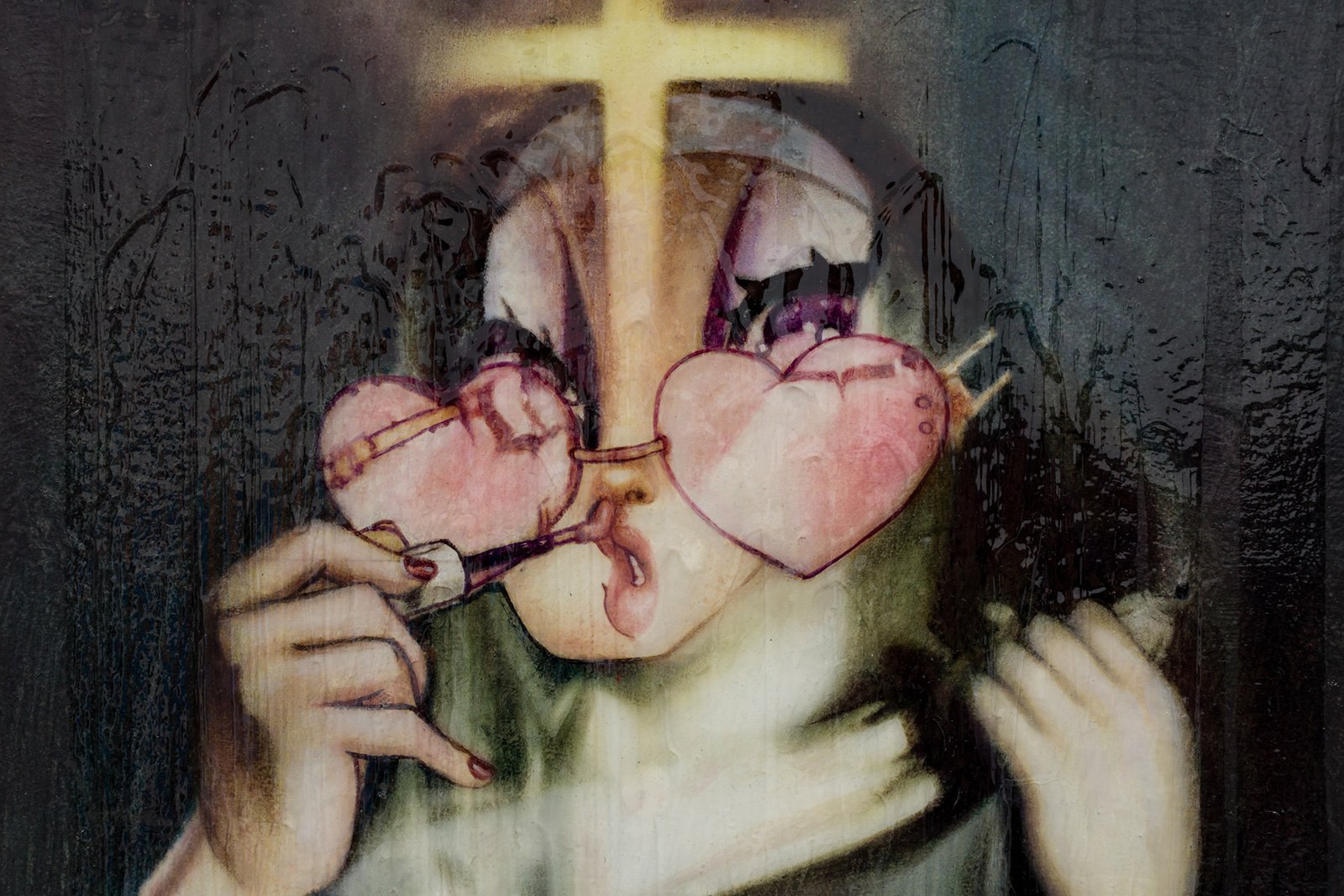
AE: On some of the faces, there’s a kind of dithered or pixelated quality, where you can see the artifacts or imperfections in the image. From a distance, some of the paintings appear like canonical seventeenth- or eighteenth-century portraits, but the closer I get, the more digital they look. Even your tonal modeling has this gridded appearance. It feels like you’re introducing the viewer to some kind of digital-cum-physical lore. Can you say something about your choice of subjects? The central figure of a girl in Profile Pictures (2026) is sitting on a papal throne in the manner of Velázquez’s Portrait of Innocent X (c. 1650).
PI: My brain is pretty loaded with art history, which is not always a point of reference in the Avant Gay scene. This one [points to Horses?7 (2026)] is a riff on my NFT collection Horses?7, reusing the assets in a new configuration made just for this show and turned into slides. The premise of Profile Pictures, which I made with my friend Xanthrax, was looking at papal portraiture as a parallel to derivatives, inserting our project as the tail end of a lineage that started with Raphael and reaches as far as Francis Bacon.
The term “derivative” means something really different in the Solana scene from what it means to trad art people, for whom it is a pejorative. You can look at one NFT collection and know it’s derivative of another because of how the subject is posed or the assets used.
Parker Ito, Profile Pictures, 2026. Photography by Jack Elliot Edwards. Courtesy of the artist and Rose Easton, London
AE: It feels as though the Avant NFT scene has fully embraced the digital condition, where we tend to remix and reshare content that’s preloaded with meaning rather than creating entirely original content every time. Of course, Generative AI models follow that derivative logic but the final output often appears highly refined, whereas the Avant NFT scene does the opposite by embracing digital collage.
PI: I regard what’s happening in Avant Gay as actually avant-garde. I want to make new things that have not been made before, and what I was drawn to in Avant Gay is that it felt new. Even if the work is framed as derivative — and even if that digital condition is present — new things are still being made, they’re just operating differently.
AE: I suppose the problem with “avant-garde” is it presupposes a kind of progressive history. What’s interesting to me about Avant Gay is that it seems willfully destructive of linear time and cults of progress, as well as social conventions.
PI: It’s stuff I’ve not seen made before, but also a way I’ve not felt looking at something.
With a lot of Avant Gay stuff, you might mistake what you are looking at for a meme, which I think is powerful because so much contemporary art looks like contemporary art.
Parker Ito, Profile Pictures (detail), 2026. Photography by Jack Elliot Edwards. Courtesy of the artist and Rose Easton, London
Parker Ito, Profile Pictures (detail), 2026. Photography by Jack Elliot Edwards. Courtesy of the artist and Rose Easton, London
Parker Ito, Profile Pictures (detail), 2026. Photography by Jack Elliot Edwards. Courtesy of the artist and Rose Easton, London
Parker Ito, Profile Pictures (detail), 2026. Photography by Jack Elliot Edwards. Courtesy of the artist and Rose Easton, London
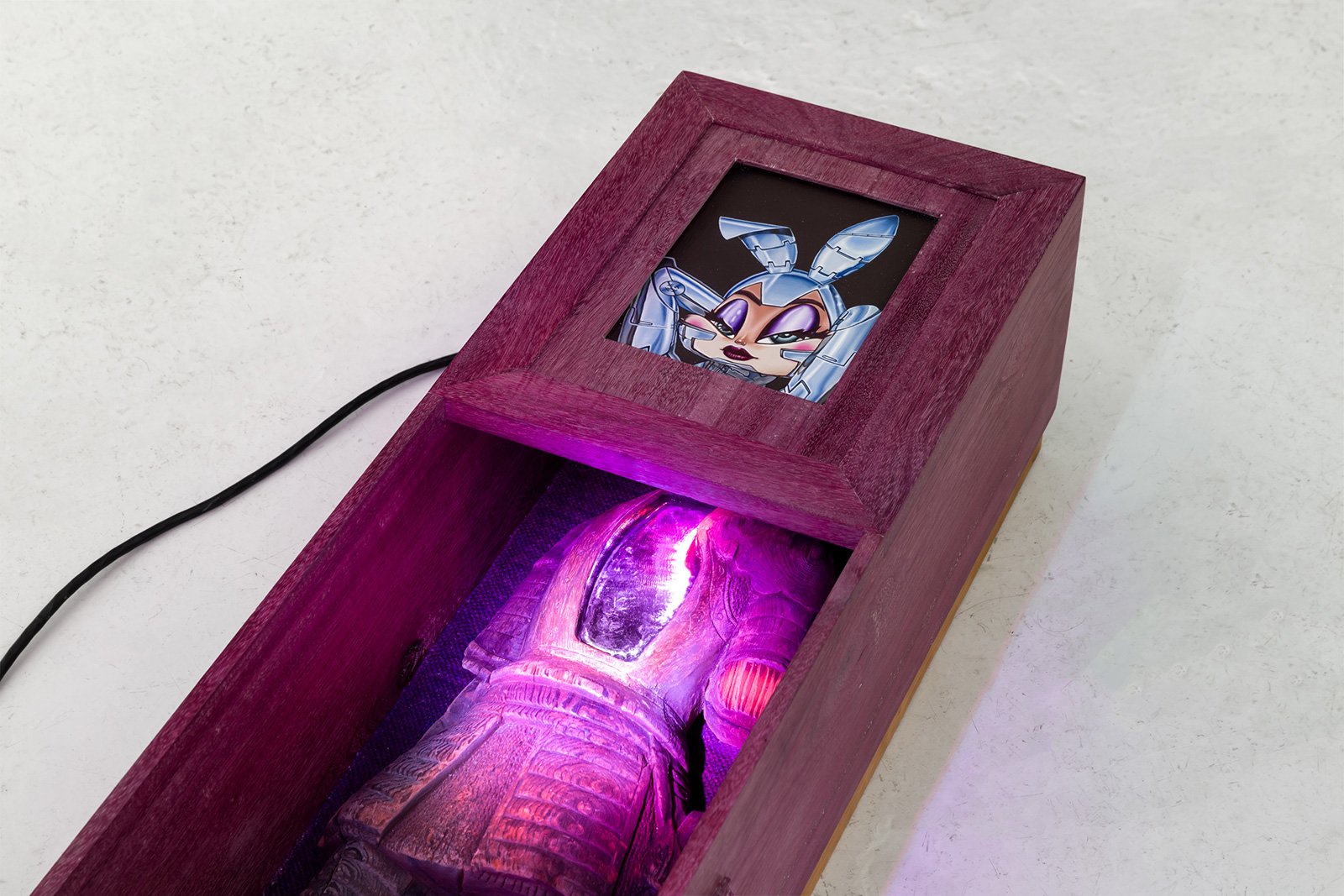
AE: Tell us about the sculpture that is the centerpiece of this exhibition, titled Full Metal Bunny (2026). I feel like I’m looking at a tomb or maybe a reliquary.
PI: A reliquary, yeah. It does feel like some sort of sacred vessel. This is an antique wooden sculpture I carved a chest cavity into that is going to have gallium vibrating in it. Gallium is a metal with a low melting point and it has this beautiful reflective quality that formally relates to the Full Metal Bunny character [also painted on the top of the box], which is an iteration of a character from my Drilady NFT collection.
The work has this transformative quality — it’s a solid; it’s a liquid; it’s unstable. It’s basically the same thing I do with the AI and the collaging to make these kinds of images that I don’t think have existed, that I turn into paintings. But this is the sculptural manifestation of that idea, which also has ties to the reprogrammed scanner sculptures I made — each presenting the malleability of material, a signature of my work.
AE: Hybrid.
PI: Yes, I think of what I have been doing over the years as building this giant complex, recursive system with all these inputs and outputs, and the outputs often feed back into new inputs.
It’s a network of objects and characters that are shifting and transforming — sometimes it’s an NFT you look at on your phone; sometimes it’s a sculpture in a gallery, but it’s all the same project.
There’s also going to be a live feed of the gallium projected large on the wall, and some slides based on my NFT collection Horses?7.
Parker Ito, The Ecstasy of Saint Drilady (detail), 2026. Photography by Jack Elliot Edwards. Courtesy of the artist and Rose Easton, London
AE: We published an article a while back called “Liquid Images”, which was a conversation with Mat Dryhurst, Holly Herndon, and Tyler Hobbs, about how in the age of deep learning you’re either upstream from the model, able to determine its operations, or downstream, using a public model like Midjourney and therefore subject to someone else’s protocol. This partly explains the emergence of so-called “protocol art”, where artists are swimming as far upstream as they can in order to set the protocols by which art flows. Does any of that resonate with you?
PI: I’m not a technical person, but with AI coding tools the barriers are quickly becoming irrelevant — I’m definitely downstream, but I’m also trying to get inside the downstream thing to see how far the limits of that thing can be pushed or fucked with.
AE: I’m fascinated by your use of the word “dumb” because I’ve recently been developing an idea for what I term “Dumb Painting”.
I define Dumb Painting as painting struck dumb by a digital condition that converts paintings into digital data, destined to flow together in an undifferentiated manner alongside all images, texts, and videos in the latent space of an AI model.
PI: I’d say “Dumb Art”. One of the qualities of art that makes it unique is how dumb it is. I’ve worked with a lot of fabricators, and sometimes you’re trying to do something that requires specific knowledge, and you go to someone who is not in art fabrication and they ask: “why would you ever want to do that?” And you say: “because I’m making an art project”. And they’re like: “Oh, okay”. The power of the art object is that it doesn’t need to justify its existence. Where else would you ever see a box with an antique figure holding liquid gallium that’s vibrating inside of it? That can only exist as an artwork.
Parker Ito, Horses?7 (detail), 2026. Photography by Jack Elliot Edwards. Courtesy of the artist and Rose Easton, London
AE: But when does art become Dumb Art?
PI: So much art now is “thesis art”; it’s like: “This is my project. These are the three sentences about what I do. Everything I make fits into that container.” That is not dumb to me and has a lot of limitations. It also leads with the head.
I guess Dumb Art would be shit where you show up and are just like “What the fuck is this? I don’t even know how to deal with this.”
In college I saw a Post-Impressionist show at the de Young Museum and it was the first time I’d seen a lot of that work and I remember being so disappointed, not because I thought the art was bad but just because the experience was so known in this way. And then I remember the first time I saw the Jeff Koons Michael Jackson and Bubbles (1998) sculpture — that was an extremely transcendental experience for me. Koons, at his best, embodies the premise of Dumb Art for me. I think that the most powerful art lures you in with its dumbness but then as you experience it more it reveals a complexity that might not have been apparent at first.
Parker Ito, Happiness is a Butterfly (detail), 2026. Photography by Jack Elliot Edwards. Courtesy of the artist and Rose Easton, London
AE: To me, the Dumb Art that you’re showing in this exhibition reflects the contemporary state of image excess in the way it jams together different art histories, as well as hardware and software, while preserving them in a state of flux. But it also confronts the global flow of images into this invisible and violent algorithmic space. As you’ve said yourself, what makes your process “dumb” is that it depends on using technology for the wrong reasons, pushing it to the point it breaks.
This work feels radical to me — as well as innately human — because the shift toward a non-human domain of images also entails the erasure of knowledge. Right now, AI companies are scanning books in order to train large language models and then destroying them. Dumb Art obstructs that accelerationist logic. At the same time, there’s nothing dumb about the Dumb Art you’re describing because it requires an understanding of a wide range of movements, art worlds, and lore in order to see it clearly.
PI: But at the same time, I think you could come to this show and you wouldn’t need to think about any of that in order to respond to it.
Parker Ito, Happiness is a Butterfly (detail), 2026. Photography by Jack Elliot Edwards. Courtesy of the artist and Rose Easton, London
AE: But speaking as an art writer, to understand it as “good” art today, I think you would.
PI: Well that’s a whole other qualitative question. Definitely, with the dumb stuff that I like there’s a qualitative element.
I’m not a medium-specific artist. I’m not a style-specific artist. I don’t have a thesis about my work.
AE: It feels like your ability to operate alongside these different, sometimes rather artificial, linguistic or market structures without losing your identity is one of your principal attributes as an artist. Do you feel like a natural shapeshifter in the way you create these interpenetrating lives, worlds, and channels of distribution?
PI: I think that’s a big part of it, if not the thing.