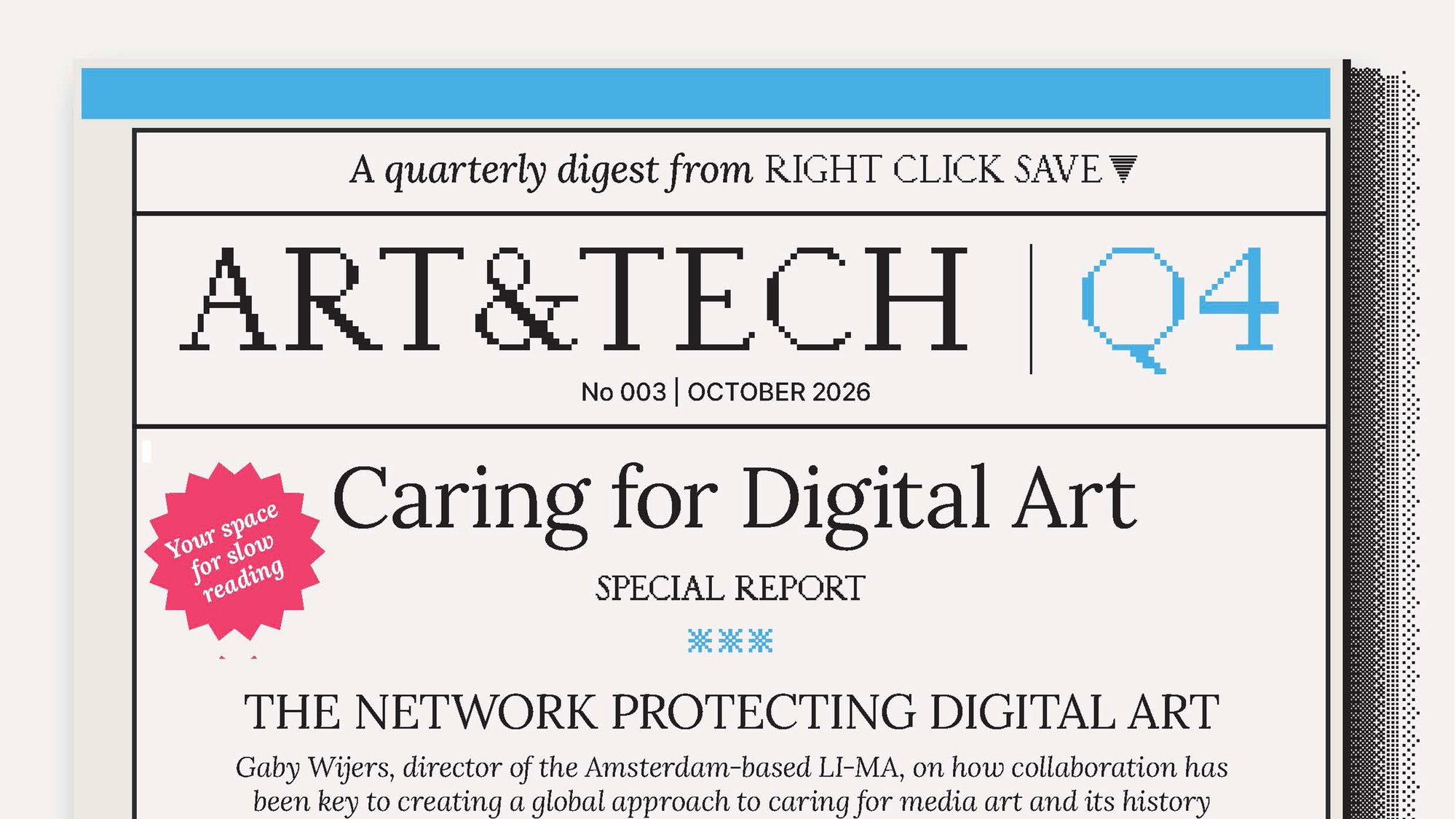
The editors of Right Click Save have published the third edition of Art & Tech, a downloadable PDF quarterly digest of the magazine’s recently published articles. It is designed to be a space for slow reading, and an alternative to the always-on culture of the attention economy.
The latest quarterly’s subject is “Caring for Digital Art”: a look at how artists, curators and technicians alike care for the history of digital art as well as the software and hardware that expresses and houses it. In two of the articles, the terms “caring” and “caretaking” are discussed as terms more useful for the purpose than considerations of “preserving” art made with technology.
Zsofi Valyi-Nagy, writing about a day of conversations on the preservation of digital art held at Los Angeles County Museum of Art (LACMA) in February 2026, observes that “it is our duty to take care of our technology (caretaking is, after all, the original meaning of curating)”. That language of care is also used by Gaby Wijers, director of LI-MA — Living Media Art, the Amsterdam-based organisation dedicated to the presentation, promotion and preservation of media art.
“Over the years we have changed the vocabulary, from the preservation to the caretaking of media art. Because it is not only a matter of preservation, but of continuous care. Something is not preserved. It needs care over time.” (Gaby Wijers)
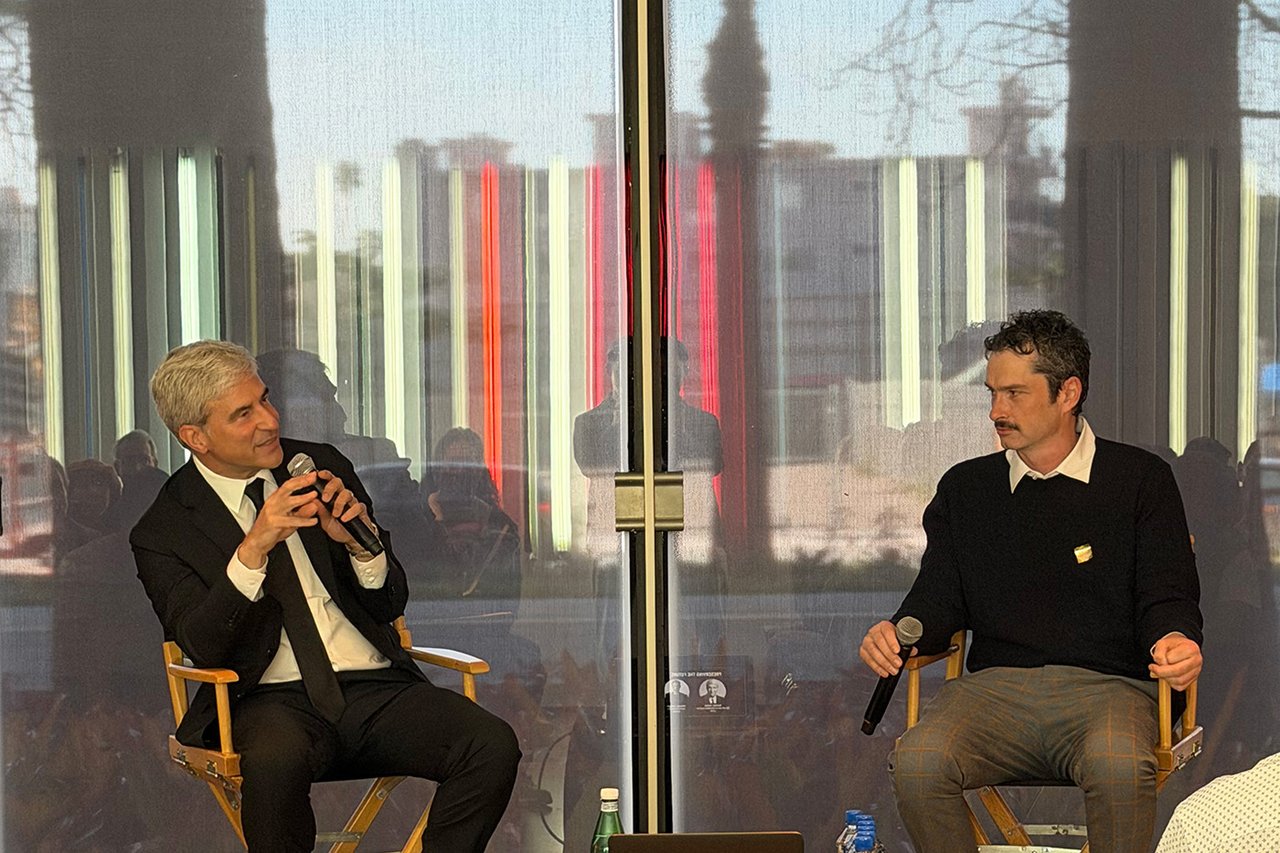
Michael Govan, CEO and Wallis Annenberg Director of LACMA (left), and Michael Connor, Executive Director of Rhizome, opened the “Conversations on Digital Art” at LACMA. Photography by Right Click Save
The design for the cover of Art & Tech, is inspired by a work, Jan Robert Leegte’s beguiling Window series (2022), which Right Click Save featured in a 2023 article “Who Owns the News in Web3?” It captures a distinctive cultural moment, from three decades ago, when the desktop publishing revolution reached a pivotal moment: the mid 1990s, when the net art that is celebrated in a number of articles in the new edition of Art & Tech was in its early stages.
The net art world that Leegte celebrates is also addressed in an interview with Olia Lialina, in Art & Tech, in which she fears for the future of the web in the age of agentic AI. And in a conversation between Michael Govan, CEO and Wallis Annenberg Director of LACMA, and Michael Connor, Executive Director of Rhizome, from the LACMA discussions in February 2026; an event that provided much of the momentum for this edition of the quarterly.
Wijers, like Govan and Connor, stresses the importance of an international community in developing the art of caring for digital art. In his “Seven Worlds of Digital Art | A Visitor’s Guide”, the media theorist Lev Manovich proposes a new approach to categorizing digital art based on ideas from the sociology of culture, and his own experiences as a digital artist. In his survey he identifies preservation and conservation as central considerations for his first category — historical digital art. In an interview about a recent group show he organized on eBay, the artist Dev Harlan reflects that digital art is meaningless without mediation by the technology or infrastructure through which it is experienced, which in turn becomes central to its long-term care.
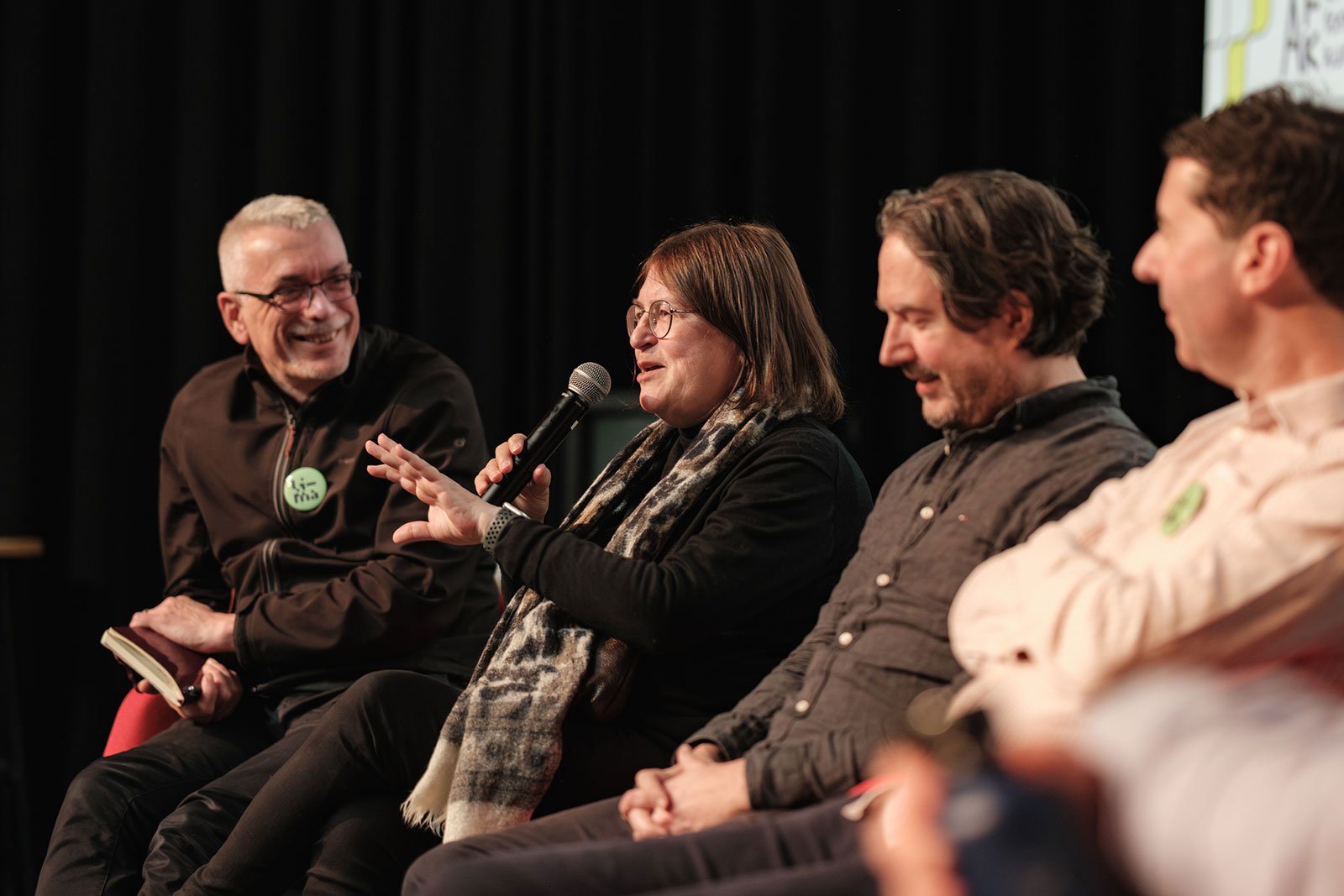
A panel discussion, “Connecting AI in Documenting and Representing Digital Art”, at Transformation Digital Art, 2026, with (left to right): Steve Benford (University of Nottingham), Gabriella Giannachi (University of Exeter) John Moore (The National Archives, UK) and Adam Lockhart (University of Dundee). Photography by Alex Heuvink
The children of the artist Stan VanDerBeek, a humanist polymath who moved fluidly between experimental film, computer animation, and printmaking, discuss the considerations of activating his archive and how to preserve, restage, and widen access to site-specific and iterative work. Meanwhile, the artist and collector Edouard, creator of the risk-auditing platform NFTimeless, discusses storage, preservation, and digital art collecting.
We also re-publish in Art & Tech Jason Bailey’s timeless analysis from 2022 — “NFT Apocalypse” — directed at the many NFT owners at the time who were unaware of the fragility of their holdings, a large percentage of which were not stored “on chain”. The advice Bailey offers in this extract from his original article was sadly prescient four years ago. It is just as vital a resource for collectors in 2026.
The first two editions of Art & Tech are each still available as a downloadable pdf. The first was dedicated to art’s new hybrid ecology, where artists are increasingly adopting interdisciplinary practices while the world adjusts to new ways of doing business across physical and digital domains. The second covered “The New Institutions”: the museums, galleries and educational entities engaging with artists, curators and scholars to drive critical conversation about digital art as part of an expanded contemporary art ecosystem.