Alistair Gentry was an artist whose disdain for the structures of the artworld fed an irreverent, politically sharp, often hilarious, and profoundly accessible practice. He was disabled and a disability activist, and his work celebrated the beauty and pathos of ordinary life.
His posthumously completed work, Folk Heroes of the Pre-Apocalypse— which is at present on display as part of “Nowism: Four artists exploring social and digital futures in the making” — introduces his concept of Nowism in the most bittersweet way following his death at 53 from natural causes during the production of the show.
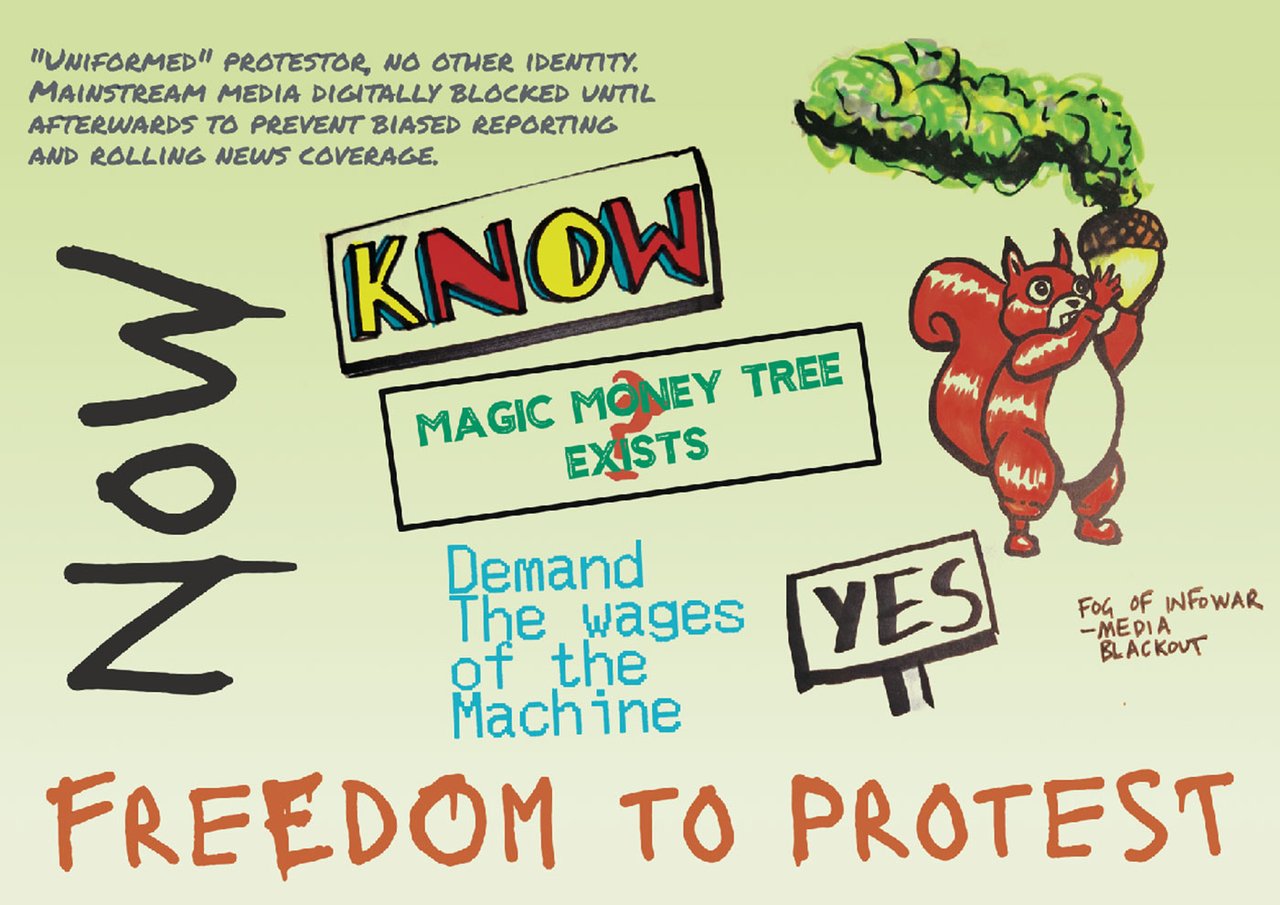
Alistair Gentry, Incognito Protestor, 2026. From Folk Heroes of the Pre-Apocalypse character sketches. Courtesy of the Gentry family
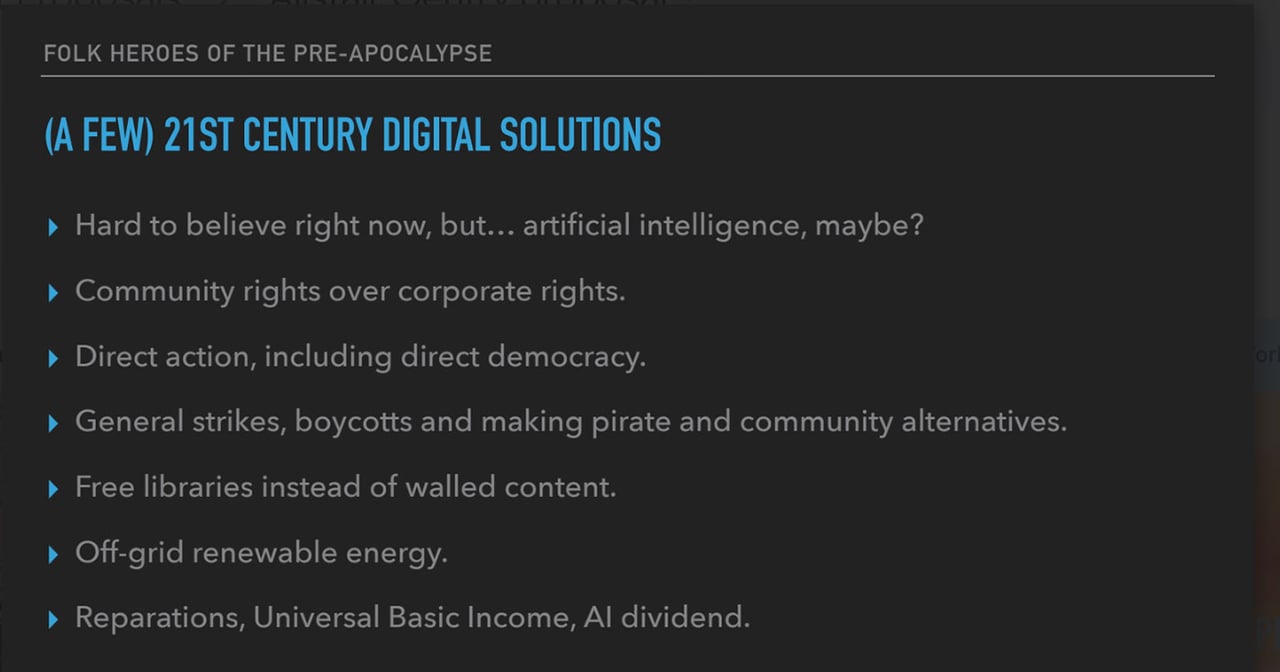
Gentry argued that as the time for “decisively rebooting our extractive capitalist lifestyles was 50 years ago or more”, we should cease being too future-focused, considering instead the power of decisions we make today as still having the potential to “achieve near-term digital futures that we will be alive to experience”.
Gentry’s deliberate rebuttal of Futurism, with its focus on generations to come, specifically zooms in on the needs of disabled people and other marginalised and minoritised people who all “deserve solutions right now”.
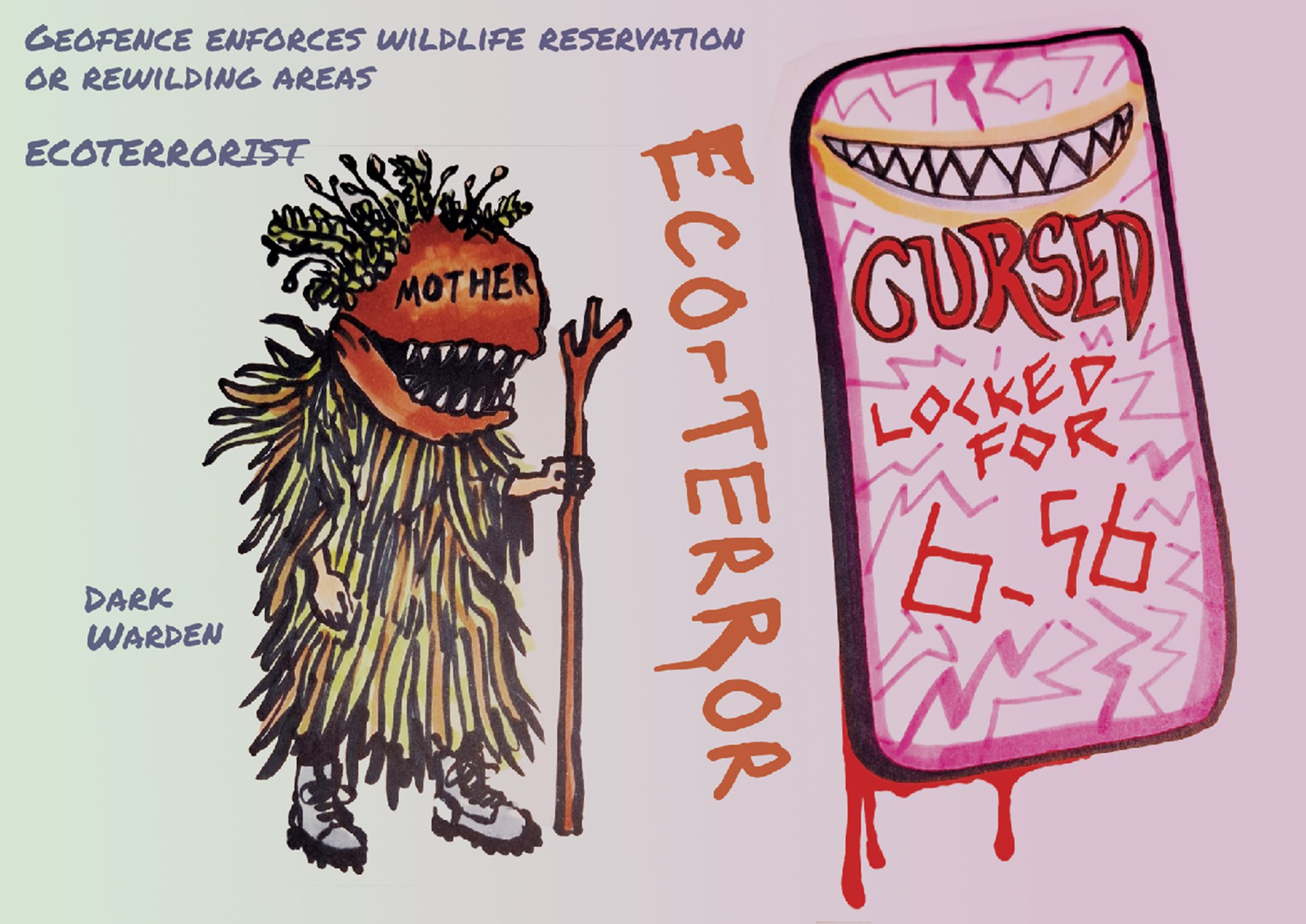
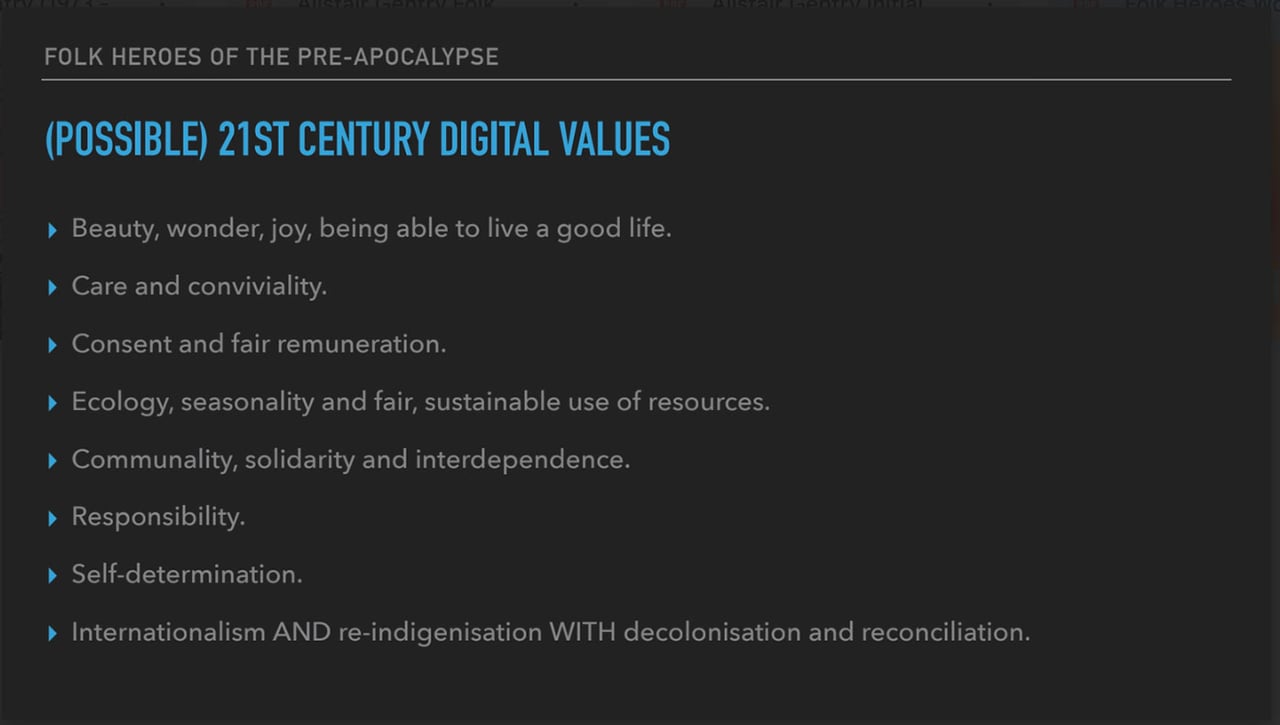
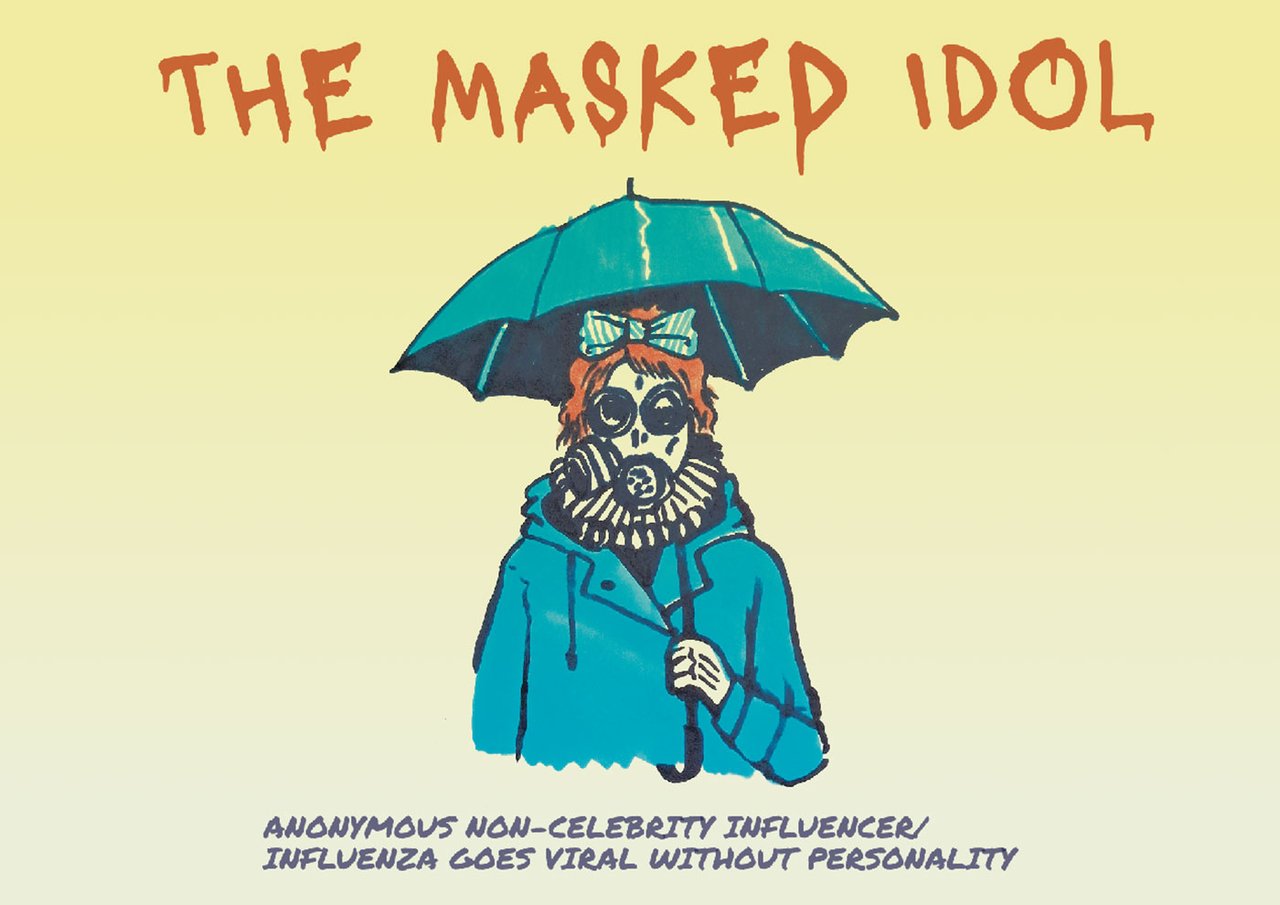
The Folk Heroes of the Pre-Apocalypse are superheroes from five minutes into the future. Inspired by glossy and garishly technophilic visions of 1970s and 1980s Sci-Fi, they resist the unobtainable, societally normative ideals many of these advanced. Rather, each Folk Hero is imbued with Gentry’s definitions for upgraded 21st-century digital values.
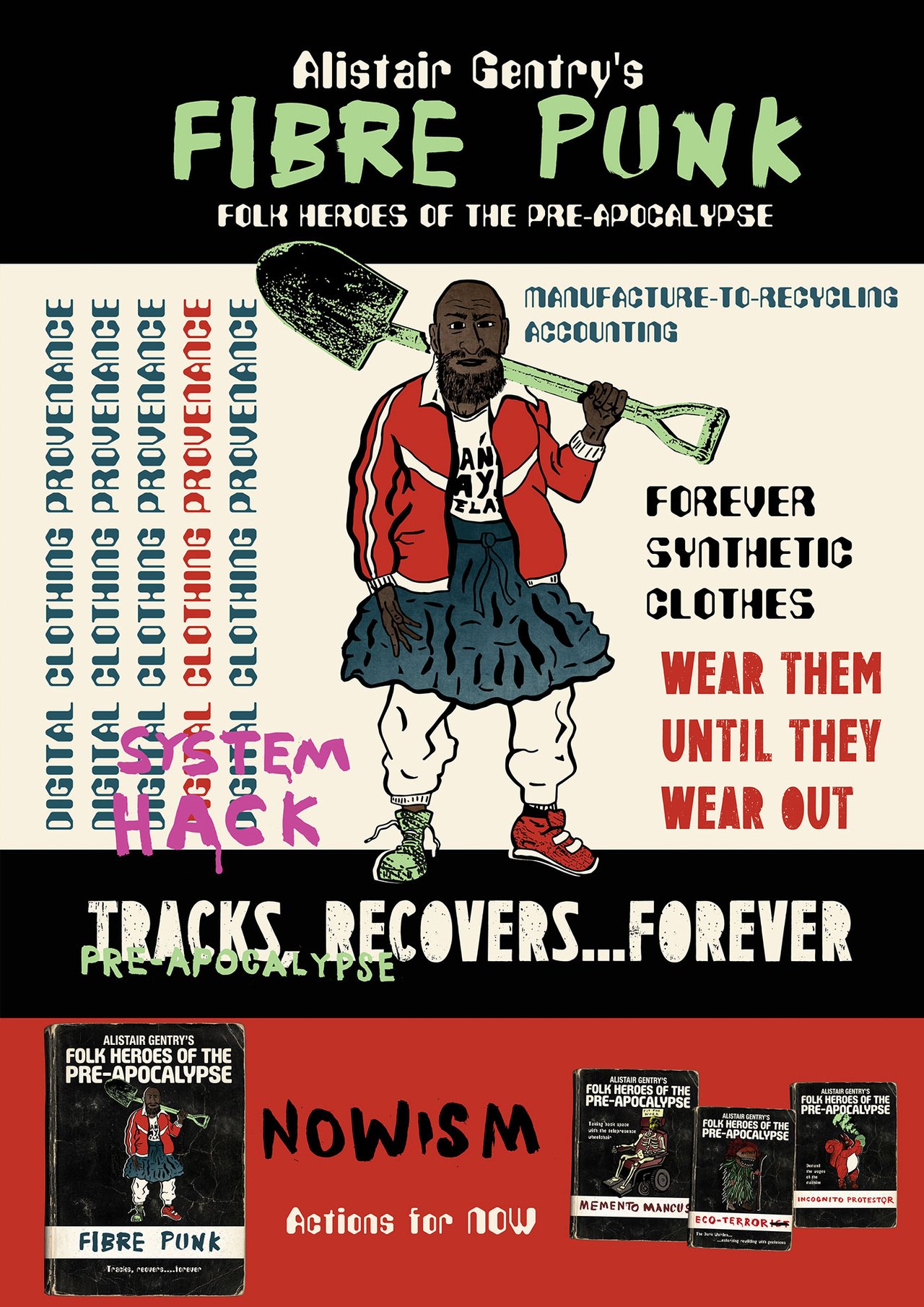
Fibre Punk, dressed in forever synthetic clothes, embodies ecology, seasonality and fair, sustainable use of resources; Memento Mancus pokes fun at successive governments’ obsession with measuring disabled people’s right to exist within productivity paradigms; while who could better argue for responsibility and self-determination than a citizen cosplaying as a Freedom to Protest squirrelobscuring the media infowar with a burning acorn?
Sam Le Mort, Alistair Gentry Punk Poster, 2026. Courtesy of Sam Le Mort and the Gentry family
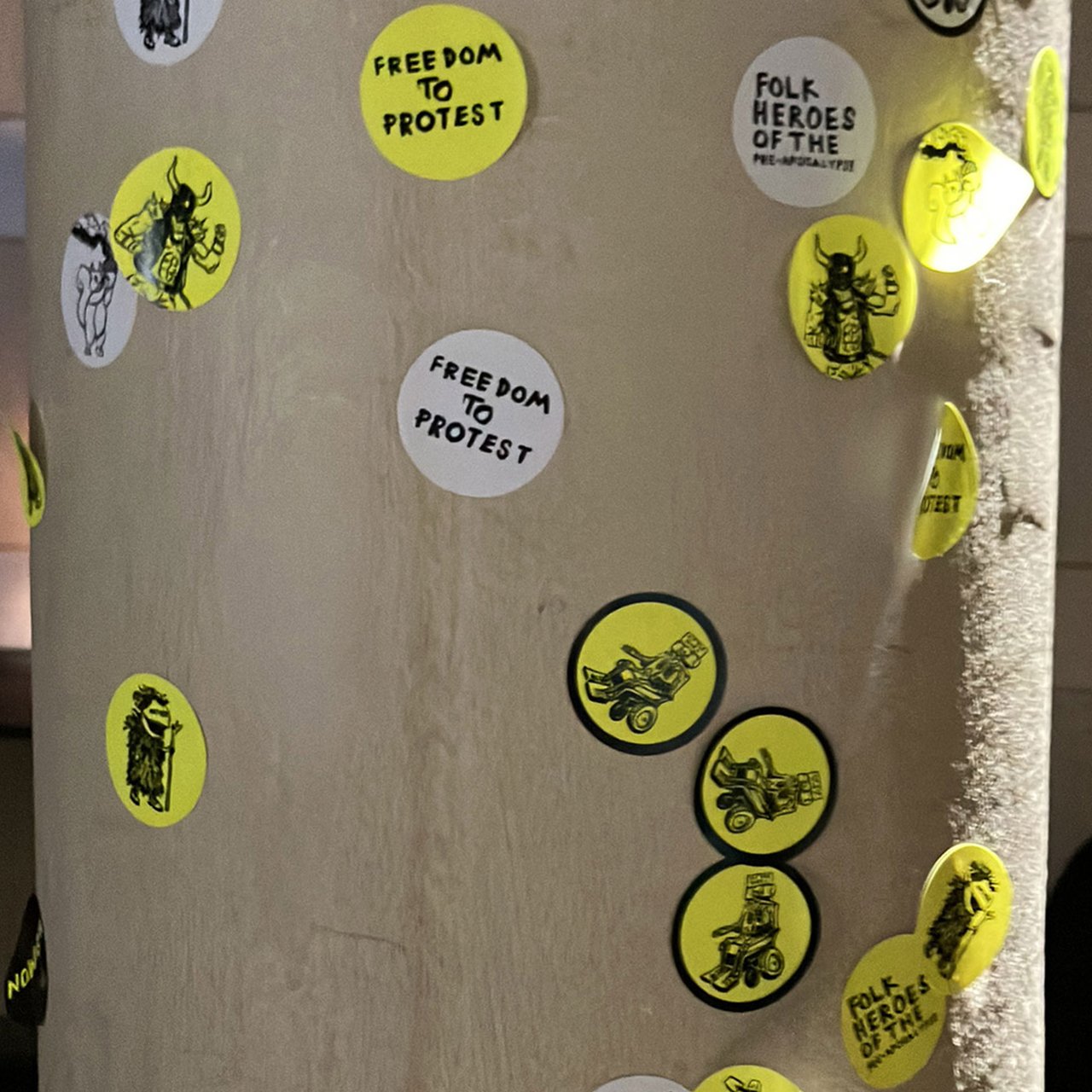
Gentry’s low-tech presentation belies the depth of his thinking about the significance of our technologically enmeshed lives. Drawings, stickers, T-shirts and guerrilla paste-up street posters — a dirty satire of the academic poster session — cock a snook at the frictionless gloss of digital experience and the university residency context within which he developed the work. That is not to say that he had anything other than positive enthusiasm for having been part of a close cohort of artists-in-residence at the University of Bristol’s Centre for Sociodigital Futures along with the other “Nowism” exhibiting artists: Annette Mees, Rachel Smith and Vincent Baidoo.
In a unique set-up, each artist developed their ideas not only in collaboration with academic researchers, but also in concert with each other, critiquing, supporting and sharing thoughts as individual pieces started to formulate, and sharing notes and tips. The title of “Nowism”, arrived at as an act of recognition and generosity towards Gentry by the other artists, reflects their camaraderie and unity.
“Alistair was a generous collaborator; always funny and properly subversive. He took the system seriously enough to understand it but never so seriously that he would let it win.” (Annette Mees)
Alistair Gentry, (Possible) 21st Century Digital Values, 2026. Courtesy of the Gentry family
Losing him was deeply shocking for us all. But, in consultation with his loved ones, we all agreed that Folk Heroes had to happen, both to honor his tremendous work and to continue to deliver an exhibition project whose architecture was built around four artists working together. Thanks to support from his friend the artist Alan Warburton, and with the brilliant work of the designer Sam Le Mort, we realised a version of his vision that we believe is true to his intent.
“Nowism” (the exhibition) blends humour, playfulness, activism and worldbuilding ideas. It points to futures where technologies are shaped by and for communities.
Baidoo’s transmedia Solar Punk Bristol explores the potential for technology to be the force that helps shape a self-sufficient future; Mees’s We live in a world made of gifts asks what new rituals for connection and making sense of the world might we want to bake into the systems that define our lives? And Smith’s Overhead Pareidolia invites us to use shapes to make “faces” that tease the limits of proprietary emotion detection software, selected by the artist because “it’s so judgy”.
Alistair Gentry, 21st Century Digital Solutions, 2026. Courtesy of the Gentry family
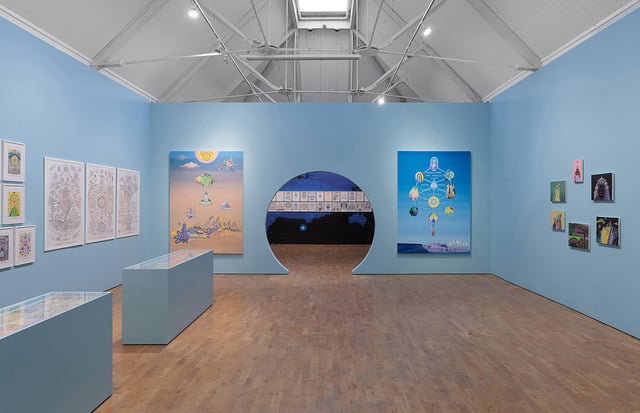
Exhibited at Bristol’s Undershed gallery as part of its Unfinished programme, the show has an added dimension, which was always at the heart of it. Each work is presented as a work-in-progress prototype — an idea that was central to the residency and to the interestAmy Rose, lead curator at Undershed, took in staging the work. This allowed the artists the opportunity to experiment, try new things and potentially fail. (I can hear, as I type, Alistair muttering darkly, but for laughs, that death wasn’t the failure anyone was thinking.) It is also special that Undershed actively collects comments from visitors. I was touched by the first comment in Alistair’s book from a person in a wheelchair: “This work is important, playful and necessary — and I’m glad his family encouraged it to be shared… Crip futures forever!”
During his life, Alistair Gentry’s practice as an artist encompassed writing, live art, performance lectures, artistic interventions, digital installations and online and real-world participatory experiences. He liked folklore, magic, silly costumes, absurdity, doing things that help people think, and making machines and systems do things their creators wouldn’t approve of.
He loathed the art world, particularly the art market side of it, as viciously expanded upon in his 2010 publication Career Suicide: Ten Years as a Free Range Artist.
Alistair Gentry, Folk Heroes of the Pre-Apocalypse stickers. Photography by Hannah Redler-Hawes
While he would likely have applauded the Right Click Save emphasis on community and accessibility, Gentry would have no doubt raised an eyebrow and thrown serious shade at its recent cheerleading of the canonization of digital art. But I am grateful to have the opportunity to share one of his incredible final works. He may have resisted the art world, but his people-centred ideas were central to its beating heart.
“Alistair projected a radical, scathing wit that took no prisoners (even when he himself was the butt of the joke) and had an infallible moral compass. He not only felt injustice deeply but used his artistic practice to draw attention to invisibilized and normalized hypocrisies, even if that impacted how he was perceived by the art world at large. Those who knew him well would have been aware of his deeply human, heartfelt core.” (Alan Warburton)
Gentry grew up in Felixstowe, in Suffolk, and in a 30-year career exhibited and performed throughout the world, in theatres, festivals such as London Data Week, CPH:DOX, ISEA and La Biennale di Venezia, and art galleries like Photographers Gallery in London, Kunstal Charlottenborg in Copenhagen, the Open Data Institute in London, Tate Liverpool, MUSAC León, Art on the Underground, Detroit Institute of Arts, Wysing Arts Centre, FACT Liverpool, and OCAT Shenzhen.
Alistair Gentry, The Masked idol, 2026. From Folk Heroes of the Pre-Apocalypse character sketches. Courtesy of the Gentry family
He was particularly proud of his long-term project “The Portland Office for Imaginary History”, 2016-23, a satirical tourist information bureau providing entirely false visitor information from an imaginary Isle of Portland where women, immigrants, working class, disabled, LGBTQ+ and other marginalised people get the historical recognition they deserve.
He is survived by his sister and his ex-partner. He was, as the artist and curator Simon Poulter wrote in tribute to his memory, “one of our own”.
Alistair Francis Leighton Gentry, born Bedford February 8, 1973; died Amsterdam March 19, 2026.
Hannah Redler-Hawes is a curator known for her pioneering work in arts-led interdisciplinary and digital projects for world-class arts, science and cultural organisations. She has been commissioning, curating and producing digital and media art since the early 1990s, including the first interactive software and neural net-based installation art to be acquired by the national collections. Her work convenes outstanding artists, scientists, technologists and experts by experience to create award-winning new artworks, exhibitions, research and events. She particularly specialises in participation, interaction and the emerging fields of data and AI. Hannah trained as a painter at Camberwell and Norwich Schools of Art and in curating contemporary art at the Royal College of Art. She moved into working with digital art after co-founding one of London’s first interactive multimedia software companies with other artists, designers and friends in the early 1990s.