The Artist Who is Making Himself Superfluous | Kevin Esherick - Right Click Save
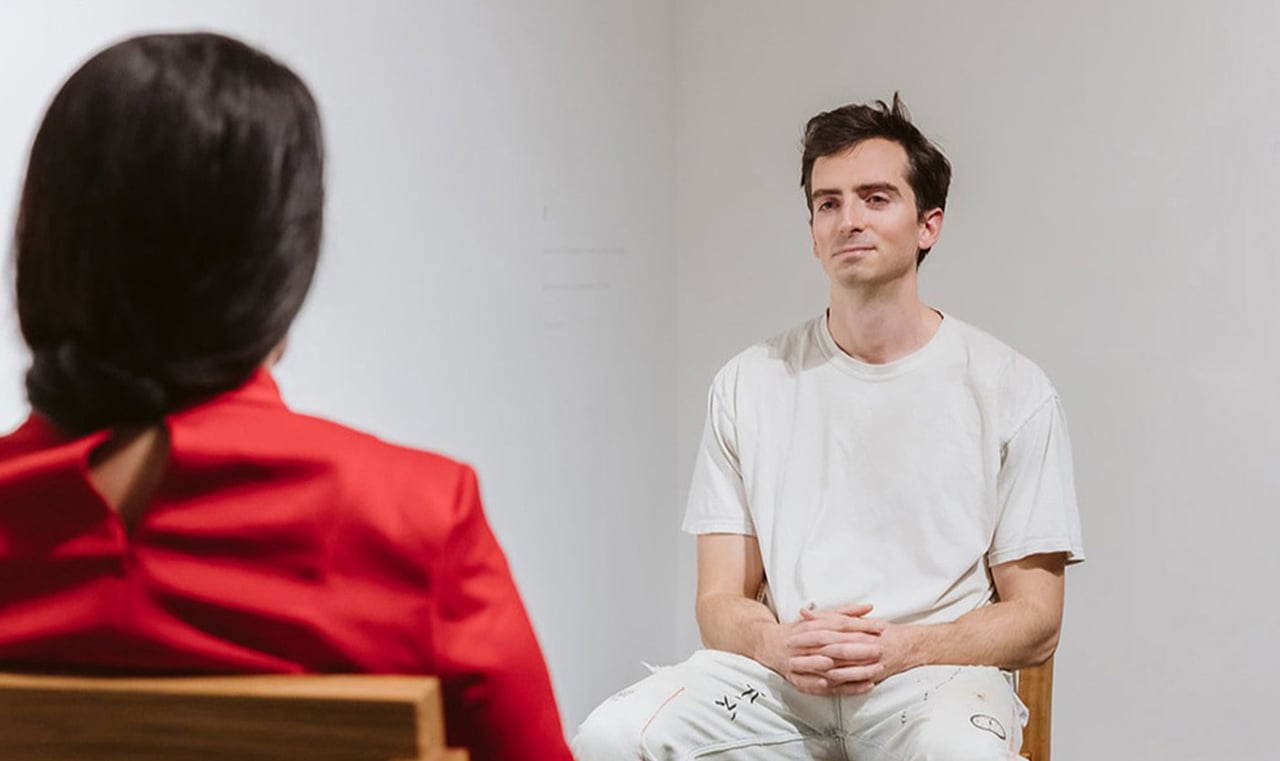
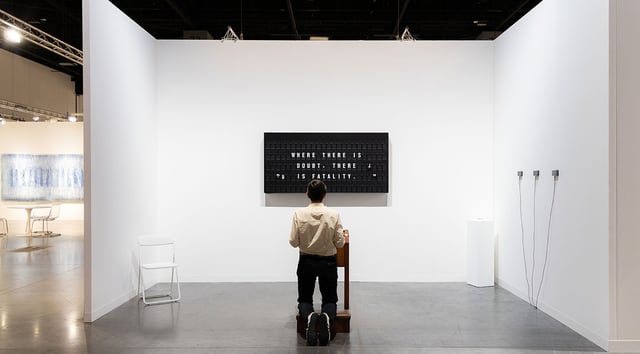
Kevin Esherick during After Marina, his recreation of Marina Abramović’s The Artist Is Present performance, at the opening reception of Esherick’s exhibition, “The Artist Is Absent” at Heft Gallery, New York, 2026. Courtesy of the artist and Heft Gallery. Photography by Rachael Crowe
Kevin Esherick, “The Artist is Absent”, was at Heft Gallery, New York, February 11 to March 14, 2026. The exhibition included two new bodies of work: Homages (2026) and Ablation Studies (2026).
On July 23, 2024, Kevin Esherick shared a letter titled The Artist is Absent. “The aim is to render myself superfluous,” he wrote in a single sentence separated from the rest of the text by a line break.
The white page with black text mimicked a mechanical typewriter. An unhinted anti-aliased slab serif type with a resolution high enough to be legible but low enough to imitate the effect of a bleed around the letters, or at least how a bleed would be rendered on a digital screen, asks the viewer to question what is real, authentic, and/or remediated.1 Available for minting, the open edition also served as form and metaphor: the possibility of an ever-expanding corpus that resides out of the hands of the artist.
Like in many of his generative works such as Artist Bingo (2023), the boundaries between Esherick the individual, Esherick the artist, and Esherick’s audience blur. The rules he sets are always designed to dissolve his autonomy as much as possible until at the very end his own work won’t be made by him. He’ll be rendered superfluous.
The artist’s solo exhibition at Heft Gallery, “The Artist is Absent”, marked the beginning of an experiment that was to take place over the following year: letting an AI model trained on Esherick’s own work replace his practice.2 On the occasion of the show, Esherick spoke about how his interrogation of technology departs from the continental canon concerning authorship and authenticity that traditionally focused on interpretation, ambiguity, and contextual structures: to ask not what happens after the author’s death, but rather, what if there was never an author to begin with?
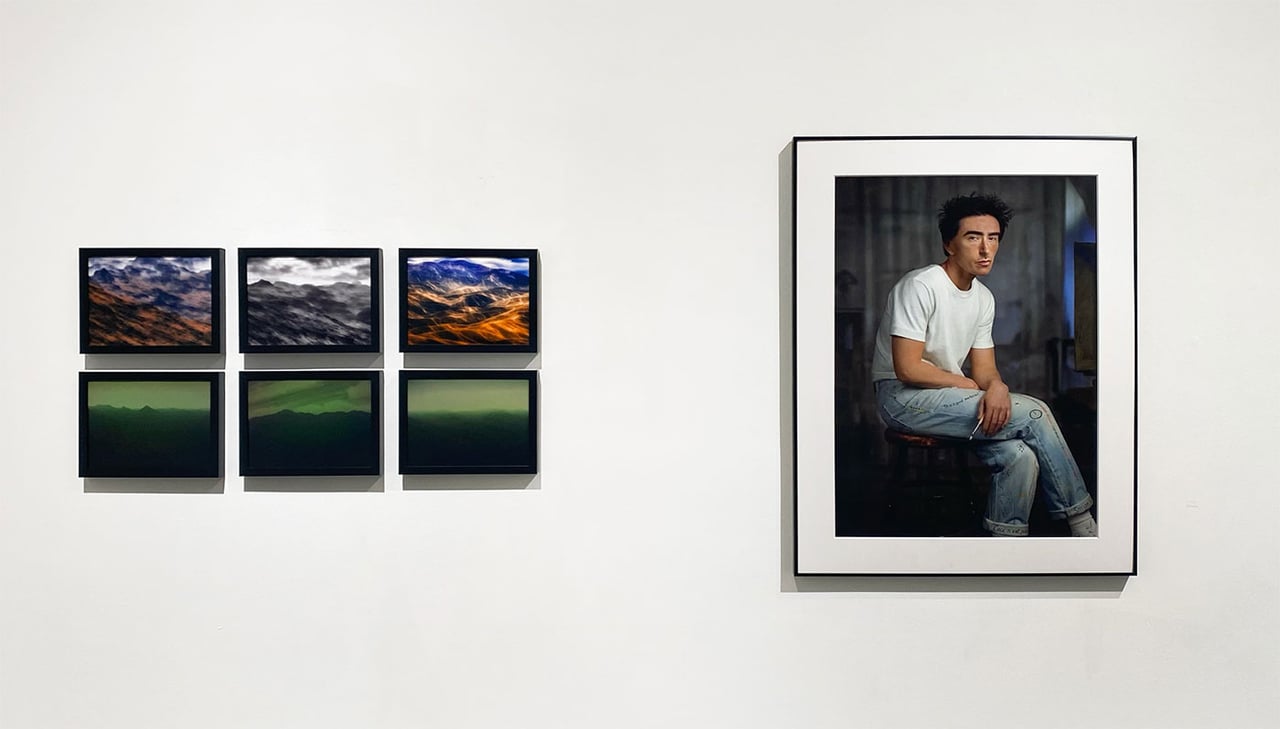
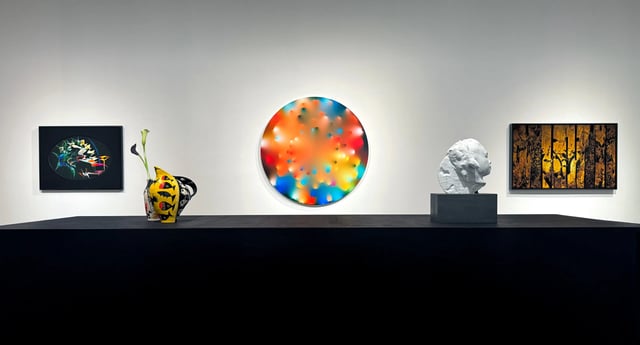
Installation view of Kevin Esherick, “The Artist is Absent” at Heft Gallery, New York, 2026, with works: Formations: Vector 322, Vector 7 (After Trevor) (2026) and Untitled #1 (After Cindy) (2026) from the series “Homages”. Courtesy of the artist and Heft Gallery. Photography by Rachael Crowe
Michael Assis: “Esherick, posing as Cindy Sherman, posing as Esherick, posing as an artist,” reads the text for his After Cindy (2026). This isn’t just about posing, it’s about becoming someone else, about surrendering your personal identity, much as Sherman herself was trying to highlight the ways in which all of our identities are constructed by various cultural norms.
A lot of the exhibition “The Artist is Absent” has to do with relinquishing autonomy, not only in relation to the final artifact or artwork, but also of your own self. Your self, in more senses than one, becomes a publicly performed event where your personal identity is deconstructed, reconstructed, and subsumed by external forces you introduce into your creative network.
These blurrings, as your letter from 2024 that opens the exhibition says, will eventually lead to “rendering yourself superfluous” within the artistic networks you set in motion. How do you locate this exhibition in relation to your previous works and artistic trajectory?
Kevin Esherick: Identity is a thread that has run through my work from the beginning. Not so much about any particularities of identity, but about the ontological and metaphysical questions around it — what is identity, what constitutes it, how do we communicate and reshape it?
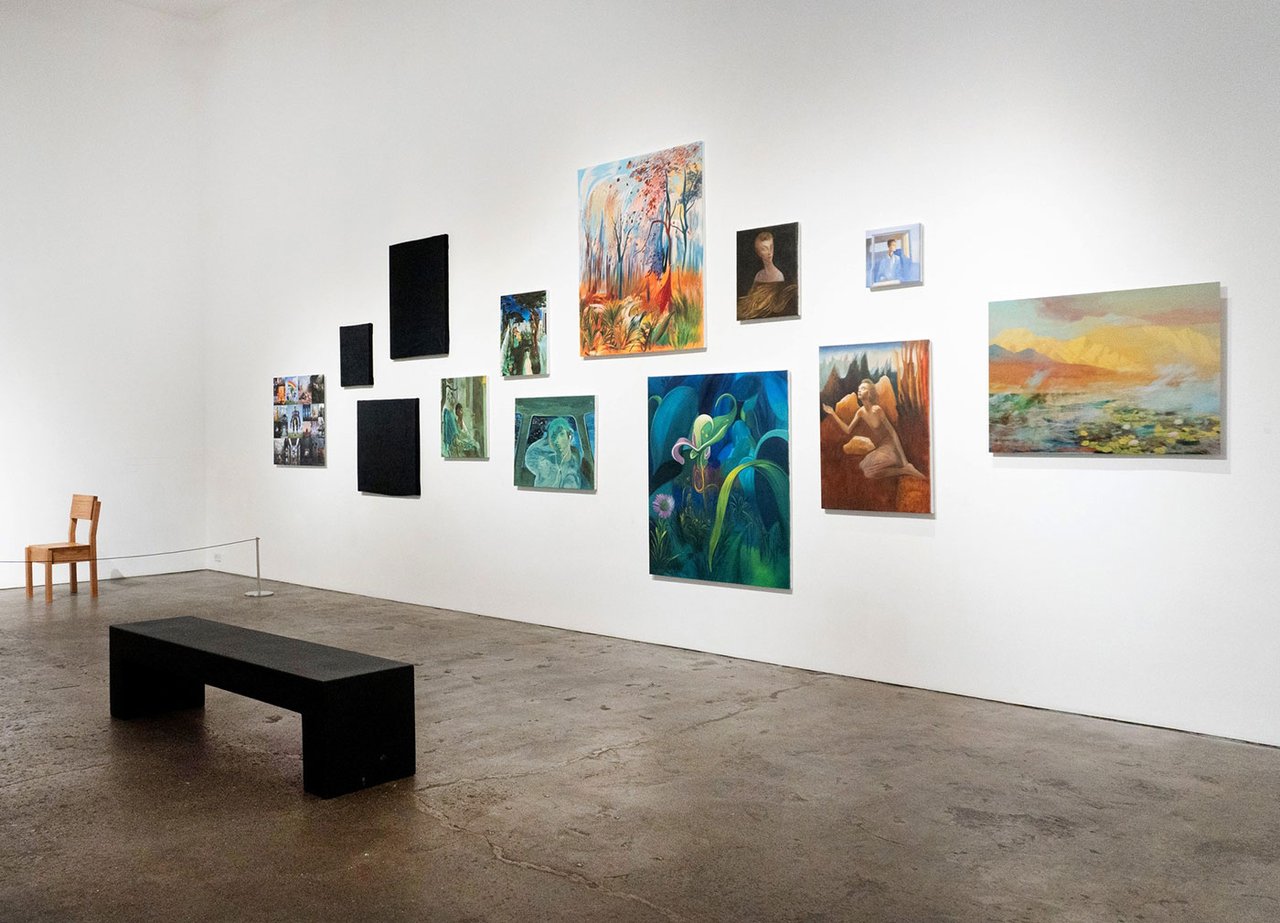
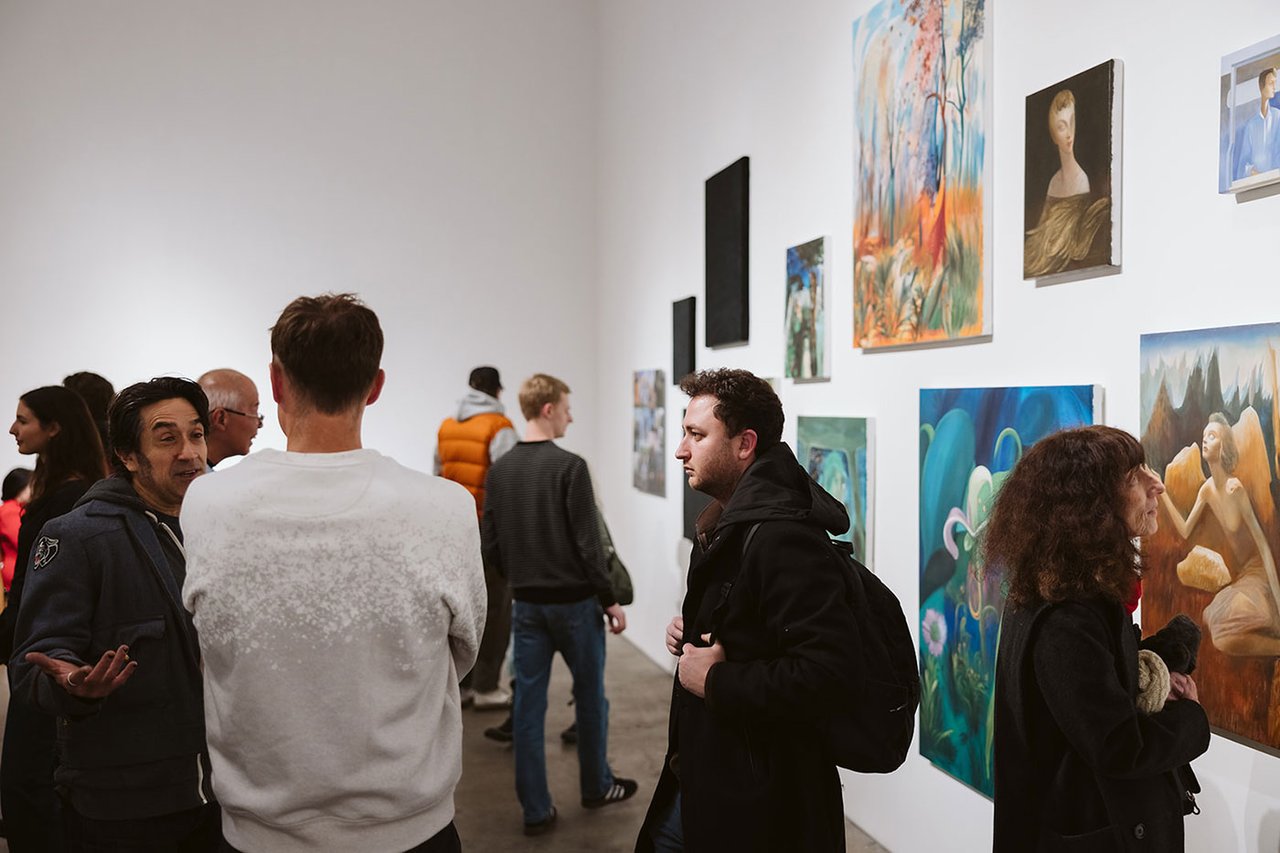
Installation view of Kevin Esherick’s “Homages” series as part of “The Artist Is Absent” at Heft Gallery, New York, 2026. Courtesy of the artist and Heft Gallery. Photography by Rachael Crowe
Early projects like Material (2021) and Artist Bingo explicitly engaged this theme. Material considered identity as a constellation of people, places, and memories, then asked what happens when I relinquish control of my life to them. Artist Bingo let people play my life and career as a game of bingo comprising the hallmarks of artistic identity. Hyperportraits (2025) examine what comes of identity under the ontological regime of a technology (AI) that treats everything as replicable.
This show continues this theme in two distinct ways. With Homages, where I trained image models to make new works in the styles of some of my favorite contemporary artists, I’m asking questions both of myself and those artists. I’m wondering what comes of style as particular to an individual when it becomes a fluid, replicable thing (as it increasingly will in the coming years).
On my end, I’m trying to break down the boundaries of myself or become something else entirely, to inhabit the mind and way of seeing the world of another person/artist, and to use that as a means of understanding and reflecting my own world. There’s also a recognition of and wrestling with the futility or tragedy of this endeavor.
The second place I really reflect on identity here is the performance of The Artist Is Absent. This one-year performance, in which I cede my artistic practice to a model trained on my own works, asks what comes of a person when a role core to their identity is usurped by AI. Through many of these projects there’s this thread of desire for something like transcendence or liberation, to be something more than I am.
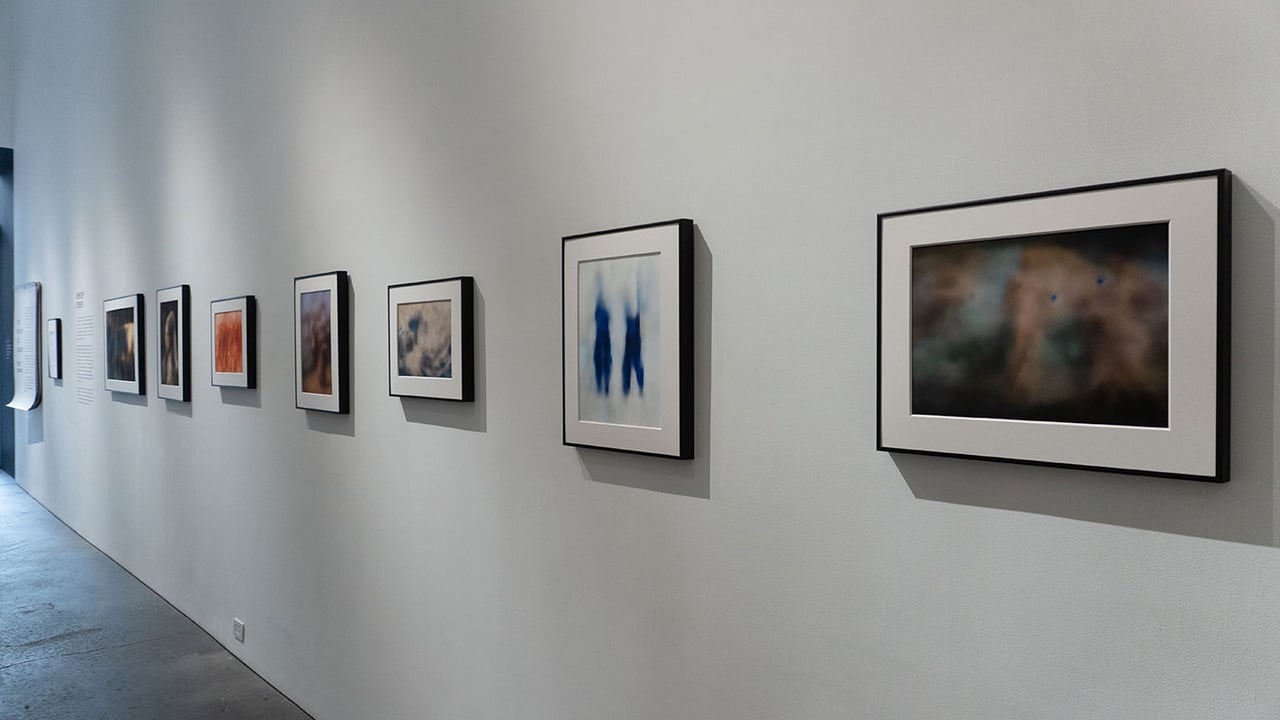
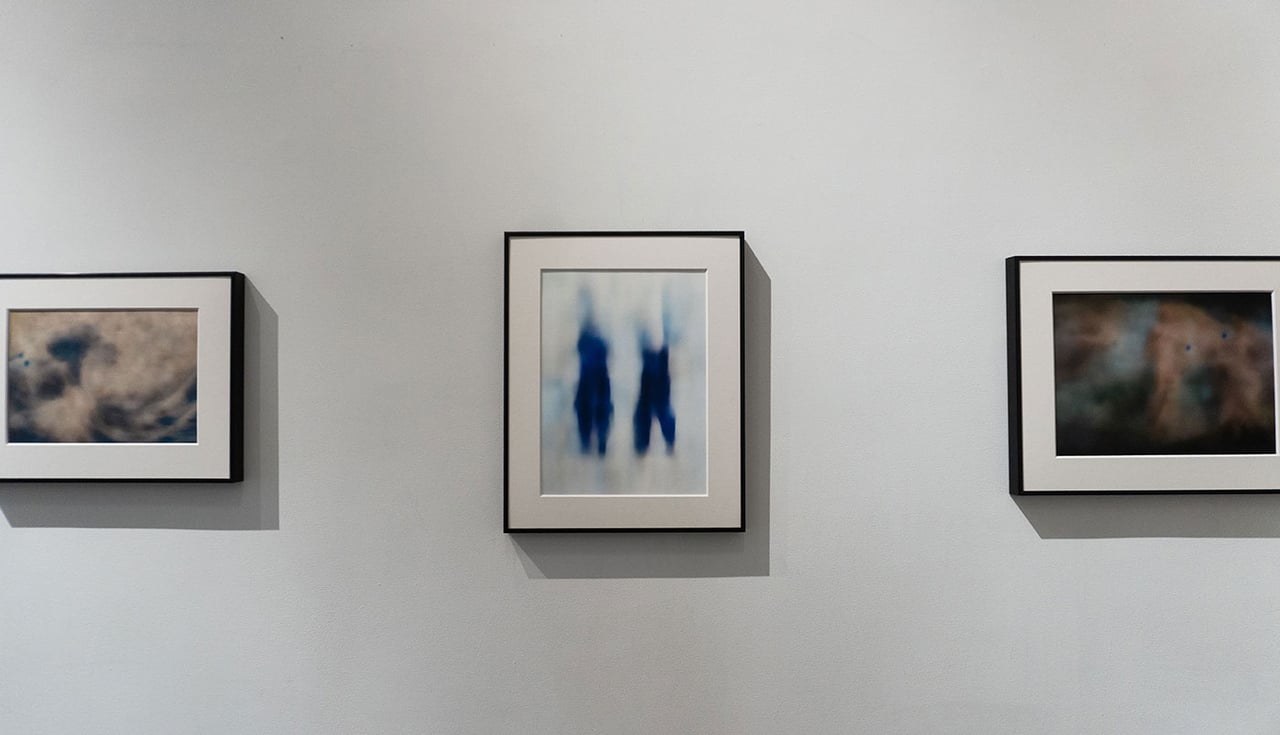
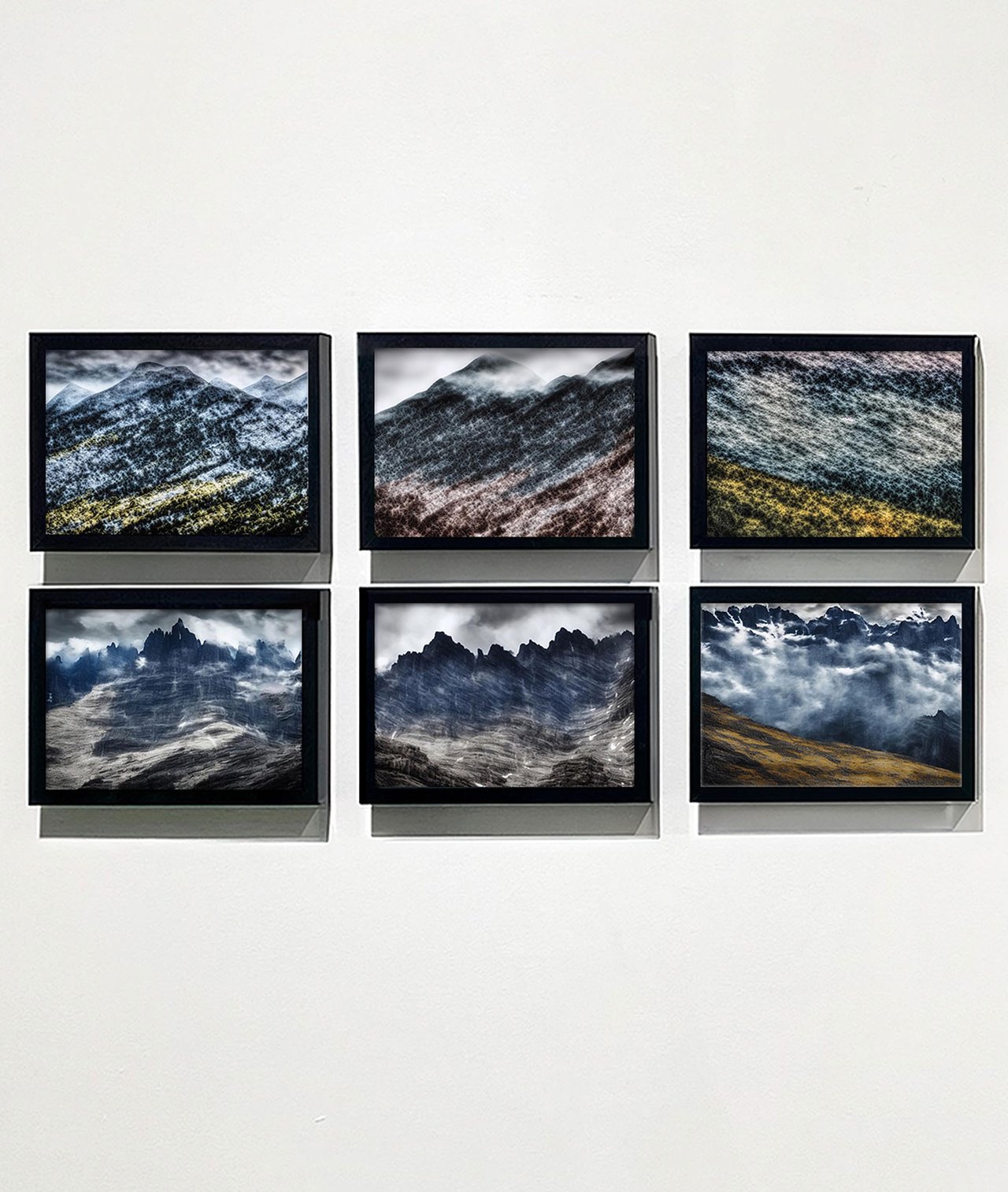
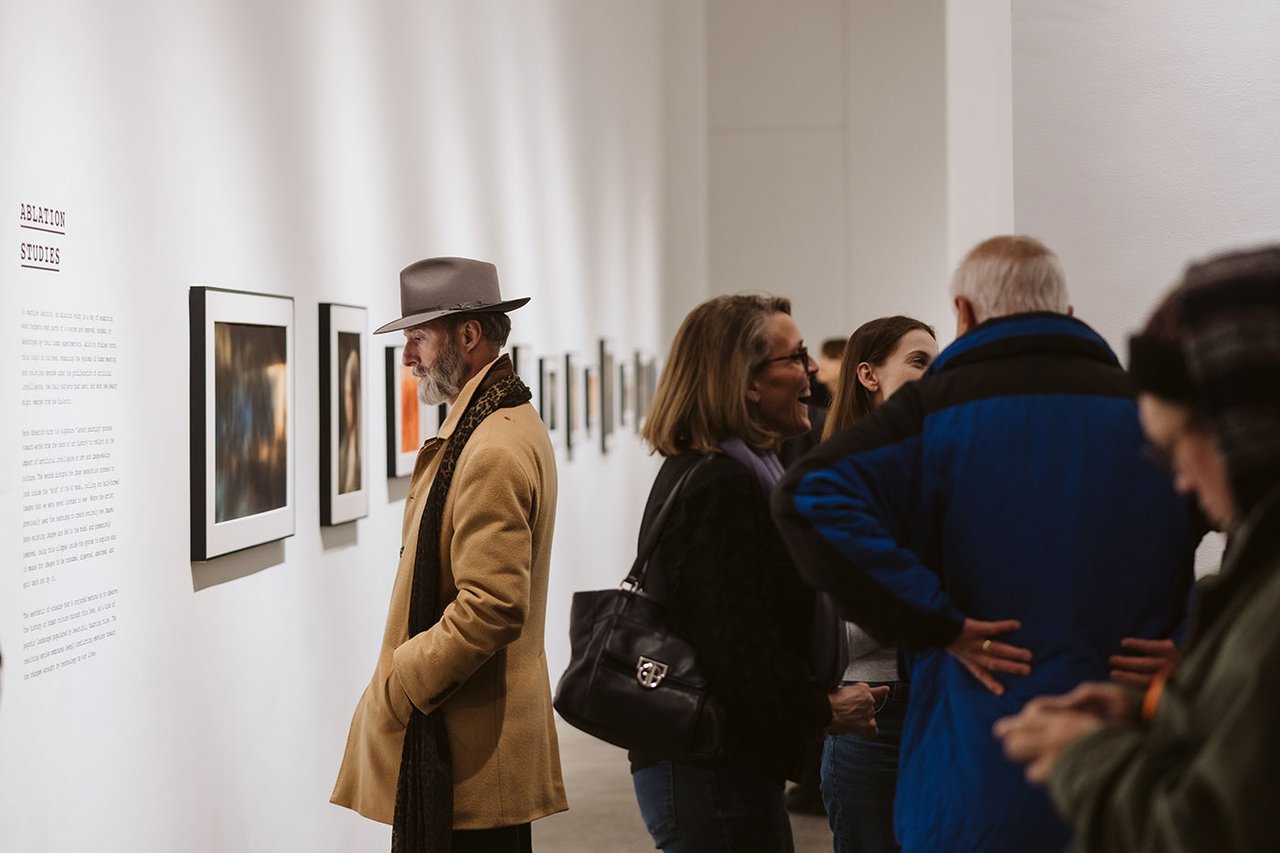
Installation view of Kevin Esherick’s “Ablation Studies” series as part of “The Artist Is Absent” at Heft Gallery, New York, 2026. Courtesy of the artist and Heft Gallery. Photography by Rachael Crowe
MA: After Botticelli (2026) is derived from Botticelli’s Glasgow Annunciation (c. 1490), heralded as early as 1919 as work of art “with a composition that’s highly original” and “a personally felt scheme entirely different from the usual repetitions by minor artists”.3 The art historian Martin Kemp described it in 1977 as “one of the most eccentrically individual works of the Renaissance to be found anywhere”.4 However, it is precisely those marks of individualism that are eroded in the processes you investigate and employ, which seem to mark a return to abstracted forms that register as an indiscernible template or format.
Tell us about the process there, and about the role that abstraction plays in your works?
KE: AI, and really all of information technology, is first and foremost a paradigm of abstraction. The telegraph abstracted information into electrical signals so it could be transmitted over long distances. LLMs [large language models] abstract multi-modal world knowledge into matrices that render everything we’ve ever known into fluid raw material for semantic computation. I’m interested in what abstraction does to us, and AI is ripe for artistic exploration of that question because it engages not only linguistic but also visual forms of abstraction.
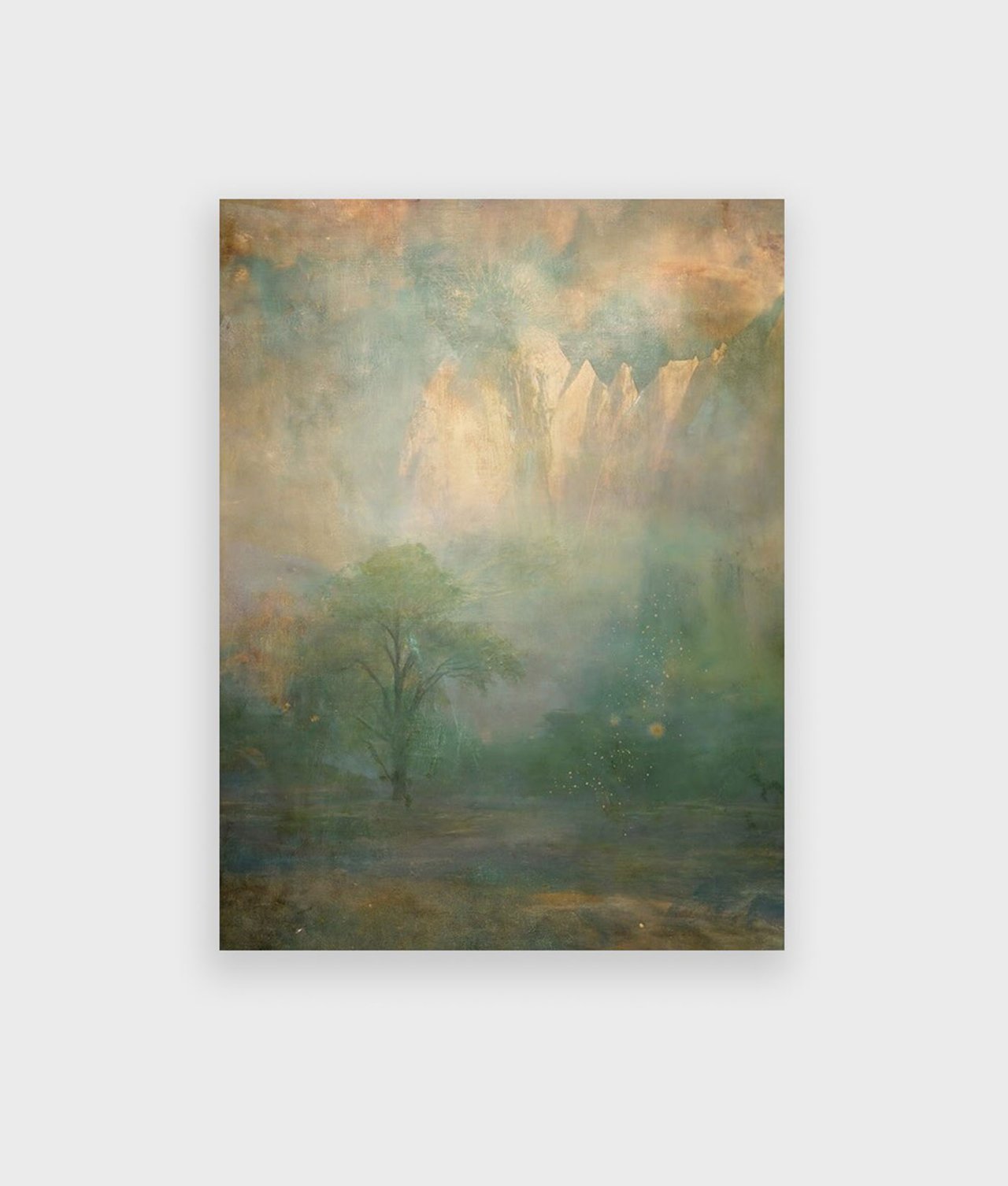
The Ablation Studies engage abstraction in a couple ways. For one, they’re visually abstract in the classic sense — they’re hazy looking, turning their source material (paintings from the art historical canon) into abstract versions of themselves. But they also point to a [form of] computational abstraction involved in their own making, wherein models digest images into a latent space represented by sets of large numbers and spit them back out as images, transformed.
Installation view of Kevin Esherick’s “Ablation Studies” series as part of “The Artist Is Absent” at Heft Gallery, New York, 2026. Courtesy of the artist and Heft Gallery. Photography by Rachael Crowe
The Botticelli Annunciation and its individuality underscore one of the effects of abstraction I’m looking at here, because it’s precisely that individuality that the Ablation Studies process washes away. As a series, they take a diverse set of paintings from across art history and erode them into a single homogeneously abstract style. This is a microcosm of models’ tendency to favor the modal input types from their training data in their outputs. LLMs spew the homogenized, sycophantic, corporate slopspeak we’ve come to recognize, while image models do their own homogenization dance with the over-polished “Midjourney aesthetic”.
The Ablation Studies wonder about the past and future of art under these conditions of generative media, and the role of the artist’s hand therein. But they also argue that when models are taken as frontiers to be explored and creatively misused (as making these pieces entailed), rather than simply taken at face value, they can yield something beautiful.
Abstraction also shifts the original paintings from compositions into something more like symbols or icons. Where before they were made up of discrete parts that yielded meaning through their relation to one another, abstraction diffuses them into singular, holistic entities, creating ambient spaces for contemplation (think Mark Rothko, Yves Klein’s monochromes, or religious iconography), but ones which still gesture to the paintings they derive from. The details are smoothed away, but contours remain. This is something I’m often trying to produce in my work — a system, symbol, or set of circumstances to provoke and entice the viewer to sit with questions and ideas.
Susan Sontag wrote in Against Interpretation of the need for an “erotics of art”. By this she meant something like a reinvigoration of art as a bacchanal of sensory energy, rather than an intellectual thing to be interpreted. I would argue, in contrast, for an “erotics of the mind”. Thought can be sensuous too. I want to engage people in that pleasure.
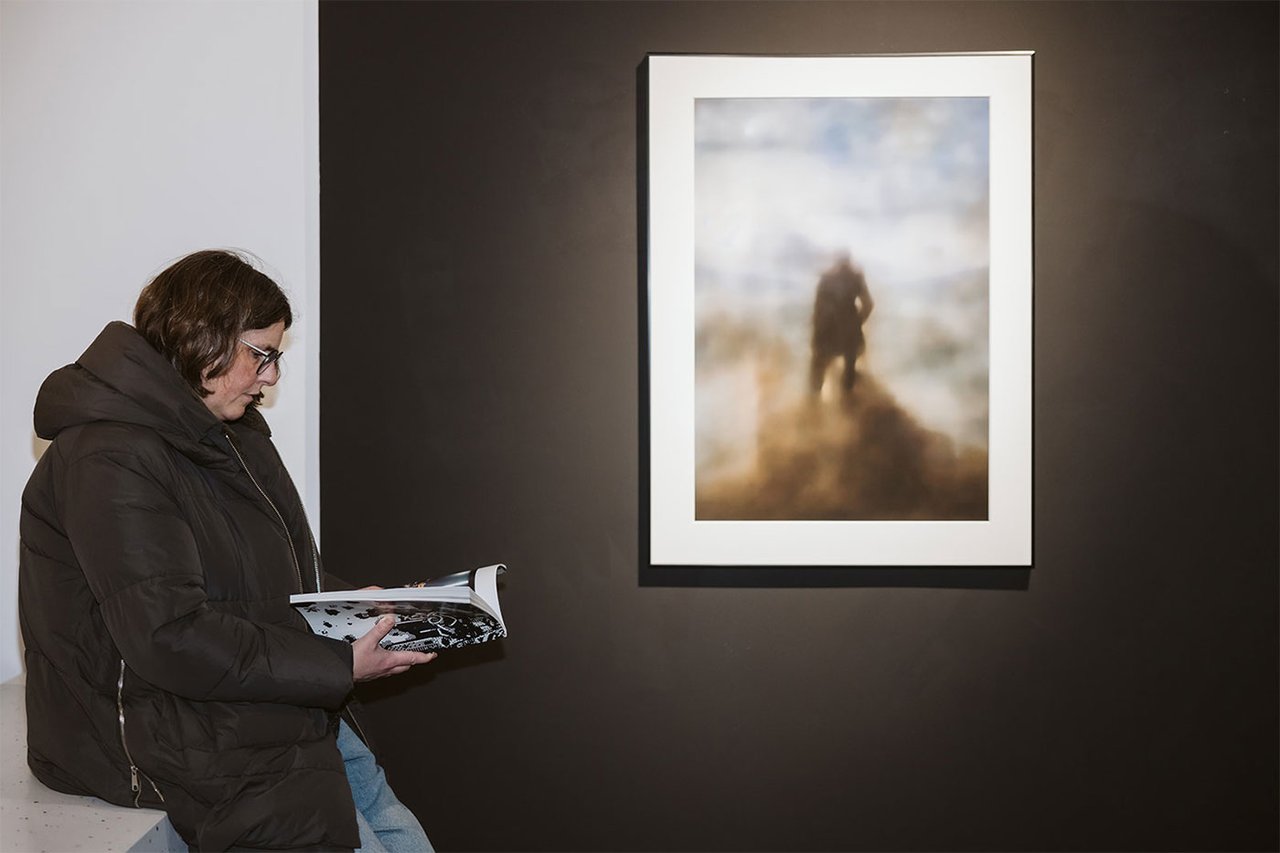
Installation view of Kevin Esherick, “The Artist is Absent”, at Heft Gallery, New York, 2026, with work: After Friedrich (Wanderer Above the Sea of Fog) (2026) from the “Ablation Studies” series. Courtesy of the artist and Heft Gallery. Photography by Rachael Crowe
MA: This idea of abstraction and the contemplative moment marks a return to similar purposes that religious art served in the Middle Ages. Abbot Suger (1081-1151), for instance, suggested “anagogia”, a spiritual ascent, through the movement from the material towards the immaterial.5 Colored light emanating from stained glass windows became a stepping stone to reflection on the divine by making “transparent” divine light possible to experience. Similarly, your images make visual what is inhabited in latent space, mathematical orchestrations that are not meant to be “seen” by human eyes in the traditional way, but to be seen by machines.
Furthermore, your works form networks between you and other interlocutors, whether machine or human, recalling what has recently been labelled the networked image: “a new form of social relations between machine and human, that also includes images made for machines”.6
As far as images made for machines, this also speaks to the idea of “operational images” introduced by the filmmaker and theorist Harun Farocki and later defined as “images that are not necessarily representational or pictorial ... they primarily operate … troubling what an image is .. and they are involved in an intervention in the world”. Trevor Paglen has also contributed to this discourse; something to which you have a homage in the exhibition.
How do you see the relationship between machine seeing and human seeing play out through your work? Are we meant to “see and/or experience it like a machine”?
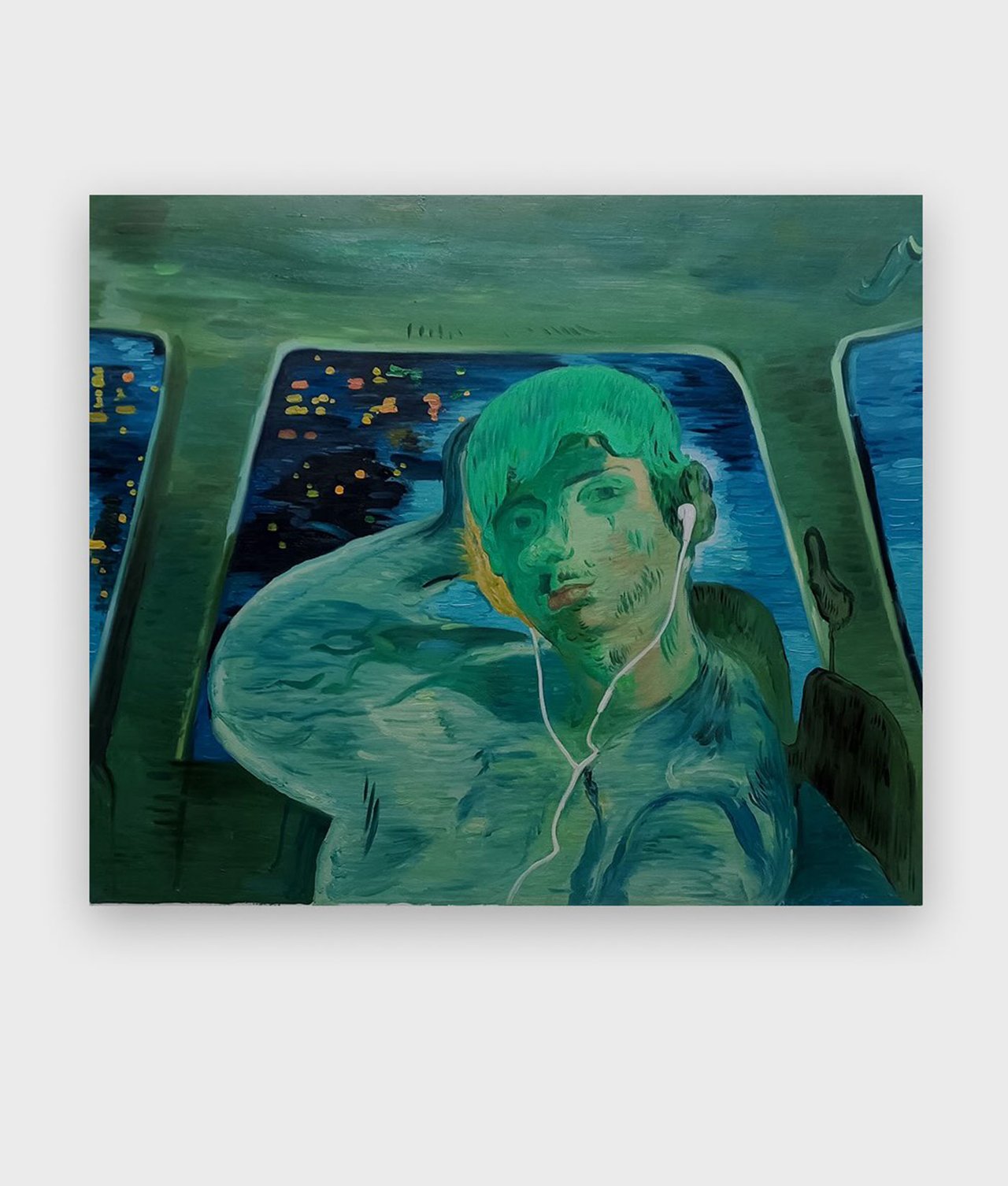
Kevin Esherick, Backseat (After Salman), 2026, from the series “Homages”. Courtesy of the artist and Heft Gallery
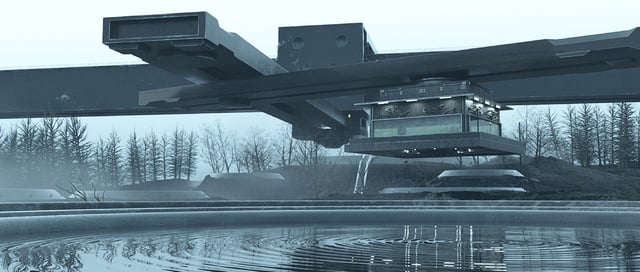
Kevin Esherick, Formations: Vector 322, Vector 7 (After Trevor), 2026, from the series “Homages”. Courtesy of the artist and Heft Gallery
Kevin Esherick, starstruck cherry blossom DRONE_STRIKE.exe “soft_focus” (After Petra), 2026, from the series “Homages”. Courtesy of the artist and Heft Gallery
KE: I started working with questions around machine seeing or machine phenomenology for my series In Utero in 2024, where I tried to envision what the cognition or “mind” of an image model might look like, or how we could imagine such a thing coming into being. Forms (2025) continued this, considering whether models hold something akin to the Platonic forms, and devising a technical process to produce images approximating them.
Hyperportraits juxtapose a familiar subject with the very foreign and incredibly powerful ways models internally represent that subject, yielding “operational languages,” more than “images”. Ablation Studies continues in the pursuit of a machine phenomenology by looking to the ways models consume and transform images.
All of these collections involve turning the models inside out to render their fundamentally alien inner workings more understandable for humans. The goal is both protective — to familiarize us with the systems playing ever more central roles in our lives — and prospective: to conceive new ways of looking, perceiving, and being. I want to help better acquaint people with these systems so that we might gain some measure of control, have grounds on which to form critique, and wield technology in service of beauty.
MA: Art has always been a battleground around the discussion concerning the role of technologies. Building on operational images, the artist Hito Steyerl also became anxious about technology, trying to come up with ways of “not being seen” digitally, like shrinking to a size smaller than a pixel, chroma-keying her face, or being female over 50. There is a lot of pushback today on AI as a technology that undermines privacy and even humanity itself.
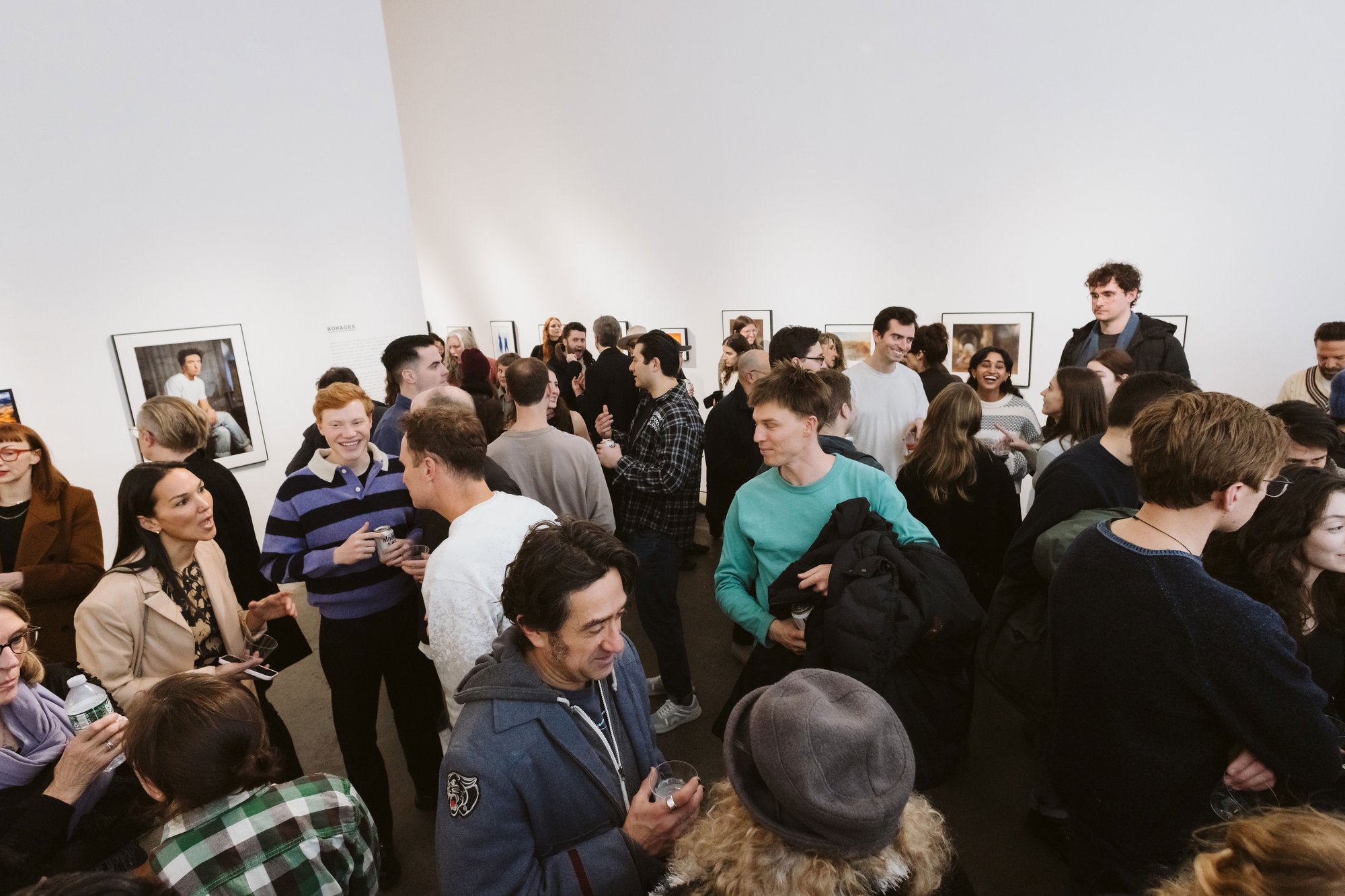
The opening reception of Kevin Esherick, “The Artist Is Absent” at Heft Gallery, New York, 2026. Courtesy of the artist and Heft Gallery. Photography by Rachael Crowe
This fear and skepticism can also be seen all the way back in the dawn of digital art in the 1960s and ’70s where, as the digital art historian Grant D. Taylor notes in his aptly titled book When the Machine Made Art, digital art was the orphan child of modernism and postmodernism: rejected by modernism for not being original, authentic, or having “authorship” in the sense of the Pollock-ian artist’s hand; and rejected by postmodernism for its identification with the technology as a means of control, surveillance, and political authoritarianism.
However, for artists like Marcel Breuer and the Bauhaus a few decades earlier, technology and industrialization was a way of bringing “good design” that would lead to a “good life” for the masses; but in the ’70s and ’80s these sensibilities were deemed authoritarian by postmodernism that broke down the possibility of an absolute good and bad.
Where do you see yourself and your work fall in this discourse?
KE: The easiest stance to have on AI as an artist right now is to hate it. The second easiest is to love it. I want to take the difficult stance, which is to detach from the comfort of a prepackaged ideological stance and look at “AI” as a complex agglomeration of interrelated things, some of which improve and some of which degrade the quality of human lives.
The trap within this stance lies in allowing that complexity to overwhelm us into a technological relativism that says it’s neither good nor bad — the old “guns don’t kill people” shtick. I’d have a hard time finding anyone who would argue that penicillin or CRISPR-based cancer drugs — both “technologies” — made the world a worse place, whereas the value of Facebook and the nuclear bomb would likely draw a lot more contest.
The opening reception of Kevin Esherick, “The Artist Is Absent” at Heft Gallery, New York, 2026. Courtesy of the artist and Heft Gallery. Photography by Rachael Crowe
The opening reception of Kevin Esherick, “The Artist Is Absent” at Heft Gallery, New York, 2026. Courtesy of the artist and Heft Gallery. Photography by Rachael Crowe
It’s a matter of how you scope the technology in question. We still need to pass judgment on certain technologies as harmful or beneficial, but we also need to exercise that judgment in light of an idea of what makes up a good life. I want my practice to form a picture of this good life. There are various paths to accomplishing this, but a primary one for me concerns finding ways to live with technology in a manner that enriches us as human beings.
How can technology enable us to live better lives, not as an optimization process, but with respect to a holistic conception of human flourishing? The Luddite or anarcho-primitivist view argues that this flourishing lies in a world without technology.
If we were still in the Garden of Eden, or had never opened Pandora’s Box, or [insert your prelapsarian metaphor here], I would maybe be of that stance. But as it stands, the backward path is untenable and we need to think critically about what it looks like to live a life integrated with and bettered by technology.
MA: Last, I want to talk about the performance aspect of this exhibition, and some thoughts for the future. You talk a lot about your works in the same breath as performance, can you say a few words on how this plays out in the show?
KE: A driving force throughout my practice, and my life more generally, is a view of life itself as an aesthetic phenomenon. It is art-like, if not art per se. I mean this in something closest to the Nietzschean sense, where the aesthetic is the gateway to the metaphysical, and the underlying structure of reality itself has something to do with meaning and metaphor.
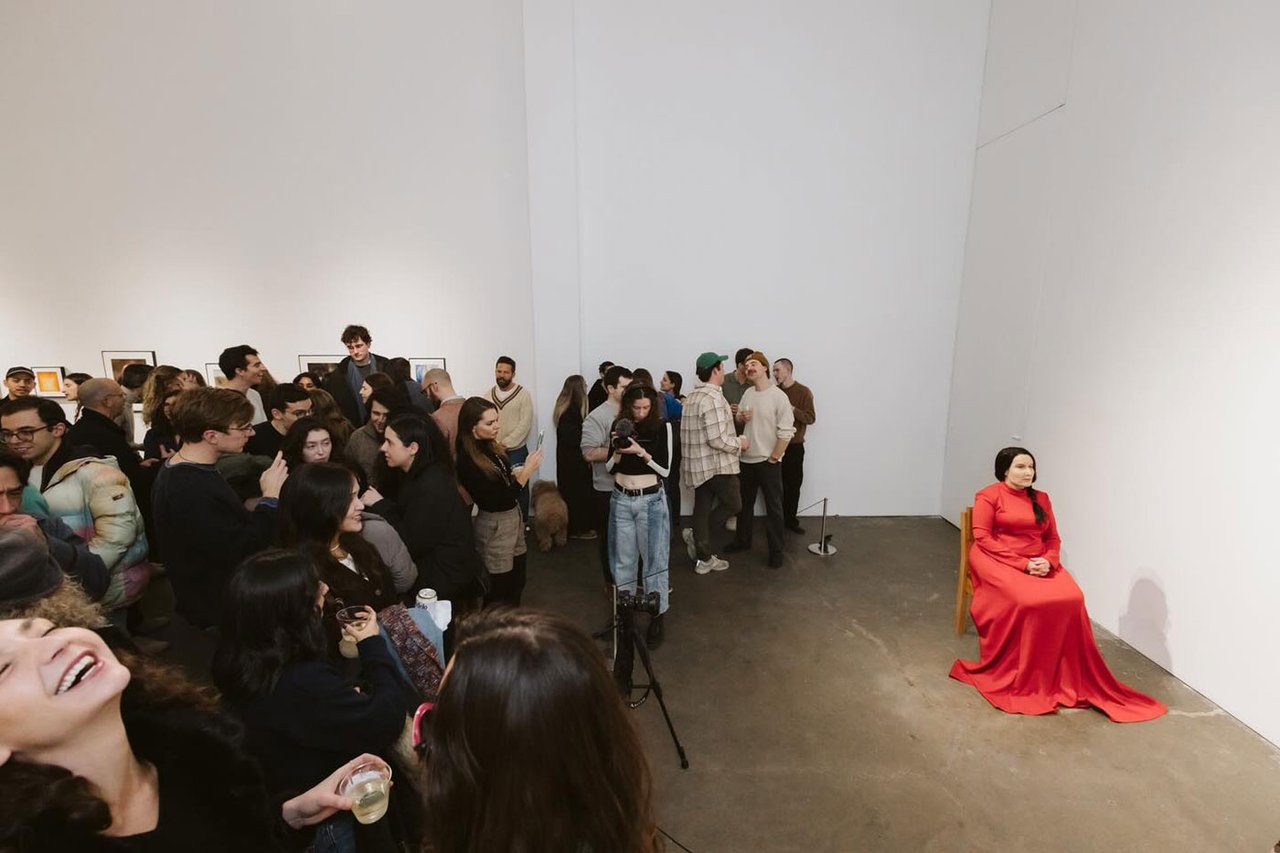
The opening reception of Kevin Esherick, “The Artist Is Absent” at Heft Gallery, New York, 2026, featuring After Marina, Esherick’s recreation of Marina Abramović’s performance, The Artist Is Present. Courtesy of the artist and Heft Gallery. Photography by Rachael Crowe
From this vantage point, the bare elements of life become more amenable to being dubbed “art”. I strongly dislike the “everything is art” platitude, because not everything is art, but anything can be art. And when raw experience is recast as art, “performance” is usually the most sensible category to place it in. This is the sense in which my work often has elements of performance.
I’m quite disinclined toward the act of performing, so it’s only through the aestheticization of things I’m already doing that I’m really cut out for it. I guess the other way performance threads through my work is that the work often consists of interactions with systems. It’s a collection of processes as much as it’s a collection of artifacts, and in art a process is most at home in the performance bucket.
This show features two main elements of performance. The Artist Is Absent, my one-year performance of letting this model take my place, obviously fits the bill, and does so by way of both of my species of performativity. For one, it takes me simply “doing life” as my forebear Tehching Hsieh would put it, literally making no art, and casting it as art. And it’s also in the exhaust of a technological system (the practice of my model replacement) that the performance arises.
The other place performance arises within the exhibition is more purely the latter form, where acting within a system amounts to an ambient procedural artwork. This is happening with the Homages, in which I systemically embodied the identities of the artists I was homaging. AI models enable us to emulate even things as complex and abstract as identity, so I really tried to inhabit the artists’ perspectives to mirror this emulation process.
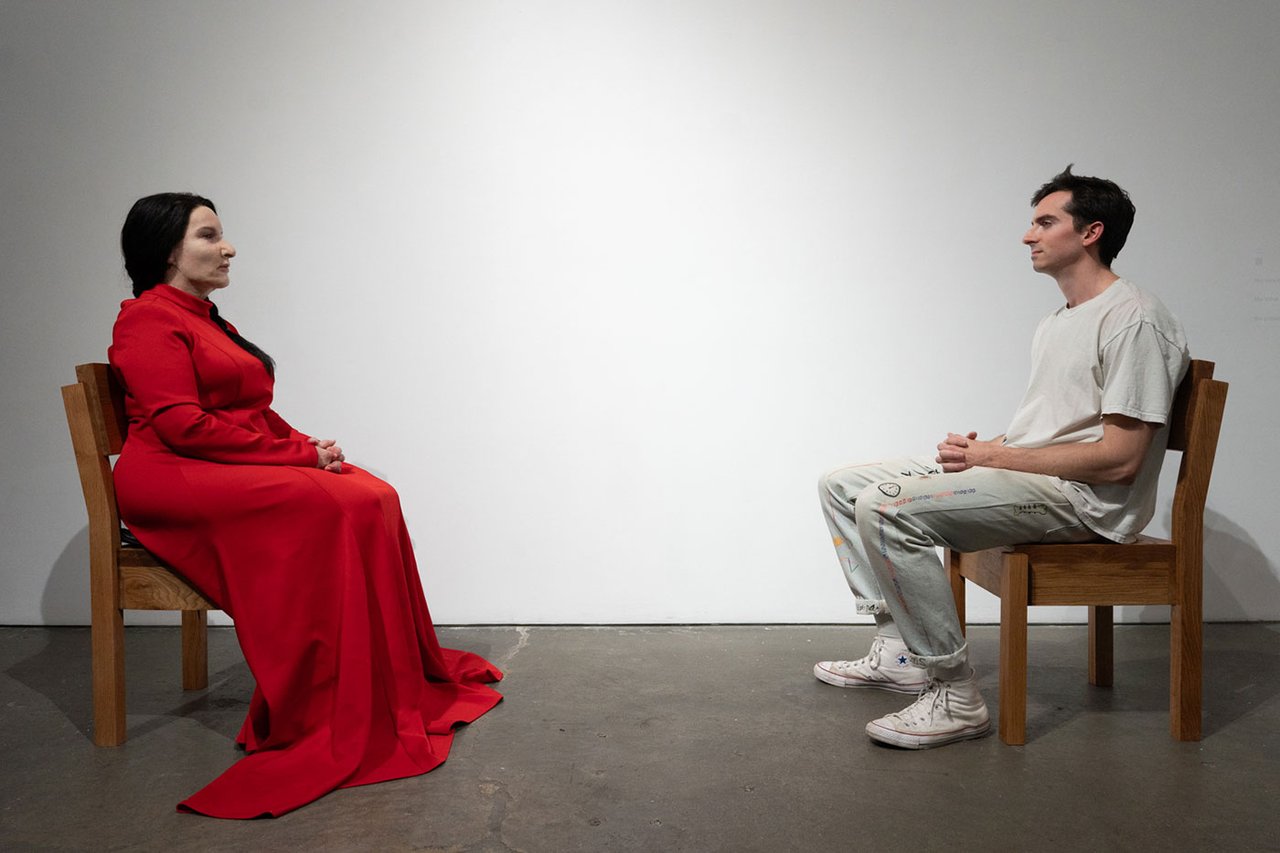
Kevin Esherick during After Marina, his recreation of Marina Abramović’s The Artist Is Present performance, during the opening reception of Esherick’s “The Artist Is Absent” at Heft Gallery, New York, 2026. Courtesy of the artist and Heft Gallery. Photography by Colin Savercool
This became most overt, and most clearly performance, in After Marina (2026) in which I restaged Marina Abramović’s iconic The Artist Is Present with a convincing fake Marina. She was outfitted in prosthetics modeled after Marina’s face, sat in a replica of the chair she sat in, and wore a replica of the iconic red dress from the original performance. The resulting facsimile of Marina represented the ultimate stakes here, shepherding the audience from questions on the changing role of the artist’s hand to ones around the place of human presence.
KE: Letting the machine completely replace me for a year. With the end of my show at Heft I formally started the one-year period of not making art. So for me as artist, up next is an empty void. For my model as me as artist, I can’t say exactly what’s coming because I don’t exactly know — it’s not up to me.
What I do know is that the model will make works that I’m genuinely proud of and excited about, because it can. Because the aim of the performance isn’t to pooh-pooh the creative capabilities of models, but to take them as a given and ask how we are to adapt in light of them.
And lastly, for me as a person outside of art, I’m going to try to spend time on things that my near-exclusive devotion to art over the last several years has come at the expense of. Writing and making some money are top of mind. I’m also planning to be scouting locations up and down the East Coast for a (non-art) project that will unfold over decades, if all goes well.
Michael Assis is a PhD candidate at Bard Graduate Center in New York and a part-time faculty member at Parsons School of Design. His work dissertation, “Decentralized Objects”, examines theoretical issues raised by art on the blockchain. Beyond academia, Assis is also the co-founder of Artistoric, an art gallery specializing in decorative arts, and the co-founder of Artfora, a Web3 platform that pairs physical objects with non-fungible tokens.
Kevin Esherick is an American artist and writer based in New York. Informed by his background in philosophy, psychology, and technology, his work touches on subject matter from consciousness to consumerism to the experience of loss, and mediums from denim to algorithms to generative AI. It has been exhibited at Expanded Art in Berlin and Sotheby’s, Heft Gallery, and the AI Psychosis Summit in New York, as well as the Hirshhorn Museum, the Art Institute of Chicago, and the National Gallery of Art (albeit without their permission).
1 I use the term “remediation” as “the representation of one medium in another”. Jay David Bolter and Richard Grusin, Remediation: Understanding New Media (Cambridge, MA: MIT Press, 1999), 45.
2 The show was comprised of two separate shows with two separate bodies of work: “Ablation Studies” and “Homages”. All three received separate pages on the gallery’s website.
3 M Kemp, “Botticelli’s Glasgow ‘Annunciation’: Patterns of Instability”, The Burlington Magazine 119, no. 888, 1977, 181.
4 Ibid., 184.
5 Abbot Suger, On What Was Done Under His Administration (De Rebus In Administratione Sua Gestis), E Panofsky (trans.), in Abbot Suger on the Abbey Church of St.-Denis and Its Art Treasures, 2nd ed., Gerda Panofsky-Soergel (ed.), Princeton, NJ: Princeton University Press, 1979, 63-65.
6 G Cox, Annet Dekker, Andrew Dewdney, and Katrina Sluis, “Affordances of the Networked Image”, The Nordic Journal of Aesthetics 30, no. 61-62 (2021), 42.
7 J Parikka, Operational Images: From the Visual to the Invisual (Minneapolis: University of Minnesota Press, 2023), vii.
8 H Steyerl, How Not to Be Seen: A Fucking Didactic Educational .MOV File, London: Tate, 2013.
9 R Cox, “The Tao of Postmodernism”, quoted in GD Taylor, When the Machine Made Art: The Troubled History of Computer Art, New York: Bloomsbury Academic, 2014, 9-11.

Thanks for the time, effort, and love that went into this Michael, and thank you RCS for publishing!