·
Article Discussion
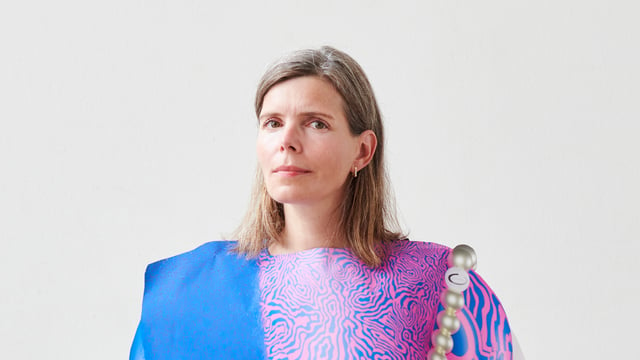
An Interview with Olia Lialina
by Anika Meier
The net art pioneer, who has always treated the web as a medium, says the tech industry is working to make the digital world increasingly invisible, prompting her to demonstrate her belief in the care of digital art
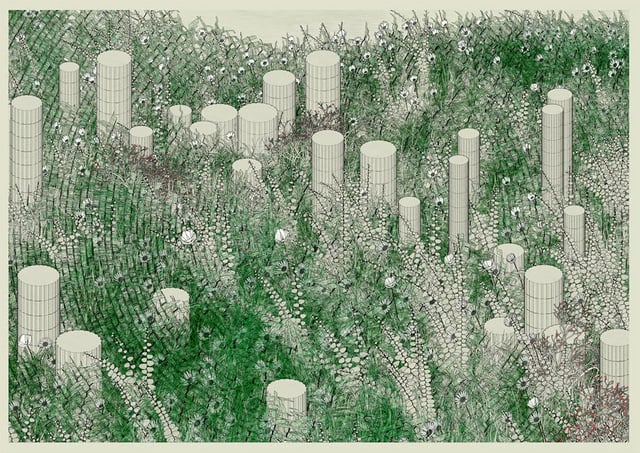
I would LOVE to hear our community’s thoughts on this, because thirty years in and Lialina says the fight has mostly been over words.
Her reasoning is that the labels are not decoration. "None of these things exist. They're zeros and ones. To give them shape, you have to find words, and these words are very powerful." Computers were named computers rather than calculators so they would seem more human. The desktop metaphor trained people to read a machine as an office. The word arrives first and the understanding follows it.
What I find striking is how her own vocabulary has moved. In 1997 she would have been "furious" to be called a web artist. Now she calls herself one on purpose, "just to keep the word in circulation," because the web is the thing she thinks is disappearing. Post-digital, which she once resisted, is now in her job title, and she needed the "post" as "a critical position, almost as a rejection." The same person, the same practice, and the terms keep changing under her, chosen each time for what they defend rather than what they describe.
Then there is the term she thinks is winning right now: "digital." She sees it "making a comeback as a more general term" that folds seven decades of practice together "without distinguishing between generative, interactive, games, and net art." She is generous about this, calling it a possibly "healthy, calm moment." I am less sure. Every time a field settles on its broadest word, the distinctions that made the work legible get absorbed into a category that describes almost nothing. Summer is a piece of software running across 25 servers in real time. A print of a Frieder Nake plotter drawing is a piece of paper. Both are "digital art" now.
So the question for this forum, and it is one we all have some stake in since we write and post under these labels every day: which word are you actually fighting for? Not the one on your bio, the one you would be annoyed to lose. And what would it cost the work if it were folded into "digital" and left there?
That’s a whole question... I find myself agreeing with Olia in that “digital” is a call for calm... I call myself a “digital artist” so that I don’t have to explain myself all the time. I remember fighting over “what is a game” when I was a videogame designer just because what I was doing within that culture differed in terms of subject and interaction. It was exhausting. “Digital” is not just for those in the know but also for those trads outside who don’t know what “software running across 25 servers” even means. And truth is most of us are doing a lot of different things within that container. Having said that, I too would be sad to not claim being a net artist, a web artist. I would be most sad to let that go.