A Quest to Show Art at Scale with Human Stories at its Heart | Onassis ONX Relay
The inaugural ONX Relay project is commissioning and supporting the exhibition of museum-scale technology-driven works by Trevor Paglen, Maya Man, and Ben Frost
Onassis ONX, the Onassis Foundation’s platform for art and advanced technologies, has launched ONX Relay, a new program designed for the commissioning and distributing of technology-driven art. The inaugural ONX Relay cohort is made up of the artists Maya Man, Trevor Paglen, and Ben Frost. Each receives funding for museum-scale work, and support in its production and in exhibiting the finished installations with institutional partners around the globe.
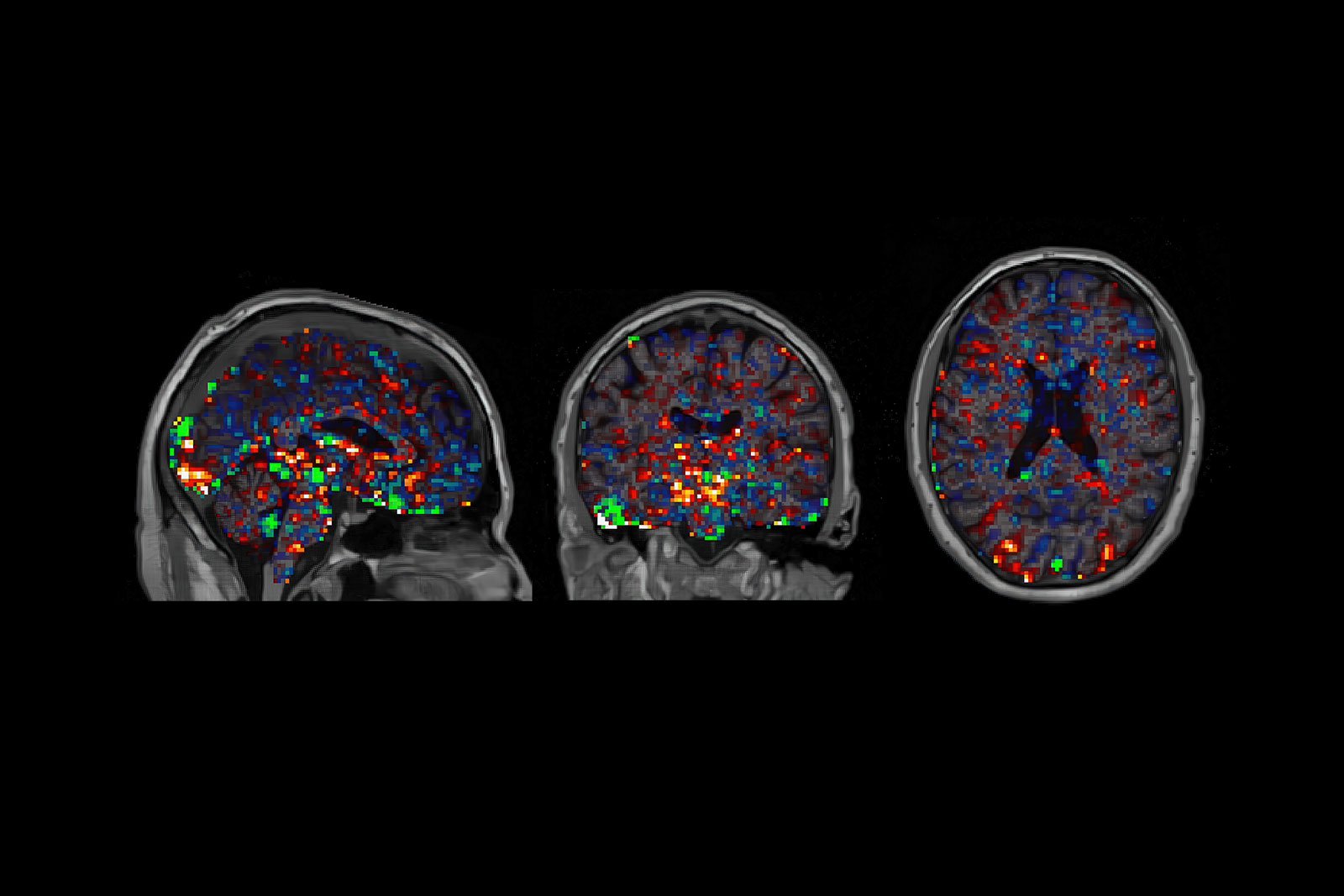
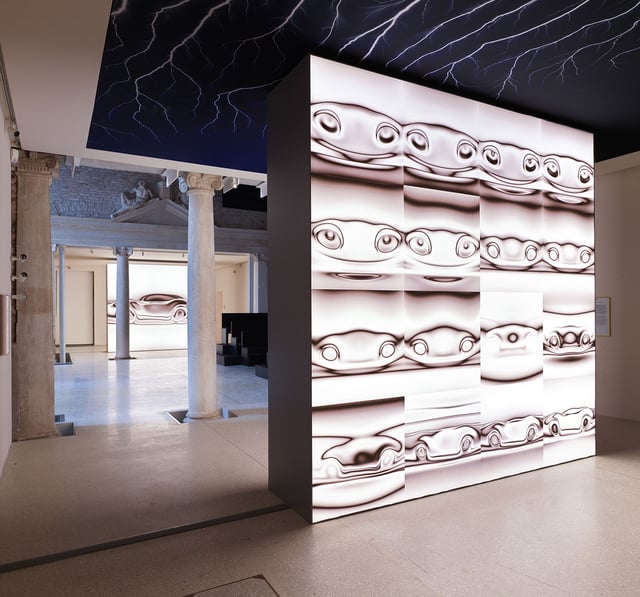
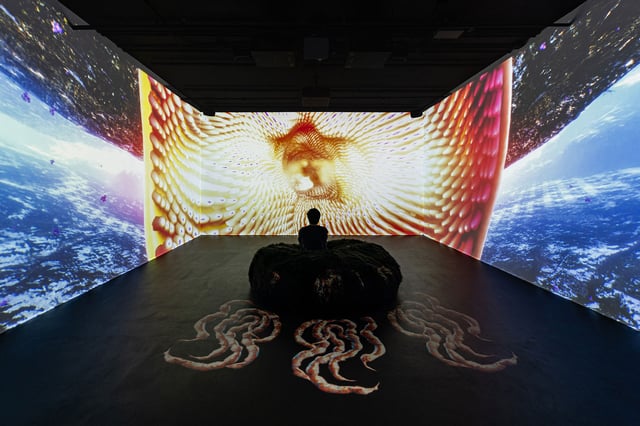
Man, the New York-based artist whose work addresses how identity culture is manufactured online, has been commissioned to make In Dreams Come True, a generative multi-channel video installation centered on a fictional K-pop-inspired girl group. The artist and polymath Trevor Paglen is working on an immersive interactive installation and a series of paintings translated from AI-generated imagery created for Neural Images, hiscollaboration with leading computational neuroscience laboratories investigating the relationship between AI, perception, and neuroscience. The artist and composer Ben Frost, who works at the intersection of sound, installation, opera, and moving image, is creating Prometheus, a multichannel video and spatial sound piece that reworks Aeschylus's hubris-ridden tragedy Prometheus Bound.
The three artists will collaborate with the Onassis ONX studios in Athens and New York City and their completed projects will be shown first, in spring 2027, to an invited group of curators, museum directors, and institutional partners, who will explore the potential for touring, exhibiting or acquisition of the works.
“Behind every work of art is a process that cannot be rushed,” Afroditi Panagiotakou, Artistic Director of the Onassis Foundation, said in a launch statement.
“Artists need time, space, and support to experiment, take risks, and imagine what does not yet exist. Onassis ONX Relay is built around that belief. What ultimately reaches audiences is the imagination, care, and dreams that brought a work into being. Technology may be the material, but the story is always human.” (Afroditi Panagiotakou)
The artists were chosen, Matthew Niederhauser, managing director of Onassis ONX, New York, tells Right Click Save, by going first to the community of artists involved in the Onassis ecosystem. Then through a call for recommendations “from institutional partners, people within the industry, other collaborators”. “We weren't quite prepared to do a full open call.” he says, “and so it was trying to activate our network both through Athens and New York.”
“Onassis ONX is trying to be a global catalyst for cutting-edge creative practices,” Niederhauser, says, so the organisation chose to work with artists who are ”really pushing the medium”. “A lot of what Onassis ONX tries to do is cultivate a group of artists who are there to work at … scale,” Niederhauser says. “But not just to be a spectacle, but to deliver real meaning through the narrative or the interactive crux of a piece. I feel the audiences want to see this type of work and we’re trying to meet that demand.”
Art institutions, Niederhauser says, find an interest among older audiences for the medium, but also a “fundamental generational shift where younger audiences that a lot of these cultural institutions are trying to reach are expecting works that are immersive, that are interactive, that are in some way responsive or thought of at scale and in formats that are don't normally fit categorization”.
Niederhauser’s point sits in parallel to the argument made by the curator Valentino Catricalà in a recent essay for Right Click Save on his concept of “New Art”, one which embraces ventures beyond the conventional exhibition experience. For Catricalà, these include work living between high art and spectacle and represented by Refik Anadol’s Dataland museum of AI art, the immersive sites created by the Tokyo-based digital art collective TeamLab, and by “Euphoria: Art is in the Air”, an exhibition of inflatable art that Catracalà curated at Le Grand Palais in 2025.
In late 2025 Onassis ONX marked its fifth anniversary in New York by moving from Midtown Manhattan to a new space in Tribeca, a 6,000 square-foot studio, at 390 Broadway, with purpose-built spaces for immersive art-making with advanced technologies, including a large motion-capture stage, a projection room able to show museum-scale institutions, and a server array to support AI and generative media. The move, Niederhauser says, was “an opportunity to double our space, have purpose-built facilities, and be in the midst of a really interesting creative neighborhood [...] accessible to our community and to audiences”.
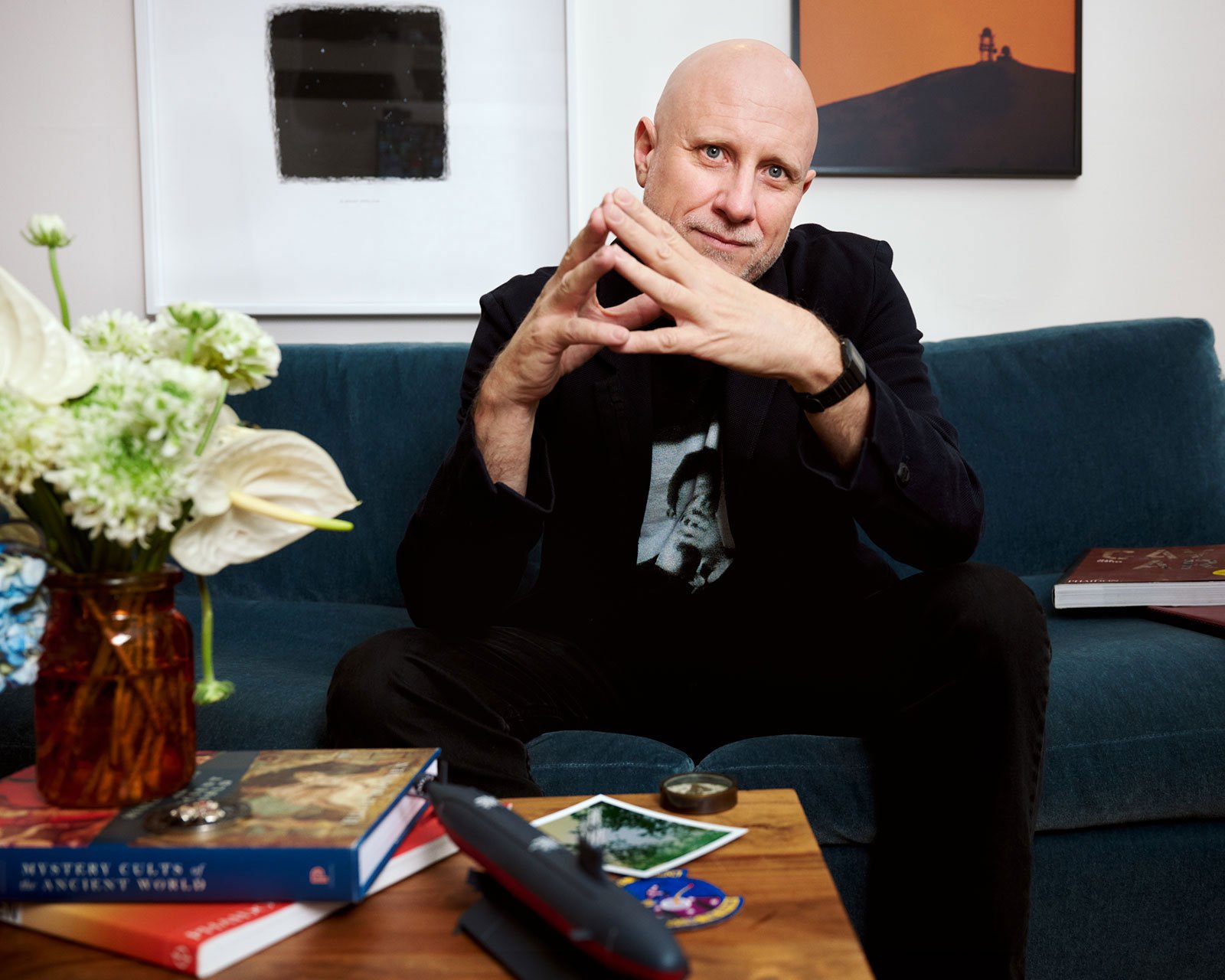
The Relay project, he says, is “definitely a response to that ambition and also to the new studio spaces that have been opening this year in Athens for Onassis ONX in the Onassis Ready building, a massive new studio and exhibition space”. Onassis Ready opened in October 2025 with a survey of the work of the photographer Juergen Teller.
Onassis ONX is looking to support the Relay artists with the production resources in Athens, Niederhauser says, but he also sees a “maturation of our entire initiative in terms of how we've been interacting with other cultural institutions, supporting them, and getting a clearer sense of how to realize projects of this importance and complexity”.
“Five years ago, we really focused only on supporting the production process, and then we realized that what we were doing was actually an important mechanism for supporting larger institutions that wanted to work with these types of artists but often didn't know how to support them.” (Matthew Niederhauser)
The showing and touring of museum-scale work is central to the Relay project. “now we’re in an amazing position,” Niederhauser says, “where we want to focus not only [on] substantial fiscal support, access to studio, access to us [for the artists involved], but then to convene people around allowing the work to tour and to be seen by audiences globally”.
“We want to see these works get shown in their best light with institutions that can properly present them for long-term exhibition. In that sense [Relay] represents the culmination of Onassis ONX as a global platform, not only for the creation of work and to support thought leadership, but actually getting these extremely ambitious projects in front of a larger global public audience.”
The Onassis ONX Relay Cohort
Maya Man. Photography by Nayquan Shuler
Maya Man | Dreams Come True
Maya Man, whose work addresses identity culture through internet-based approaches to hyperfemininity, authenticity, and the performance of self, is working on the ONX Relay commission Dreams Come True, a piece about a “fictional globally engineered K-pop-inspired girl group”.
One of her most recent creations is “StarQuest”, a body of work focused on competition dance culture in the US, which concluded in May 2026 with the solo show “StarPower”, at bitforms gallery, New York. Man was recently named as one of the first cohort of AI artist residents at Refik Anadol Studio’s Dataland museum of AI arts in Los Angeles, in a program run by the museum in partnership with Google Arts & Culture.
Dreams Come True is created using AI text-to-video and text-to-music models, and examines and addresses, according to a launch statement, “how entertainment industries construct identity, authenticity, and desire through increasingly algorithmic systems of image production”.
Man, Niederhauser says, “is inventing a global pop group in order to examine the machinery behind … the K-pop style training and promotion, which has become a global phenomenon. It is not simply a project about pop music, but about globalization, labor, representation, cultural power, and the generative AI technologies that she uses to achieve it. It is not just a production. It [is] representative of a lot of deeper cultural trends where we’re seeing entertainment interwoven with generative AI.
“[Man’s] work is mesmerizing and at the same time one of these amazing examples where through the use of the tools becomes a really nuanced critique of how they're manifesting all around us, especially in entertainment and media.” (Matthew Niederhauser)
Trevor Paglen. Photography by Jake Holler
Trevor Paglen | Neural Images
Trevor Paglen, Niederhuaser says, is “having a great moment”. The polymathic artist co-curated the Zero 10 initiative for art of the digital era at Art Basel 2026; he recently published his sixth book, How to See Like a Machine: Images After AI (Verso Books, 2026); and in March 2026 he won the LG Guggenheim Award, which noted his work bringing “visibility to digitally invisible structures, drawing on sustained engagements with AI, computer vision, digital infrastructures, and expanded landscapes”.
Paglen’s ONX Relay work, Neural Images — which he will present as an immersive interactive installation where audiences will join the image-generation process, and large-scale paintings based on AI-generated imagery — is the fruit of work done with computational neuroscience laboratories at Cornell and McGill universities on the connections between artificial intelligence, perception, and neuroscience.
Paglen, Niederhauser says, is somebody who has been “investigating the politics and technologies of seeing for a very long time” and is at a really interesting juncture “insofar as I think he's an artist who has always been prepared for this moment [...] And he is diving so deeply into the image-making processes, this experimental neuroscience problem,.”
“Trevor is both the artist and the test subject within this neuroscience problem. He’s been doing this deep work … over the past few years and asking about how images can be predicted to produce unusually strong activity in particular regions of the brain.” (Matthew Niederhauser)
This type of experiment, Niederhauser observes, “occurs almost on a daily basis on our cellphones. Technology companies measure our attention in different ways or change imagery or visuals based on lingering, and scrolling; all these different methodologies for producing greater engagement and longer attention. And Trevor is diving into the real feedback loop between the biological body and artificial image generation, which once again is becoming a massive percentage of what people are consuming online.”
Ben Frost. Photography by Jordis Richter
Ben Frost | Prometheus
The artist and composer Ben Frost, known for his operatic works for institutions including the Royal Opera House, London, is working on the large-scale multichannel video and spatial sound installation Prometheus. From its inception, he has seen his installation based on Aeschylus’s Prometheus Bound, a dramatization of the story of Prometheus — the Titan chained to a rock by Zeus as a punishment for passing the secret of fire to mortals — as an exhibition work.
Frost has been in Athens working through the Onassis AiR artistic research and residency program, which, in the past 10 months, has widened its activities into the new Onassis Ready creative hub for experimentation with digital technologies and large-format projects. Frost, Niederhauser says, “is an amazing composer and a very thoughtful creator of installations and environments that are transportive and evoke strong emotional landscapes. He approaches sound as a very physical and emotional material”.
While Paglen and Man are “very focused on this transformative moment that is occurring through generative AI, and new machine-learning tools”, Niederhauser says, Frost is using advanced technology in a different way. “He's reimagining an operatic piece into the form of a an immersive installation through not only the the sound and the image but also environmental factors and through an ancient myth that also addresses contemporary systems of power. [He is] looking at Prometheus, and presenting the Titan as a political prisoner, one who knowingly accepts punishment for disclosing what authority wants controlled. And has the endurance required to resist systems that can exceed an individual lifespan.”
“Ben is plunging into some some depths that are maybe less about the technology themselves but how the body becomes a site of resistance to them.” (Matthew Niederhauser)
“We're especially excited about how Ben conceives of large scale installation,” Niederhauser says, “and how to move an audience through something that is approaching the scale of an operatic work in terms of composition, libretto, and scenic design.”