Carl Gombrich on Art and Learning in the Digital Age
The scholar and grandson of E. H. Gombrich discusses the evolution of the artist and the power of interdisciplinary education
María Angélica Madero
The scholar and grandson of E. H. Gombrich discusses the evolution of the artist and the power of interdisciplinary education
This conversation begins with art history and ends in its disruption. Carl’s grandfather E. H. Gombrich wrote The Story of Art (1950) — perhaps the most famous art historical survey of all time — not simply as a chronological account, but as a guide to how vision has evolved in relation to culture, history, philosophy, and psychology. This approach exposed the limits of seeing artworks as detached fetish objects, asserting instead that the meaning of art is inseparable from its context.
In shifting his focus away from the isolated artwork to the conditions of its reception — what he termed “the beholder’s share” — the elder Gombrich signalled a methodological shift away from art’s autonomy toward situated practices that live in and shape the worlds around them. Though his own work inhabits a different intellectual landscape, Carl Gombrich shares the same relational impulse as his grandfather. A triathlete opera singer trained in physics and mathematical logic, Carl has spent much of his career as a leading proponent of interdisciplinary education and research.
Many of the most pressing issues of our time, from inequality, migration, and sustainability to algorithmic governance, unfold across systems that cannot be understood within a single disciplinary framework. They involve ecological processes, technological networks, political institutions, economic forces, and cultural histories that are constantly intersecting in ways that evade legibility.
In recent years, numerous artists have embraced interdisciplinarity in order to disrupt established categories as well as hegemonic political, intellectual, and technical regimes. From cellular automata to “protocol art”, today’s artistic production is often less about crafting discrete objects than inquiring into complex systems. In this way, it reflects a more-than-human condition where humans, machines, and nature are inextricably entangled.
The following discussion between Carl Gombrich and María Angélica Madero, a member of the founding faculty of the London Interdisciplinary School, is a prompt to consider what happens when we begin not with what we know, but with what we do not yet understand.
María Angélica Madero: Across the different programs that you have developed, both at UCL and at the London Interdisciplinary School, the emphasis appears less on defending interdisciplinarity as an abstract theory and more on creating practical conditions for new forms of inquiry to emerge through experimentation, collaboration, and engagement with complex problems. How far has your understanding of interdisciplinarity developed through testing institutional and educational forms in practice?
Carl Gombrich: Firstly, I really don’t see myself in the same league — let alone the same division — as my grandfather in terms of intellectual contributions and achievement. He was, I think it’s fair to say, one of the great intellectuals of the twentieth century.
The theories came after I had tried some implementations of interdisciplinarity. We might now call [this] approach “active research”, which is [to say] “learn[ing] by doing and iterating to correct mistakes”. This process, rather than any theory about it, is in fact quite close to the artistic process. Certainly, it involves creativity and adapting to context. I like that connection with the arts.
Rather than focus on whether interdisciplinarity is a “new form of knowledge” in some kind of theoretical way — which would be impossible to answer without detailed discussion of epistemology and other classically philosophical things — I focus on problems as a basis for education.

MAM: Is that where interdisciplinarity becomes concrete?
CG: An interdisciplinary approach is still seen as very radical in higher and secondary education. This is because the entire system has been organized around disciplines, [which is] the fancy name for the subjects we study at school: maths, physics, chemistry, biology, history, literature, art, economics, and so on. That’s how our system works in terms of exams, qualifications for teaching, etc. Any attempt to cross, integrate, or even do away with those disciplines will have to be brave and radical as you are changing or breaking the current system.
But [...] to focus on problems as a starting point for education is not particularly new. One can certainly trace it back to John Dewey at the beginning of the twentieth century, but arguably the person who articulates this philosophy best is Karl Popper (my grandfather’s best friend) who said:
“We are not students of some subject matter, but students of problems. And problems may cut right across the borders of any subject matter or discipline.”¹
MAM: Are you saying that the problem comes before the discipline?
CG: Yes. For Popper, problem-solving — in a more intellectual sense (although he also saw animals as problem-solving) — was a quintessentially human thing to do. He thought that the secret to a happy, fulfilled life was to “fall in love” with a problem and then spend one’s life trying to solve it until another more “loveable” problem came along!
My grandfather also saw artists as “problem-solving” in their own way. He saw this as how artists moved, historically, from drawing and painting what they knew to [capturing] what they saw, at least until photography came along. That changed everything. Problem-solving as a basis for education is easy to say, of course, but much harder to do!

MAM: While Popper emphasizes the intellectual joy of the problem, decolonial scholars such as Arturo Escobar remind us that the framing of a problem is never neutral. To “fall in love” with a problem also requires us to ask: “whose problem is this, and whose world view does this frame serve?” If we aren’t careful, problem-solving can simply become a way of redesigning the world in the image of the same old power structures. What makes the problem-first approach so difficult in practice?
CG: The methods we use to collect data and interrogate it — to advance knowledge, in other words — have been developed in tandem with the corpuses of knowledge which constitute the “disciplines”.
[The challenge is] if you want to teach students to advance, or at least interrogate, knowledge, you need to teach them methods, and those methods will, inevitably, start to silo the students in particular canons of disciplinary knowledge.
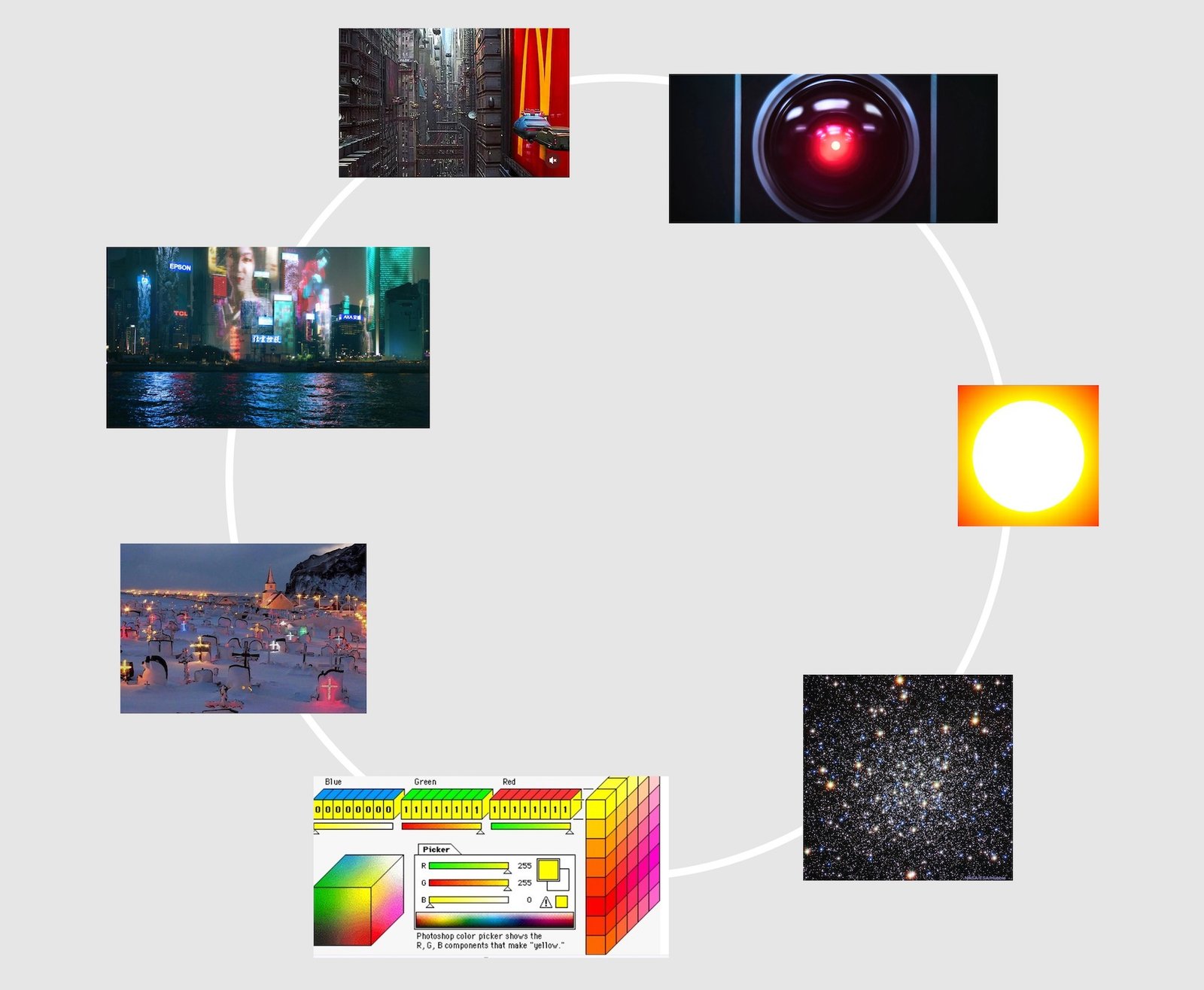
My other grandfather, Carl J. Friedrich, who was Professor of Government at Harvard, wrote about the tight connection between bodies of knowledge and methods. There is [a] tension between respecting the origins of the methods — and the disciplines that grew out of them — and the need to stay alive to the fundamental importance of exploring the problem without prejudice: a “pure approach to problem-solving”, which is so important in intellectual inquiry.
As you hint, “purity” is also pretty much impossible [...] and some set of prior values will always be involved, but the aspiration to frame the problem as clearly and neutrally as possible is still important. At the London Interdisciplinary School, we did our best to teach lots of interesting methods to students from across the arts, humanities, social sciences, and sciences, and then encourage [them] to use those methods to tackle any problem that they were “in love with”, even if we didn’t quite phrase it like that.
[...] As a wise person said to me when we were setting up our curriculum: “When looking at a problem, always ask, ‘who is benefiting from this problem?’”
An education based on using a range of methods to tackle interesting problems can really bring out the best in the very best students. Such an education can either be naturally interdisciplinary, if the students use a range of methods they think are best to tackle their problems of interest, or the program can do an element of “forcing” interdisciplinarity by requiring students to combine methods usually associated with different disciplines, for example by obliging students to take a big data (quantitative) view of a social problem, combined with a more qualitative approach associated with, say, the softer social sciences or the arts.

MAM: A discipline offers a structure: a disciplined way of thinking, and a specific lens. A problem, by contrast, begins in uncertainty, and demands new methods, debates, canons, and questions to be assembled.
You have written that interdisciplinarity is “easy but hard, hard but easy”: easy because we simply follow the problem and hard because the problem rarely tells us how to follow it.
CG: At the level of the learner, it requires people with wide-ranging interests and a willingness to challenge their own presuppositions and follow problems wherever they lead. As our colleague James Carney phrases it [often attributed to William Faulkner], you may need to “kill your darlings” if they bind you to previous prejudices or blind alleys. This demands psychological flexibility and resilience: qualities not particularly associated with academic life, so there is something of a paradox in requiring this in higher education. Yet many students leaving school possess them, and it is rewarding to offer higher education programs in which they can flourish.
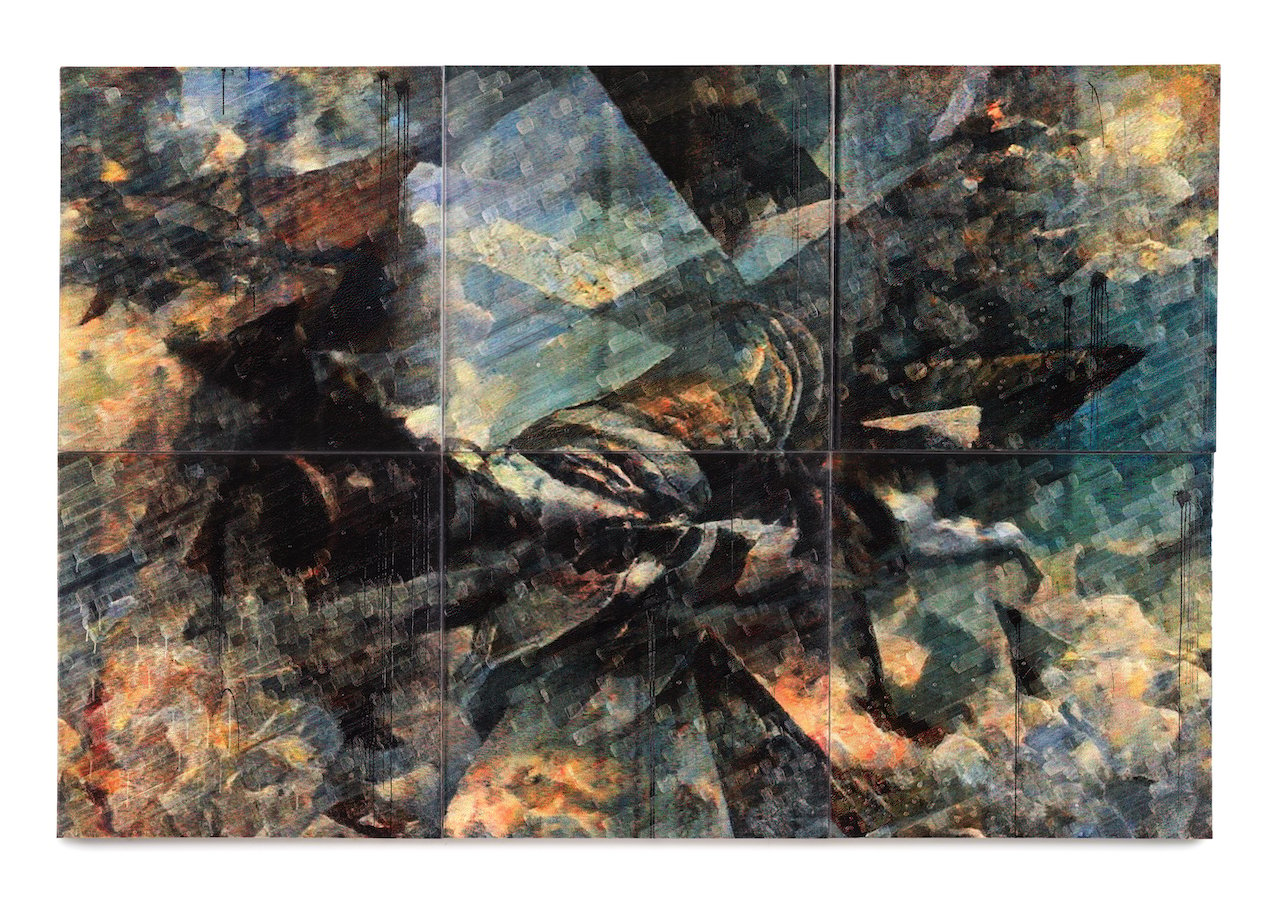
MAM: Working with images is a missed opportunity in education that privileges words and numbers and which regards the visual as illustration rather than the principal inquiry. But in an interdisciplinary context, images often become sites of synthesis where data, ethics, and aesthetics converge. What makes visual literacy so vital today?
CG: Visual literacy is downplayed as one of the key literacies we expect people to have as part of their general education. And so many academics in disciplines outside of the arts will have little understanding of art, even at a basic level. The primary problem with teaching visual literacy as an equal partner alongside numeracy and literacy — one of the reasons people “miss” it and fail to put it on a par with those other literacies — is that there isn’t a clear, universally agreed syntax or semantics.
It is in the nature of the arts that significant portions will always lie beyond contemporary possibilities of measurement. And this is a problem for many bureaucratically-driven education systems.
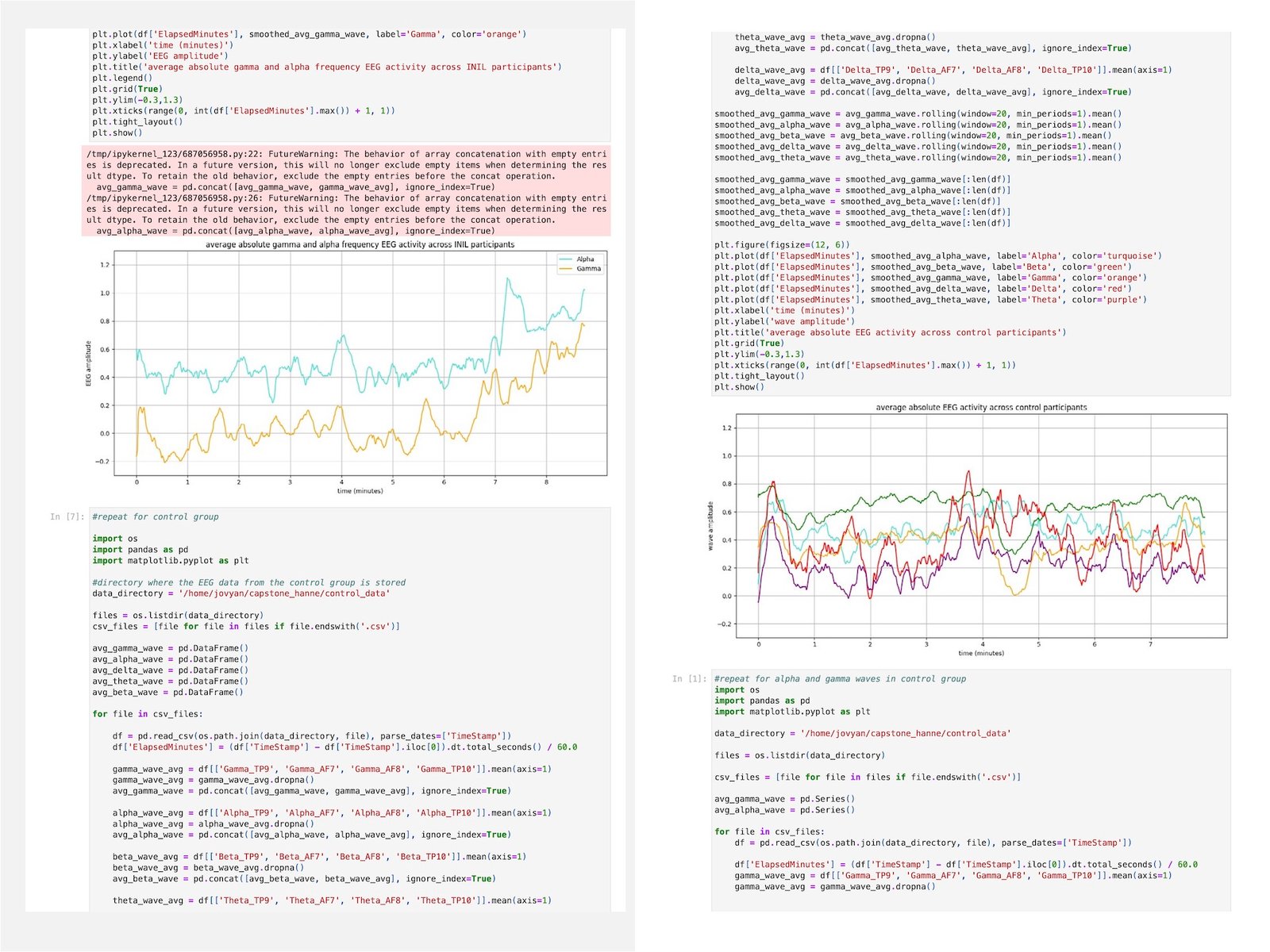
Interdisciplinary approaches such as that taken by our student Hanne Peeraer in quantifying human perception of the abstract in art may go some way to changing this. Ironically, market-driven systems sometimes recognize visual innovation more easily than education does, precisely because new forms cannot be evaluated through existing metrics.
MAM: In your work on interdisciplinary education, you’ve spoken of superconcepts: ideas such as entropy, evolution, and networks that travel across disciplines while reshaping problems in each context. Why do some concepts move so productively between fields?
CG: I’m not sure, but there is something deep about the ability of some concepts to reveal patterns [and] structures in the world that we haven’t seen before and [that] don’t simply belong to one discipline. On the other hand, there are a bunch of really interesting and powerful concepts that also emerge in a disciplinary context and go on to have fruitful applications far outside their original domain. My great mentor and friend, Alan Wilson, named these superconcepts: ideas forged within specialized fields that later prove widely transferable.
Take evolution or natural selection: the idea that there is a relationship between an individual and its environment which results in certain individuals being selected by that environment so that their traits are passed onto the next generation emerged with Charles Darwin, and received a huge boost from the realization that it could be explained by the genetics of natural organisms.
But now the concept of evolution is seen to apply to everything from genetic algorithms — where programmers test the robustness of their programs in created environments — to the design of products such as toasters or sneakers, to the online world of memes.

There are many other concepts that work in this superconceptual way. Entropy is a fascinating example, [emerging] originally in engineering, then physics, which can now be applied fruitfully in the social sciences as well as music and the arts. Or structuralism — originating in Ferdinand de Saussure’s linguistics — which now [applies] in anthropology, international relations, and elsewhere.
These conceptual histories are really fun to explore both from the perspective of a history of ideas and because [the] habit of thinking in terms of conceptual transfer can be a way of getting good at creative brainstorming. There is a whole line of thinking about creativity that says that creativity is the ability to transfer concepts into new spaces in order to give insight or produce something new of value.
MAM: Many contemporary artists working with generative systems operate through conceptual transfer, constructing environments from which forms emerge relationally. Emergence feels especially important here because it describes phenomena that cannot be reduced to their constituent parts but arise through interactions between them. I’m thinking specifically of Juan Covelli’s Speculative Treasures (2021), where a generative AI model trained on images of the Quimbaya artifacts becomes a means of symbolic repatriation.
CG: I like the way this blends advanced computational systems with Indigenous history and the unresolved legacy of colonization. Maybe in just a few years we will have fewer calls for repatriation of artifacts as the digital substitutes or descendents will be more interesting than the originals! These wheels turn in strange ways sometimes.

MAM: In your piece, Interdisciplinarity: Virus or Network?, you describe interdisciplinarity as operating through two seemingly contradictory logics: transgressive and disruptive on the one hand and connective and structural on the other. Contemporary art also seems to inhabit both conditions simultaneously.
CG: That piece was part of the catalog for an exhibition of the work of Jacob van der Beugel at the Museum Beelden aan Zee in The Netherlands.
The main idea was to describe two very different views of interdisciplinarity: that of a virus that infects the status quo, undermines certainty, and is potentially destructive as well as generative; and that of a network, a structure or structuring, that connects previously disparate entities, forming a coherent whole by linking disconnected parts. Both metaphors apply well to the arts.
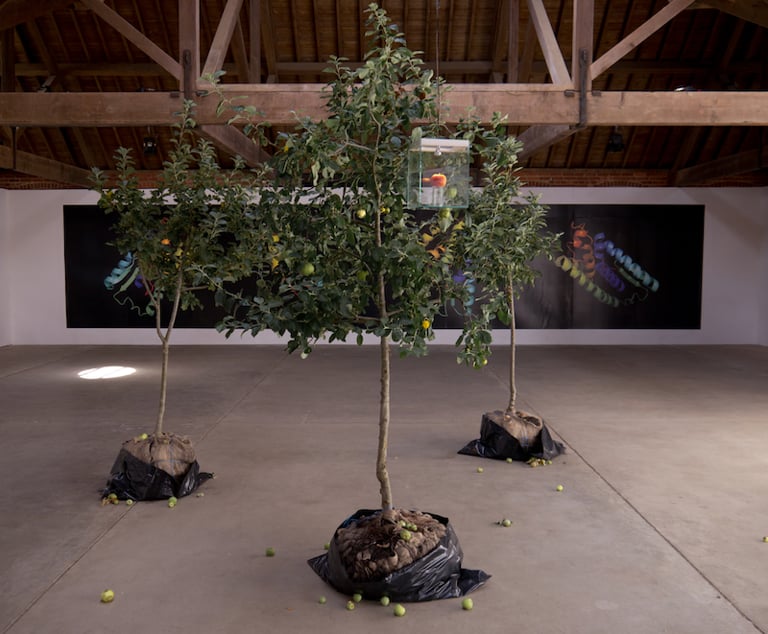
One example of a “virus-type” work is that of Charlotte Jarvis, whose project, Blighted by Kenning, involved bioengineering a bacteria with the Universal Declaration of Human Rights encoded into its DNA sequence. The synthetic DNA was extracted and used to “contaminate” apples grown near The Hague, the seat of the International Court of Justice. These “forbidden fruit” were then sent to genomics laboratories around the world, [with] scientists asked to sequence the declaration from the DNA and then to eat the fruit. It is a piece that both intrigues and revolts at the same time, forcing a physical internalization of a legal code.
For the “network” side of the distinction, I referenced Heath Bunting’s maps of political connections and influence, specifically A Map of Terrorism (2008). While Jarvis’s work is about the biological infection of the body with law, Bunting’s map reveals the “expert system” that governs our social mobility.
In much contemporary art we see that artists are thrown, perhaps willingly enough, into [the role of] hackers or transgressors. Art, or at least “good” art, is about helping us to perceive things differently, and that will always by definition involve being somewhat at odds with, or outside the norms of, the day.
Despite the rich potential of the digital age for art, truly productive interdisciplinary collaborations between artists and mainstream scientists or engineers are still rare. That is something we could work on.
The good news for art and artists is that this extraordinary digital age, with its new artistic as well as political and social affordances, is a playground for hackers. [It offers] a rich new canvas and set of tools for those artists who would be the virus or those who would like to connect to create new networks of insight or meaning.
Carl Gombrich is a British interdisciplinary educator, academic, triathlete, former opera singer, and co-founder of the London Interdisciplinary School. In 2010, Gombrich was appointed Programme Director of UCL Arts and Sciences, leading the design, development, and implementation of the degree, which began accepting students in 2012. In 2017, Gombrich founded the London Interdisciplinary School, where he worked as the Academic Lead and Head of Teaching and Learning until 2025.
María Angélica Madero is part of the founding faculty at the London Interdisciplinary School, where she likes to preach that images are as important as words and numbers. She’s currently Associate Director of the Masters in Art and Science in Interdisciplinary Problems and Methods. Once, she was the Head of Art at El Bosque University in Bogota, Colombia. She cares about how to inhabit the present more radically. She mostly works in collectivity.
¹ KR Popper, Conjectures and Refutations: The Growth of Scientific Knowledge, New York: Routledge and Kegan Paul, 1963, 88.
No comments yet. Be the first to share your thoughts.
Mentioned in this article
People: Carl Gombrich, María Angélica Madero, Charlotte Jarvis, E. H. Gombrich, Hanne Peeraer, Jacob van der Beugel, Juan Covelli, Karl Popper|Works: Blighted by Kenning, Speculative Treasures — Tayrona|