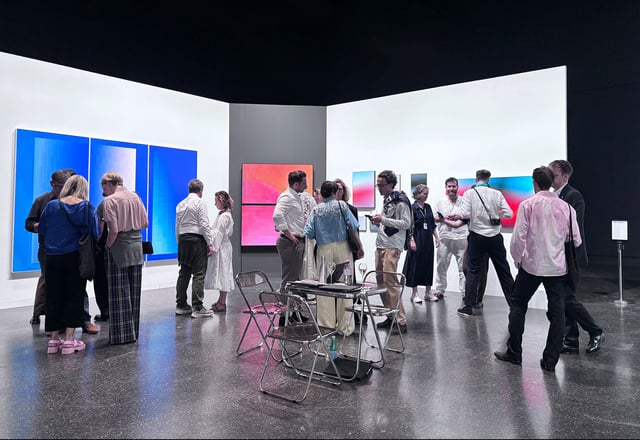
William Mapan is showing two new series of work — Paysages Plausibles (2026), a group of oil paintings, and the related plotter drawings Dances on Shadows (2026) — with Art Blocks, as part of the third iteration of Zero 10 at Art Basel, Switzerland (June 16 to 21, 2026).
Both series derive from nine months’ work on an algorithm built through research into texture, form, and space, carried out on what the artist describes as a “bridge” between code and paper, between digital landscapes and physical paintings. That work is an evolution of the program the artist used to create the four oil paintings he showed in “Code + Matter”, a group show of physical works by algorithmic artists that he put on in Paris in October 2025 with his friends Alexis André, Julien Espagnon, and Florian Zumbrunn.
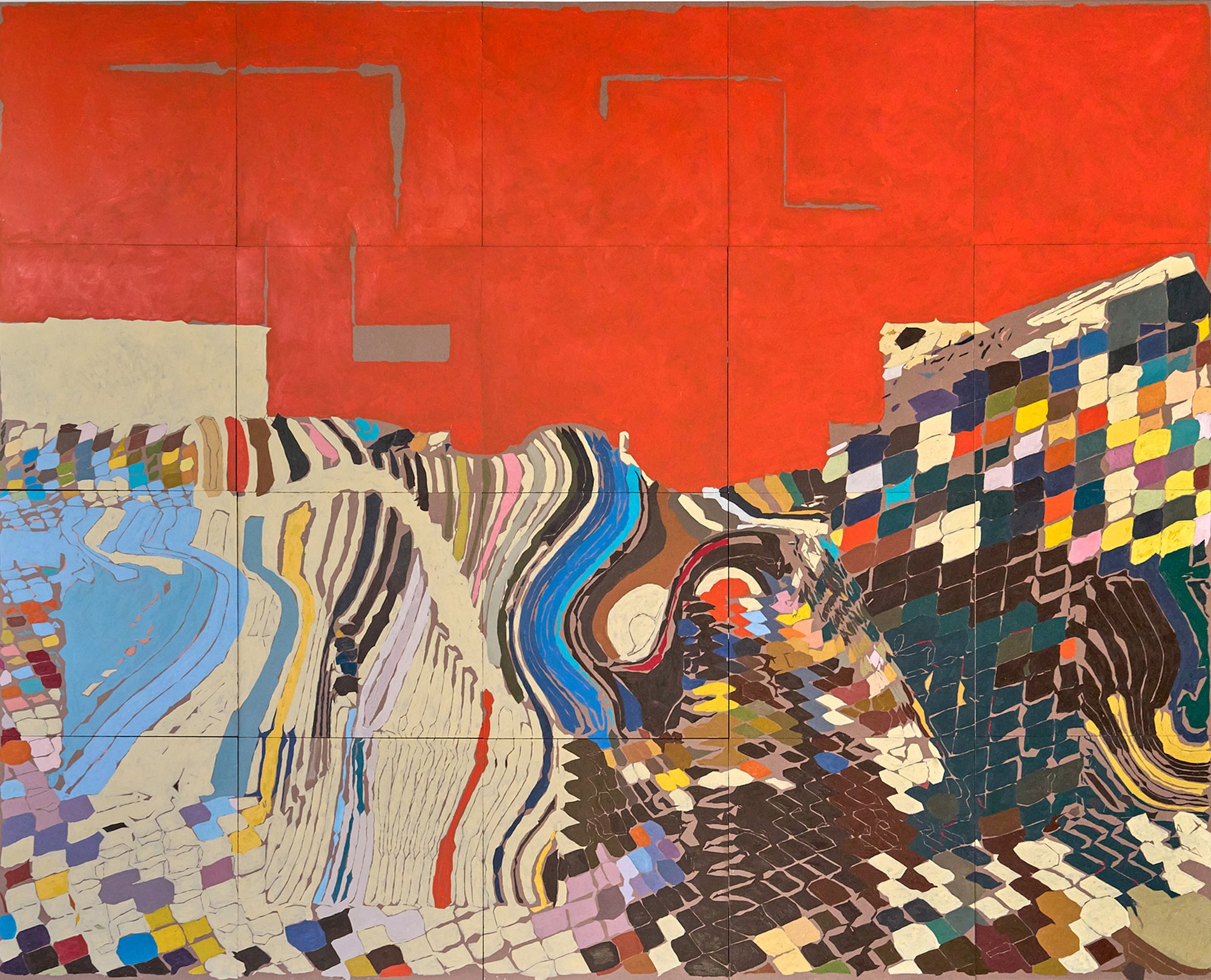
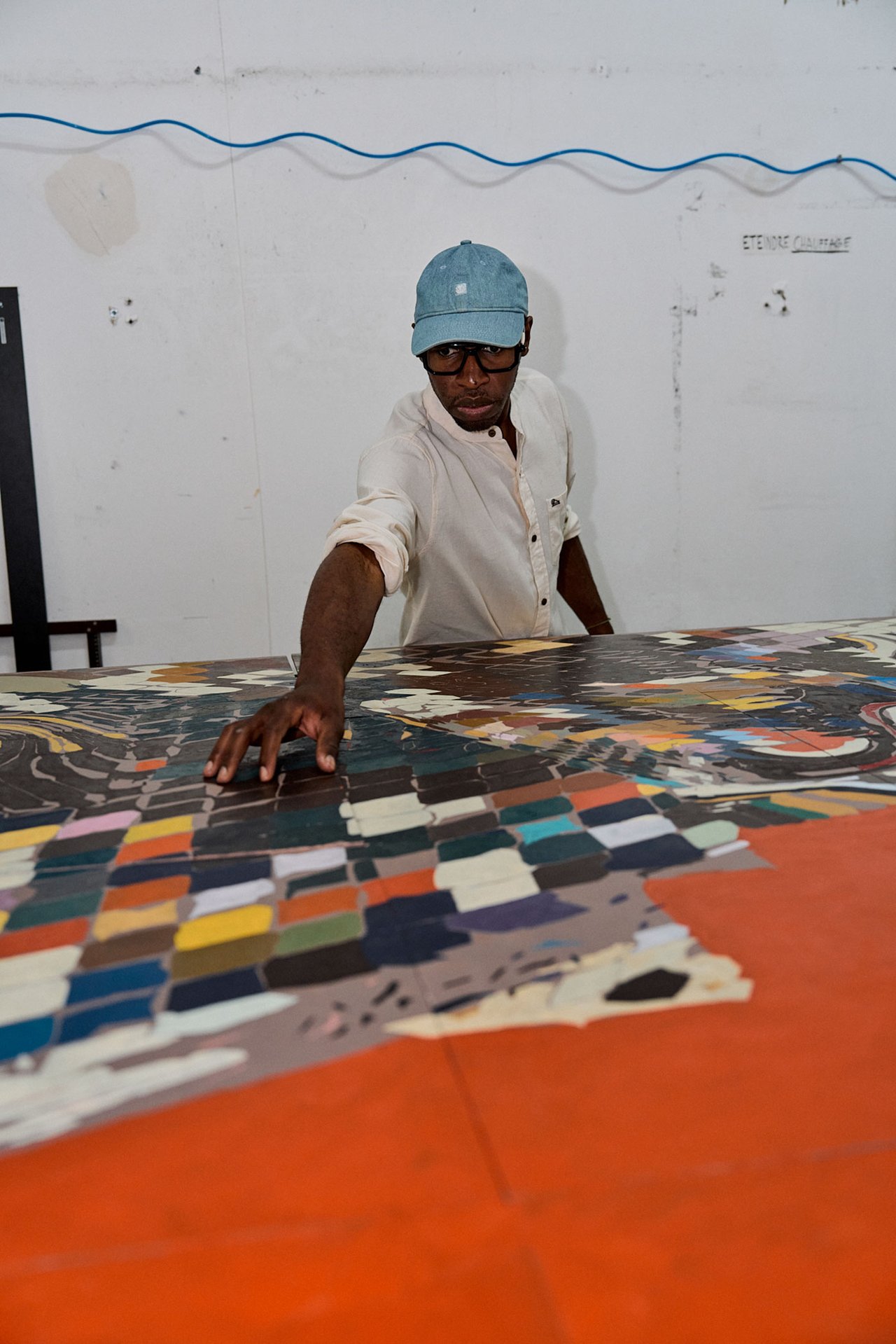
At the center of the presentation at Zero 10 is Mapan’s largest oil painting to date, État des lieux, 2026, 2m tall by 2.5m wide, and made up of 20 wood panels. The work, Mapan says, is in the tradition of David Hockney's A Bigger Grand Canyon (1998), in the way it embraces multiple vantage points to create a sweeping, generative landscape.
As Mapan tells Right Click Save, he was deeply impressed by seeing “David Hockney 25”, the late artist’s largest ever show, at Fondation Louis Vuitton, in 2025: “It made me think of my work when I play with dimensions in 3D and 2D. [You have Hockney saying] from one point of view, I will show this. And from another point of view, in the same painting, I will show this. In different [parts] of the painting, the ‘camera angle’ is different. So you have these different perspectives, these different stories, and multiple points of view. And as a viewer, when you look at it, you don't know where the start [is] and [where] the end….”
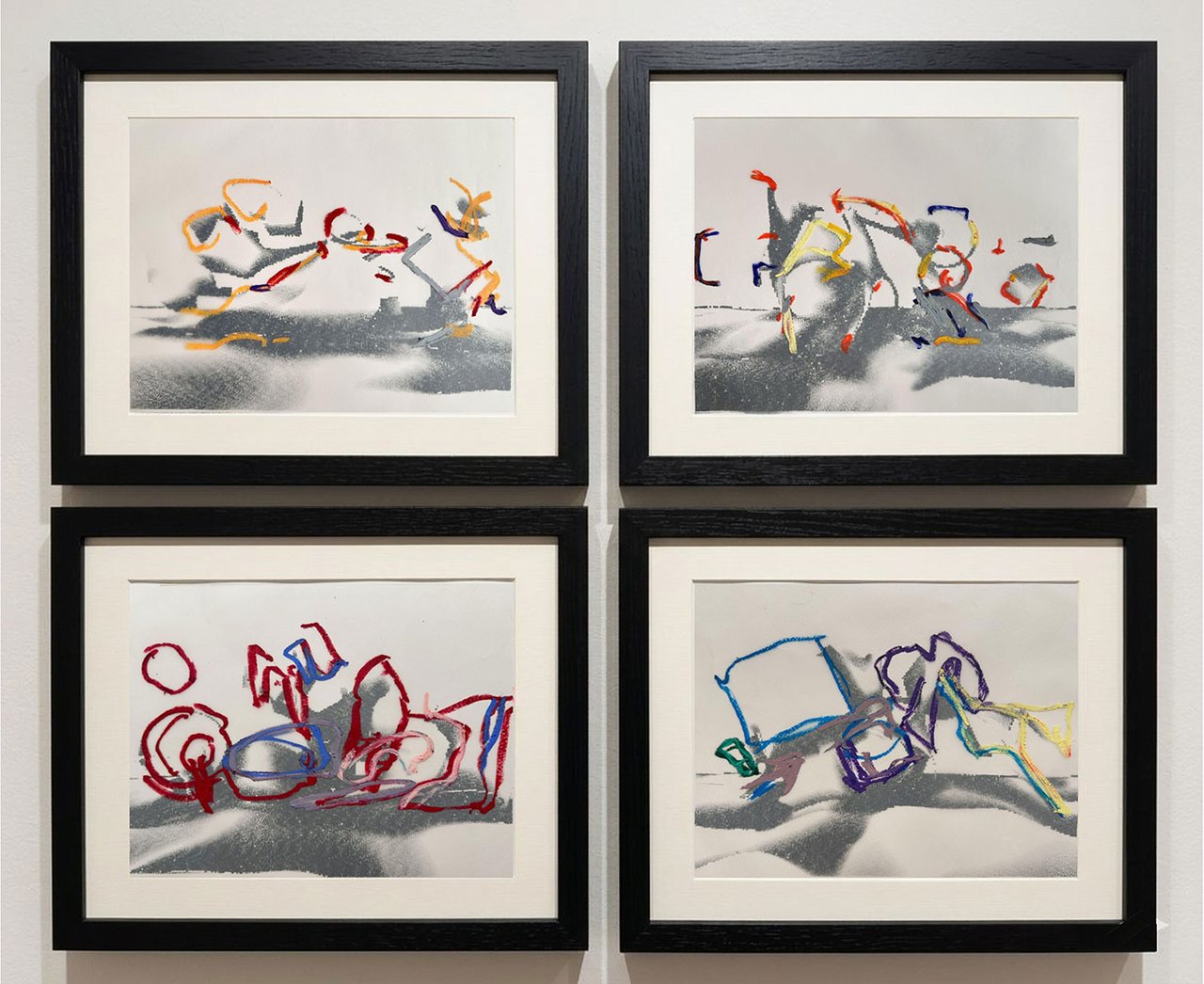
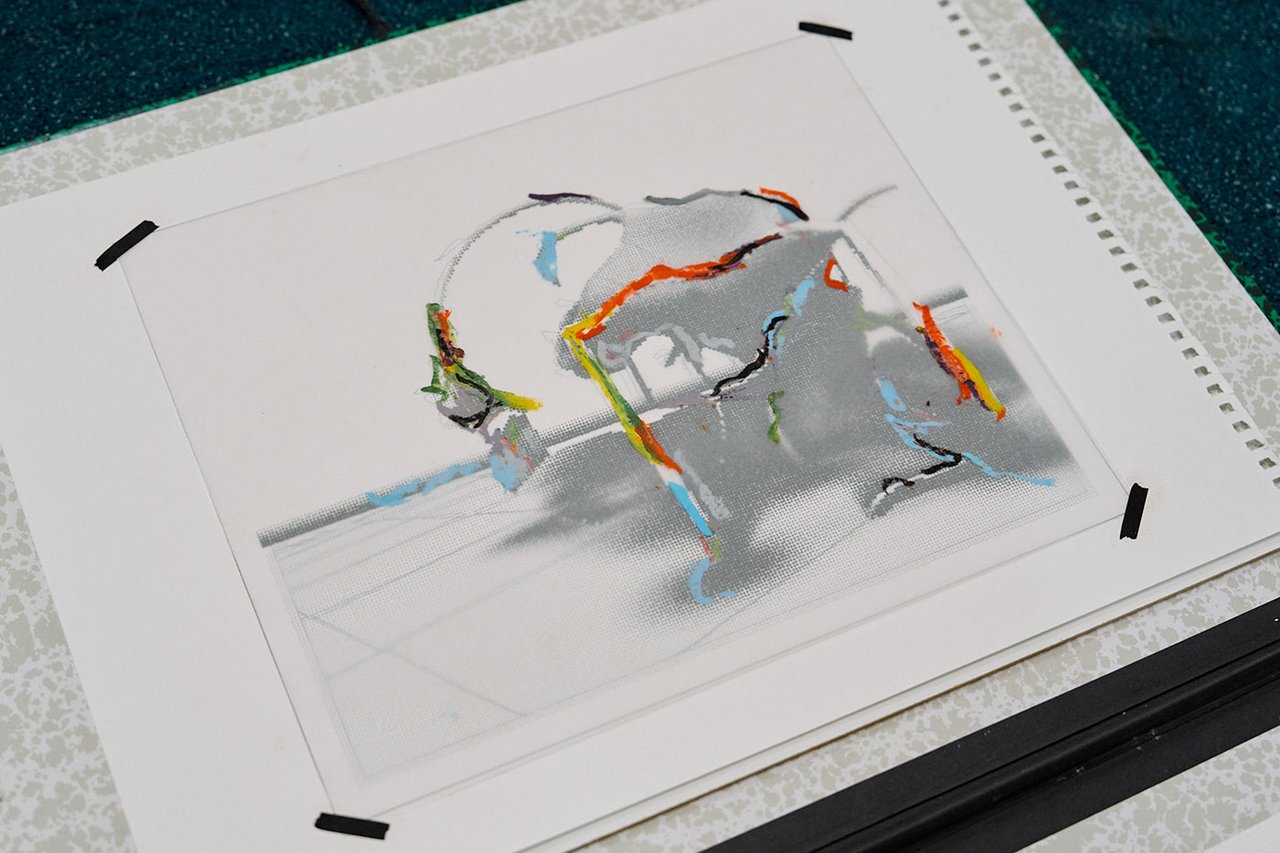
William Mapan, plotter drawings from the series Paysages Plausibles: DOS, Dances on Shadows, 2026. Courtesy of the artist. Photography by Federico Floriani
Mapan will also be showing six smaller oil landscapes, 80cm by 60cm, and a live installation, where buyers can mint and output plotter drawings, 30cm by 24cm, from the generative series. In the catalogue, the artist describes Paysages Plausibles: DOS, Dances on Shadows at Zero 10 as “A drawing machine executing as William’s brain”.
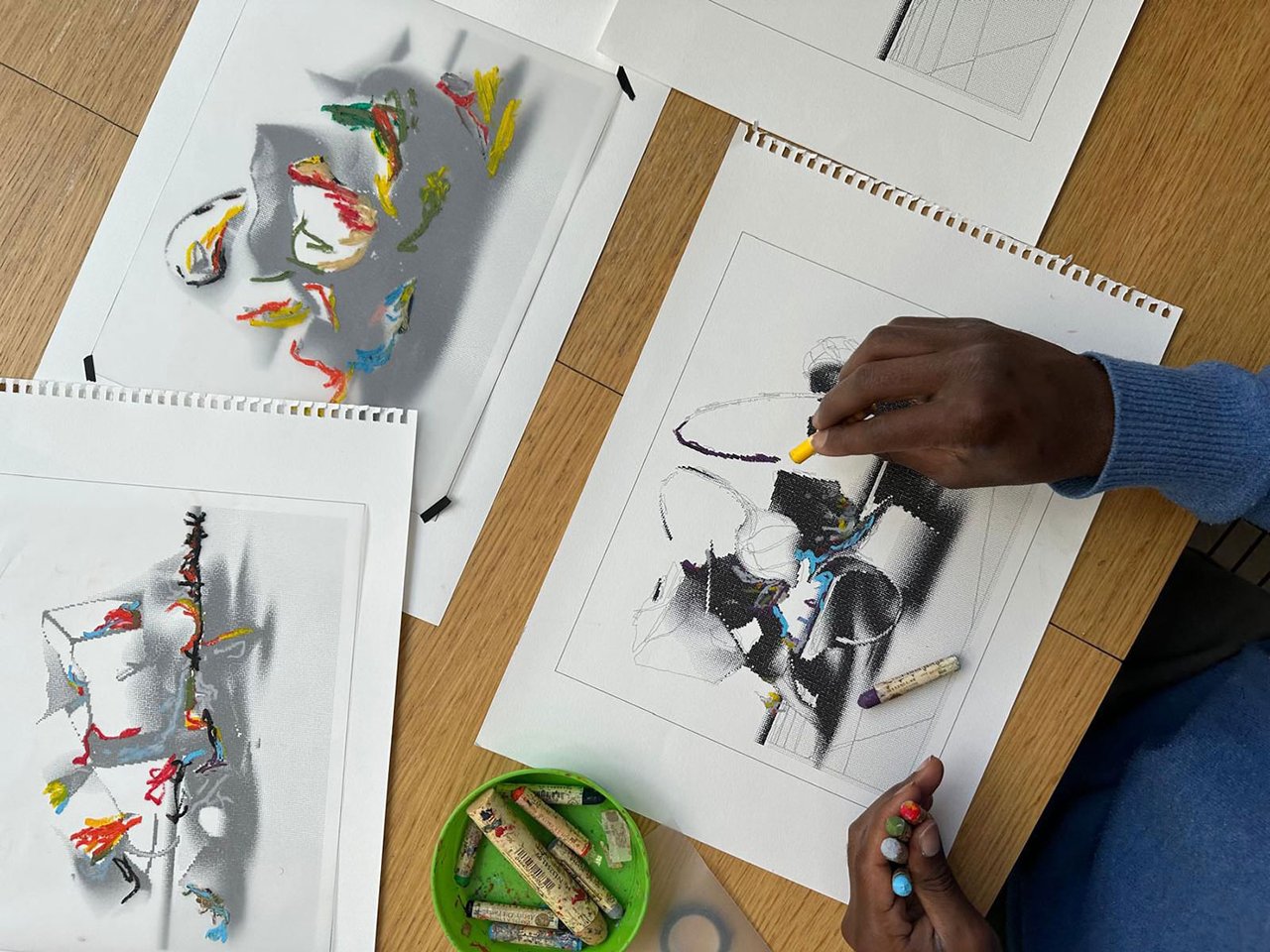
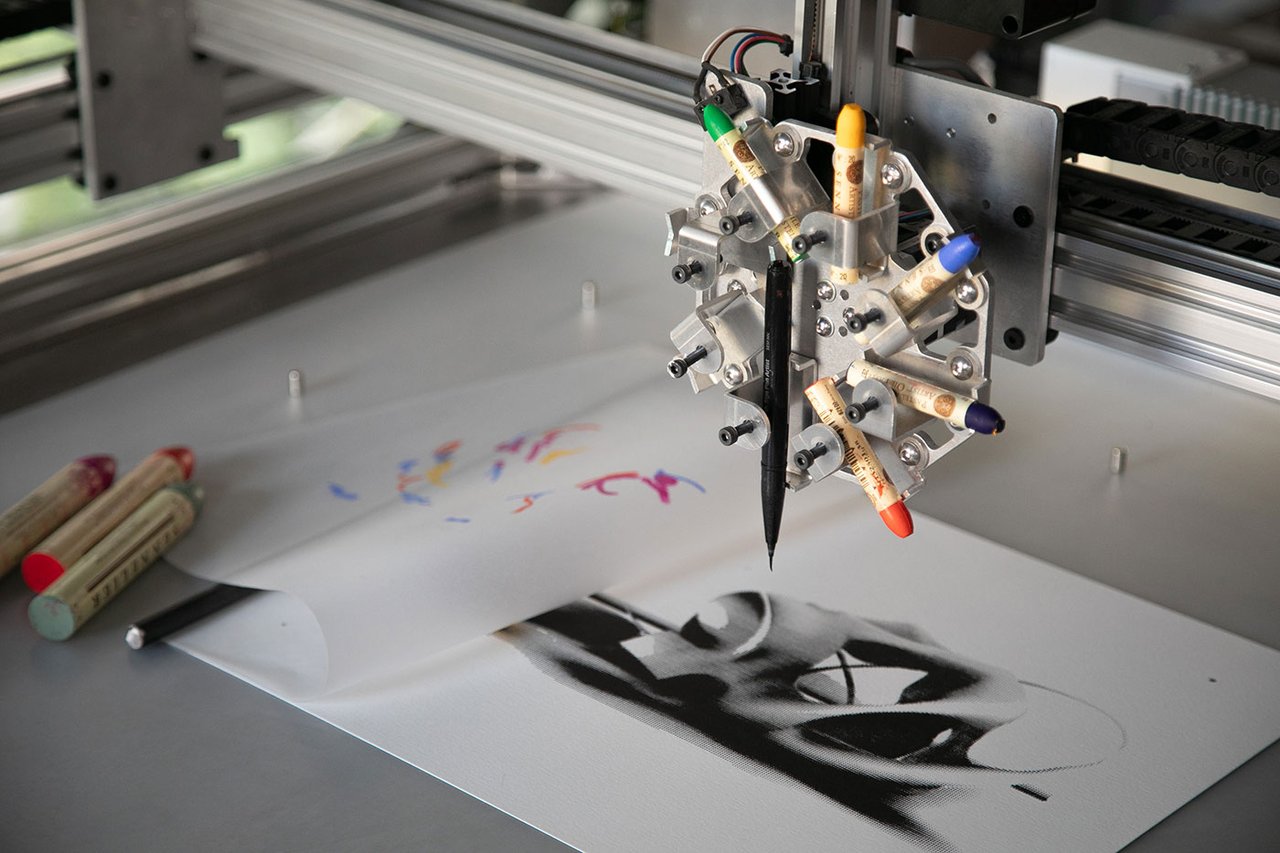
The plotter drawings are made up of two layers. An underlayer on paper of a landscape and a pastel overlay on tracing paper. There will be 12 pre-made plotter drawings exhibited on the Art Blocks booth; another 10 will be available online for those who cannot attend Art Basel; with up to 18 made live at the fair (with each plotter drawing taking around two hours to complete). Buyers will be able to explore Mapan’s algorithm on the booth, choose an iteration to mint, and make it live on the plotter by the end of the art fair.
Mapan spoke to Right Click Save about the story behind his new work for Zero 10, and the combining of code and painting in his work. He describes his daily routine, sketching and painting in the morning, coding in the afternoon; how he reached a “50:50 balance” between paint and algorithm work in the lead-up to “Code + Matter”; his admiration for the daily output discipline of artists such as Zach Lieberman and Beeple; the need he feels to code and paint every day; and the archival and experimental practice that supports the creative bridge in his work between the digital and the physical.
“My physical practice and my coding practice have to be aligned. They have to be aligned for me to be OK with something.” (William Mapan)
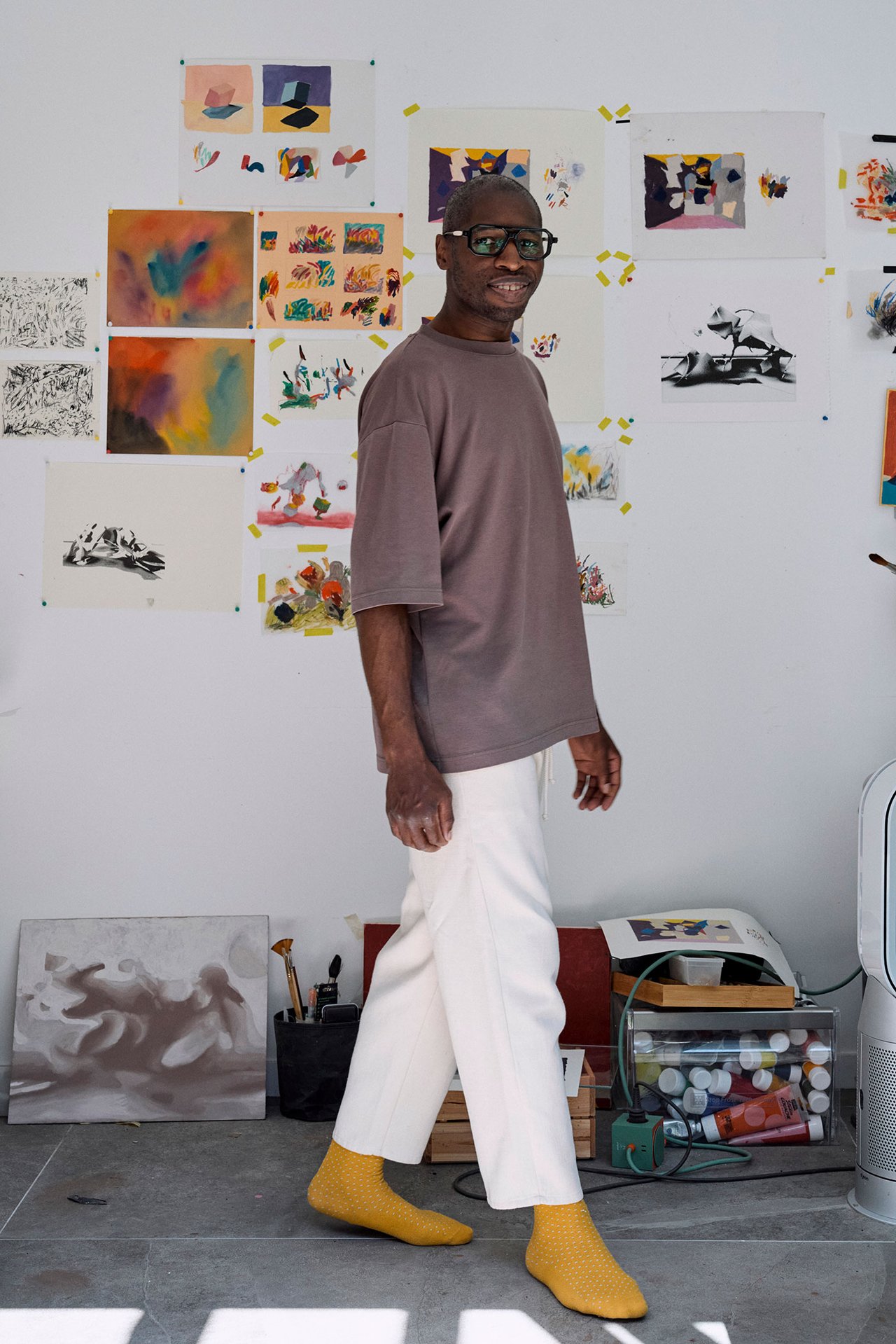
William Mapan in his Paris studio. Courtesy of the artist. Photography by Federico Floriani
Louis Jebb: Please could we start with the story behind the Paysages Plausibles series of paintings you are showing at Art Basel Zero 10, and the related plotter drawings in Paysages Plausibles: DOS, Dances on Shadows?
William Mapan: The two series make a body of work, which continues a conversation started last October at the “Code + Matter” exhibition in Paris. For the landscapes, I had started to figure out for the Paris show how to reach the middle ground between my painting and my coding practices, by injecting memories of photographs into the paintings; by taking my own experience of landscape painting and photography and combining everything to make those paintings.
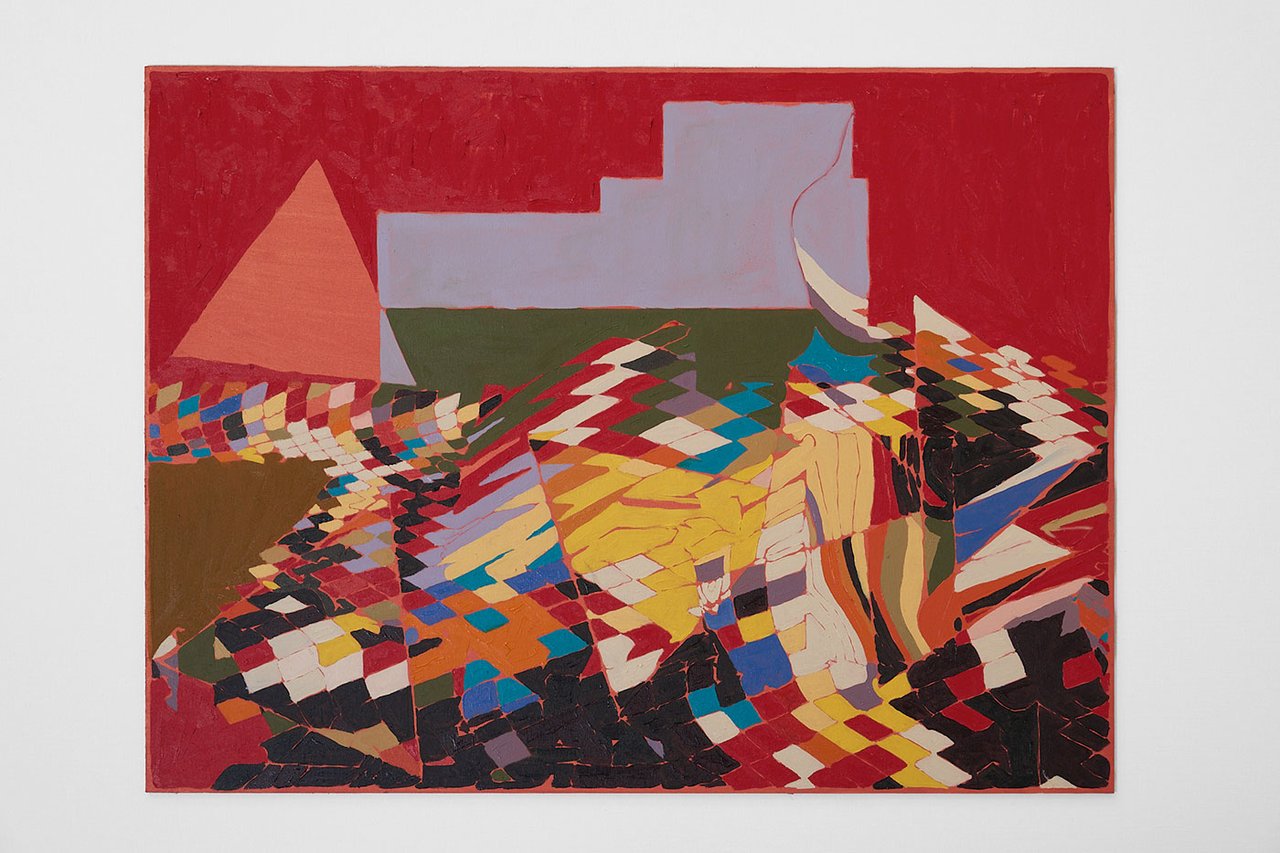
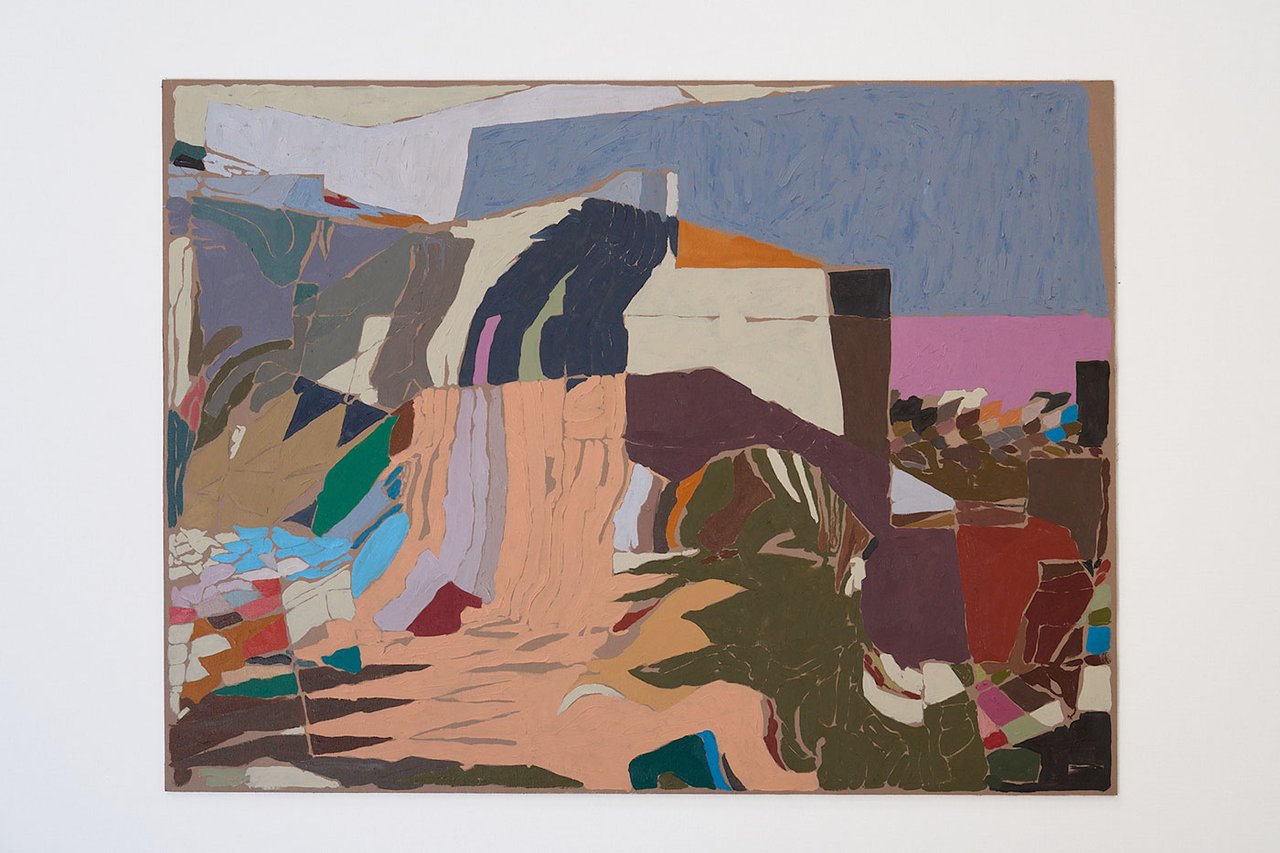
For Paysages Plausibles the concept is to have “plausible landscapes”: scenes, theatrical moments that capture the light. [After nine months’ work on the landscape algorithm] we started the big oil paintings six weeks ago. The largest work is 2.50m by 2m. I have wanted to make a bigger piece for a very long time. For our exhibition in October there wasn't enough space.
People will be able to interact at Basel with Dances on Shadows, the generative work that will be minted on Art Blocks.
I wanted to have a way to connect the two series. The paintings are visualized as seen from far away, as in a photograph, while the plotter drawings are zoomed-in. They represent what happened in the actual landscape. And they will be animated on screen.
William Mapan working on the plotter drawing series Paysages Plausibles: DOS, Dances on Shadows, 2026. Courtesy of the artist. Photography by Federico Floriani
There are two dances: one on screen and one with the plotter. So the first, “shadow”, layer, is plotted. and then on top of that a second layer, with pastels plotted on tracing paper. The combination makes the whole piece.
I like the title — DOS: Dances on Shadows. I had the choice between Dances on Light or Dances on Shadows. But Dances on Shadows makes “DOS” when you shorten it. “DOS” is like “two”, and you have the two layers.
LJ: What experience do you hope people will come away with from visiting the Art Blocks stand with your twinned Paysages Plausibles series available as paintings, NFTs and interactive plotter drawings.
WM: I feel we have a good mix. [One that shows that] my code [is not] restricted to the screen. It can be a painting, it can be plotted, it can be animated on the screen.
It’s very much in the Web3 ethos or even the Zero 10 ethos to have a new model of distribution.Being able to distribute the same work in three different ways is amazing. It shows that there are other ways to connect with broader audiences, and with collectors.
William Mapan, plotter drawing from the series Paysages Plausibles: DOS, Dances on Shadows, 2026. Courtesy of the artist. Photography by Federico Floriani
As at “Code + Matter”, we want the attention of the public to be on the artwork and not on the tech behind it. In Paris [last October] people were walking into the space and were asking us, “Where is the code?” And this is when I clicked: “OK, we did it.”
Because then the medium is not the main thing. It’s the intention which is the main thing and then our medium, which is code and iteration, supports what we want to say rather than being the point of the thing.
We wanted to do something else; like no screen at all. It was the one thing we said all together: “it’s made with code but it won’t live on the screen”. We had one screen to show the behind-the-scenes, the trailer, and we had one little installation that, when you press a button, you get an iteration from our algorithms. It was nice for people to understand. It was just a link. [The “Code + Matter” exhibition declared] “These people work with algorithms, they deal with this infinity of possibilities and, on the wall, this is what they make of this infinity”.
William Mapan, Mieux ailleurs, from the painting series Paysages Plausibles, 2026. Courtesy of the artist and Art Blocks. Photography by Federico Floriani
LJ: What does it mean to be appearing at Zero 10, iteration number three. And what else are you looking forward to seeing in Basel?
WM: It’s very cool. It’s a crazy thing to be able to say, “We’re going to Art Basel with a solo show”. I don't know if this would have happened so fast in my career without the pace of Web3. Everything is fast in Web3.
I had to decline Zero 10 at Miami Beach and Hong Kong because I couldn’t meet the timeline. Trevor Paglen and Eli Scheinman have made a very good creation for Basel. A very good mix of Web3 and non-Web3 integrated into Zero 10. I can only be proud of being part of it.
I’m eager to see what everyone has installed. And it will be very interesting to interact with other artists and galleries in Zero 10; to be part of a group in [...] Basel that is trying to show to the broader audience what contemporary practices are.
I'm very happy to be able to show how I work in person. During the time at Basel, there will also be the Helen Frankenthaler show in the Kunstmuseum. Helen’s work has been very defining for [..] my practice.
William Mapan, Toujours là, from the painting series Paysages Plausibles, 2026. Courtesy of the artist and Art Blocks. Photography by Federico Floriani
LJ: May I ask you to talk about your daily practice: how, with “Code + Matter”, and the work on your Paysages algorithm you feel you have now reached the middle ground between your painting and your coding practices? And how, with your experience in creative coding, as both artist and teacher, you are able to bring a strong sense of materiality, of the organic feel of your painting and drawing work, into your algorithmic output?
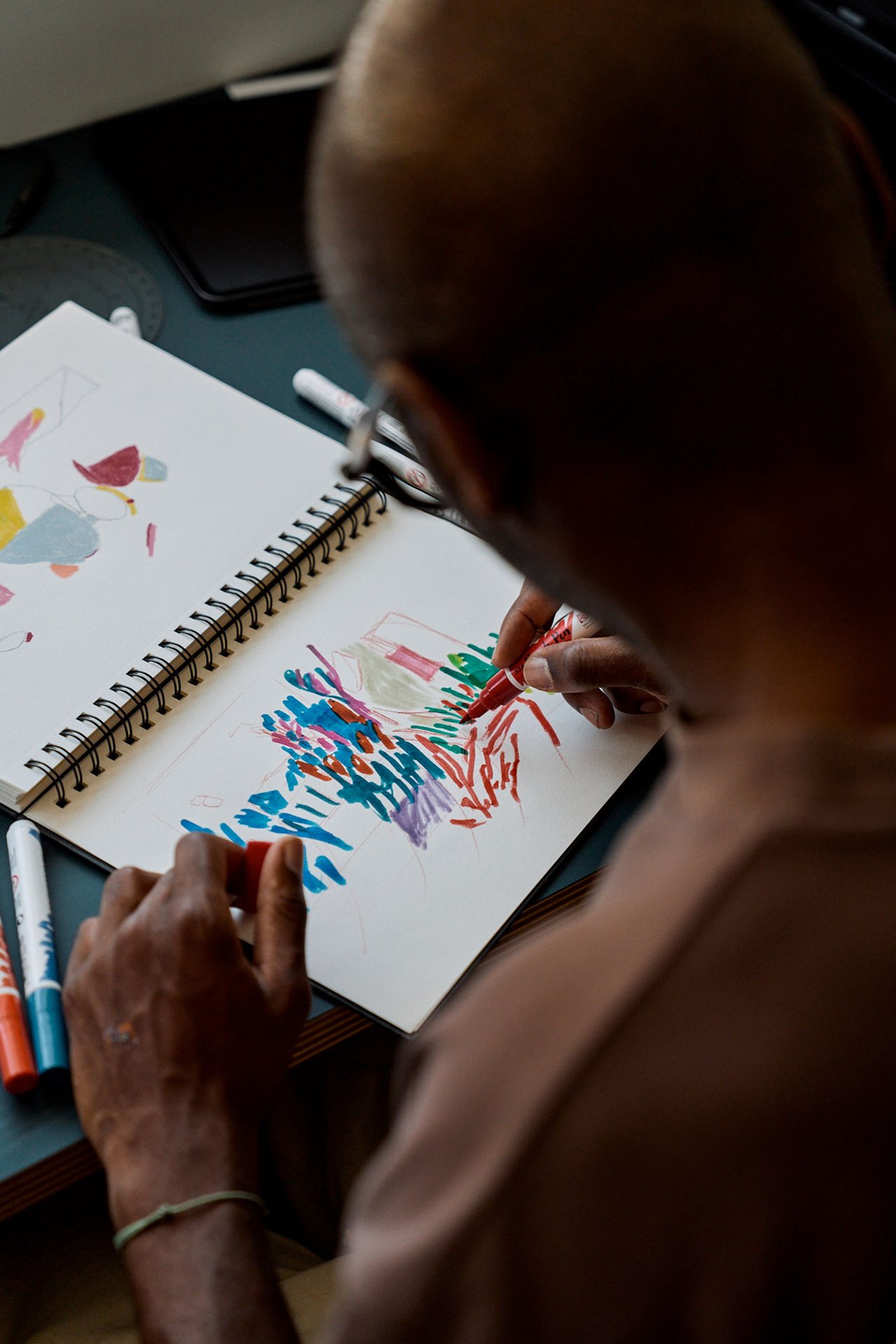
WM: In the morning I sketch and paint in my studio and in the afternoon I code. And this everyday, for the last 15 years. It is a habit; like a meditation. I have a very [inquiring] mind and I need to make stuff every day. I couldn't create for the week before “Code + Matter” — the show was so intense to put together — and I felt the frustration in my body. I needed to make something. Even if I had 10 minutes. That was enough
My Sketchbook series (2023) and even Etudes (2025) are a nice way to demonstrate how my universe connects, how my physical and digital practices meet. I think the Sketchbook series is the most demonstrative of this process. People ask me “How do you make this digital work so real, so human?” It’s because I’m trying to translate my hands, my physical senses, [into] mathematical functions. And this bridge is the hardest to build. To do that, you have to elevate both practices to the highest level.
My algorithmic self pulls from my drawing self and they merge together; they pull from each other. If I’m doing something digital, I pull from the physical; if I’m doing something physical, I pull from the digital. It’s a balance I try to keep because, for me, this is a way to explore infinity while still keeping my identity as a painter.
[When making decisions about an image developed in code] I need to paint it to figure [the answer] out. On the computer it’s easy. But if I don’t develop the physical relationship, it’s harder for me to come to a decision.
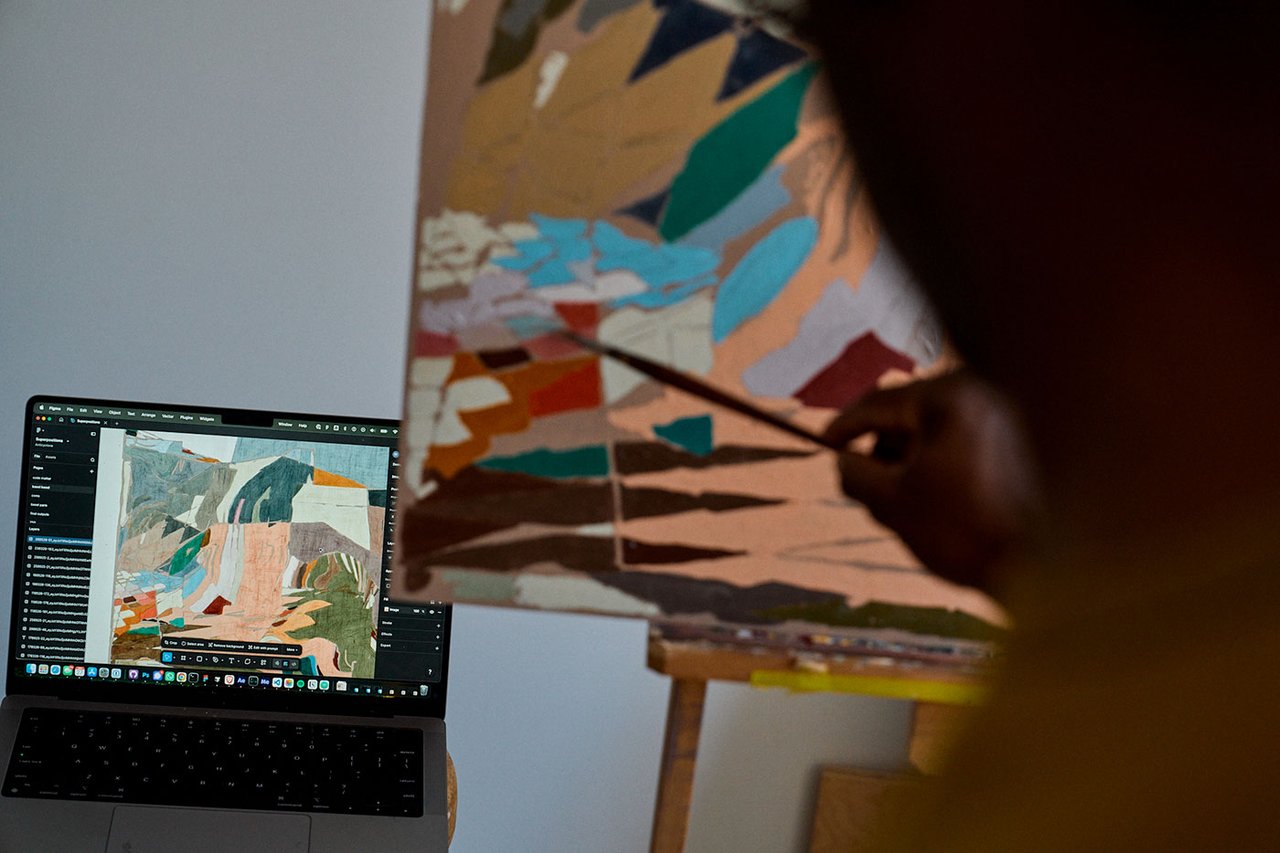
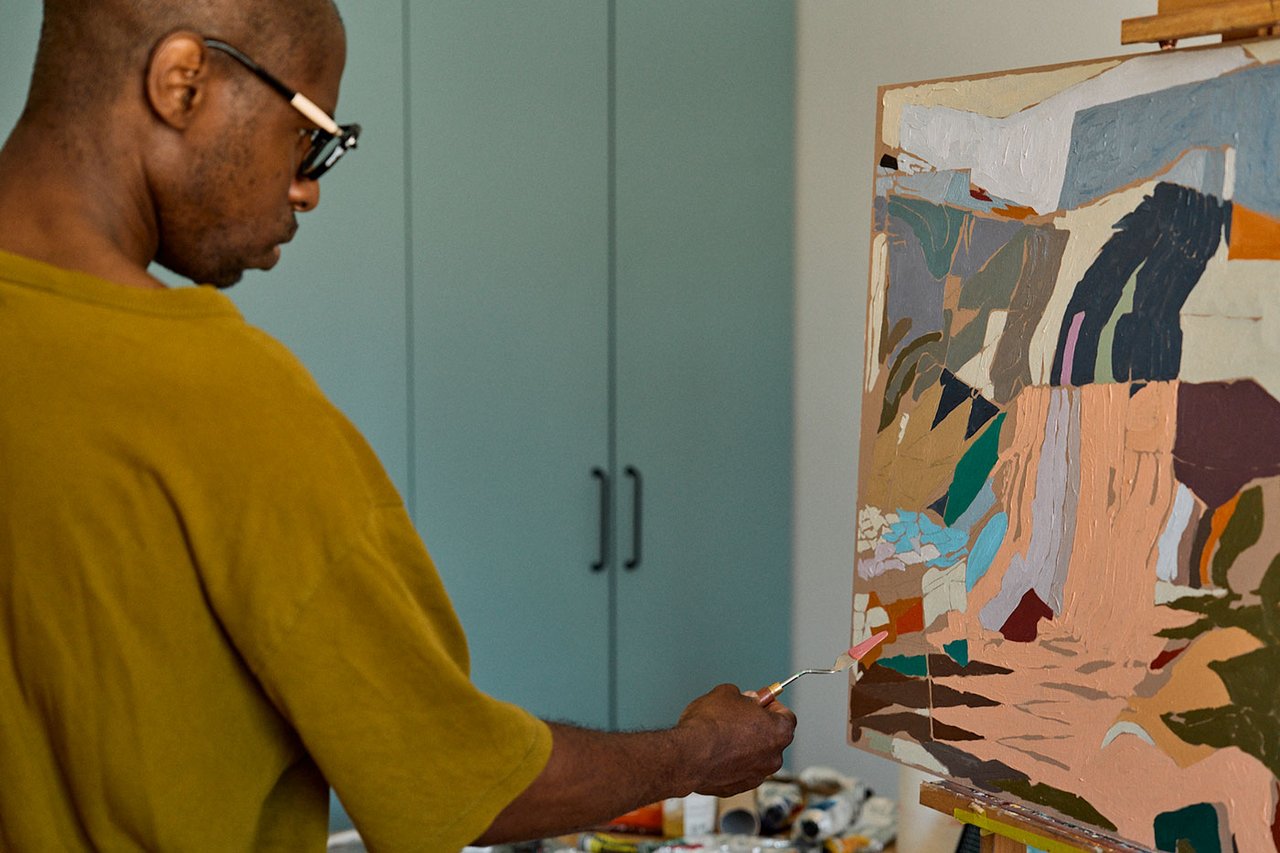
William Mapan working on the painting series Paysages Plausibles, 2026. Courtesy of the artist. Photography by Federico Floriani
LJ: What are the processes that link the digital and the physical sides of your practice?
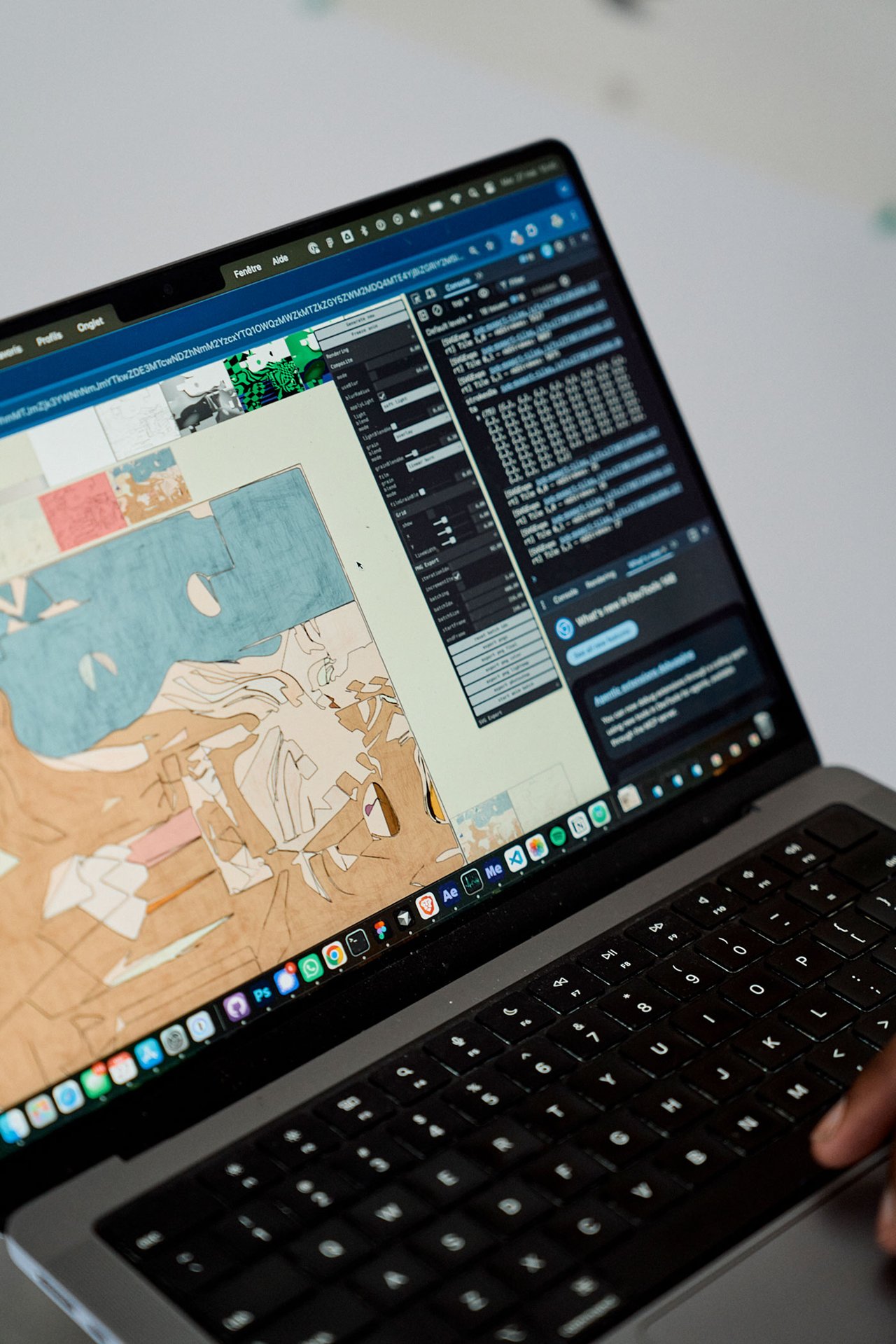
WM: In one process, I draw with code and then paint or draw the outputs. In another, I draw and paint, and then I import those outputs into code. In a third, I try to encode the work we are drawing with an algorithm to see if I can execute these things using robot plotters, without me intervening physically. With the plotter files I am trying to answer the question “Can I tell someone how to draw like me?”
When I am coding, I see, on average, every day, between 500 and 1,000 outputs. And [archiving these outputs allows me to] explore my findings; for at least 10 minutes a day. Then the brain gets used to it; creates more habits; has more things to say. You develop intuition and instinct in coding. When people ask how, I say, “I've been doing that for 15 years. If, in my code [say, a] variable is 0.6 or 0.4, I know it’s going to be 0.6; because I have been toggling this variable for 15 years.”
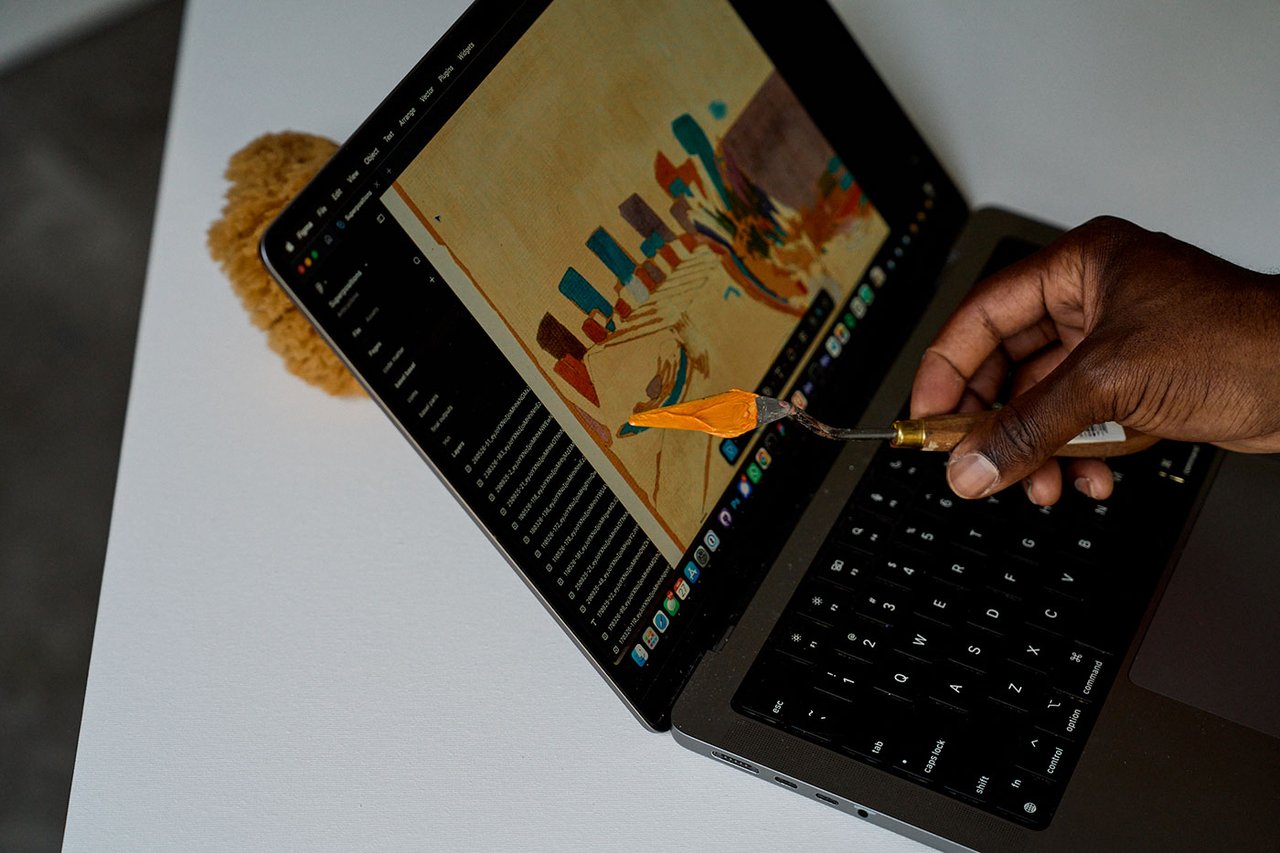
[Work with the plotter is] another bridge for me to [...] see if I understand myself. To be able to draw like myself with code and to understand myself. And if I do it with a plotter, it’s another proof [...]. Sometimes it's obvious with a plotter where the mistakes are.
The plotter pen in William Mapan’s Paris studio. Courtesy of the artist. Photography by Federico Floriani
But I’m a motion designer as well, so I always have animation tests in my workflow at some point. Even if it’s not the final format. To see what happens.I know where I want to go, but it’s quite a journey: step by step, make the bricks, build the wall, until the point I can sleep in the house.
Everything is energy; moving things in flow. Everything is connected. And I think [the algorithm for Paysages Plausibles] is a way for me to demonstrate that [as] I try to find how the energy goes into those abstract landscapes. I think the medium of iteration also allows you to explore broad concepts of moving crowds, of moving things.
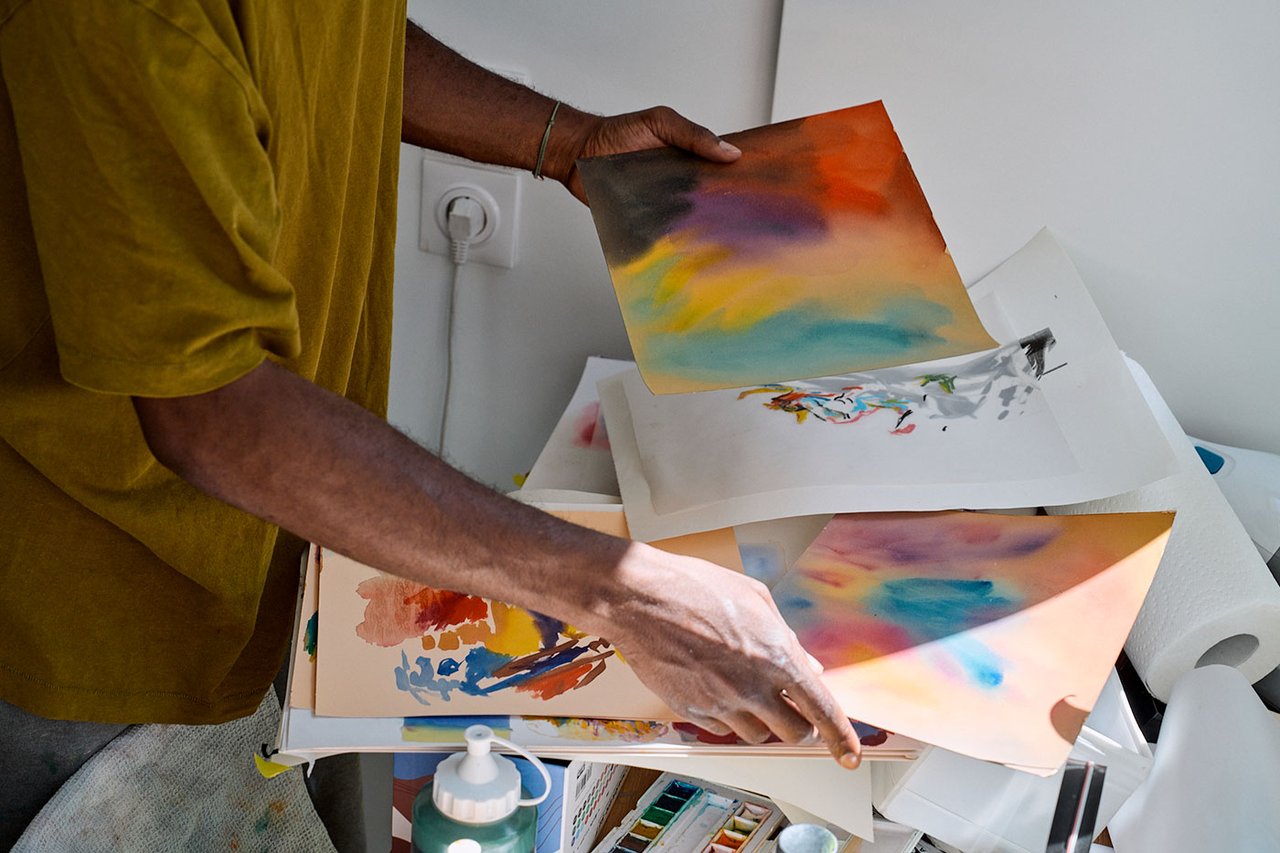
LJ: At your Paris studio you keep your daily algorithmic outputs on your computer, and a mass of physical works on paper, board, canvas, and in sketchbooks: sketches, paintings, plotter drawings. Can you talk about how, in your daily practice you keep track of everything while working on an algorithm for nearly a year, leading up to Paysages Plausibles — with outputs in oil, plotter drawings and animated digital files. What are the creative and archiving challenges that have fed into your practice, and your decision-making as an artist? And how does your archiving work help you keep track of the genealogy of your output, both digital and physical?
WM: There are daily generative outputs. Up to 1,000 every day, I try to archive everything because then you can see the evolution and how you work. And if sometimes if you feel a bit lost, you can trace back through it.
William Mapan working on the painting series Paysages Plausibles, 2026. Courtesy of the artist. Photography by Federico Floriani
I also have a mark-making book where I create marks [in crayon, charcoal, paints] over and over until something has clicked in my brain. And for the plotter drawing I save prototype experiments of how I express for the [plotter] robot and how I translate my gestures with code.
And [the archiving] is a parallel practice. I do both at the same time. [code and paper] … I always try to balance between the complex composition, the simple composition, see what works, working at the atomic level first, just like the brush.
Back in 2021 or 2022, when a platform [approached] me, [I would say] “OK, I'm going to do a work specifically for you.” And I felt frustrated with this approach. It felt very forced. So now I try to be in my [long-term] flow. And if someone wants to do a release with me, they take whatever I have at that moment.
I think it’s a way better way of working for generative artists. In my case, I work every day with a lot of outputs. So it makes much more sense for me to be in that flow and see what happens rather than forcing things [in the direction of] a certain release or a sale. And because I see so much every day, this is my way of navigating my algorithm. I’m creating through the quantity of things I see. I’m curiosity-led. “Oh this is of interest. Let's go there… It's not anymore. Let’s close the door… Let’s go somewhere else.” And I do this every day. For me, it’s a way to be in that flow of exploration, constantly
William Mapan working in his Paris studio. Courtesy of the artist. Photography by Federico Floriani
This way of working is a way for me to keep building on the foundation I had the day before and accept that this is my way of working. I don’t make a new algorithm every day. Sometimes I make very basic prototypes [...] and they stay at prototype until I come back way later, maybe a year later.
LJ: When talking through the narrative of your algorithmic work over the past year you identified outputs that were “main quests” and others were “side quests”. A nice nod to the language of a game like Zelda. How do you see the balance of these different quests in staying on your creative course?
WM: I know I'm going to discover things on the way, in the sidelines [of my coding] that will be very useful on my main track. So I'm never afraid of going everywhere at once. But at some point, you need the discipline to stay focused and come back to the main track.
[Looking back over the archive for June 2025] I see there was a lot of different stuff. I felt my code was solid enough at the time that that I could go quite far. But when you have a very young algorithm, and you go sideways, it can fail. However, after months and months of building an algorithm, sometimes [I say], “Oh, let's try to go to another city with it”. And it works in less expected ways.
William Mapan’s Paris studio. Courtesy of the artist. Photography by Federico Floriani
LJ: Color has always been central to your practice. How has it featured in developing Paysages Plausibles?
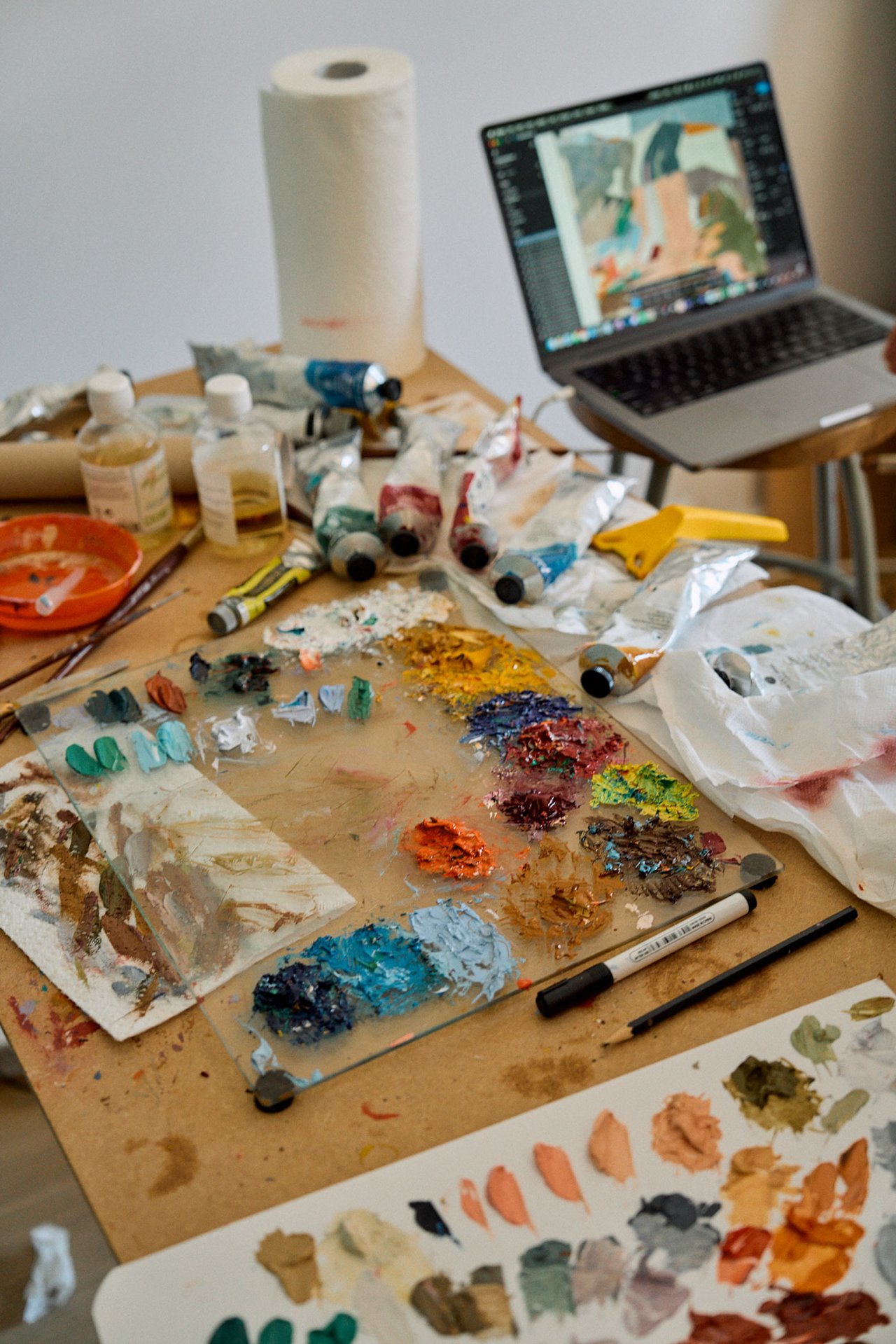
WM: [My work with colors today is] much more based on my painting practice. Which pigment do I use? Which color can I deduce from the basic palette that I use?
I no longer [work across digital and physical with] color that I can't make physically. It is a limitation I imposed myself, because I feel more connected that way.
When you come to my studio, you will see that in every medium except crayons and pastel, I have basic colors. And then all the colors I make are from these limited palettes, so that finding colors is much more personal and fun.
William Mapan working in his Paris studio. Courtesy of the artist. Photography by Federico Floriani
After I went on vacation [in summer 2025] and I started to have much more natural colors in my composition [by working with my holiday photographs]. By combining the [images and colors of] places I've been [with] these compositions that “don't exist” [for Paysages Plausibles]? And finding a middle point.
I made small paintings to match the colors in the holiday photographs. I then took a photo of the painting and picked the color digitally to make a palette to put into the digital composition. In that way the colors [in the algorithmic output for painting] are much more natural because they come from the color-sample painting. It's a bit intense as a process, but [by going through it] I can confirm if I want to paint [a particular picture] or not.
For me it is very important that my colors make sense. They don't come from nowhere.
William Mapan working in his Paris studio. Courtesy of the artist. Photography by Federico Floriani
LJ: You have mentioned the importance of Helen Frankenthaler to your work?Which other artists, in your career, have been big inspirations?
WM: On the digital side, there is Zach Lieberman. He puts everything out there. When I found him on social, I thought “Oh, this guy! He puts something on the internet every day!” And then there was Beeple making every day; and the commitment of a lot of artists in the Japanese community. And I thought “Let's try to apply this mentality to my medium”. But my medium with code means I have a thousand outputs a day and then the “everyday” becomes like a variation of an algorithm a day.
Matt DesLauriers is another inspiration. because he has done so much for the community, generative artists, creative coding communities. He's a good friend as well, so it's always nice to exchange ideas with him. I think we have a similar sensitivity to art, like how we approach color, and visual language.
William Mapan working in his Paris studio. Courtesy of the artist. Photography by Federico Floriani
I am a big fan of Henri Matisse. The boldness in his use of color. Etel Adnan made abstract landscape which talks a lot to me. Then there is Paul Klee — the way he can break geometry with water color. He uses a medium to break structures. John [Singer] Sargent, for his use of light. And the way you can feel him moving when you look at his paintings; how he moves around, how he sees the light, the relationships between textures, all the components that make a painting. He could do anything.
I think it's very important to be aware of what has been done, [in order] to make something that hasn't been done. That's my logic. And I try to combine it with all the tech things, robot plotters, and to use [tech hardwares as] a tool where I'm going to express myself even more.
One thing that had a particular impact on me was “David Hockney 25” at the Fondation Louis Vuitton in Paris [April 9 to September 1, 2025, a retrospective covering Hockney’s work between 1955 and 2025]. The impact of it on me was crazy. Because I was thinking I was making an OK size of paintings. And then I went to “Hockney” and there are giant paintings with multiple patterns. And you see how he has practised. How he started with some style but kept pushing, kept evolving. Working with topics like portraits or perspectives, and playing with different mediums: oil, acrylic, charcoal, drawings, water color.
William Mapan working on the painting series Paysages Plausibles, 2026. Courtesy of the artist. Photography by Federico Floriani
I have always believed an artist’s career is not linear, but this was a proper proof that it can be. What was fascinating to me is how he has evolved through painting, oil, then acrylic, iPad, digital, and animation. He travels generations of art.
I think Hockney is very interested in just sitting in the moment where he is in nature. Always on the go, but observing the world, trying to see it from a different angle….
I saw the show at Vuitton just before going on vacation [last summer]. And right after that, I wanted to make even bigger paintings or even tinier paintings. But it kept me pushing [more] into painting: keep practising because you never know where it will lead you.
The French artist William Mapan (b. 1988), based in Paris, blends traditional artistic methods with computer programming to create works merging the digital and physical worlds. Fascinated by technology from an early age, Mapan shifted toward art after studying computer science and visual arts at Gobelins, the school where he now teaches creative coding and generative art. His creative process begins with hand-drawn sketches and diverse graphic explorations. which he then transforms into algorithms. For William Mapan, the computer acts as an extension of the human hand, enriching artistic expression. Mapan's work emphasizes humanity, manual gestures, and personal identity through introspective digital creations. Influenced by Abstract Expressionism and Impressionism, he cites artists like Paul Klee, Etel Adnan, Helen Frankenthaler, and Matisse among his inspirations. William Mapan intertwines emotion and personality in his notable series, including Anticyclones, Sketchbook A&B, and Distance, created for LACMА. William Mapan's work is in public and private collections internationally, including LACMA, the Victoria and Albert Museum, the Toledo Museum of Art, Museum of Art+Light, Manhattan, Kansas, the Alan Howard Family Office, and the Kanbas Collection.
Louis Jebb is Managing Editor at Right Click Save.