When NODE Foundation opened its first physical space for the exhibition of digital art in Palo Alto, in the heart of Silicon Valley, on January 23, 2026, it ushered in a year of new and revived art institutions that promise radical ways of curating and experiencing art made with technology.
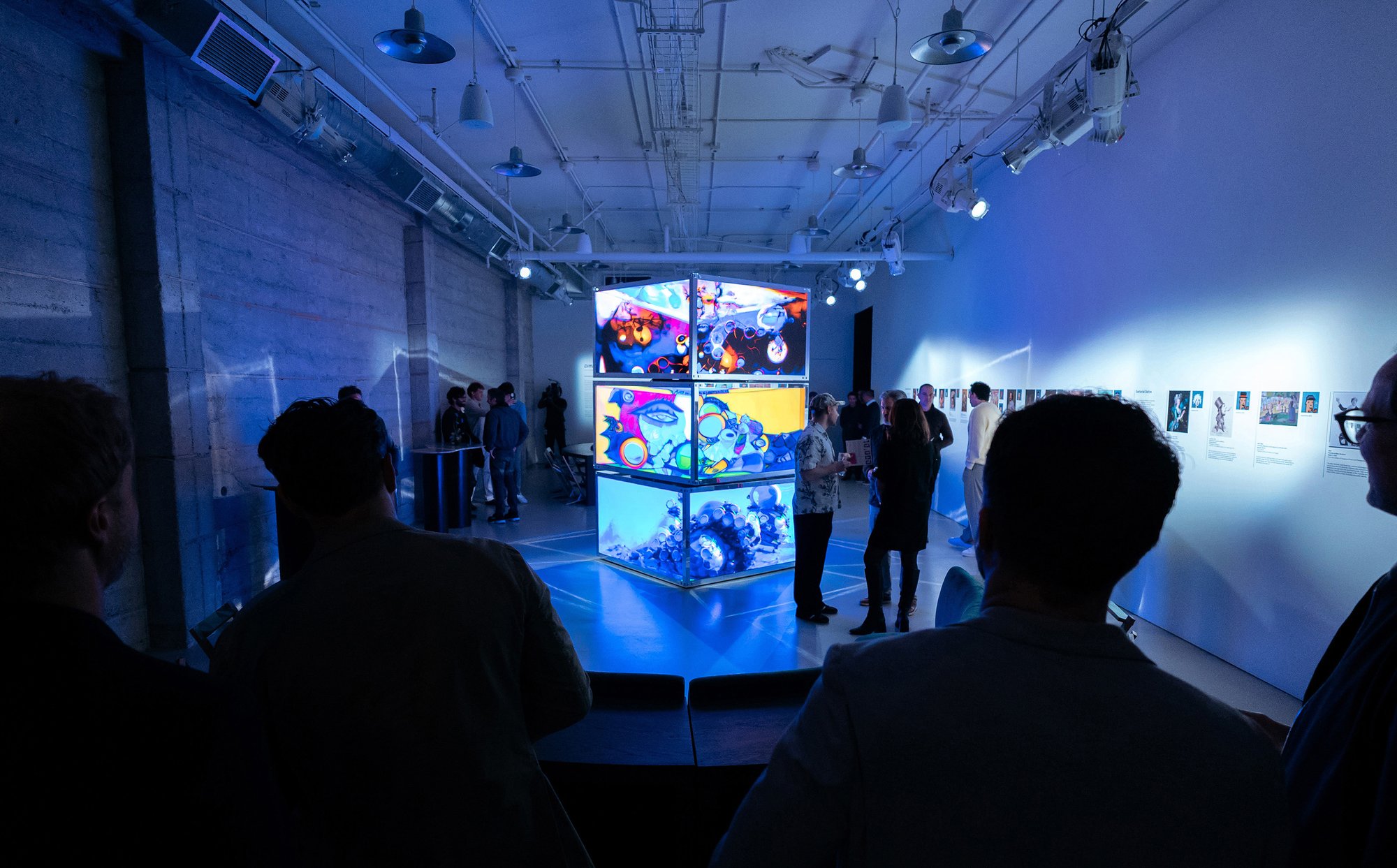
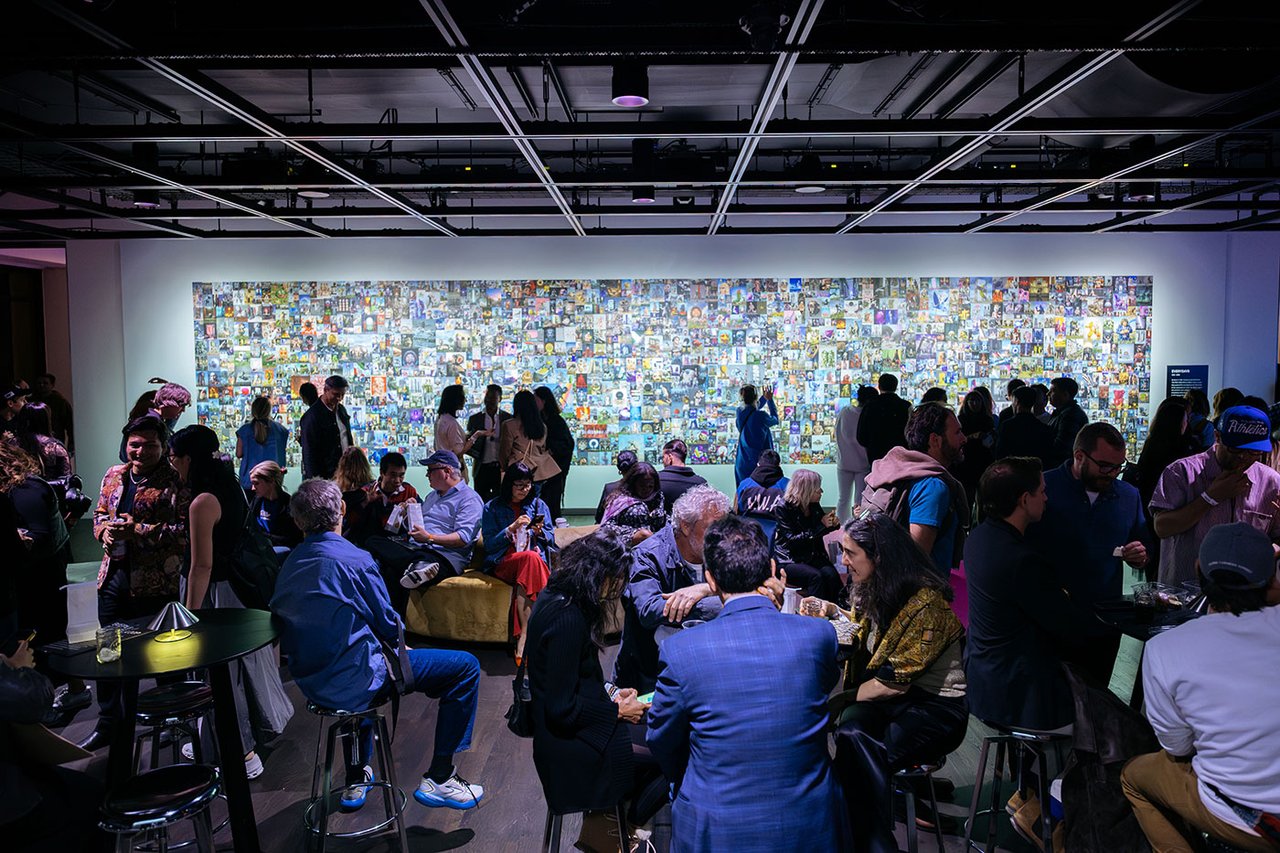
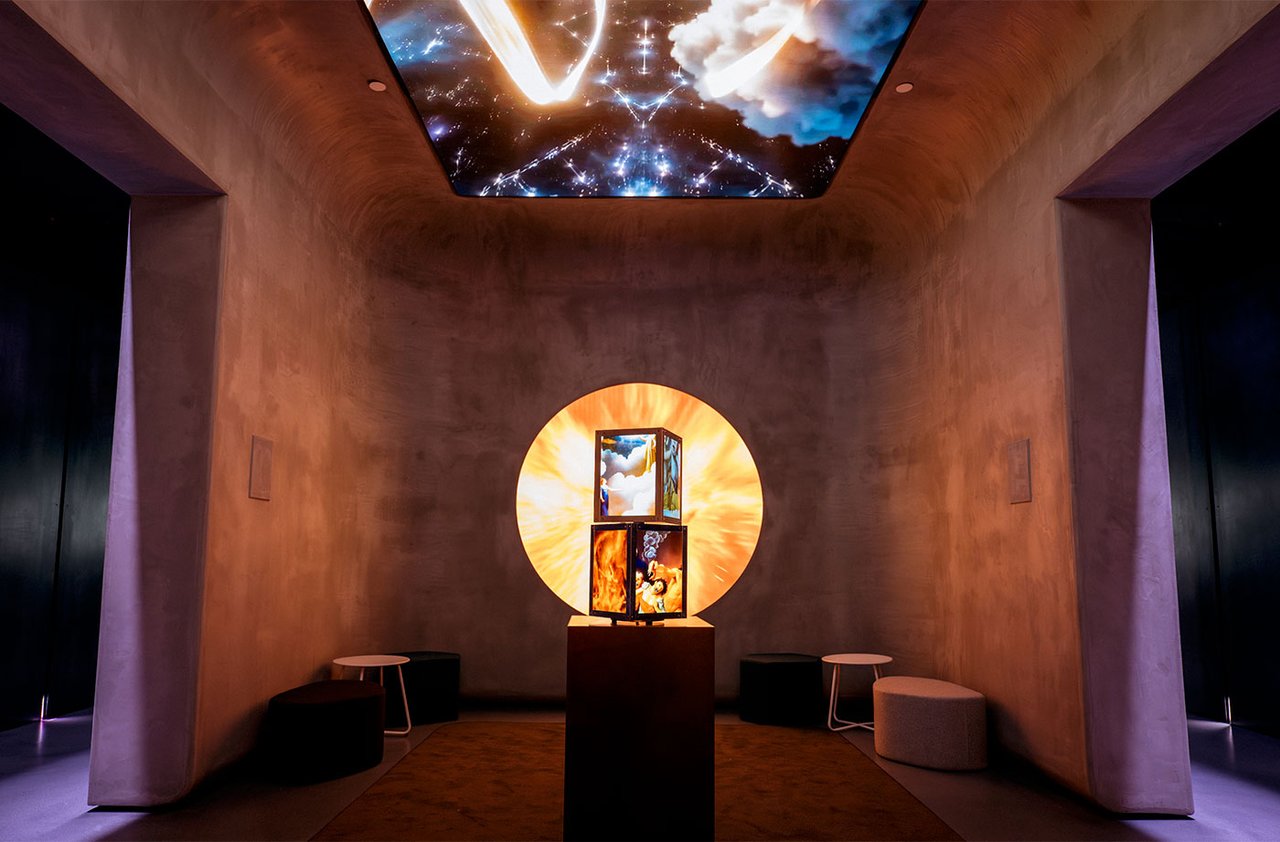
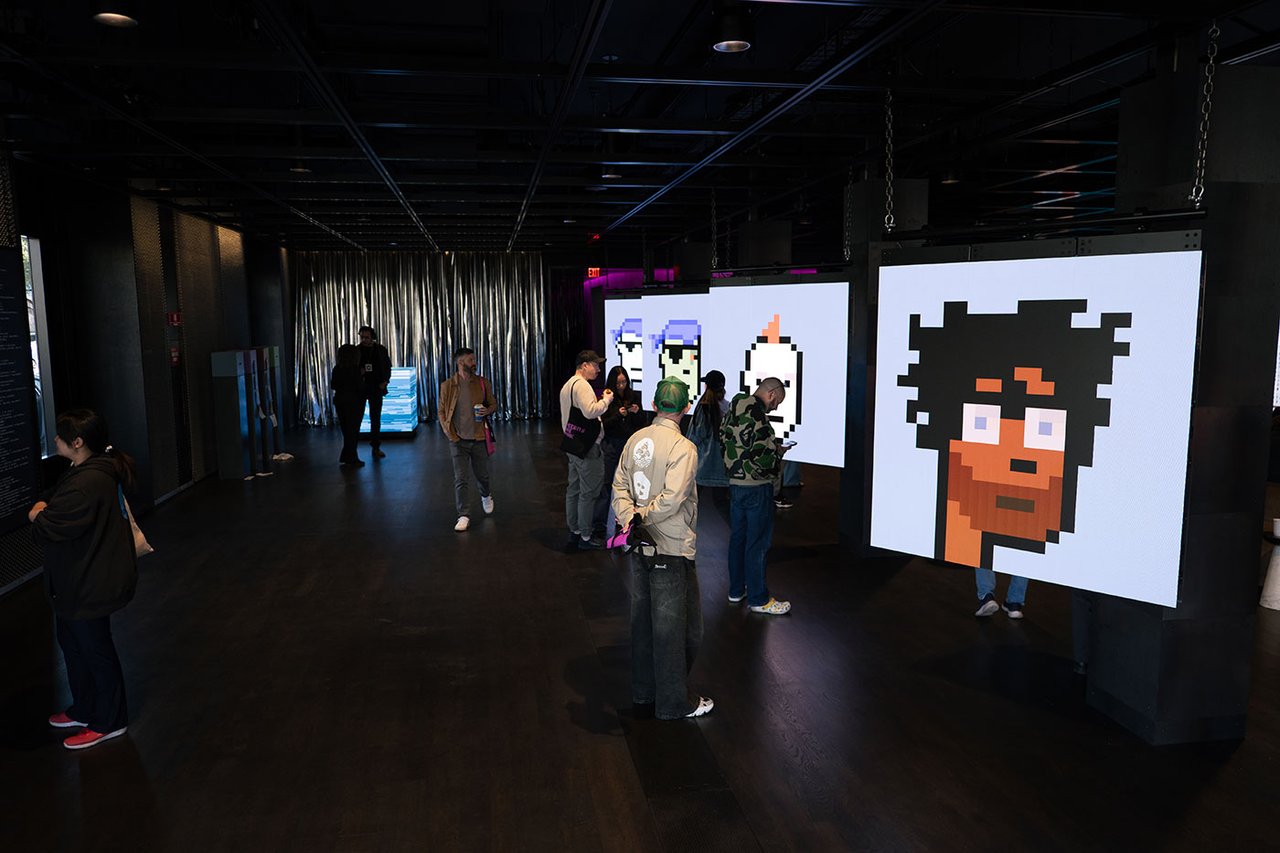
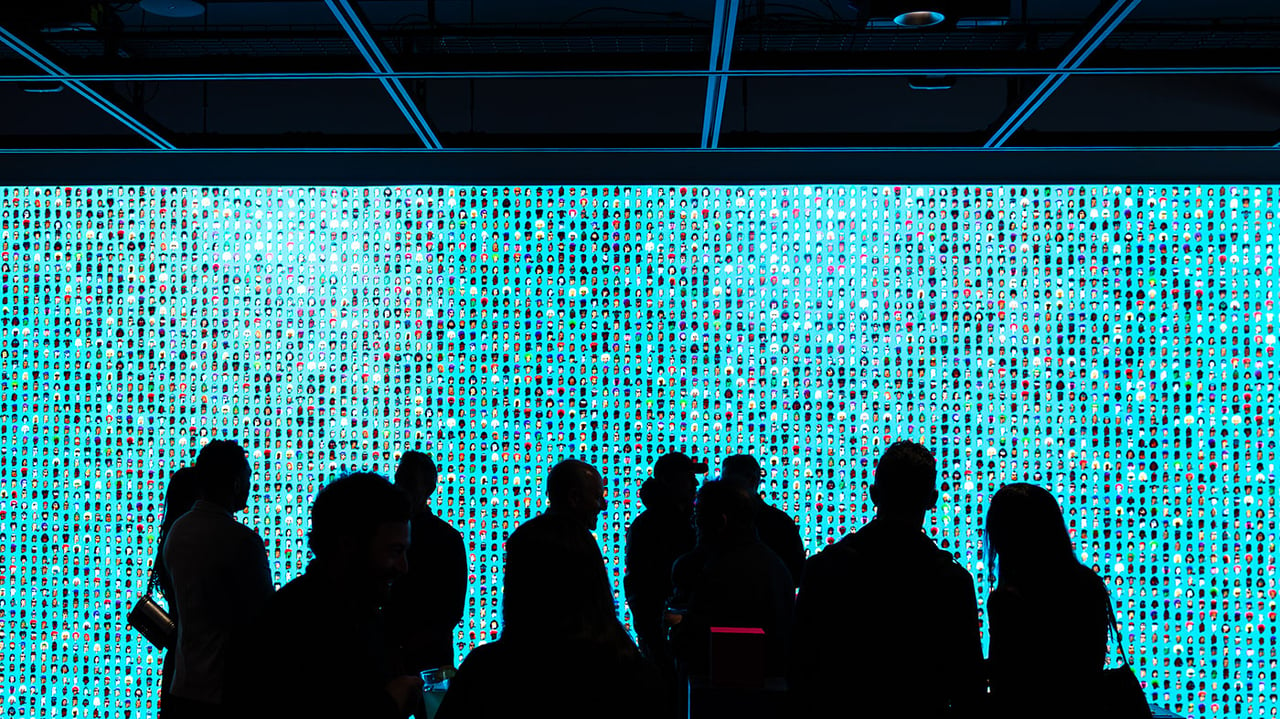
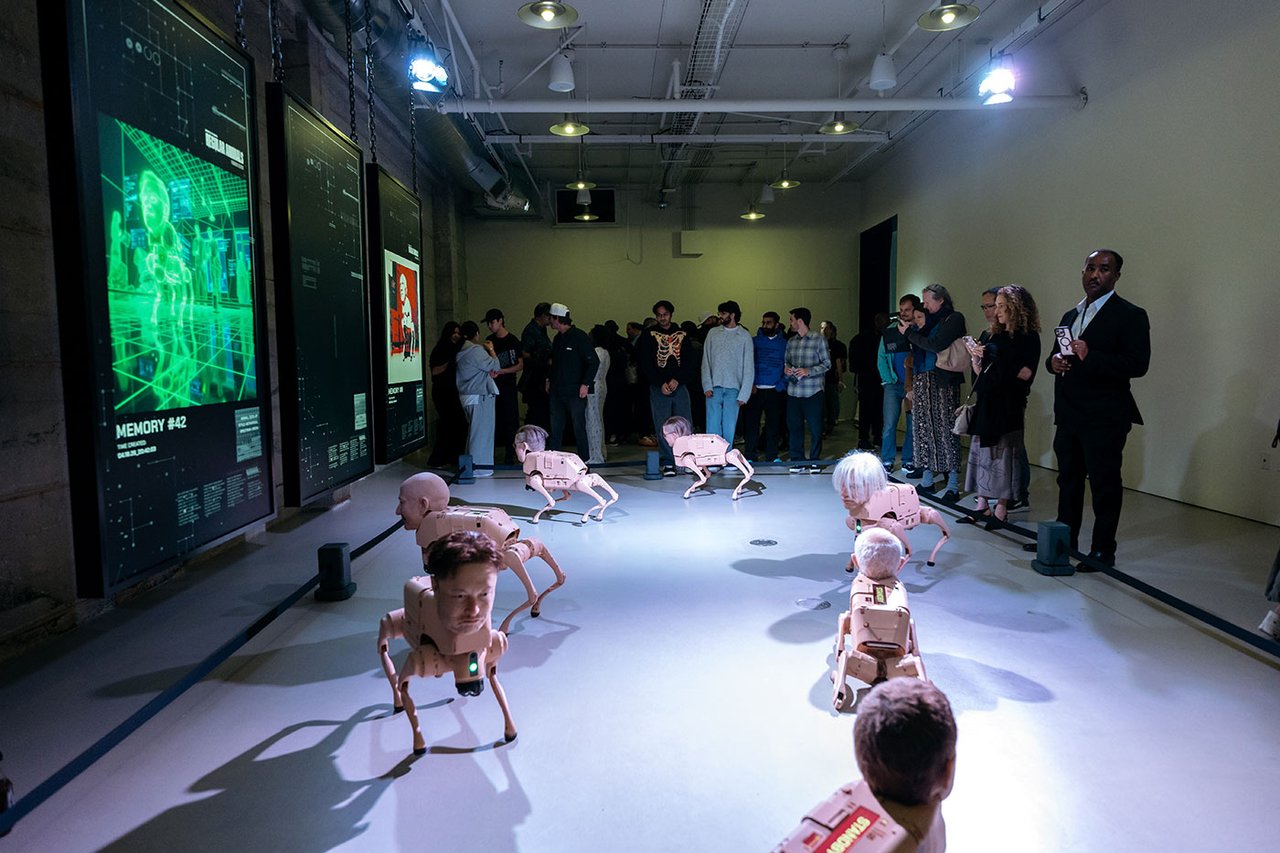
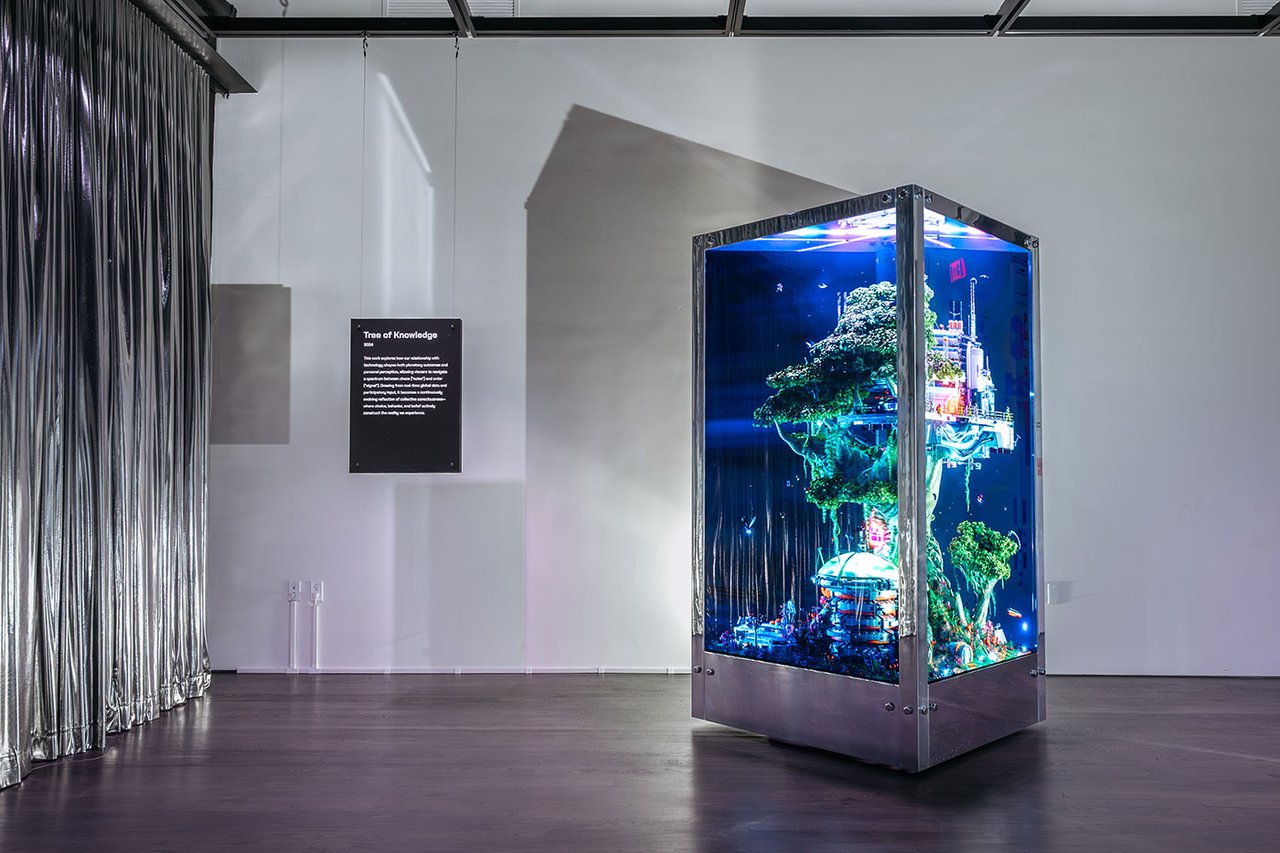
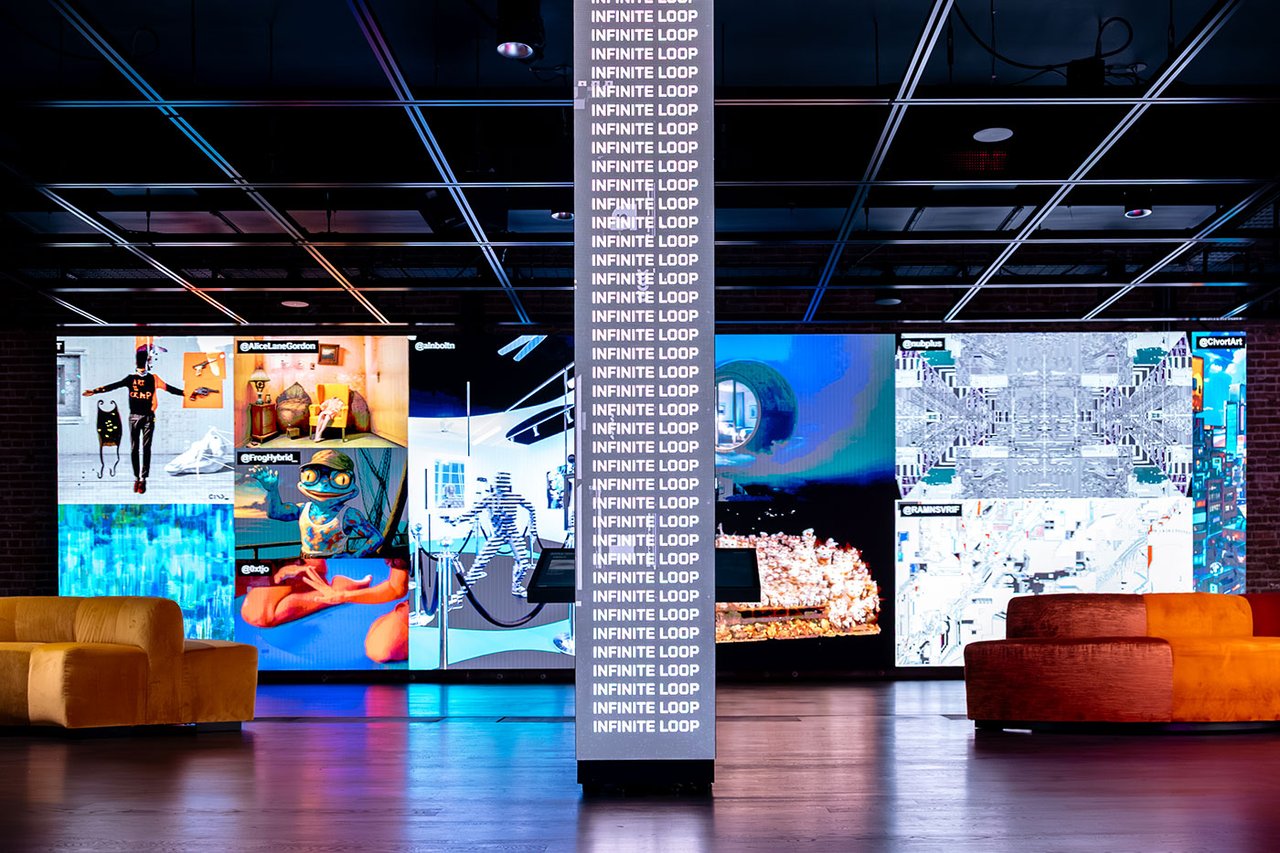
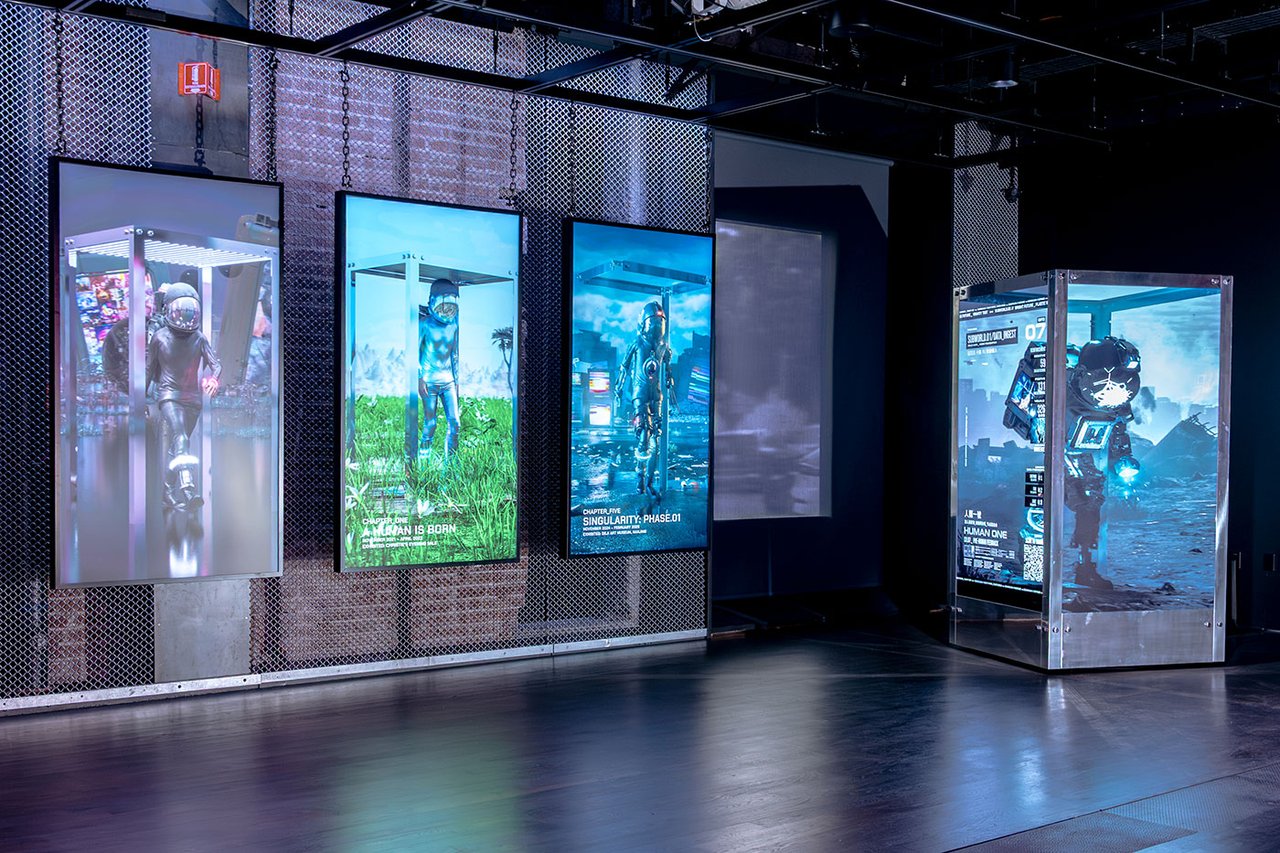
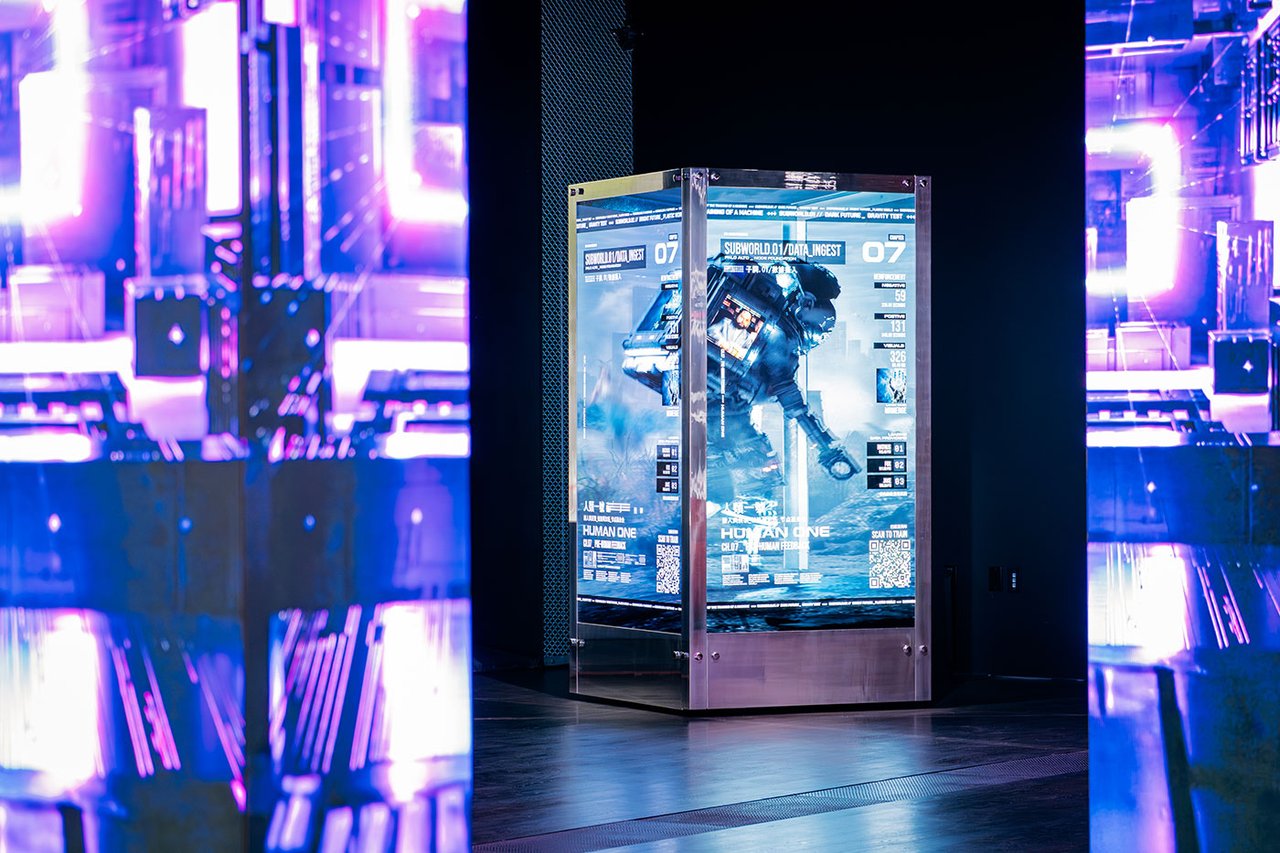
NODE launched with “10,000”, an artist-led exhibition by Matt Hall and John Watkinson, the founders of Larva Labs, centered on the artists’ CryptoPunks (January 23 to April 12, 2026). While “BEEPLE: / INFINITE_LOOP”, a mid-career survey of the work of Mike Winkelmann (Beeple) runs until June 28, 2026, presenting a selection of the artist’s ongoing 19-year project Everydays (2007-present), the headline-grabbing tech-titan-headed robot dogs Regular Animals (2025), and his kinetic sculptures Heaven and Hell (2023), Tree of Knowledge (2024), Transient Bloom (2024), Diffuse Control (2025), and HUMAN ONE (2021-present), whose seventh iteration was unveiled at NODE.
On July 11, 2026, NODE is due to open “PXL” by Kim Asendorf, a leading figure in the world of generative art.
Asendorf, the gallery says in an announcement, will transform NODE “into his PXL ecosystem, including DEX, POD, and the latest NET. New PXL tokens will be open for collecting onsite.”
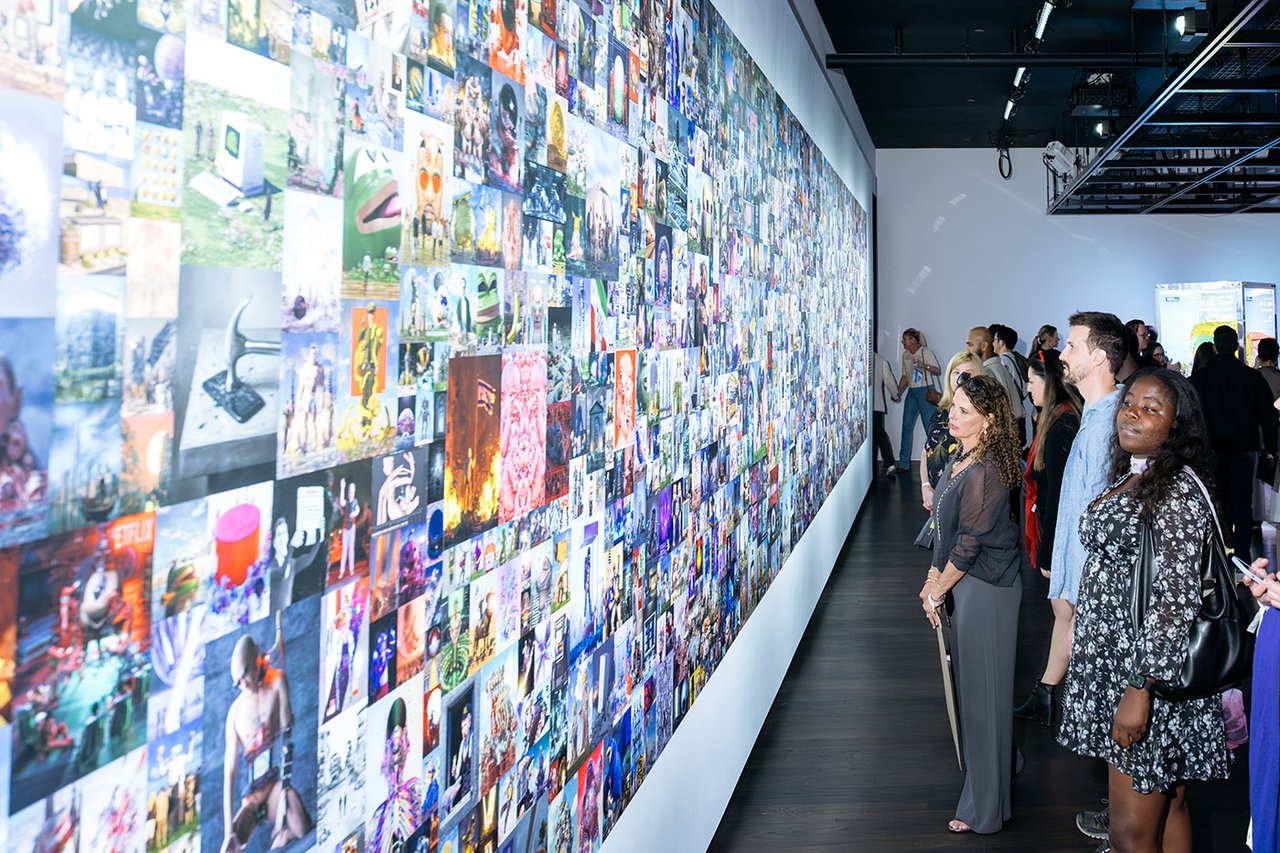
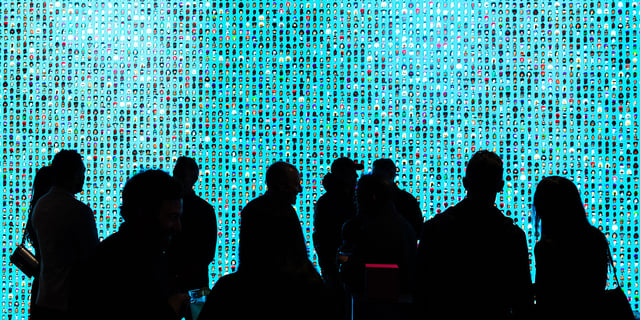
Beeple, Everydays, 2007-present. Installation view, “BEEPLE: / INFINITE_LOOP”, NODE, Palo Alto. Photography by Felix Uribe
The NODE project is backed by a $25 million endowment from its founders, Micky Malka of Ribbit Capital and his wife Becky Kleiner. In May 2025, NODE acquired the full CryptoPunks IP from Yuga Labs for approximately $20 million. Hall and Watkinson are members of NODE’s advisory board, and also donated 25% of the proceeds from their 2025 project Quine to the foundation.
NODE is part of a new generation of institution designed to meet audiences where they are, favoring accessible language as well as a graphic, interactive welcome, while deploying state-of-the-art hardware and software, as the digital age interlaces the age of AI. They promise fresh frames through which to view the entanglement of art, design, science, and technology that has long been an editorial focus of Right Click Save.
NODE defines itself as artist-first: “built with artists, by artists, and for artists”, clearly articulating an appreciable trend in 2026: artists taking control of the curation, distribution, and cultivation of critical discussion around their works.
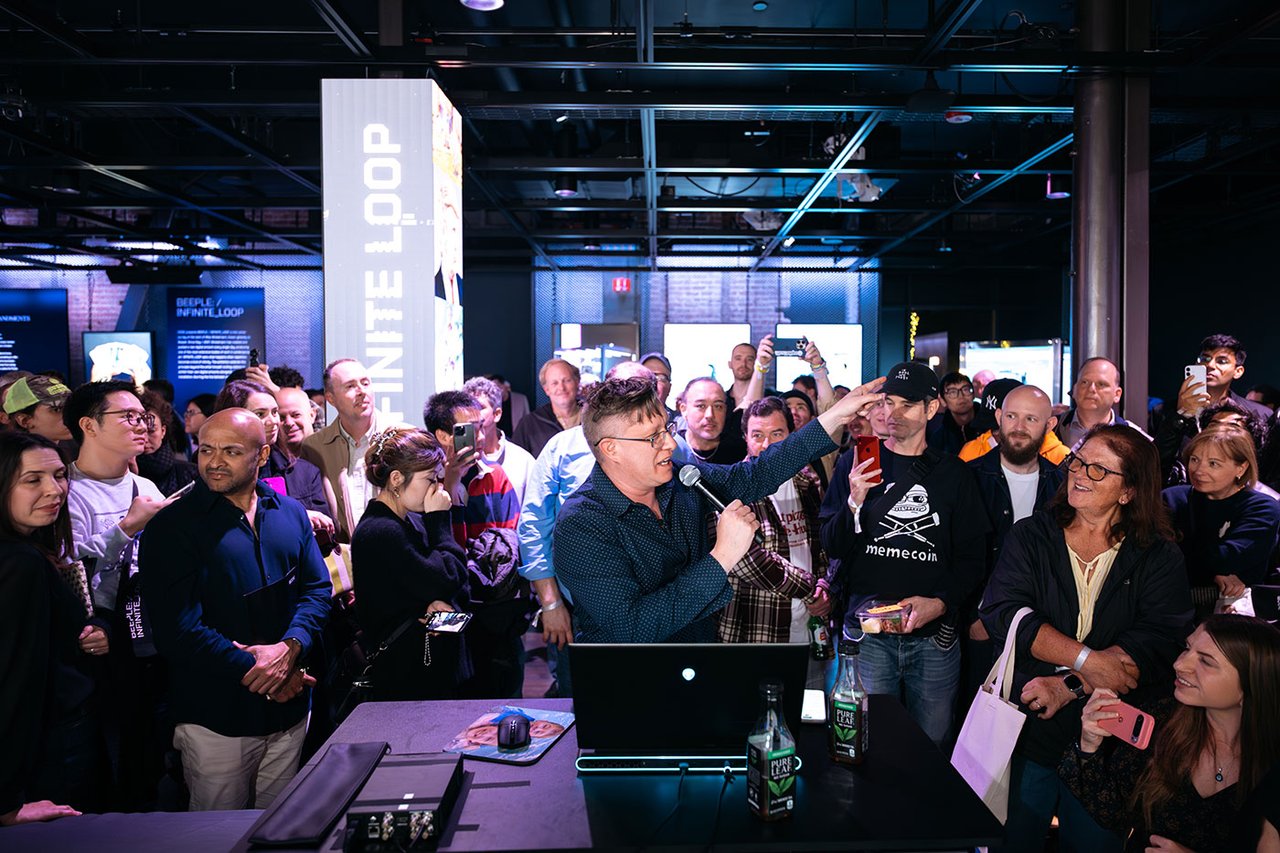
Beeple (Mike Winkelmann) at the opening of "BEEPLE: / INFINITE_LOOP”, NODE, Palo Alto. Photography by Felix Uribe
Part of the significance of NODE is its situation in the tech “here and now” of Silicon Valley, reimagining the cradle of online interaction and frontier-breaking AI companies as a home for artistic discourse. In recent weeks, Beeple, one of the world’s best known digital artists, has been discussing AI and creativity at the d.school, Stanford University, the academic powerhouse behind the rise of Silicon Valley. Meanwhile, two other leading figures in the field, Holly Herndon and Refik Anadol, were discussing “AI, Creativity and Ethics” with academics from Oxford University, as guests of the Schwarzman Centre.
The executive director of NODE, Phil Mohun, describes it as “a physical space for digital art. We want to continue to create these physical spaces for digital art because it’s the best way to get people’s attention in a world that is increasingly saturated online.”
For Malka, since the launch of NODE, “our core mission has become even clearer: to present, educate around, and preserve the art movements emerging from internet culture and computational systems. Everything else — the technology, the architecture, the programming — exists in service of that mission.”
Malka, Kleiner and Mohun spoke to Right Click Save about what they have learnt from NODE’s opening shows with Larva Labs and Beeple; and their vision for the future.
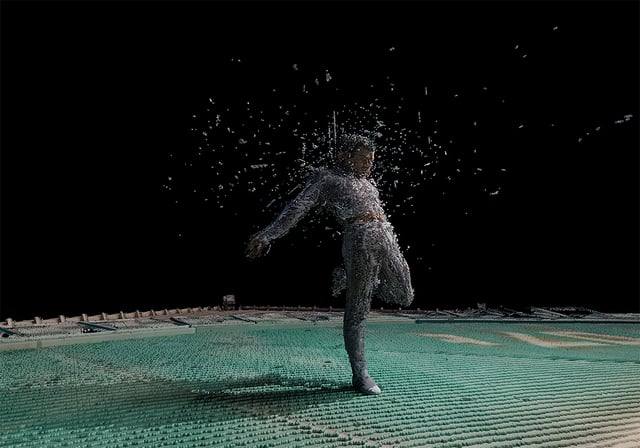
Beeple, Heaven and Hell, 2023. Installation view, “BEEPLE: / INFINITE_LOOP”, NODE, Palo Alto. Photography by Felix Uribe
Louis Jebb: You have held two headline shows at NODE so far, with Larva Labs and Beeple. What has most struck you, and most surprised you, in experiencing the two exhibitions on site?
Micky Malka: What struck us most was realizing that digital art does not behave like traditional art once it enters physical space. CryptoPunks and Beeple could not have been more different. One felt almost archaeological — a cultural artifact of the early internet becoming physical for the first time. The other felt alive, adaptive, and constantly mutating in real time. But both confirmed the same thing for us: presentation is now part of the medium.
The architecture, software, lighting, pacing, scale, even the movement of people through the building — all of it becomes part of the artwork itself. That is one of the core ideas behind NODE. We are not simply presenting work on walls. We are producing environments, alongside artists, that could not exist anywhere else. (Micky Malka)
Larva Labs, “10,000”. Installation view, NODE, Palo Alto, 2026. Photography by Felix Uribe
The biggest lesson was that great digital artists think like directors, systems designers, and world-builders — not just image-makers. (Micky Malka)
Matt and John approached CryptoPunks with incredible restraint and historical sensitivity. They understood they were not simply showing images; they were stewarding a piece of internet culture that millions of people already emotionally identify with.
Beeple operates almost at the opposite end of the spectrum. Mike pushes scale, intensity, velocity, and iteration constantly. Working with him feels less like preparing an exhibition and more like building a live operating system. What connected both collaborations was the level of conviction. Neither artist wanted a passive exhibition. They wanted to shape how people physically experience the work. That is exactly the kind of artist NODE was built for.
BK: What struck us most was how radically different the artistic directions were. Both exhibitions were deeply intentional, but in completely different ways. The artists were incredibly clear about what they wanted to communicate and how they wanted audiences to experience the work.
Larva Labs, “10,000”. Installation view, NODE, Palo Alto, 2026. Photography by Felix Uribe
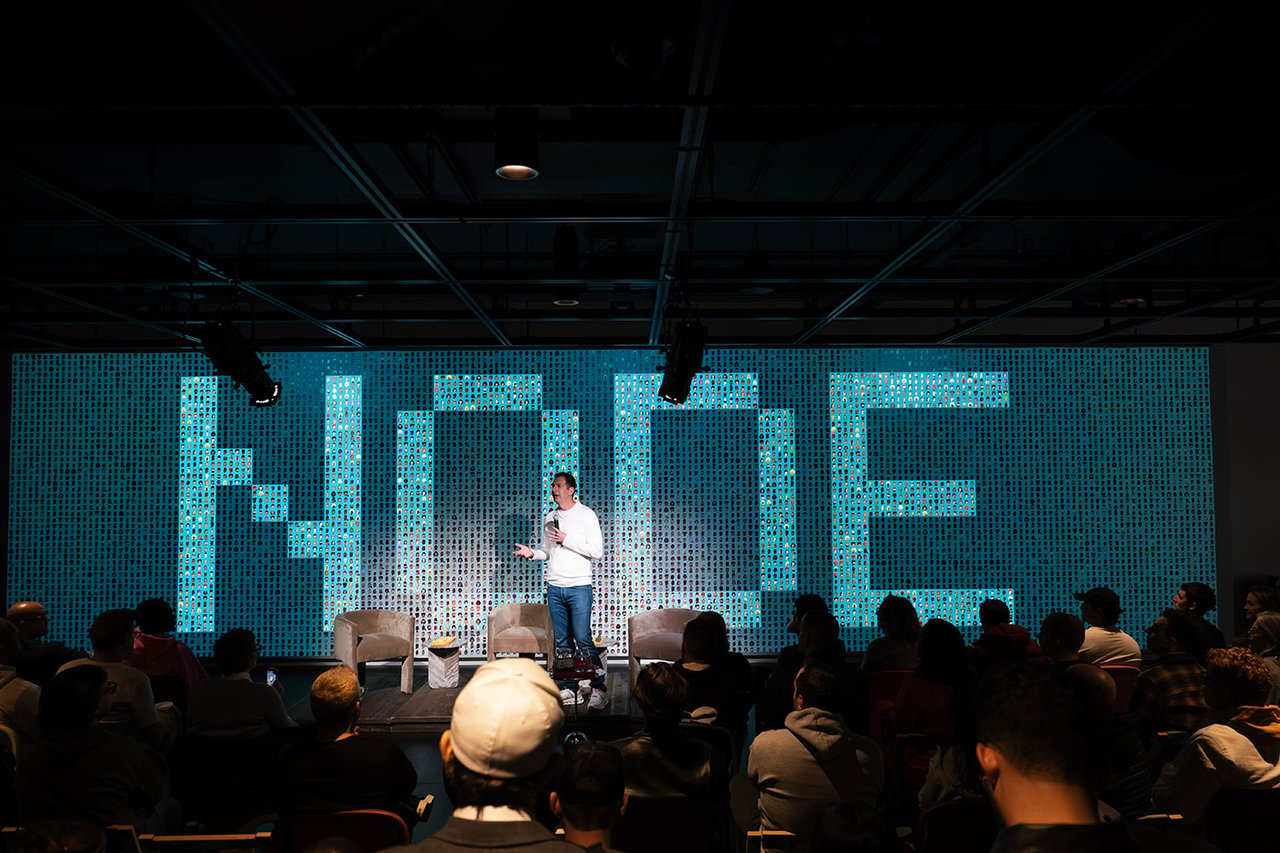
Phil Mohun: When we opened “10,000”, it was also the grand opening of NODE. And it’s easy for us to forget that most people outside of our little [digital art] bubble don’t pay very much attention to what’s going on here [...].
One of the most common things I heard when we opened was, “Oh, wow. Is this that NFT thing? I didn’t realize that this was still going on.” (Phil Mohun)
The front room of “10,000” intentionally showed the marketplace activity, prices and all, front and center, and it caught people’s attention: “They paid how much for what?” And it started a conversation which was basically us catching the public up on five years of progress [in networked art]. The last time they had heard about it was probably on a late-night talk show in 2021 and then they haven’t heard about it since.
And so it felt in the first few months [like we were] reintroducing this concept of digital ownership to the world in which CryptoPunks, to me, are the epitome of digital ownership. It is the reason that the project exists and it’s an incredibly elegant formulation of it. In 246 lines of code, you get digital ownership.
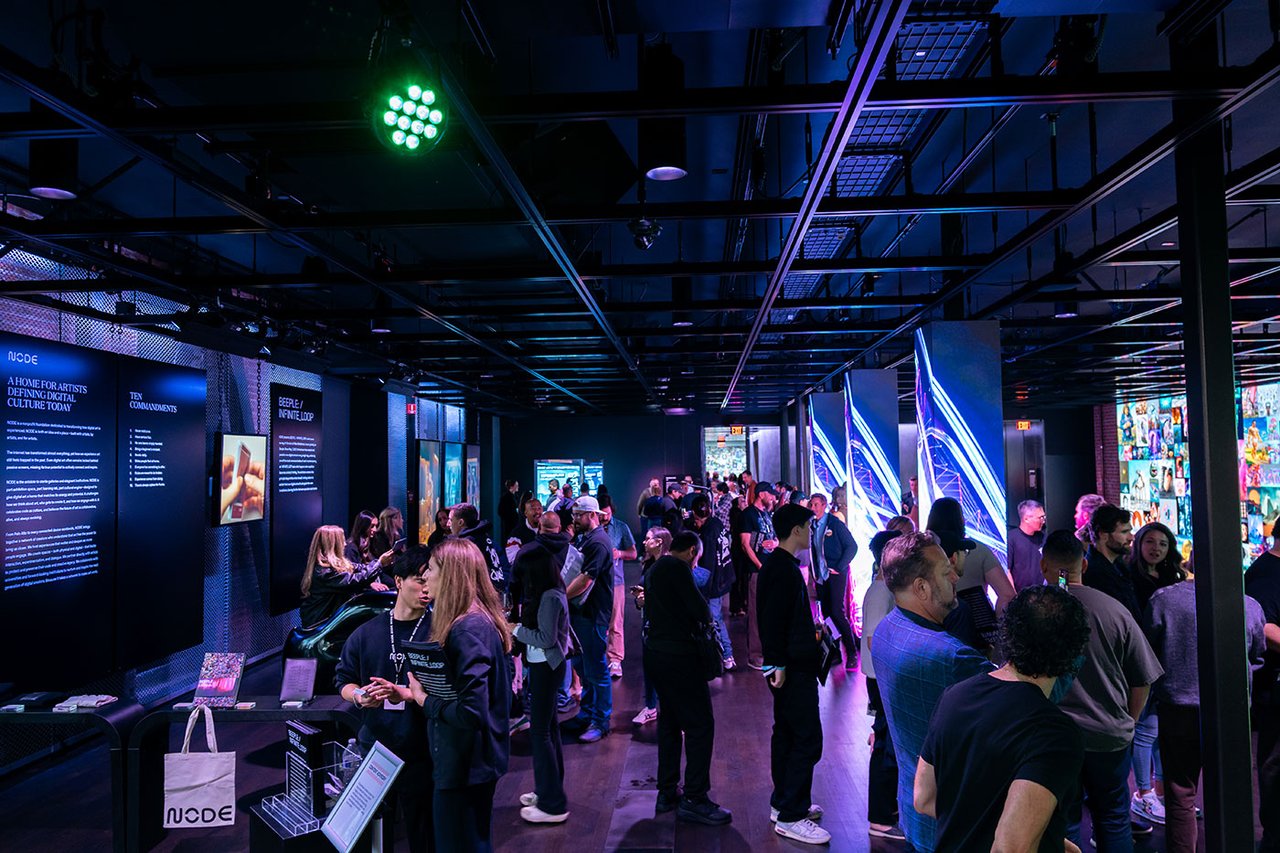
Installation view, “BEEPLE: / INFINITE_LOOP”, NODE, Palo Alto. Photography by Felix Uribe
“INFINITE LOOP”, because it’s a blend of physical objects, kinetic sculptures, and purely digital works — the Everydays — is changing people’s idea of what digital art can be. And this is what I’m so excited about.
There are so many different forms that we are going to explore [that] fall under the umbrella of digital art. People have a hard time grasping purely digital ownership. But when you have something physical that you can show them, they get it. (Phil Mohun)
Right before the Beeple show opened, we hoisted up two giant plaques that have our mantra [“Presentation, Education and Preservation”] and our Ten Commandments. [Never midcurve. Have serious fun. No one leaves empty-handed. Bring a beginner’s mindset. Iterate daily. Make people feel at home. Everyone has something to offer. Rules are meant to be broken. Experience comes from doing. There’s always a place for Punks.]
Those are good reminders of what we’re doing … [as a] home for artists defining digital culture today. One of the [commonest] questions we used to get when people walked in during the CryptoPunks show was, “What is this place?” We still get that question, but now it seems to be answered nicely [on the two plaques].
Beeple, Regular Animals, 2025. Installation view, “BEEPLE: / INFINITE_LOOP”, NODE, Palo Alto. Photography by Felix Uribe
LJ: Of the Ten Commandments now displayed at NODE, “never midcurve” feels particularly striking. How have visitors interacted with the commandments?
MM: “Never midcurve” started almost as an internal joke, but it became surprisingly serious very quickly. The internet tends to reward extremes. The work people remember is rarely the safest version. It is the work that takes a real risk — aesthetically, emotionally, technically, or culturally.
NODE exists because we felt too many cultural spaces had become optimized for consensus. Safe lighting. Safe programming. Safe ideas.
We wanted to create a place where experimentation itself felt visible. Visitors react to that immediately. Some people love the commandments. Some people argue with them. Honestly, we enjoy both reactions equally. The worst possible outcome for NODE would be indifference. (Micky Malka)
BK: We are not chasing perfection. We are chasing originality, experimentation, and emotional impact. The commandments invite people to think differently about creativity — to embrace risk, curiosity, and boldness. Visitors engage with them constantly. Some laugh, some debate them, and some take photos and send them to friends. But most importantly, they understand that NODE is trying to build a different kind of cultural space.
Beeple, Tree of Knowledge, 2024. Installation view, “BEEPLE: / INFINITE_LOOP”, NODE, Palo Alto. Photography by Felix Uribe
LJ: What have you learned about presenting digital art from your live experience of artists and audiences at NODE?
MM: We’ve learned that digital art cannot simply inherit the exhibition logic of older mediums.
A painting can survive almost any wall. Networked art is different. It depends on systems, synchronization, light, scale, latency, software, sound, interaction, and increasingly real-time computation. In many cases, the exhibition itself becomes part of the artwork. That changes the role of the institution completely.
The institution can no longer behave like a passive container. It has to become an active collaborator. That realization sits at the center of NODE. (Micky Malka)
BK: We always believed digital art would resonate with younger generations, but we never imagined that seven- and eight-year-olds would become some of our most engaged visitors. They pull their parents into the space, ask incredible questions, and interact with the work instinctively.
There is something deeply native about this media for them. In many ways, they are already helping us imagine the future of exhibition-making.
Installation view, “BEEPLE: / INFINITE_LOOP”, NODE, Palo Alto. Photography by Felix Uribe
PM: What I love about our ability to work with artists and have them show their work here is they’re speaking the same language as [Silicon Valley]. These artists are software engineers, they’re builders, they’re developers, but they’re coming in with this outside perspective that’s putting a mirror up to what’s being created here. And that’s really healthy.
Our job is to provide the artists with a canvas that they can use to do work that they couldn’t do anywhere else. (Phil Mohun)
What I love about the artists that we work with is often they’re using the technology before it’s ready for commercial use. And so you get this glimpse of the future.
Right now inside of “Infinite Loop” there’s [...] the first sculpture that Beeple made with AI. It’s from about 2023, and then the walls and the ceiling are using a video model from 2026. [It had] only been out in the US for two or three weeks at this point.
Beeple, HUMAN ONE, 2021-present. Installation view, “BEEPLE: / INFINITE_LOOP”, NODE, Palo Alto. Photography by Felix Uribe
LJ: What has it been like presenting the latest version of Beeple’s HUMAN ONE, in company with previous versions of the sculpture?
MM:HUMAN ONE is an extraordinary artwork because it refuses to stand still. What makes it powerful is not only its scale or technical sophistication, but the fact that it continues evolving over time. Beeple keeps updating it, expanding it, and placing it into dialogue with the present moment. That changes the relationship between artist, artwork, and audience entirely. Most traditional artworks are frozen in time. HUMAN ONE behaves more like a living system carrying memory while continuously transforming itself.
For us, that captures one of the most important ideas in digital art: permanence no longer has to mean permanence through stillness. A work can endure precisely because it evolves. Seeing multiple generations of the sculpture together inside NODE made that idea incredibly tangible. (Micky Malka)
Beeple, HUMAN ONE, 2021-present. Installation view, “BEEPLE: / INFINITE_LOOP”, NODE, Palo Alto. Photography by Felix Uribe
LJ: Four months in, how do you see things coming together for your ambition to share the NODE model more widely?
MM: We do not think NODE is just a building. We think it is an emerging institutional model. Museums were designed around static objects. But more and more important cultural works now behave like living systems — networked, iterative, programmable, and constantly evolving. That requires different infrastructure, different production methods, and different relationships with artists.
We are already seeing curiosity from institutions around the world because many of them recognize the gap. They know internet-native culture matters deeply, but most existing cultural infrastructure was never designed for it. NODE is our attempt to help invent that new language. (Micky Malka)
Beeple, Everydays, 2007-present. Installation view, “BEEPLE: / INFINITE_LOOP”, NODE, Palo Alto. Photography by Felix Uribe
PM: One of the first things we did was [to publish] all of our specs on our website. All of the hardware that we use is open source and, increasingly, we’re allowing artists to integrate directly with the software we are building to control the space. And we’re getting better with that with every show. We want to be able to essentially provide a layer that artists can hook into and we turn this physical environment into a software problem.
The benefit of [doing] these big quarterly shows is all of the R&D that goes into [one] can be repurposed at zero marginal cost. So, we build something as part of a large show and that takes time, it takes development hours, it takes trial and error, but then, once we have it, other artists can use it essentially for free. (Phil Mohun)
And so we built with Matt and John, for example, the “10,000” wall [of all the CryptoPunks]. We had to really design this solution. Matt and John spent so many hours on “How do you precisely map this wall?” Because there are distortions in the image and the projector. Now we’ve solved that problem and future artists don’t have to deal with it.
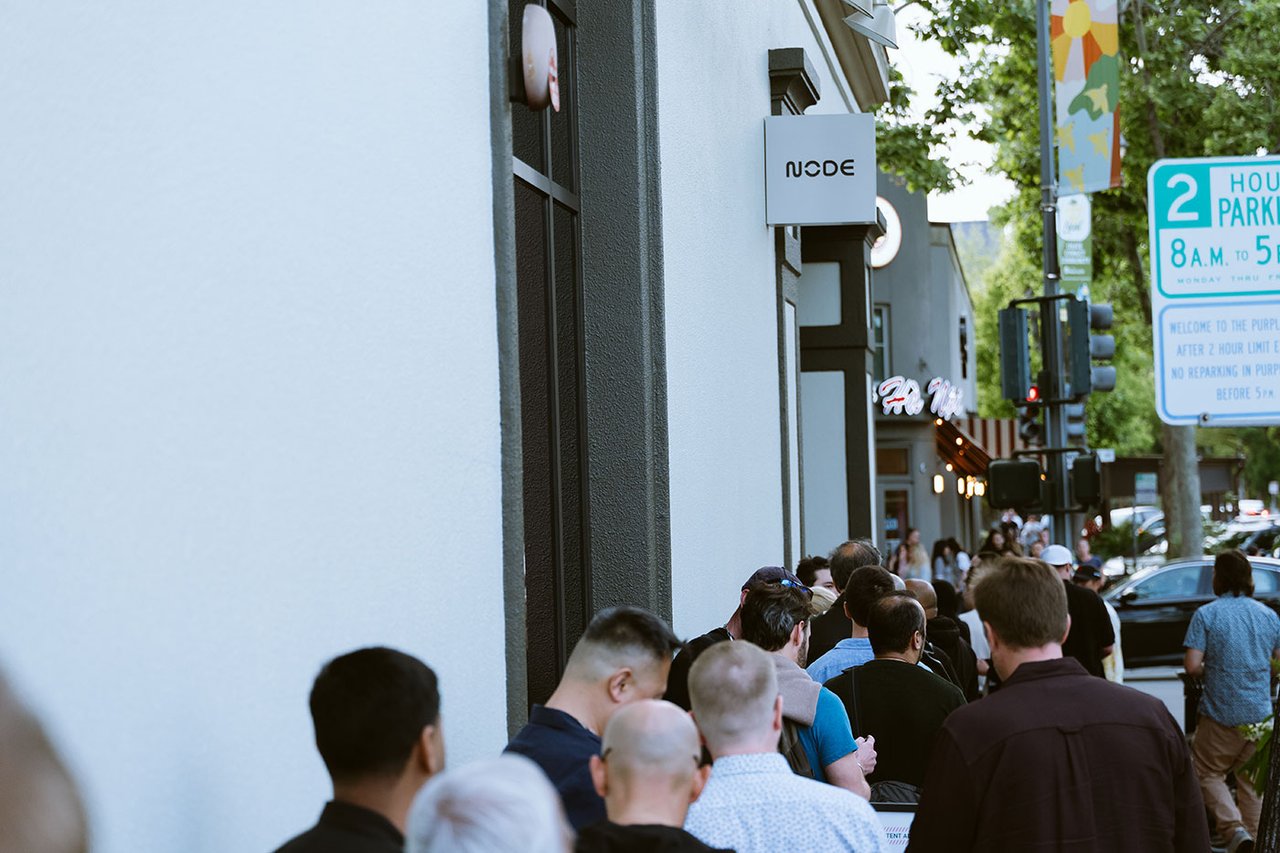
Attendees queue for “BEEPLE: / INFINITE_LOOP” at NODE, in the heart of Silicon Valley. Photography by Felix Uribe
LJ: How have the Palo Alto neighbourhood and its resident student communities engaged with NODE?
BK: The response has exceeded every expectation we had. The community embraced NODE far faster and more deeply than we imagined possible in such a short time.
High school students are writing about NODE in their school newspapers. Universities are bringing students for tours and discussions. Families come back multiple times. Neighbors stop to tell us that this kind of cultural space was something Palo Alto truly needed. (Becky Kleiner)
There is a strong alignment between the curiosity of this community and the spirit of NODE. People here are excited by innovation, but they are also hungry for meaning, creativity, and shared experiences. We feel incredibly welcomed.
MM: What has been especially encouraging is watching audiences mix in ways that rarely happen in traditional cultural spaces. You might see a Stanford researcher, a CryptoPunks collector, a high school student, and a family visiting together, all reacting to the same work from completely different perspectives. That feels very “NODE” to us.
Micky Malka at the opening of “10,000”. NODE, Palo Alto, January 2026. Photography by Felix Uribe
LJ: What do you hope that NODE will bring to the arts and culture of the Palo Alto neighborhood, and to the wider San Francisco area?
BK: We hope that NODE becomes a true cultural landmark for the Bay Area — a place people feel they must experience when they visit the region. But beyond visibility, we hope NODE helps expand the cultural conversation.
The Bay Area has shaped so much of the technological future of humanity, and we believe it should also play a defining role in shaping the future of artistic expression. (Becky Kleiner)
MM: Silicon Valley has shaped how humanity communicates, works, learns, and connects. But culturally, the region still lacks institutions that fully engage with the artistic consequences of the technologies created here. We hope NODE helps close that gap.
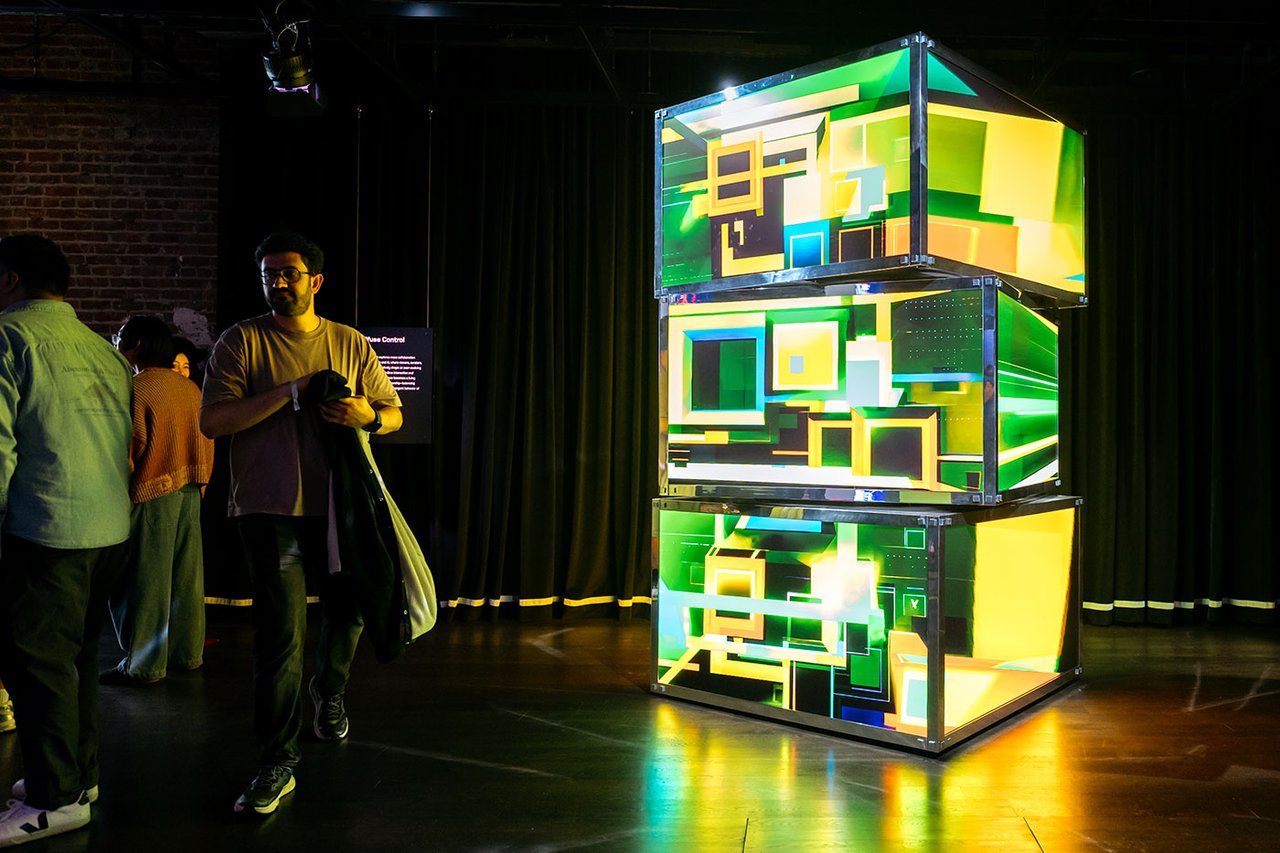
Beeple, Diffuse Control, 2025. Installation view, “BEEPLE: / INFINITE_LOOP”, NODE, Palo Alto. Photography by Felix Uribe
LJ: In the four months of public operation, how has your vision for the space and the foundation developed?
MM: One of the biggest realizations has been that NODE behaves more like a living organism than a traditional institution.
Every exhibition changes how we think about architecture, audience behavior, software, production, education, and community. We are learning in public. (Micky Malka)
That openness to iteration is important because digital culture itself evolves incredibly fast. A static institution risks becoming outdated almost immediately.
BK: One of the healthiest things we have done is approach NODE with the mindset of a startup — probably the most fun startup imaginable. We understand that the first year is about experimentation, learning, adapting, and discovering what truly resonates. We allow ourselves to evolve. That constant evolution is part of NODE’s identity. We are building something living, not static.
Becky Kleiner is an investor and the founder of NODE, a nonprofit foundation dedicated to transforming how digital art is experienced in Palo Alto.
Micky Malka is the founder of NODE and the founder and managing partner of Ribbit Capital, a venture capital fund focused on investing in innovative companies in financial services.
Phil Mohun is the Executive Director of NODE, and CEO and cofounder of Windward Labs, a creative agency. He previously helped start Bright Moments, a digital art gallery that minted on-chain artwork as part of a ten-city world tour from 2021 to 2024.
Louis Jebb is Managing Editor at Right Click Save