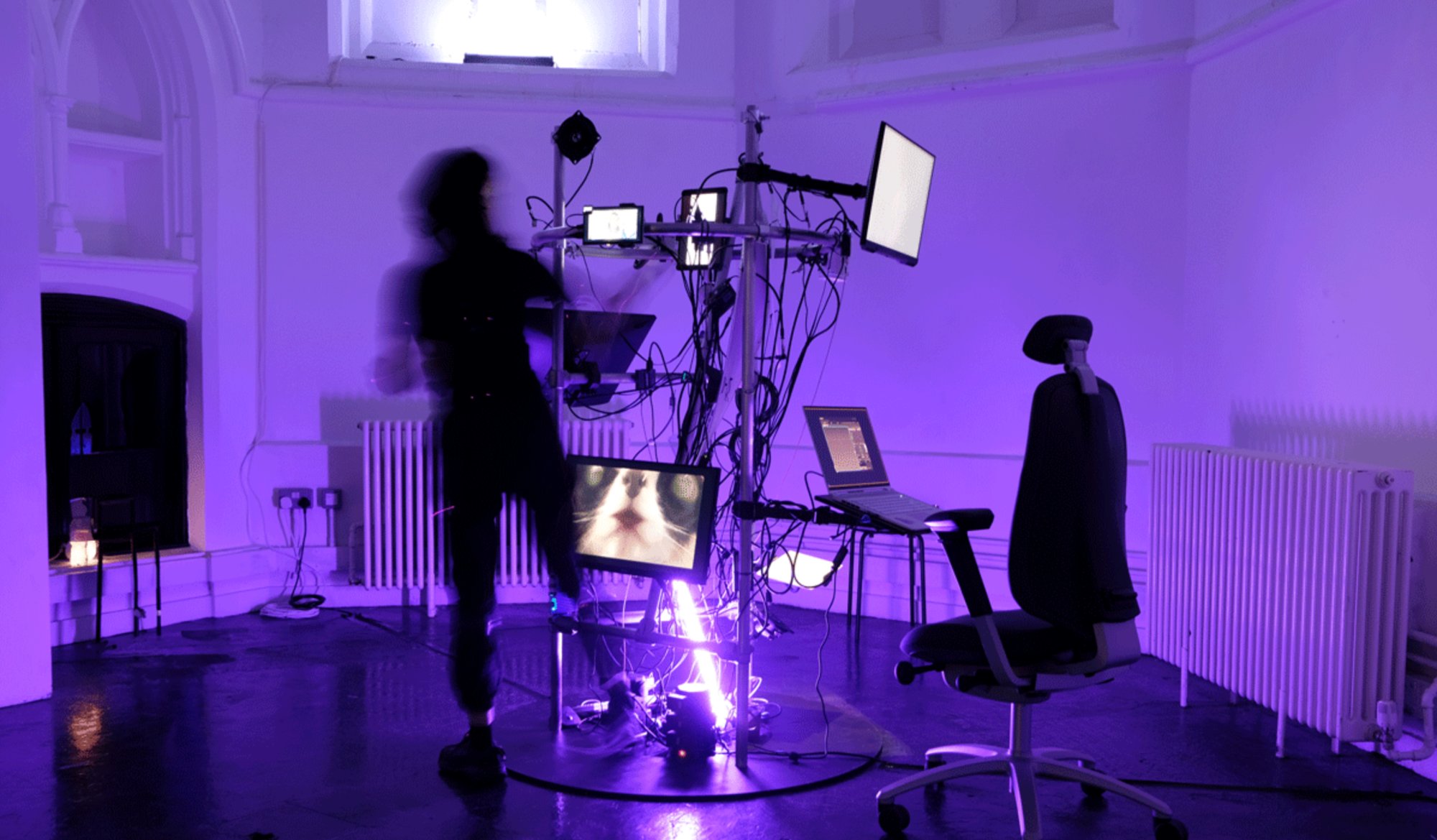
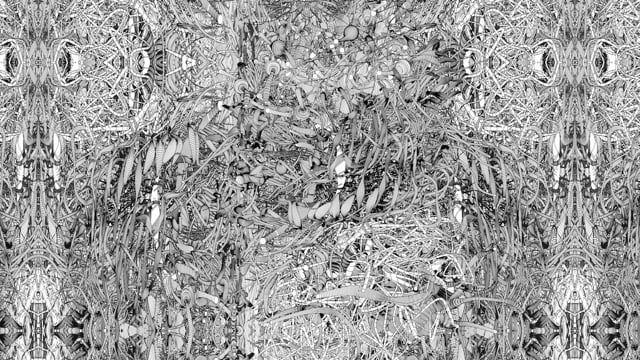
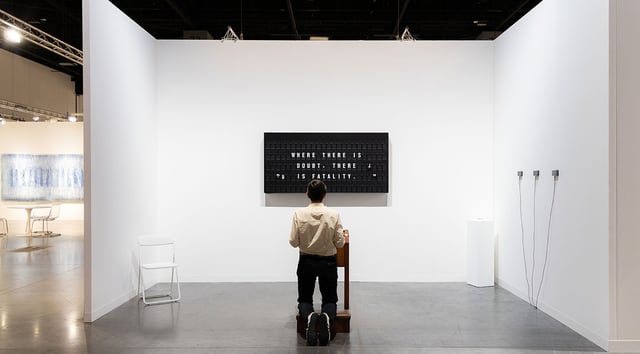
Installation view of “This Is Why The Whole Remains Open” at Goldsmiths, University of London, 2024, with work: The Screen is the Brain (2024-25) by Rafa Roeder. Courtesy of the artist
What does it mean to occupy the hyphenated space between artist and curator? In a conversation hosted at Goldsmiths, University of London, Right Click Save’s Founding Editor, Alex Estorick, joined the college’s Head of Creative Technology, Rachel Falconer, to examine the evolving figure of the curator-artist — a hybrid actor increasingly central to the ecology of contemporary art.
Moving between media theory, market history, and pedagogy, their discussion with a group of emerging talents from the MFA program traces how digital technologies, and the NFT in particular, have disrupted the infrastructures of the legacy art world, creating new freedoms and hierarchies in the process.
If remixing original content — or prompting generative AI that has been trained on original content — is now inherent to the digital condition, then creativity is increasingly a curatorial act.
At stake in this conversation is not simply the ascent of the curator, but the broader question of how cultural value is produced, contested, and distributed in the age of AI. One through line in the discussion is the language through which art legitimates itself: who gets to name movements, align emerging practices with canonical precedents, and determine which artists are remembered.
In the legacy art world, language has often been used to obscure rather than to illuminate meaning, transferring interpretive authority from artists to the keepers of the gallery system. Against this, editorial practice can also serve as a form of ethical curation and layer of resistance, one that is capable of rebalancing hegemonic structures and making legible the entangled realities in which digital artists are enmeshed.
The artists participating in the discussion are London Ham, Youwei Luo, Isabel Merchante, Mikhail, and Rafa Roeder. Their exchanges on smart contracts and resale royalties, display and spectacle, process and commodity, and access and privilege represent vital insights into the new age of hybrids.
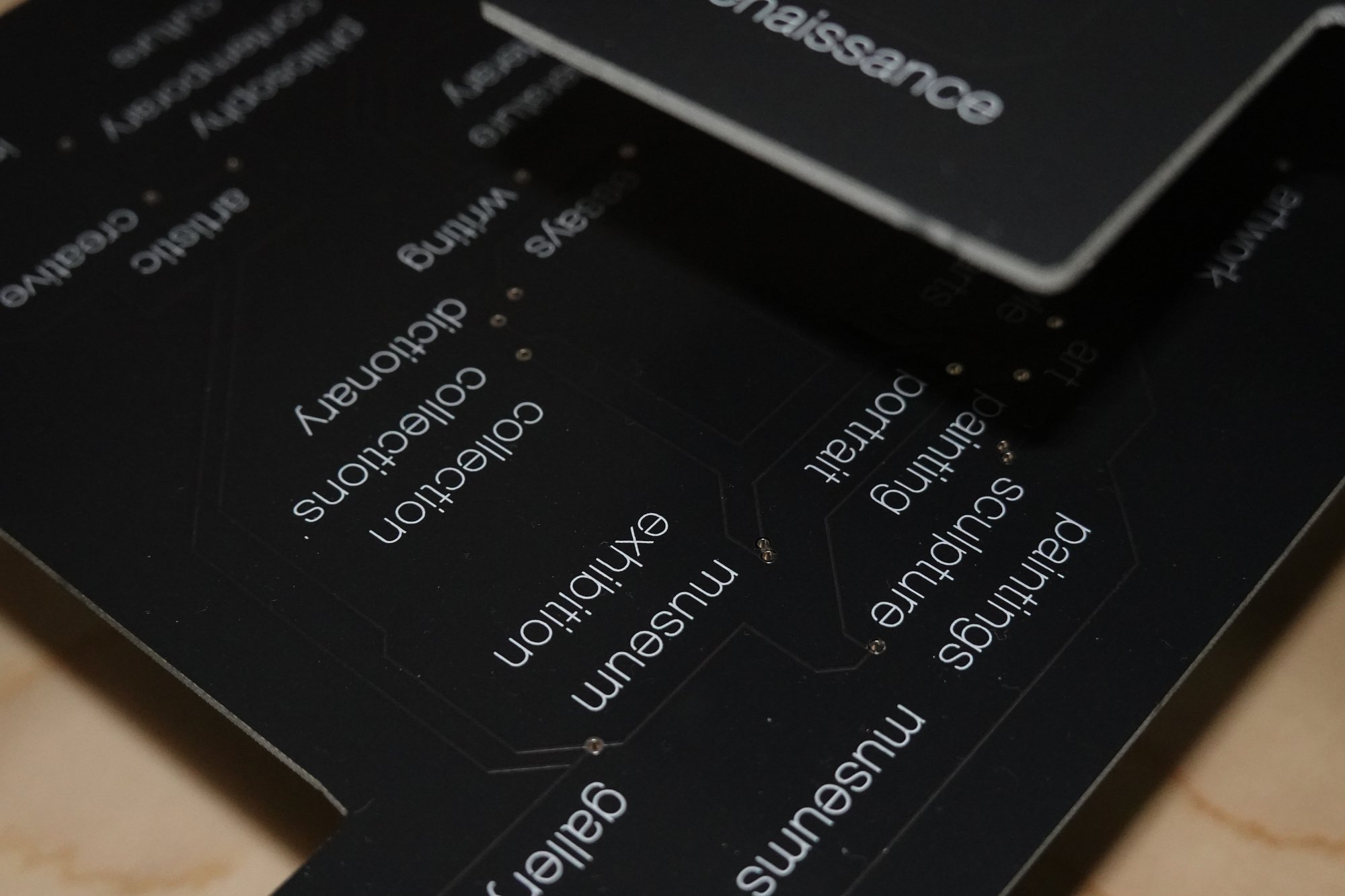
Isabel Merchante, Prototype of PCBS (Poetic Cartography of Branching Significances), 2026. Photography by Chenchen Cai. Courtesy of the artist
Isabel Merchante: Nowadays we need to be curator-artists. We also have to behave like entrepreneurs or artists developing a business.
When NFTs came out, the part I found most exciting was that you could create a smart contract attached to your own work and continue receiving some benefit from the secondary market.
As an artist, I’m interested in learning more about ways to sustain my practice. But in the end, this seemed all talk, because when you collaborate with a gallery, nobody knows about these things.
Alex Estorick: A lot of the reason Web3 technologies — blockchain, NFTs and smart contracts — were disruptive was because they challenged pre-existing legal regimes as well as the habits of the legacy art world. While there had existed ways of preserving digital media, we didn’t have a means of creating a sustainable market. NFT marketplaces replaced traditional galleries as mediators in these natively digital transactions.
For a couple of years, there existed a generally accepted minimum 10% resale royalty, which has been a holy grail for contemporary artists for many decades going back to The Artist’s Reserved Rights Transfer And Sale Agreement of 1971. At Right Click Save, we’ve covered various projects that seek to automate equity. At its best, the smart contract can function as a way of automating the compensation of digital labor. But because of the bust that followed the NFT boom, the potential value of smart contracts as a means of obviating the conditions of precarity in the digital economy has not been fully realized. These technologies offered the potential — indeed the temporary reality — of an alternative art world. We are now living in the aftermath of that.
Rachel Falconer: Which brings us back to the agency of this curator-artist, who is a hybrid creature in themself who can influence the flows of gatekeeping, whether institutional, para-institutional, or external to the institution.
As computational artists, we can’t avoid the agency that we are drawn into through our hybrid condition: interfacing with a complex art ecology. The aftermath is something that can be highly generative. It can provide versatile ground to renegotiate our position as computational practitioners.
AE: It’s also hard to ignore the fact that many artists in this new cultural economy are also collecting. That is partly a function of a natively digital market that started out life as a gift economy, which invites people to perform behaviors that might have once been carried out by a gallery or PR agency. But because it often privileges individuals with big social followings, success in the Web3 ecosystem has often involved an artificial, and temporary, inflation of cultural value. The fact that many participants in the digital space have often embraced hype — in contrast to the legacy art world, which tends to trade in clever-sounding artspeak — is not a cause for celebration, but it does indicate a generational shift.
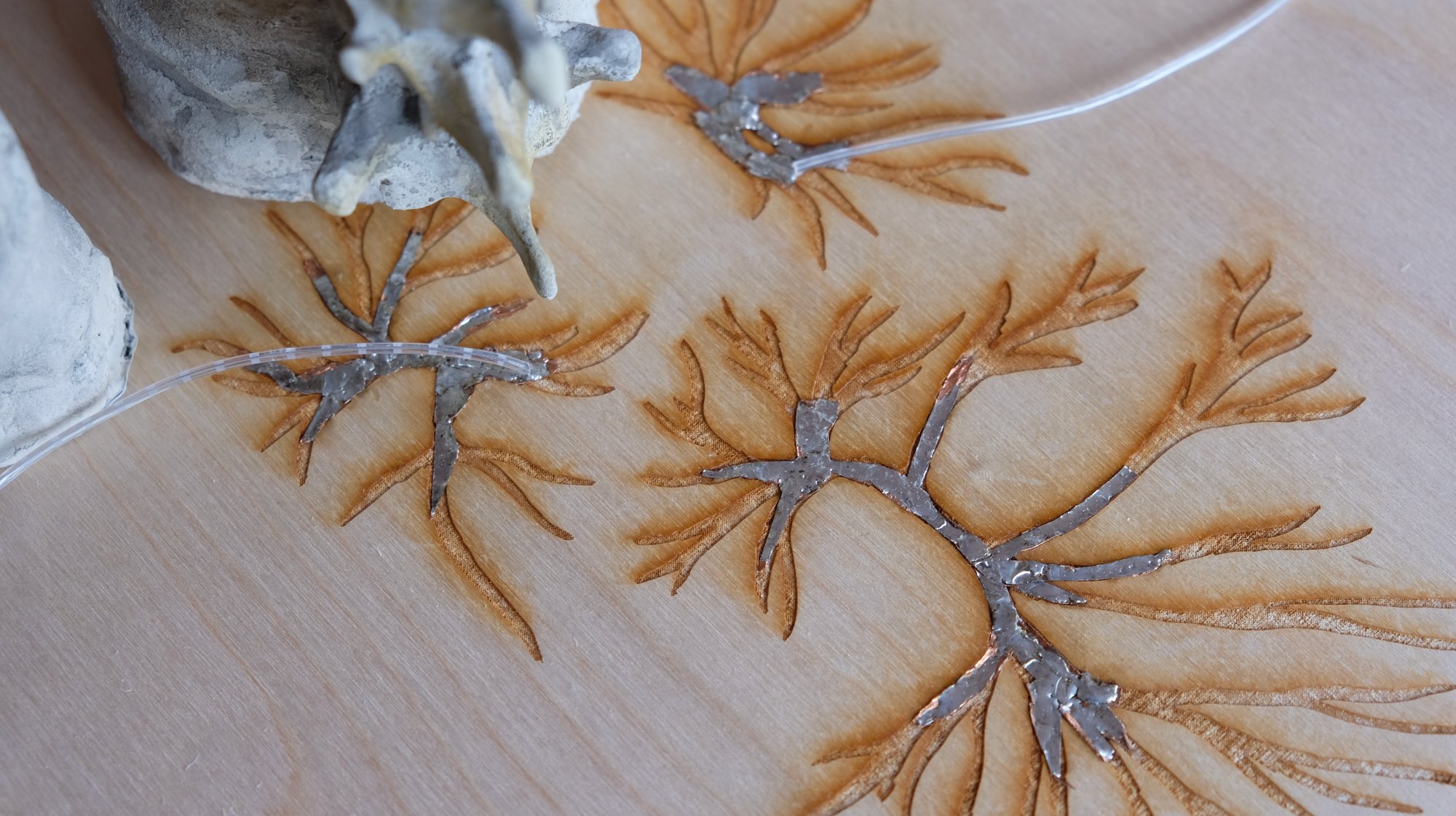
Youwei Luo, Prism of Belief, 2026. Photography by Chenchen Cai. Courtesy of the artist
It’s hard not to feel that the new creator-collector-curator is a late capitalist incarnation of homo economicus. But, at the same time, because of their literacy in code-based systems, today’s radically-minded digital artists can also double as disruptive and ethical regulators, reprogramming technical systems toward more inclusive operations. (Alex Estorick)
London Ham: There’s also a pretty strong analog history of artists trading paintings with other artists — Marcel Duchamp selling [works by Constantin] Brâncuși to survive while he was making his own work in New York. What I’m really curious about is the idea of aesthetic rigor and how that gets established within a distributed ecosystem.
AE: Back in 2022, I led a study “In Search of an Aesthetics of Crypto Art”, looking at approximately 20,000 tags — words artists were associating with their particular works on the marketplace SuperRare. What we found was that of the top 50 tags, 30 had nothing to do with fine art, but five of the top 10 did. You had words like “surreal” or “abstract”, and colors like black and red alongside a range of media terminology. It was clear from that study that we were dealing with a hybrid discourse as well as an age of relative innocence.
Few of that generation had an art historical training, but that doesn’t devalue the cultural importance of a project like CryptoPunks (2017), which is simultaneously a collectible, a blue-chip digital asset, and a prototype of long-form generative art. It is its polyvalence that makes it so disruptive of art-world norms.
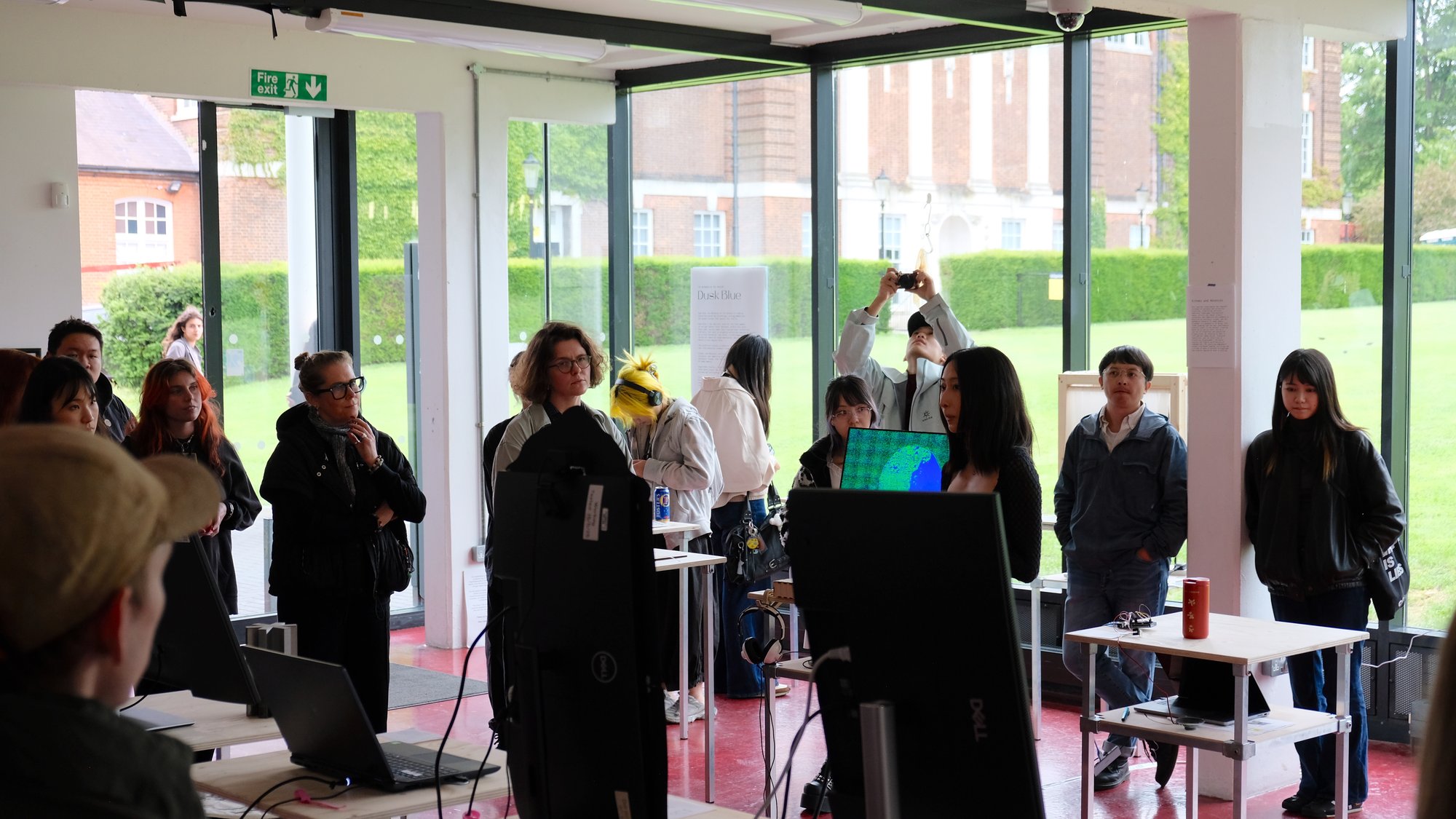
Rachel Falconer and Rebecca Aston with students from the MFA Computational Arts at Goldsmiths, University of London. Photography by Chenchen Cai
Youwei Luo: The process of tokenization — which is a form of symbolization — seems to carry cultural values and attributes that cannot be separated. Even though commodity value and artistic value are not essentially related, [the token is] reduced to a currency rather than an artistic output. I’m wondering why it is necessary to frame [the work] as art in that scenario, and how we avoid [producing] another inevitable monopoly.
AE: Blockchain and NFTs have been used as a form of resistance to traditional frameworks. Crypto art, which was codified by Jason Bailey, was one solution for how to mobilize these technologies in support of a movement for radical inclusivity. We’ve published articles about memecoins, which are not generally regarded as art even though they combine a visual image or signifier with a financial asset in much the same way as work of tokenized digital art.
As an editor, I’m always frustrated when language ceases to be a means of coming to terms with an artwork’s intended or unintended meanings, and becomes instead a vehicle to evacuate meaning entirely. This often coincides with a transfer of control over a work’s cultural significance to the keepers of the gallery system or indeed crypto’s own clan of whales. What is it like studying a specific creative medium at a time when you can see for yourselves that the domains beyond your own are just as relevant — and that having hybrid literacies is, in a way, the only way to survive in a world of layered realities?
Rafa Roeder: I come from film, and I came to Goldsmiths looking for a methodology for things I was already trying to navigate. To me, it’s a question of what I’d be interested in expressing — perhaps from something I’ve read or something that resonates unconsciously — and then asking: what’s the ecosystem of this idea? Maybe it’s important to have a VR headset but then, maybe not. Right now I’m thinking about lecture-performance techniques as a way of addressing audiences directly. Even the most beautiful and sensitive exhibition can be nebulous but there are direct forms of expression that we can use to bring audiences in.
As a viewer, the exhibitions I enjoy most involve displays that go beyond the tool to the building of an ecosystem. I remember an exhibition by Pipilotti Rist at MOCA in Los Angeles a few years ago where you’d enter a whole ecosystem with a lot of different media: sculpture, video art, as well as more technically involved work. That invited curiosity and allowed one to enter further and further.
My education in film has taught me that everything matters: every light, every color, every edge of a table, everything can prompt something. But I also try to resist that impulse as I can get lost in trying to drive an experience for the audience. I would like my audiences to be curious and contemplative rather than hoping for entertainment.
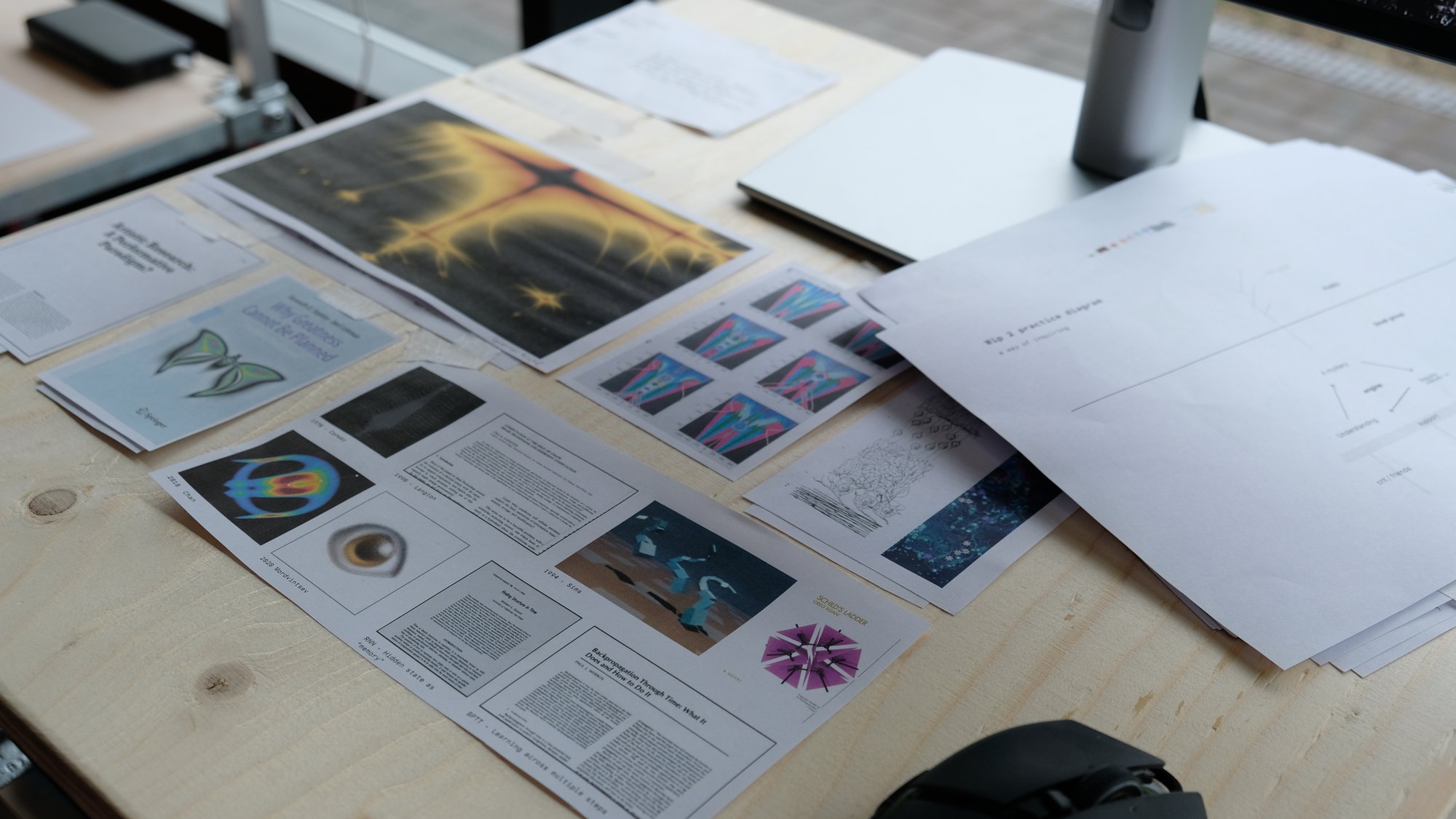
Mikhail, Studio Visit, 2026. Photography by Chenchen Cai. Courtesy of the artist
AE: Are you conscious of the benefits of an interdisciplinary outlook or of synthesizing different literacies?
Mikhail: I’ve been working like that for quite a while, so I’m not sure I’m conscious of it anymore. It’s less common for me to think “I’m doing X and Y and merging them” than “this direction is interesting to me.”
AE: How important is the output to you relative to the concept or code?
M: I’m currently more interested in parameter spaces than in any particular point or output within them. I keep returning to the Lyapunov fractal as a beautiful space. One might ask: “what is the space of all possible animals, and what would it look like to navigate that?”
Rather than looking at a single animal or output of a system, what if computational art looked at spaces?
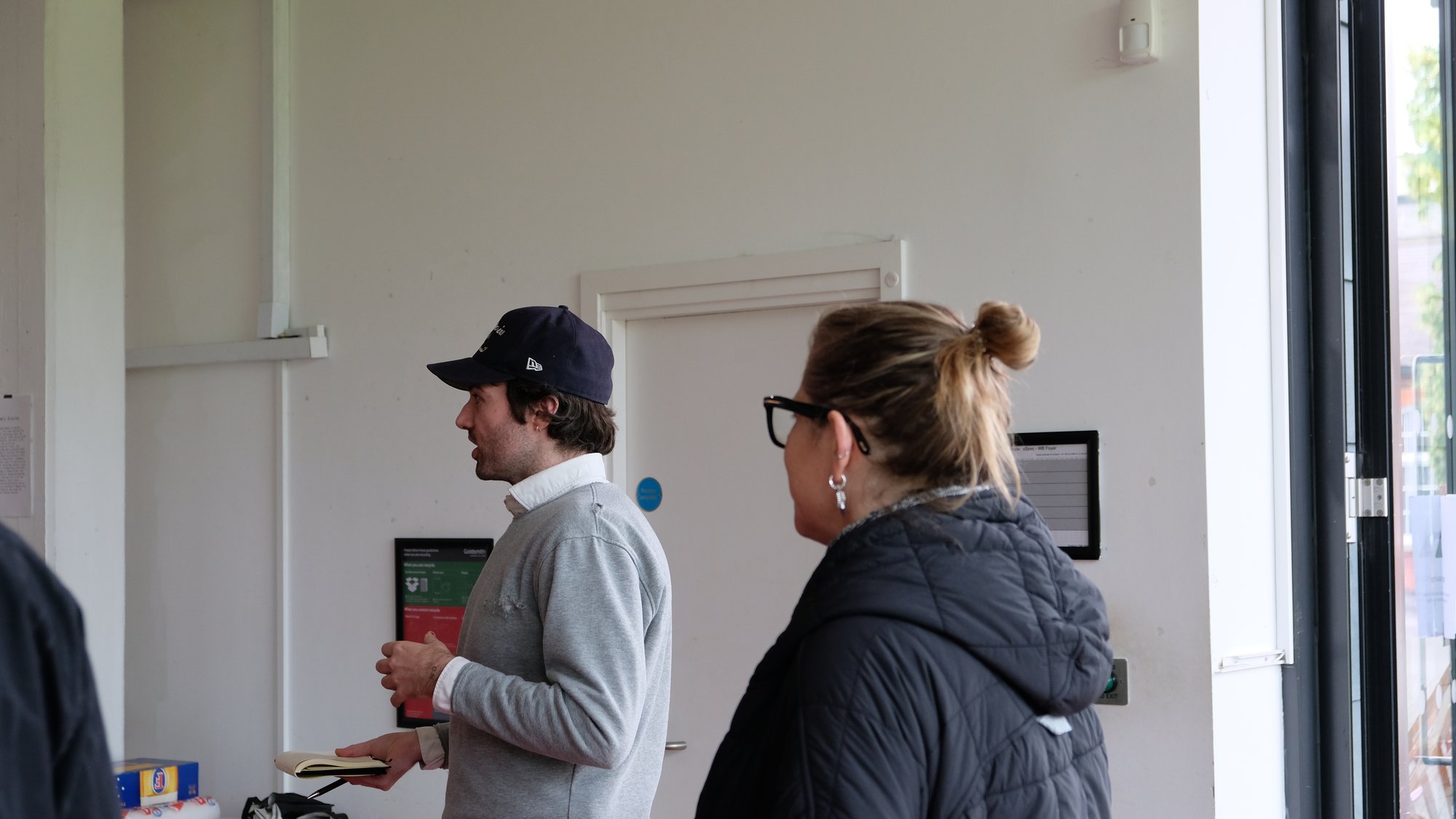
London Ham and Rachel Falconer. Photography by Chenchen Cai
AE: I wonder whether it’s possible to engage audiences in this expanded, interdisciplinary field of digital arts without reverting to tired, skeuomorphic terms.
LH: I remember seeing Laure Prouvost at the Moody Center in Houston, and the thing that tied everything together was narrative. The show included VR headsets inside baskets suspended from the ceiling: you’d pull the basket down over your head, which was simultaneously a sculptural object and an immersive experience. What bound it all together was the attempt to tell a story.
Like Rafa, I come from a film background and, for me, the idea is to try to filter an idea through a medium instead of the medium itself being the idea, which seems like the trap in working with bleeding-edge tools or computation.
You’re building this extraordinary tool, and someone’s asking: “Okay, but why? What does it do? What do I care?”
RF: Not what does it do but what does it communicate?
LH: Exactly.
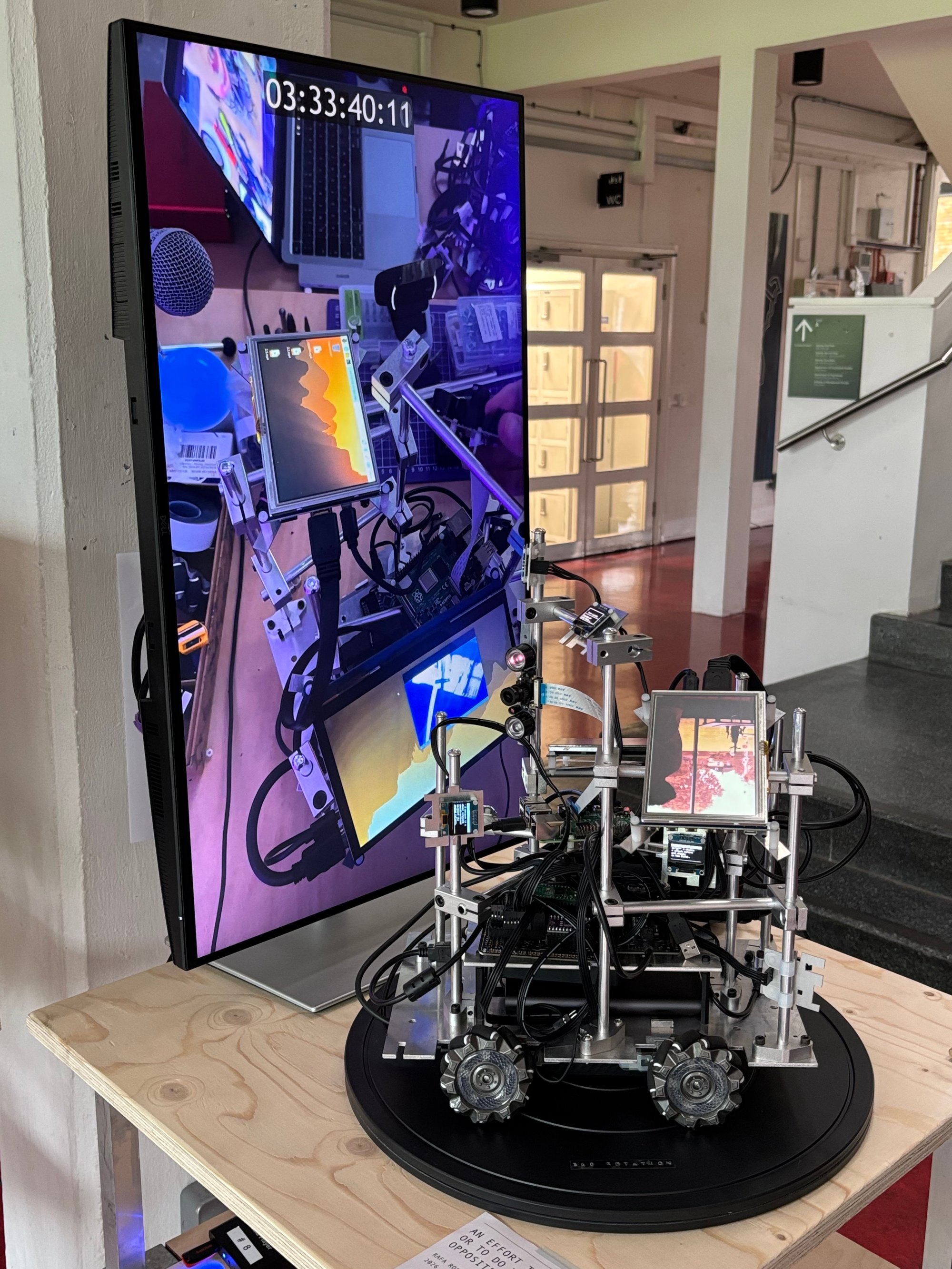
Rafa Roeder, An effort to communicate or to do the exact opposite, 2026. Photography by Right Click Save. Courtesy of the artist.
RF: The NFT era was this imaginary moment where tech would save us, where tech would address the class system that permeates the traditional art world. But then a different type of class system came into play. Tech bros have very well-resourced platforms. Maybe that disruption was one of the first moments to start challenging particularly computational arts practice [and] to start to become more destabilized or decentralized.
AE: But then, if one is not giving people an entryway or allowing them to locate themselves within a particular techno-social reality, what is the point? That is an imperative for a curator in this expanded and uncertain space. Artists can write the rules — and DIY is, I think, increasingly the only way of adequately coming to terms with the monopolistic nightmare that envelops digital experience.
RR: For me, resisting the commodity definitely puts the process in the middle. I live the process; I’m not constantly producing products. But then the commodity becomesthe process. I come from the Global South; I was born and raised in Peru, so resistance is sort of in my background.
Process is vulnerable, uncertain, messy, beautiful, chaotic, which are all the things I grew up with. But there’s a conflict between process, commodity, bringing people in, and output as a product that entertains, which is what we expect from tech. In my own practice I try to leave the process uncertain and cryptic.
AE: I’m interested in your process of suspending different considerations in a kind of flexible, maybe even unstable, framework. That feels to me like a really sensitive curatorial strategy — not to come down on the side of process or output, but to suspend both in tension. That’s a real solution: unfinished perhaps but not in a negative sense.
RF: I’m wondering how that contingency, confusion, ambiguity, and blurred edges — the constant shifting of all those elements within your practice — could then be laid bare in an institutional context. To me, that’s exciting and specific, not nebulous.
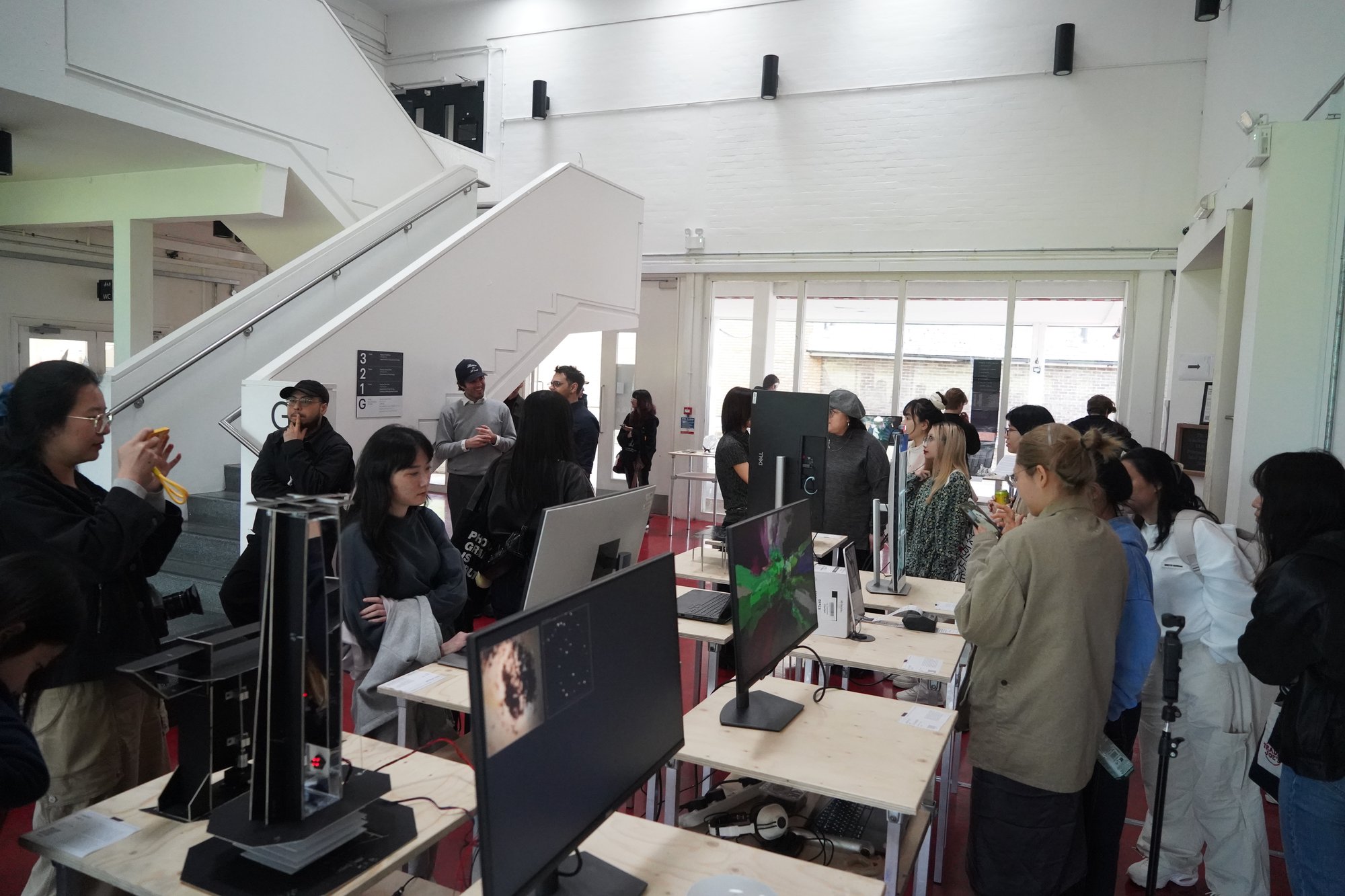
Installation view of “Dusk Blue: The Networks of the Unseen” at Goldsmiths, University of London, 2026. The pop-up exhibition explored technology, ecology, memory, and the unseen systems that govern reality. Photography by Chenchen Cai
AE: Coming back to the curatorial layer within these patterns of entanglement, to me there’s an imperative to inject a kind of legibility about artistic approaches that are hybrid, elusive, and perhaps necessarily shapeshifting.
RF: Curatorial practice is not neutral, and it doesn’t have to be singular nor delivered by one person or entity — it can be a collaborative process with other humans and other-than-humans. I formulate my curatorial approach around this idea of holding my responsibility as a curator lightly, but also with a certain adherence to that responsibility — operating as a kind of archivist or counter-cartographer; a fluid interpreter of the situation.
Taking the process and putting an artificial punctuation mark on it is essentially what exhibitions, institutions, museums, and the academy do: they impose a false punctuation mark on something that, if left to its own devices, would continue to evolve and rotate.
AE: Perhaps part of the role of the curator or artist or hybrid is to try and render temporary and porous structures that are fixed and hegemonic.
RF: I would agree. Whether we come back to this idea of artist, curator, or resistor, it’s DIY.
London Alexander Ham is an artist from Houston, Texas, who lives and works in London. His ideas manifest in whichever material best suits their needs. His practice emerges from a long relationship with filmmaking that is refracted through experiments in sculpture, computer graphics, sound, and performance. From 2016 to 2019, he was the director of Blank Check, an artist-run gallery space. From 2022 to 2024, he was the director of The Car Wash. He is a former co-director of Emily Cooper Gallery, London. He is currently an MFA candidate in Computational Arts at Goldsmiths, University of London.
Youwei Luo is a contemporary artist with more than five years of professional experience working across sculpture, installation, 3D printing, sound, and computational media. He has exhibited widely in London and continues to develop his practice while pursuing an MFA at Goldsmiths, University of London. Youwei’s work interrogates the boundaries between life and machine, nature and culture, and the artificial and the organic, through pieces that are simultaneously uncanny, poetic, and immersive. Central to his approach is materiality, metamorphosis, and post-anthropocentric perspectives, creating hybrid objects and environments that invite reflection on resilience, transformation, and the evolving relationships between humans, technology, and the natural world. His practice explores the interplay of form, matter, and concept, pushing the limits of abstraction and experimental processes to produce work that is thoughtful, engaging, and conceptually rich.
Isabel Merchante is a visual artist with a background in design and computation. Her work integrates programming, neural networks, projection, and ephemeral matter to reimagine technology as an emotional and poetic tool. Through a speculative approach, she designs systems in which technical objects are displaced from their sociopolitical logic of efficiency to become companions in thought. In recent years, she has gained recognition for her distinctive approach to AI within sculpture and installation, exhibiting in institutions such as CentroCentro and La Casa Encendida, Madrid; Tate Modern and Camden Art Centre, London; Círculo de Bellas Artes, Madrid; MARCO, Vigo; Cidade da Cultura de Galicia, Santiago de Compostela; CAMT, Tetouan; and Fondazione Pastificio Cerere, Rome. An alumni of the Royal College of Art, London, and UFV, Madrid, Isabel is currently completing an MFA in Computational Arts at Goldsmiths, University of London, supported by a “la Caixa” Foundation Postgraduate Fellowship Abroad.
Mikhail is an arts student and programmer based in London.
Rafa Roeder is an artist and researcher based in London. Her work is concerned with how humans relate to the technological and societal systems shaping their lives. Keeping the inner workings of film, electronics, performance, and other technology-based processes on the surface, she demystifies these systems. Her work has been shown at MUTEK, Montreal, Somerset House Studios, London, and Le Bel Ordinaire, and she recently completed a residency at Khoj International Artists’ Association in New Delhi, supported by the British Council. She holds a BA in Filmmaking and is completing an MFA in Computational Arts at Goldsmiths, University of London.
Dr Rachel Falconer is an independent curator, Senior Lecturer, and Head of Creative Technology at Goldsmiths, University of London. Her systems-based curatorial practice operates across contemporary art, feminist technoscience, critical AI, and networked culture, developing alternative exhibition models and research platforms that investigate the entanglement of network apparatus and technological and social behaviors. She is founder of Mutable Prototype Syndicate — a research-as-practice agency for critical disruption through experimental curatorial methods — and serves as a Dedicated Mentor at NEW INC, advisor to the Ars Electronica S+T+ARTS Prize, and juror for The Lumen Prize. She has participated in programs at Tate, Barbican, ICA, V&A, Rhizome, Arebyte Gallery, Transmediale, and Furtherfield, among others. She is an RSA Fellow.
Alex Estorick is the Founding Editor of Right Click Save.