William Latham
artist, b. 1961, based in London, United Kingdom.
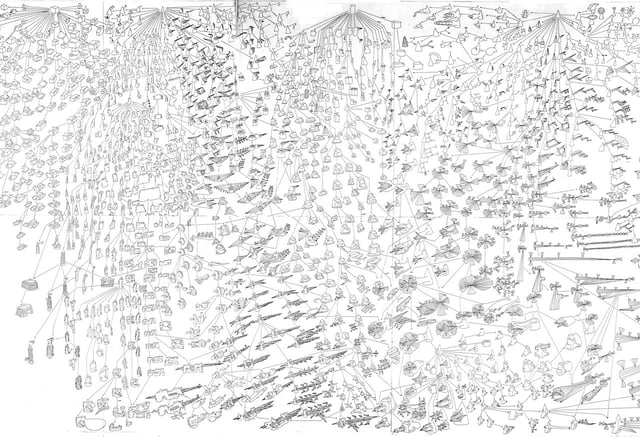
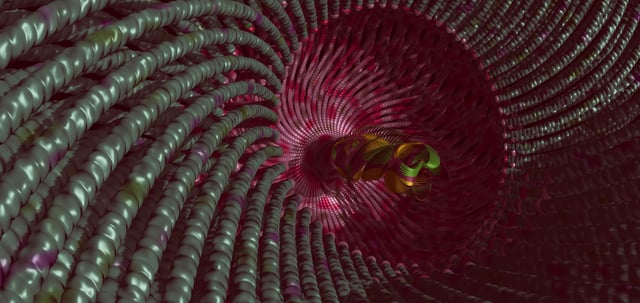
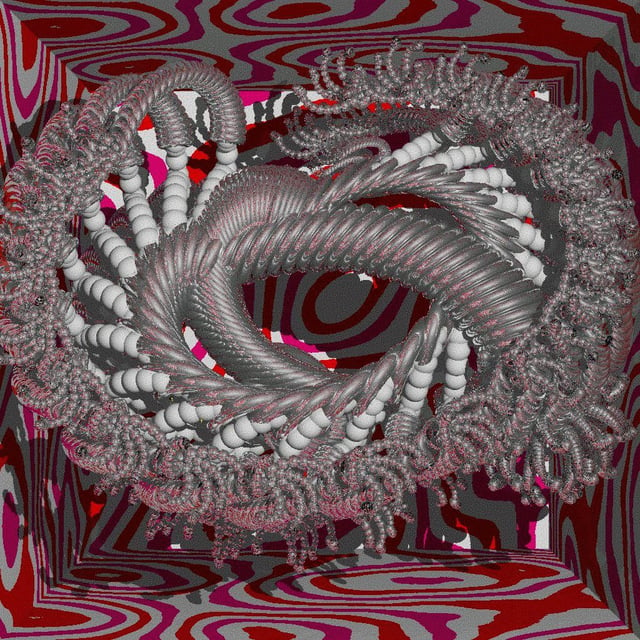
William Latham is well-known as an early pioneer of generative art through his Mutator Evolutionary Art, created at IBM in the late 1980s and early ’90s. His work, which exhibits strange organic, often serpentine, forms, is produced using his “alternative evolutionary software system,” developed with Stephen Todd and team, which Latham uses to pick and breed 3D forms freed from the limits of the human imagination. His work was shown widely in museums and touring shows in the UK, Germany, Australia, and Japan at that time. Latham’s work is focused on using evolutionary processes to create art centered on the idea of the “artist as gardener,” originating from his time as Henry Moore Scholar at the Royal College of Art, where he created his FormSynth drawings and etchings — a blueprint for his later Mutator work. On leaving IBM in the mid-nineties Latham set up a studio in Soho, London and moved into Rave Music where his organic art had built up a following in the emerging Rave and Cyberculture scene. After three years, he and his team of around 70 then began developing games with Warner Bros. and Universal Studios. In 2002, they created the hit game, The Thing , based on the John Carpenter movie.
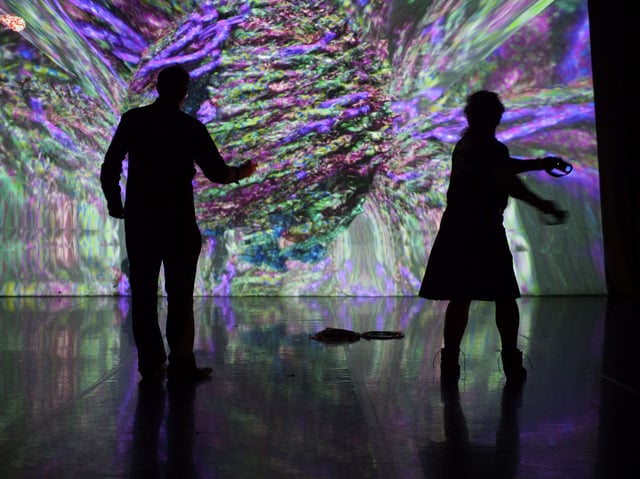
In 2007, he moved away from entertainment, becoming Professor in Computer Art at , where he restarted his creative collaboration with mathematician and programmer . They resurrected and extended their old Mutator code and pushed the technology into VR, creating highly novel organic immersive experiences for the public. This VR work has been shown in many touring exhibitions in China, Japan, Peru, Belgium, and the UK. Mutator VR uses Latham’s core evolutionary ideas with influence from Rave and interactivity from games. His recent “Fantasy Virus Mutator” and “Infinity Mirror” series are influenced by electron microscopy as well as the engravings of Albrecht Dürer. Latham’s work is in the permanent art collections of the , Paris; The V&A and Calouste Gulbenkian Foundation, London; and the Henry Moore Institute, Leeds.