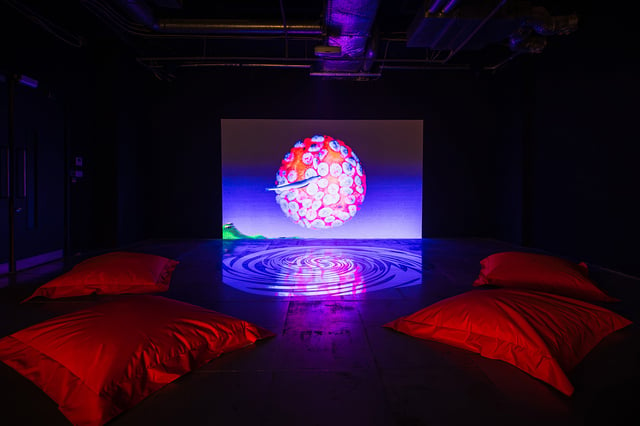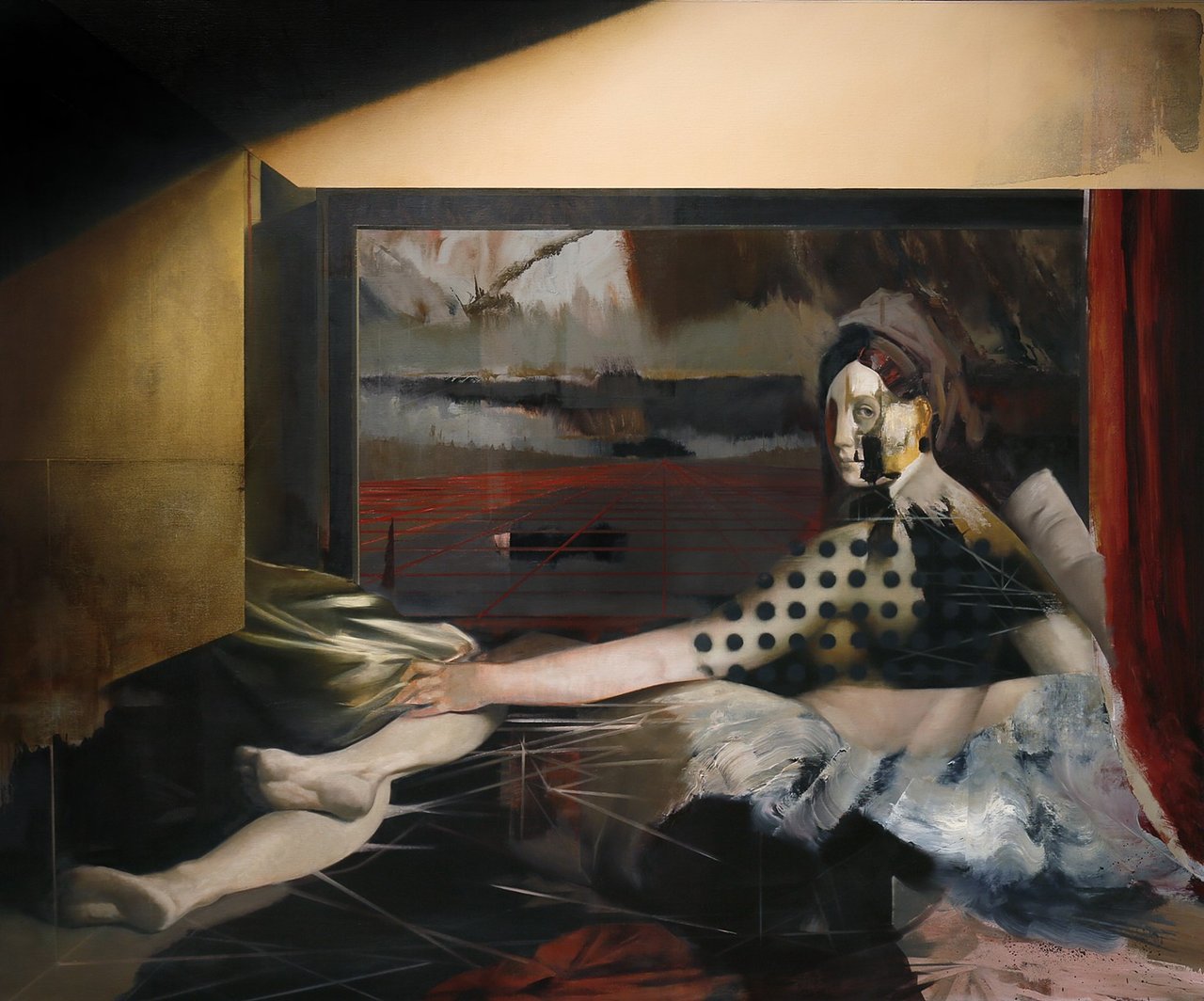
Tim Kent, Inclinations, 2024. Courtesy of Tim Kent Studio
The Immense Museum of Strangeness | Tim Kent
The painter discusses rest, recursion, and the eternal power of metaphysical painting in an age of uncertainty
Tim Kent, Inclinations, 2024. Courtesy of Tim Kent Studio
The painter discusses rest, recursion, and the eternal power of metaphysical painting in an age of uncertainty
Tim Kent has spent the better part of two decades building a practice that circles back on itself in mesmerising fashion. A rigorous technician in the craft of painting, his hermetic interiors and surreal landscapes are recognizable for their combination of obsessive rigor and tectonic precarity.
Blending neoclassical nostalgia with a taste for digital visualization, Kent’s world is always on the edge of elemental breakdown, populated by figures in a very contemporary state of flux.
Trained in England at a moment when painting had fallen almost entirely out of institutional favor, Kent has spent his career exploring what it means to make representational images in a culture that has become, in his own words, “toxified” by digital saturation and a state of experiencing the world “dumbly”. That word, dumb, surfaces in his conversation with Right Click Save’s Founding Editor, Alex Estorick, who recently developed his own thesis of dumb painting to describe art that confronts the flattening of all cultural forms in the age of AI.
Designed as an escape from precisely that condition, Kent’s latest show, “Sojourn”, at Hollis Taggart, New York, is a clinic in the art of slow reading and a conscious refusal of the attention economy. Yet the painter is candid about the struggle to reconcile digital immersion with analog inquiry. As it turns out, painting rest is just as much work as painting anything else. In the following interview, the artist reflects on the continuing importance of metaphysical painting, on the march of superintelligence, and the recursive, almost fractal logic by which he builds a canvas from a single promising mistake.
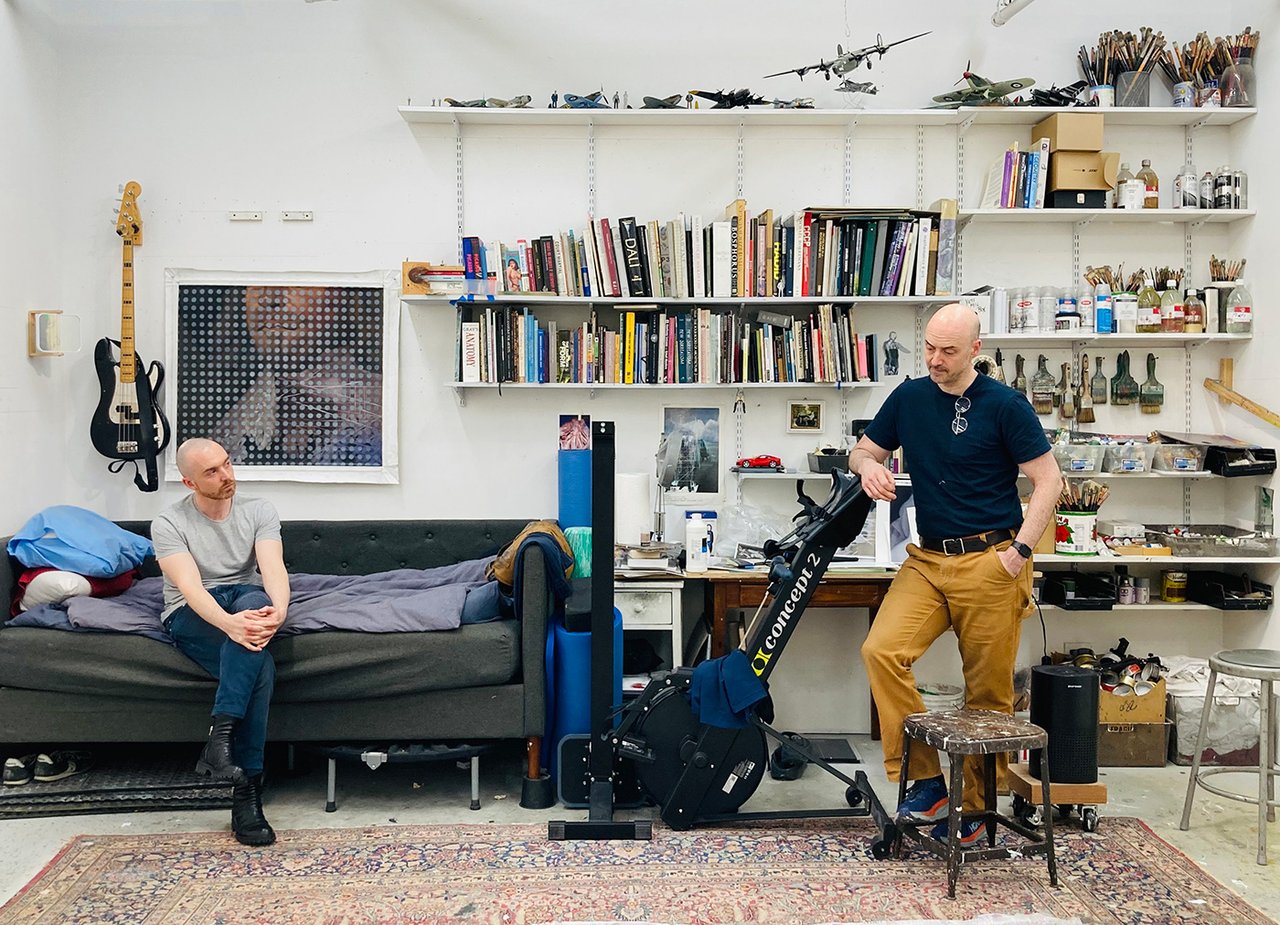
Tim Kent (right) in the studio with Alex Estorick, 2024. Photography by Charlotte Kent. Courtesy of Tim Kent Studio
Alex Estorick: Your show “Sojourn” proposes rest and slowness as an antidote to the attention economy. As a magazine editor, I can see for myself how people’s reading times are coming down, but your paintings demand a level of close observation too. How are you making sense of the current changes in how people digest and engage with images?
Tim Kent: “Sojourn” is an attempt — and I don’t think a very successful one, ultimately — at not engaging with art made for media, or art that has to be seen on our various apps and devices.
Over the last year, with all the doom and gloom around our impending death via artificial superintelligence, I got fed up and thought, “I need a break from the whole thing”. I was tired of looking at art that simply talked about what a computer is and does — it’s boring. I wanted to talk about the spaces and places in which we are not surrounded by this technology.
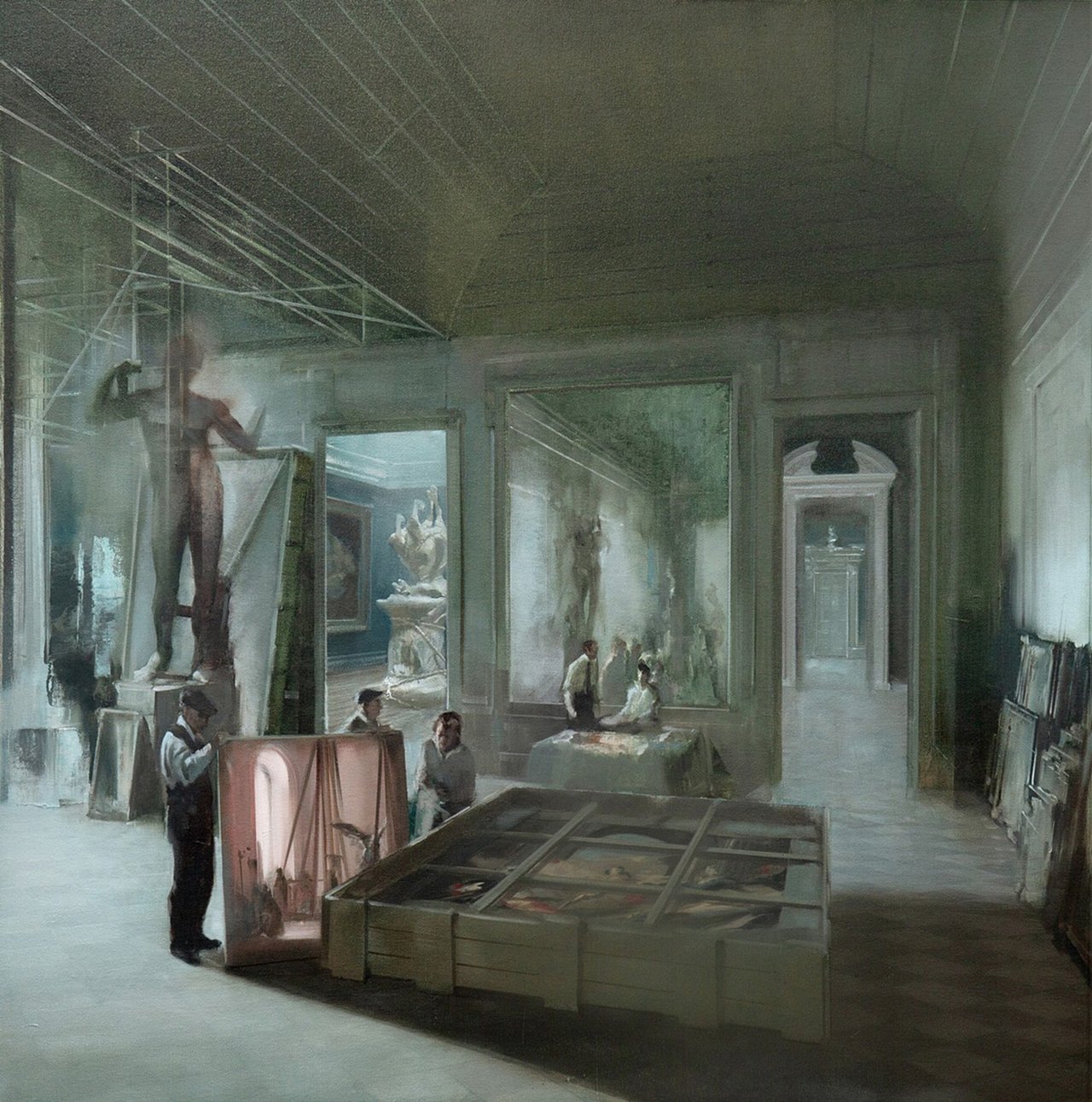
Tim Kent, Arts Work, 2024. Courtesy of Tim Kent Studio
AE: I vividly remember visiting your studio a few weeks before your show “Histories in Flux” opened at JD Malat gallery in 2024, which read like a concerted attempt to paint in a way that acknowledged the digital surround. I regard you as a postdigital painter because, while you’re working harder than ever in this haptic, analog medium you’re also not in denial about the dominance of the digital image. In fact, you seem to embrace the reality that your work is likely to be seen first in digitized form on a screen. Could you say something about how the last few years have evolved as life has become increasingly saturated by the digital imaginary?
TK: Twenty years ago I was doing a master’s degree in England, studying painting at a time when painting instructors were being pushed out because everything had become about new media or concept-based work. I still remember when Martin Creed won The Turner Prize, and the talk was still all about him sticking a piece of Blu-Tack on a wall — painting was completely out of fashion. Fast forward to today and you have a complete rebirth of good painters working with representation.
I don’t know why that switch happened, but by 2009, when I did my first big New York show, there was a lot of commentary around painters using Photoshop. As I began to work with architecture and interiors, I had to construct, on a small scale, perspective systems that a hundred years before would have been worked out on huge chartboards; you’d need eight feet on each side to make a drawing correctly. Compressing that into Photoshop, and early computer-aided design (CAD) like SketchUp — which I still use constantly — meant working in sophisticated programs that would crash the whole time.
Over the last fifteen years, we’ve seen artists impregnating the digital into their work even when they’re making tactile, physical paintings — Chris Dorland is a good example. But I don’t want to spend so much time engaging with the digital because it means sitting down and using my eyes for other things.
I still like the idea of constructing an environmental space with objects in it that I also exist in, rather than the cerebral, ocular business of looking at my phone and that becoming the space.
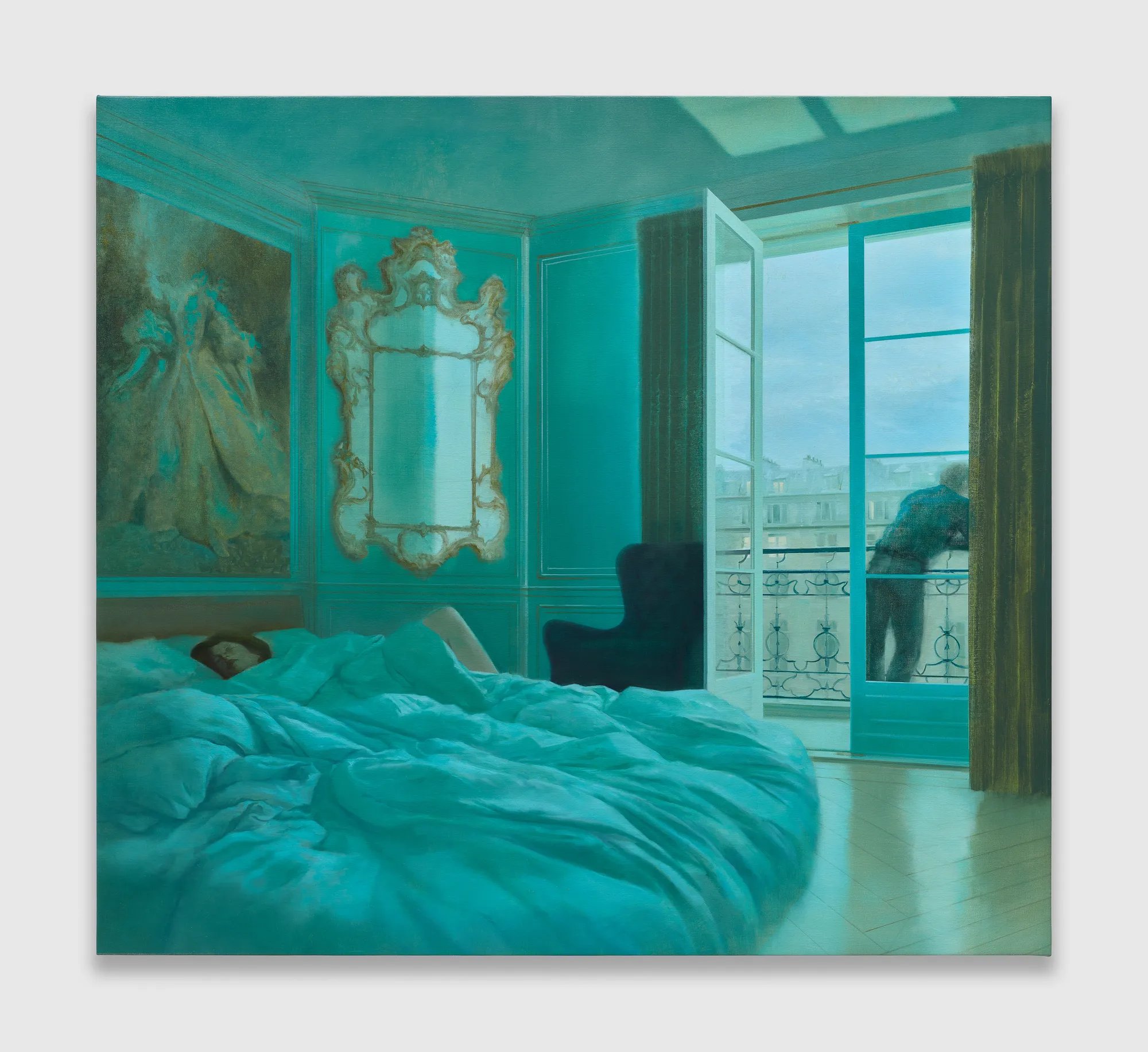
Tim Kent, Passy, 2026. Courtesy of Tim Kent Studio
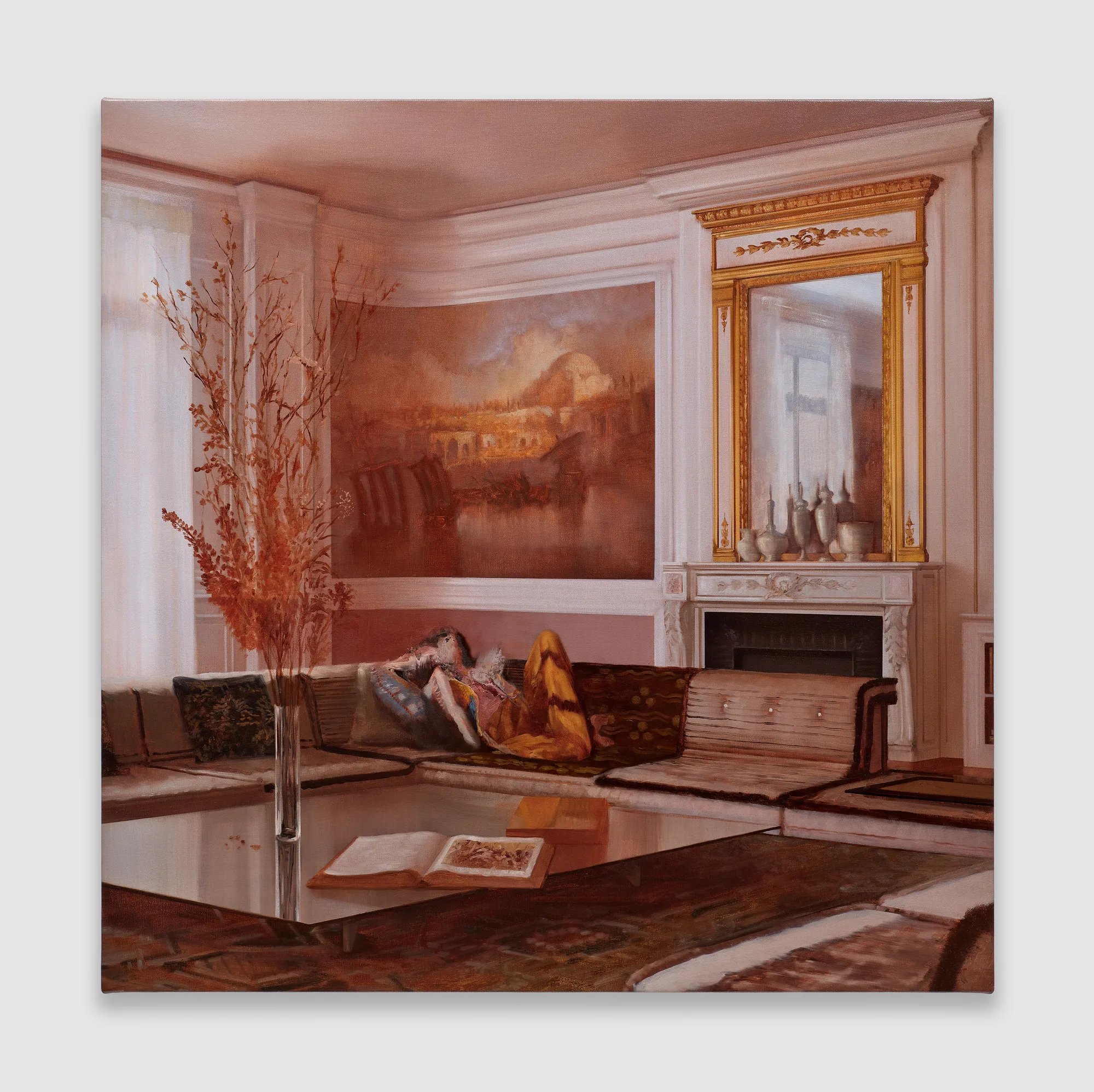
Tim Kent, Pera, 2026. Courtesy of Tim Kent Studio
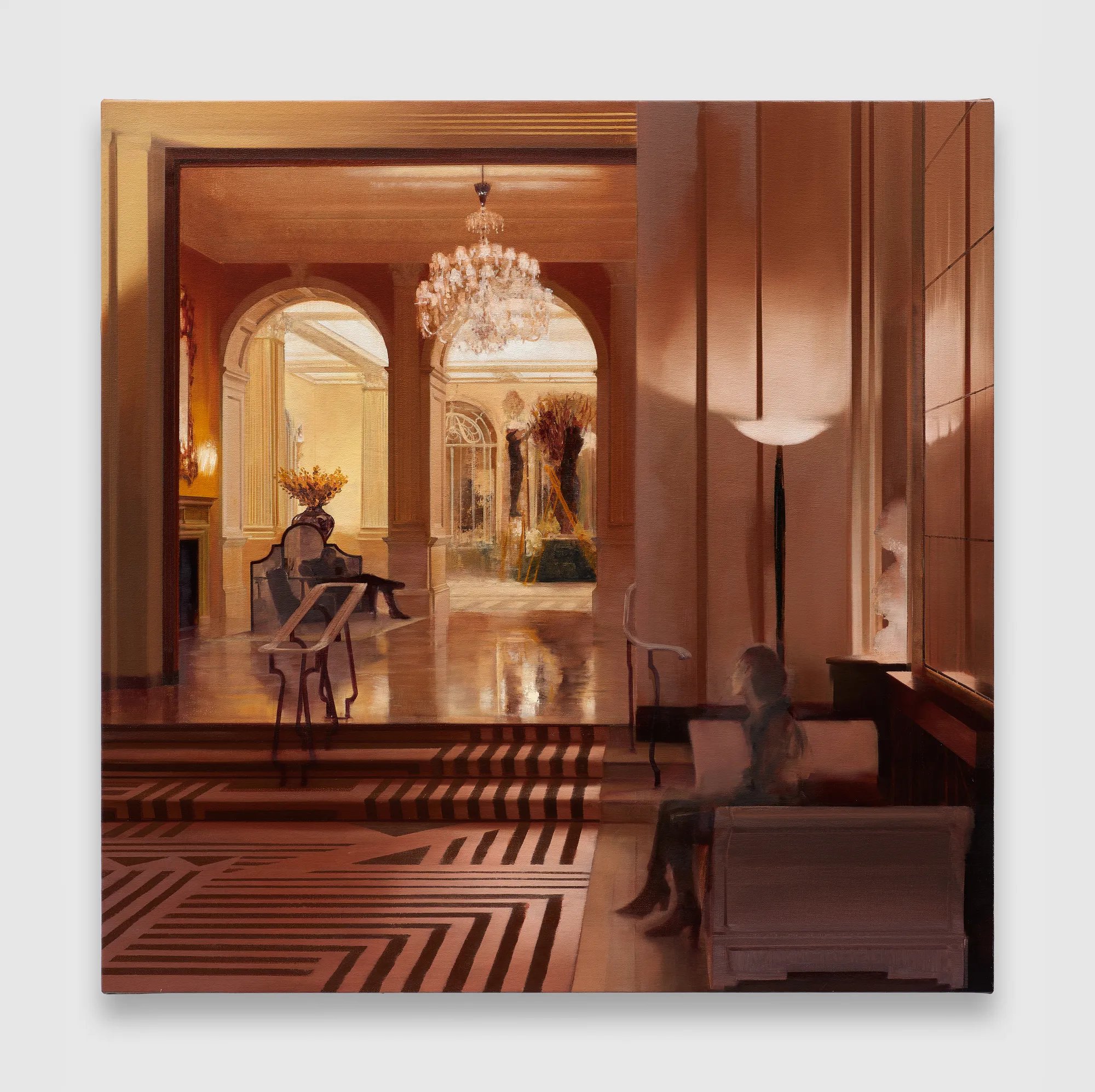
Tim Kent, Mayfair, 2026. Courtesy of Tim Kent Studio
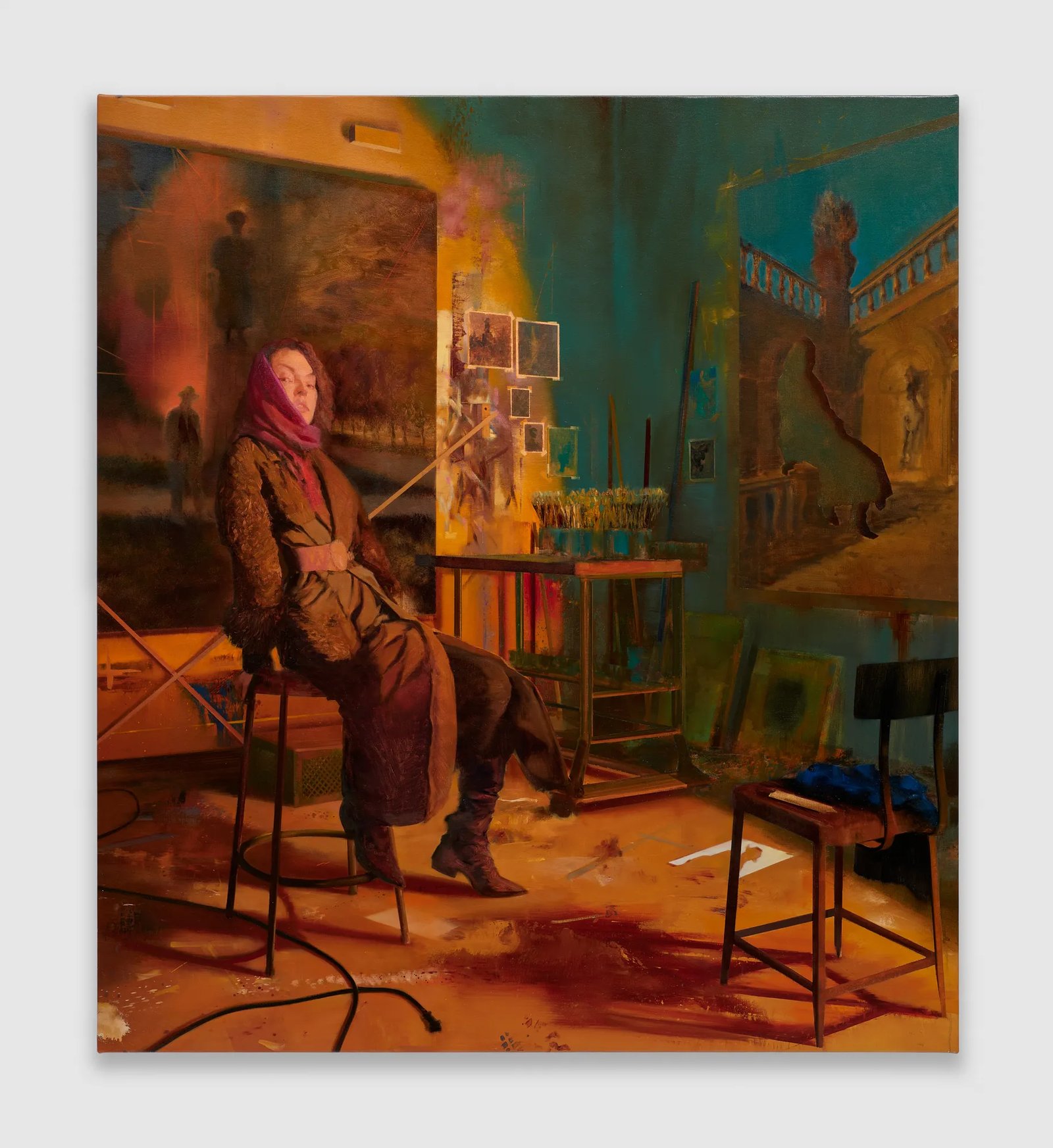
Tim Kent, Gypsy, 2026. Courtesy of Tim Kent Studio
Right now, it feels like there’s a choice between moving toward a more abstracted, purely formalist system of painting — because I still want to make paintings — or engaging with the representational dialog of the digital space.
When I think about someone like Trevor Paglen, all the permutations of his ideas are rooted in a terrifying landscape. In 2014, I read Nick Bostrom’s book, Superintelligence: Paths, Dangers, Strategies, and the further you go into it, the darker it becomes, the less meaning there is, and the less soul is left to the person engaging with it because ourselves and our ideas become completely computational.
There’s a type of hopeful utopianism that comes with believing we’ll all be happy living in some fully mediated digital space. As far as artists working in that space are concerned — good luck, honestly. If that happens, I’ll buy the product. I’m just not that interested in designing it, and I’m rather fearful of people who think it’s a good thing.
But if it’s a space that needs to be explored and someone feels compelled to explore it — I’m thinking especially of Aaron Huey’s wanderings across different game spaces, walking to the edge of them, falling off, and back again — that’s a fun, playful exploration of the technology and the psychology behind it. But it’s not something that preoccupies me.
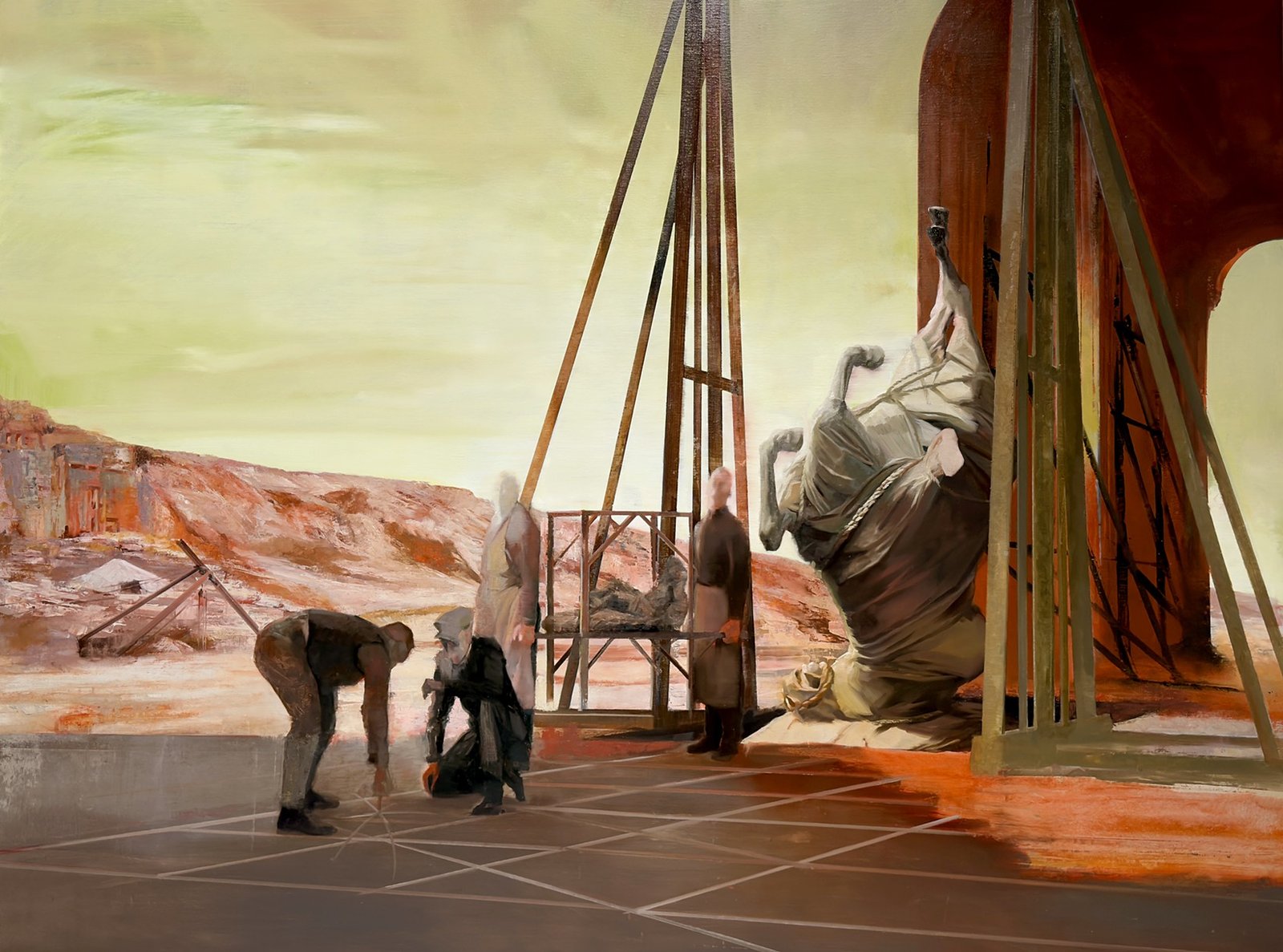
Tim Kent, Past Again and Again, 2024. Courtesy of Tim Kent Studio
AE: Recently, a lot has been written about the “slopification” of image culture, with generative AI creating a numbing loop of pre-existing material scraped from artists across the internet. As a painting like Past Again and Again (2024) makes clear, you specialize in recursion and looking back over the grammar of Western painting — from reclining nudes to equestrian monuments — opening up those tropes and interrogating and unsettling them. What’s the difference between your process of looking back in order to mine reality and a machine-learning model that mines an infinitude of material?
TK: The difference is simply that I’m doing it for my personal understanding of how and why we’ve ended up where we are. For my life to have some sort of meaning I want to come to terms with my own experience of history, as well as the political and theoretical space I live and work in. I don’t know if a supermind does it for any reason other than its job.
I think we’re all having a hard time coming to terms with the idea of the inhuman and the meaning there. I read a lot of papers that discuss how, once we have superintelligence, we’ll have pleasure, a basic living wage, and it’ll all be okay.
But what happens when people decide, now that they have so much more time, that they’re going to become a painter, and after three months they realize it is really fucking hard work and they suck at it, and to get better they have to work harder. Maybe they’ll get meaning out of that, or maybe they’ll just get depressed and go play golf.
I’ve always admired people who know how to take time off and enjoy it. But I know that I will not be fulfilled if I don’t have a reason to investigate or a reason to create.
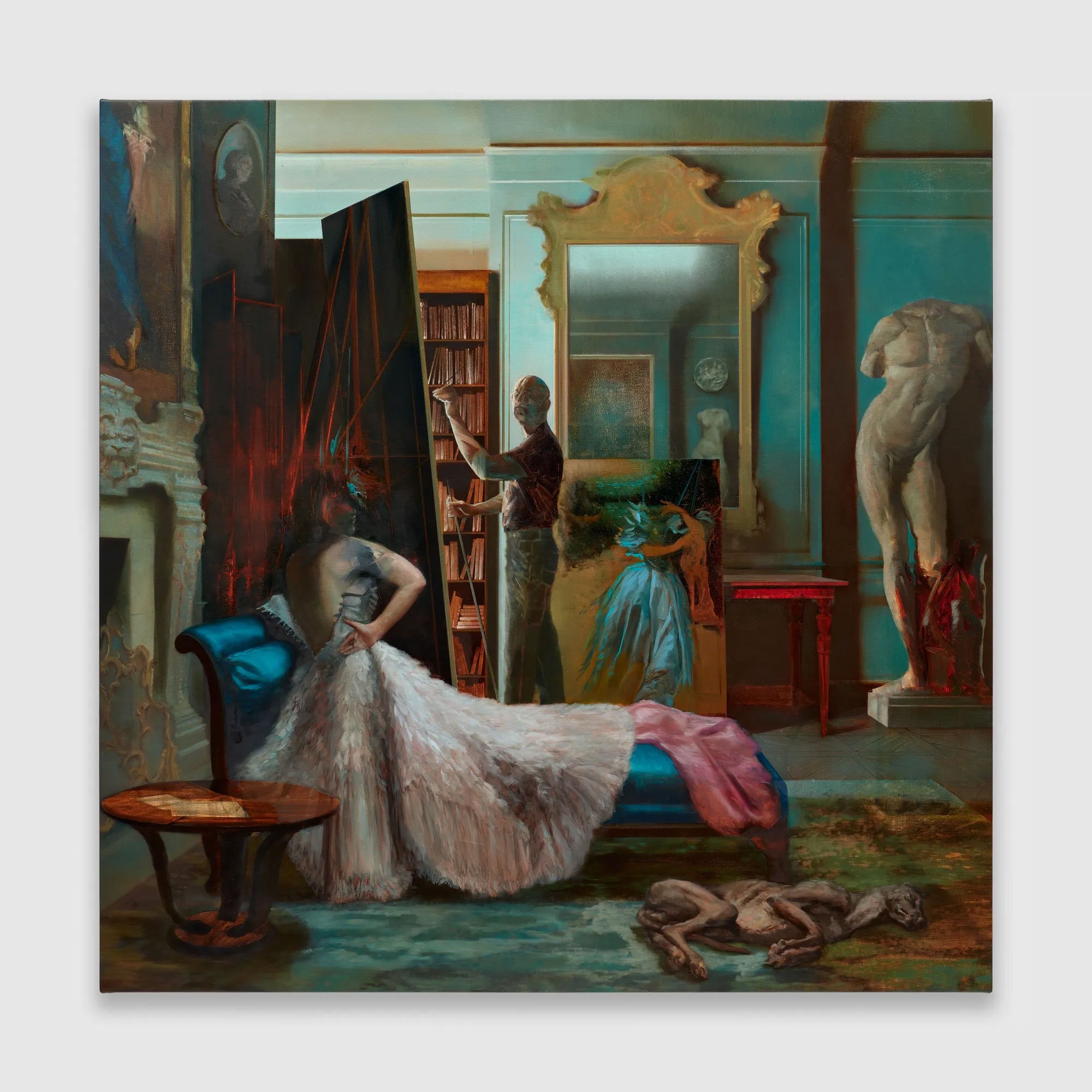
Tim Kent, Sojourn, 2026. Courtesy of Tim Kent Studio
AE: I’d like to briefly discuss some of the ways you’ve tried to reconcile the medium of painting with the digital condition — invoking the visual grammar of military targeting programs, dot matrices, and perspectival grids that read more as vector graphics than the tiled pavements of Renaissance canon. I’m sensing a level of, if not quite apathy, weariness at the enclosure induced by these systems. Have you given up on coming to terms with digital experience, or is the digital condition no longer legible, and therefore no longer available to a painter to mine?
TK: When I started getting interested in mapping systems, I was trying to find ways to express the engineered environment, and there were a couple of good moments for me. One was realizing that the power grid is the largest engineered structure on the planet and that there’s a physicality to this invisible transfer of energy around the world. Another moment was when I was researching the Chain Home network on the coast of England, which was the first radar system.
By 1917, you had these huge concrete listening bowls facing the water, where two or three people would stand and the sound of planes would echo into them from miles away, which eventually developed, by 1939 to ’42, into radar antenna towers pinging out an early electrical pulse.
These were physical objects that described an invisible space of reality, and I was fascinated by how you plot that information out, which is where this idea of the informational landscape came from. But it’s also a very closed system and there’s not so much more information left to landscape. Maybe I’ll start an informational landscaping company.
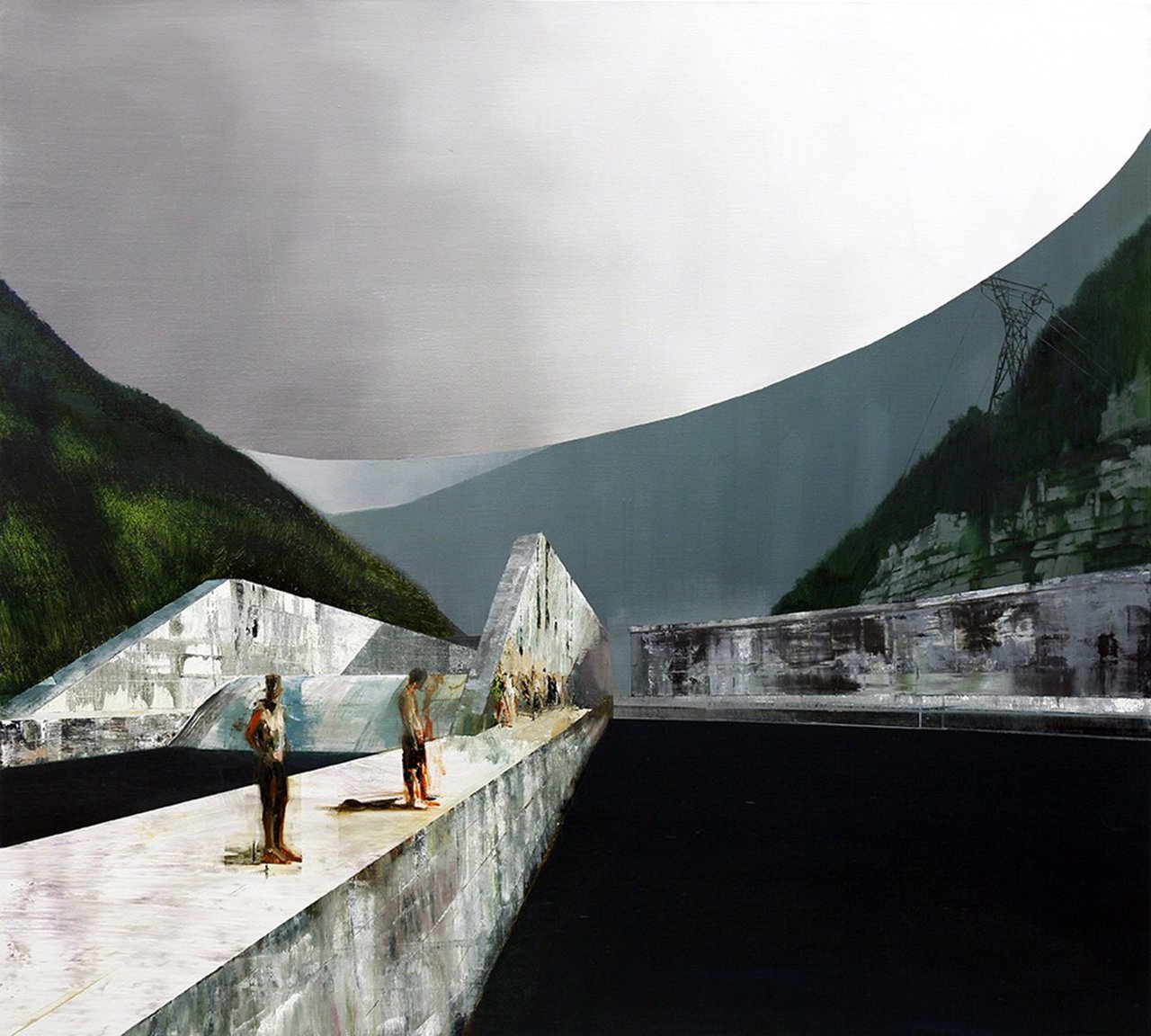
Tim Kent, Swimming Hole, 2017. Courtesy of Tim Kent Studio
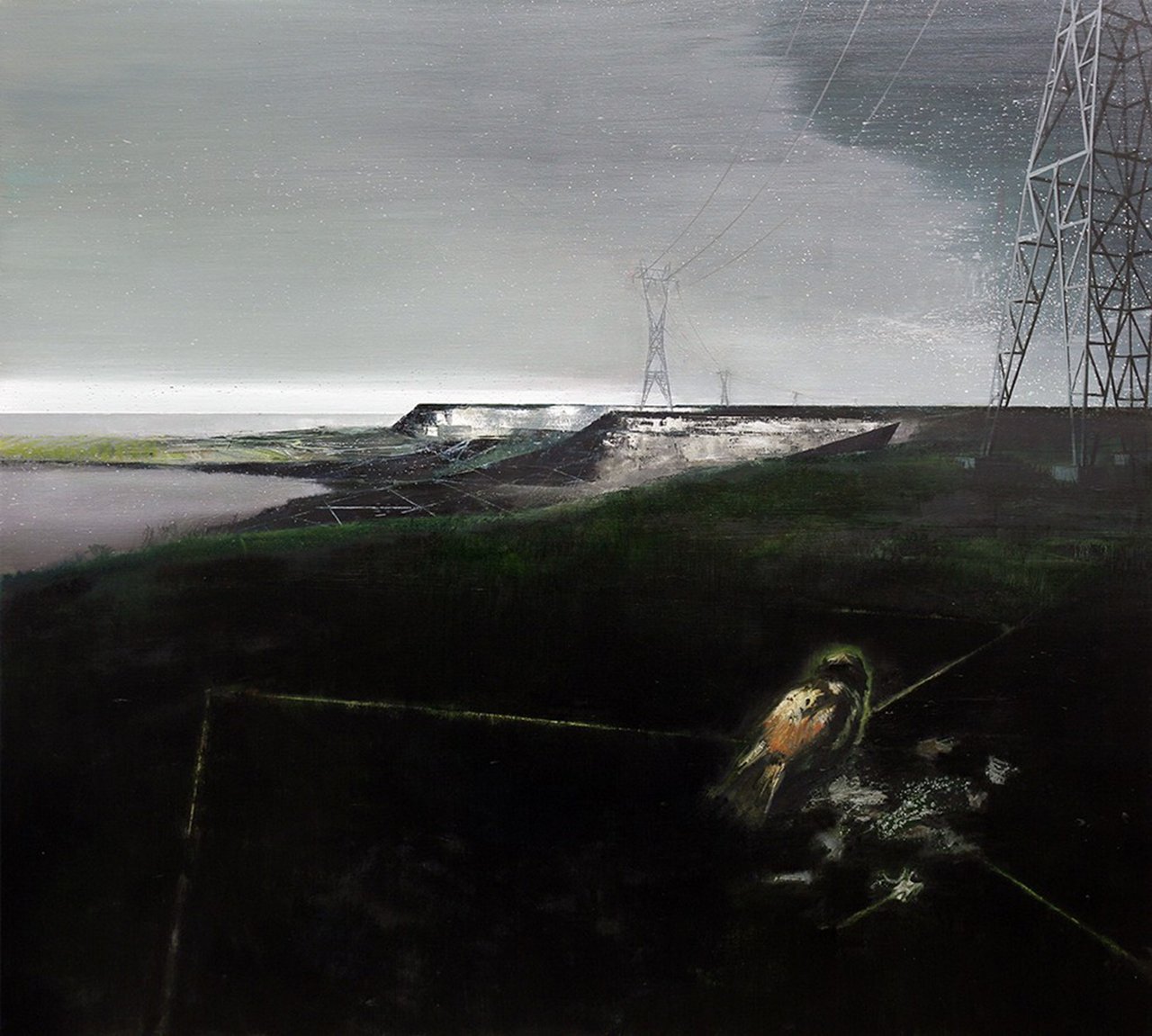
Tim Kent, Storm, 2017. Courtesy of Tim Kent Studio
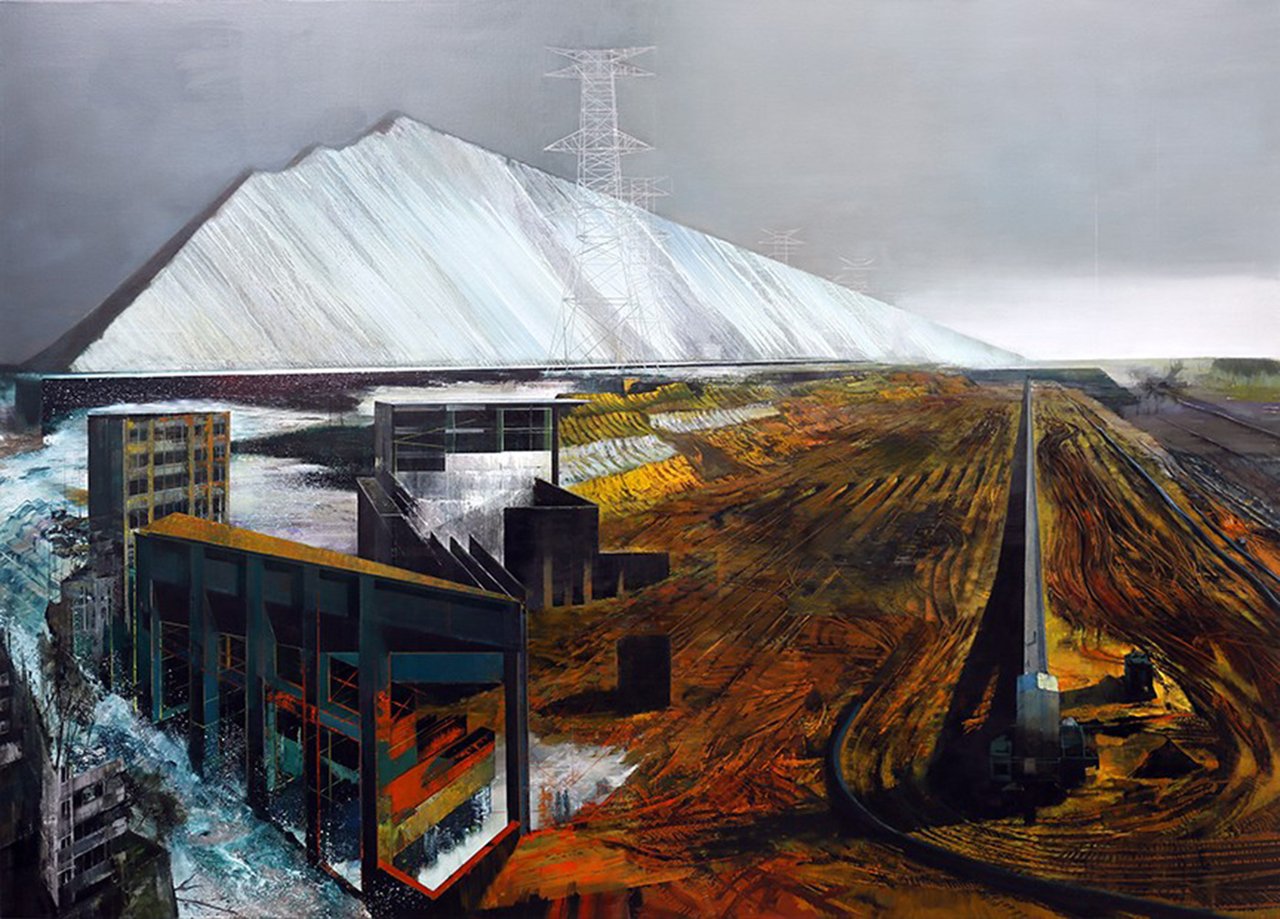
Tim Kent, Pastoral, 2017. Courtesy of Tim Kent Studio
AE: So you’re thinking about hardware as much as software.
TK: Only hardware, because that is the physical manifestation of the information space.
AE: You mean it’s the engineering, the guts.
TK: Right, and going back to Dorland, that’s what is interesting, he’s taken the guts and made it into an image object, a visual object.
AE: Going back to your series from Kunstverein Viernheim, which includes the works Storm, Pastoral, and one of my favorites, Swimming Hole (all works 2017), those all express visually a lot of what you’re expressing now in words — this connected landscape of electrical pylons interspersed with black holes and powered-down power grids.
TK: At that time, I wanted to make paintings that seemed very innocuous but had all these elements embedded in them, put into a classical dialog with painting. Swimming Hole is a massive geoengineered hydroelectric dam with these weird people standing there going swimming, and the hole itself is this blue-black emptiness; to me, it’s a terrifyingly empty image.
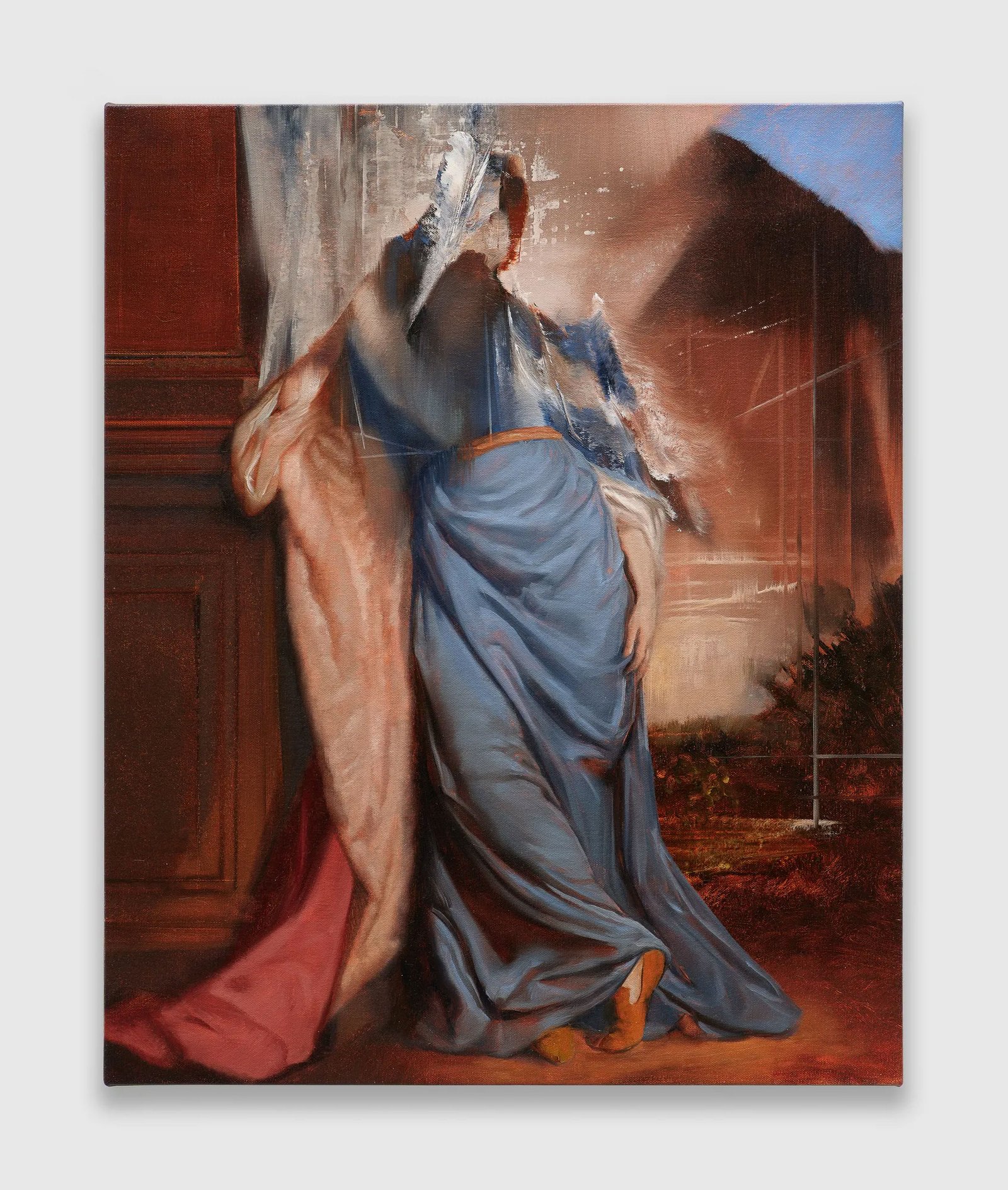
Tim Kent, Dexedrine, 2026. Courtesy of Tim Kent Studio
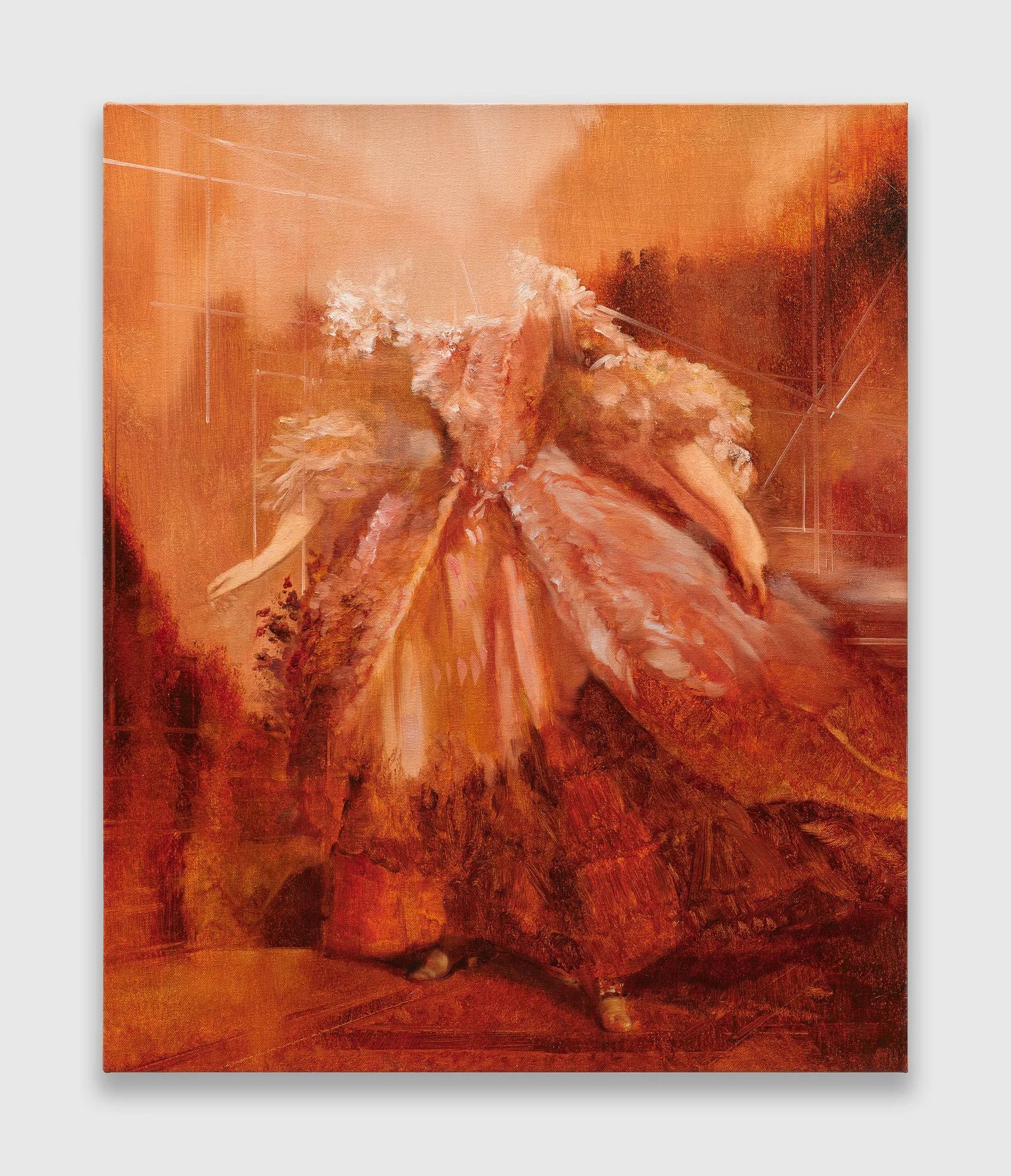
Tim Kent, Lexapro, 2026. Courtesy of Tim Kent Studio
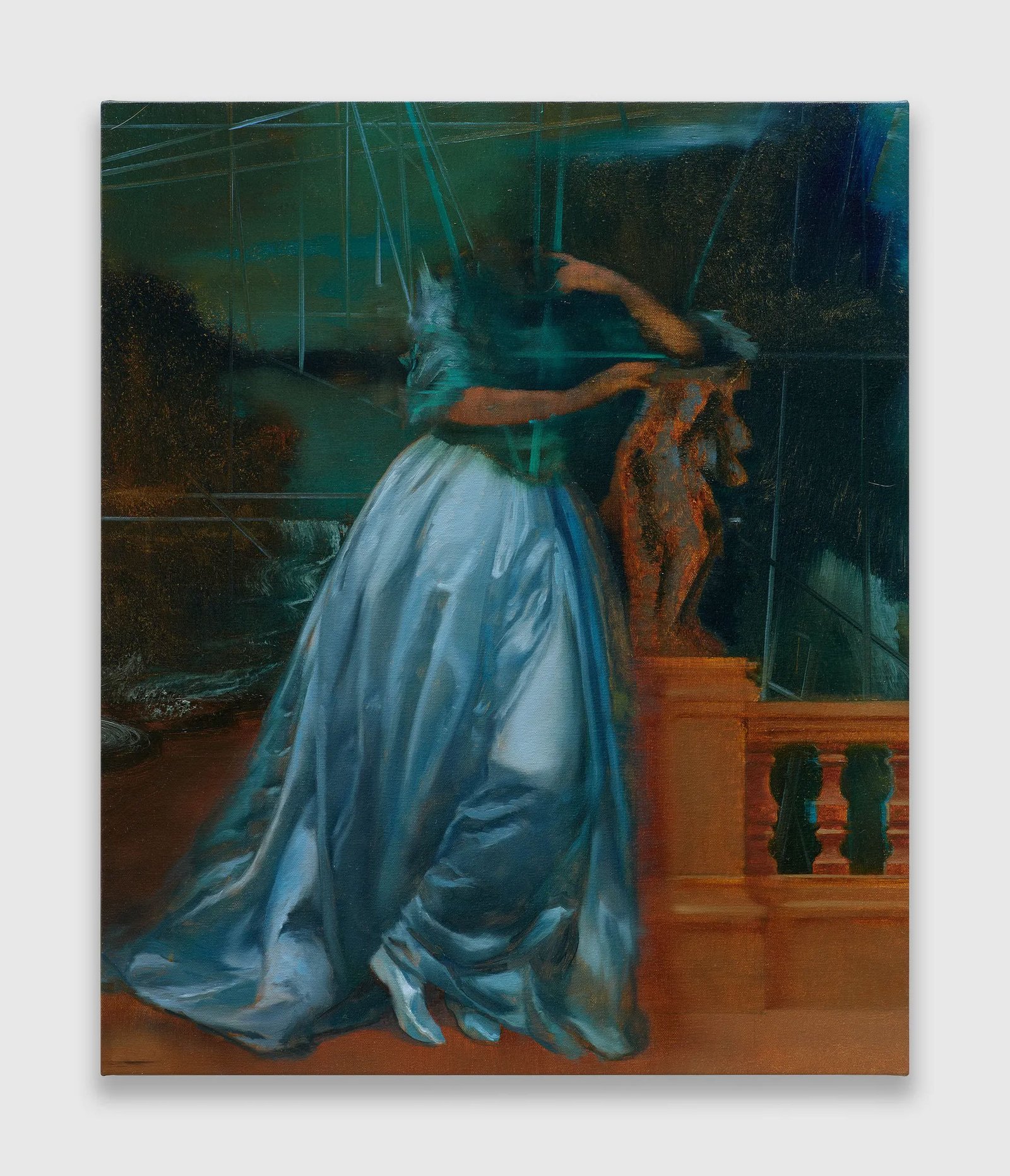
Tim Kent, Fluoxetine, 2026. Courtesy of Tim Kent Studio
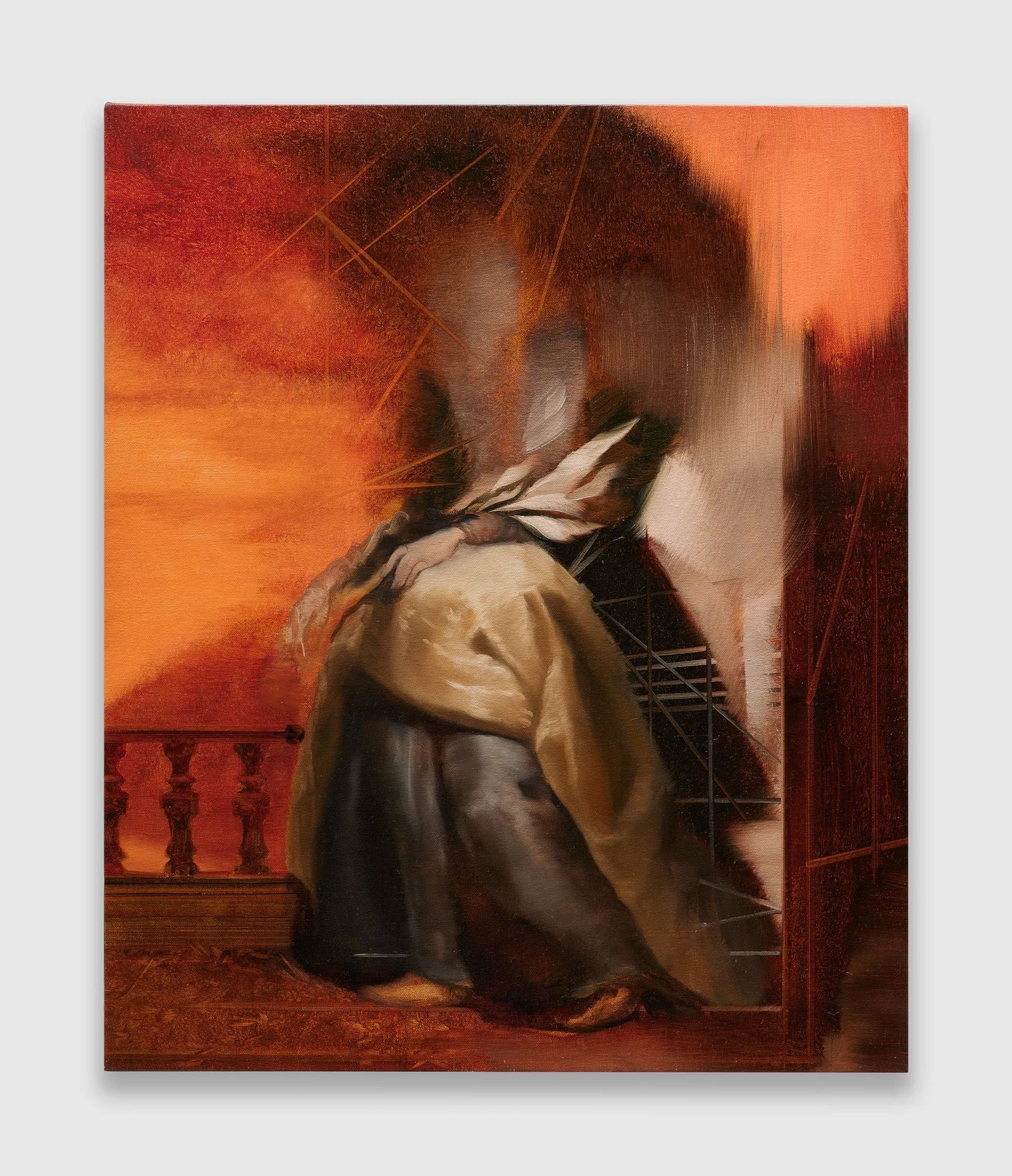
Tim Kent, Valium, 2026. Courtesy of Tim Kent Studio
AE: Your latest works are a series of hermetic interiors breaking into voids. I don’t know if anyone expresses the collapse of the embodied human into a melted digital state in quite the way your figures do in paintings like Dexedrine, Fluoxetine, Lexapro, and Valium (all works 2026). It feels like you’ve gone all in on a kind of toxic posthuman collapse.
TK: Toward the end of the show I realized that no matter what I do, I’ll always be seeing everything in a state of toxified collapse, and it’s not so much digital as this state of ennui that we’re in, which is influenced by the external environment.
The classical has gone and it’s been replaced by hyper-incessant digital communication and externalized wellbeing, which is really the state of the world right now, and I think we’re all trying to come to terms with that. Looksmaxxing is a crazy thing, and I think it’s a perfect symptom of the condition we’re in.
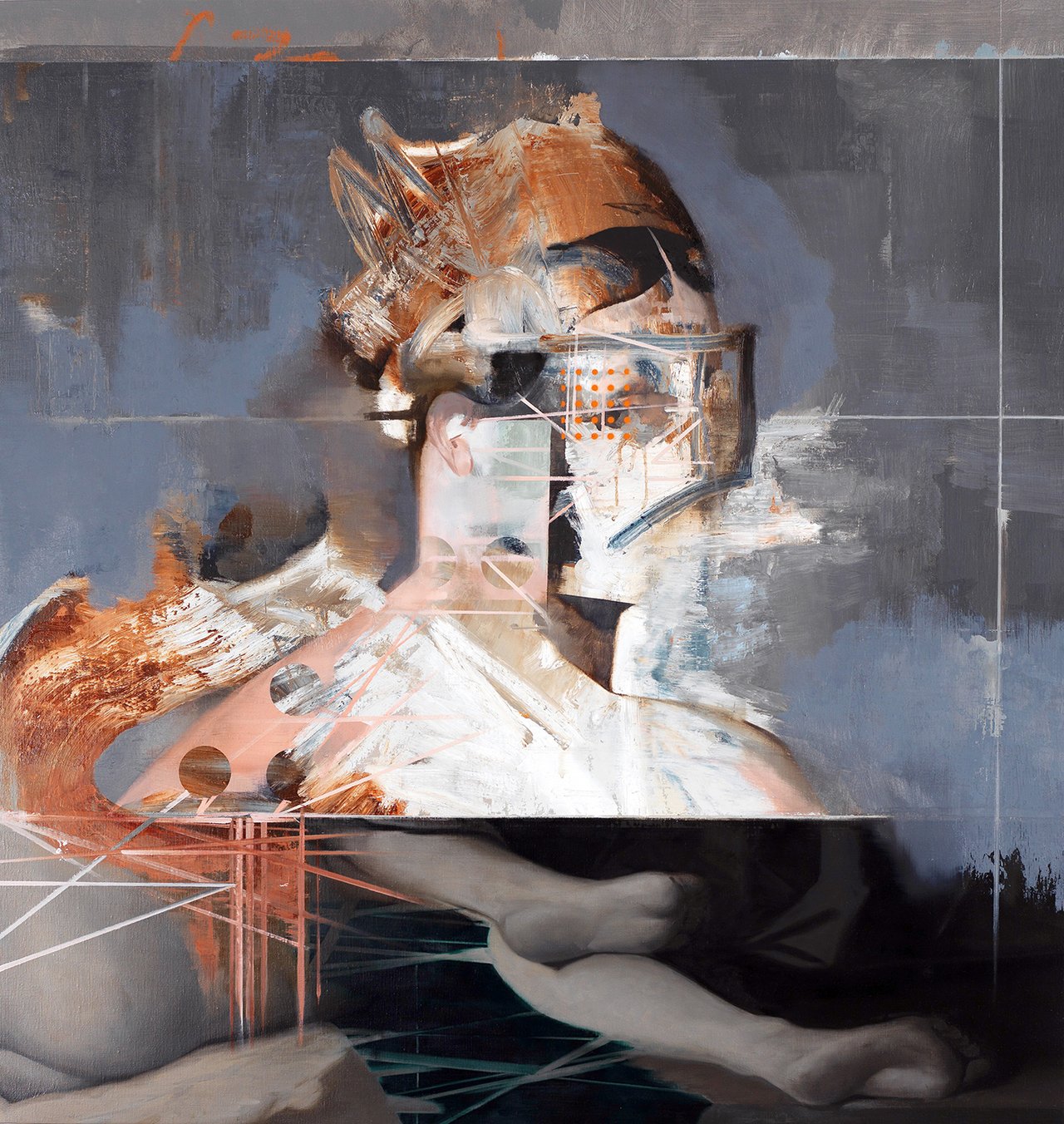
Tim Kent, Odalisque, 2023. Courtesy of Tim Kent Studio
AE: A number of artists are leaning into trait-maxing at the moment, and the layering of motifs through digital collage is becoming increasingly common practice. If that feels like a parody of the synthetic, face-tuned human, you’re giving us the dopamine-collapsed carcass that goes with it.
TK: Somebody said to me: “you keep removing the faces from a lot of your figures”, and part of it is this cult of having to be presentable, having to smile, having to represent yourself digitally — erasing that is a way of getting rid of the psychosis. Gretchen Andrew has been dealing with this kind of material for years and really nailed something there — these grotesquely painted beauty-pageant figures, fixed by the digital, rendered in paint, horrible, terrifying — but she’s right.
AE: Gretchen’s Facetune Portraits (2025) remind me of Willem de Kooning’s “Woman” series (1950-53). I’m happy that they now share space in the Whitney Museum.
TK: Totally, it’s so funny because they’re just like that.
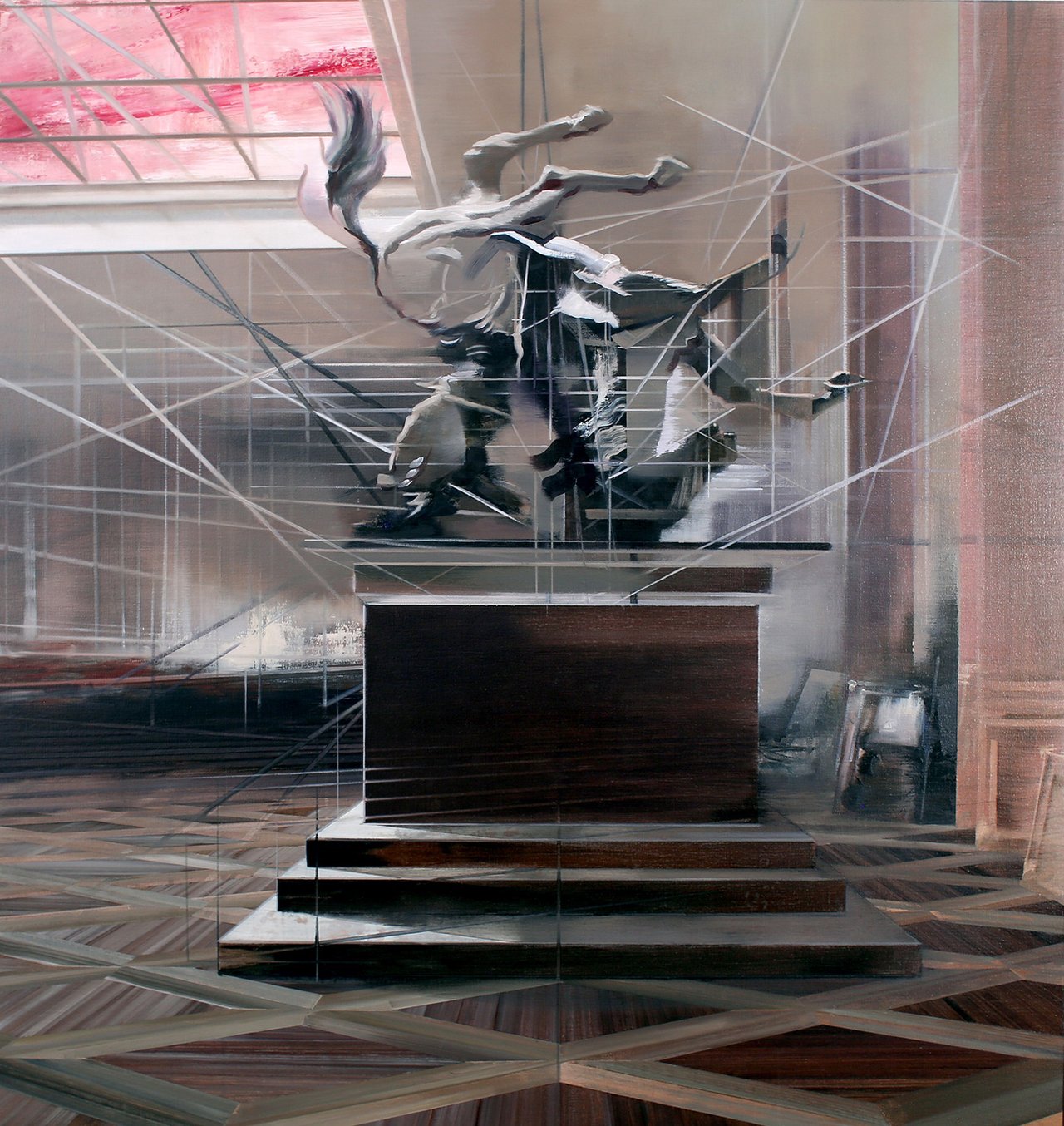
Tim Kent, Muniments I, 2023. Courtesy of Tim Kent Studio
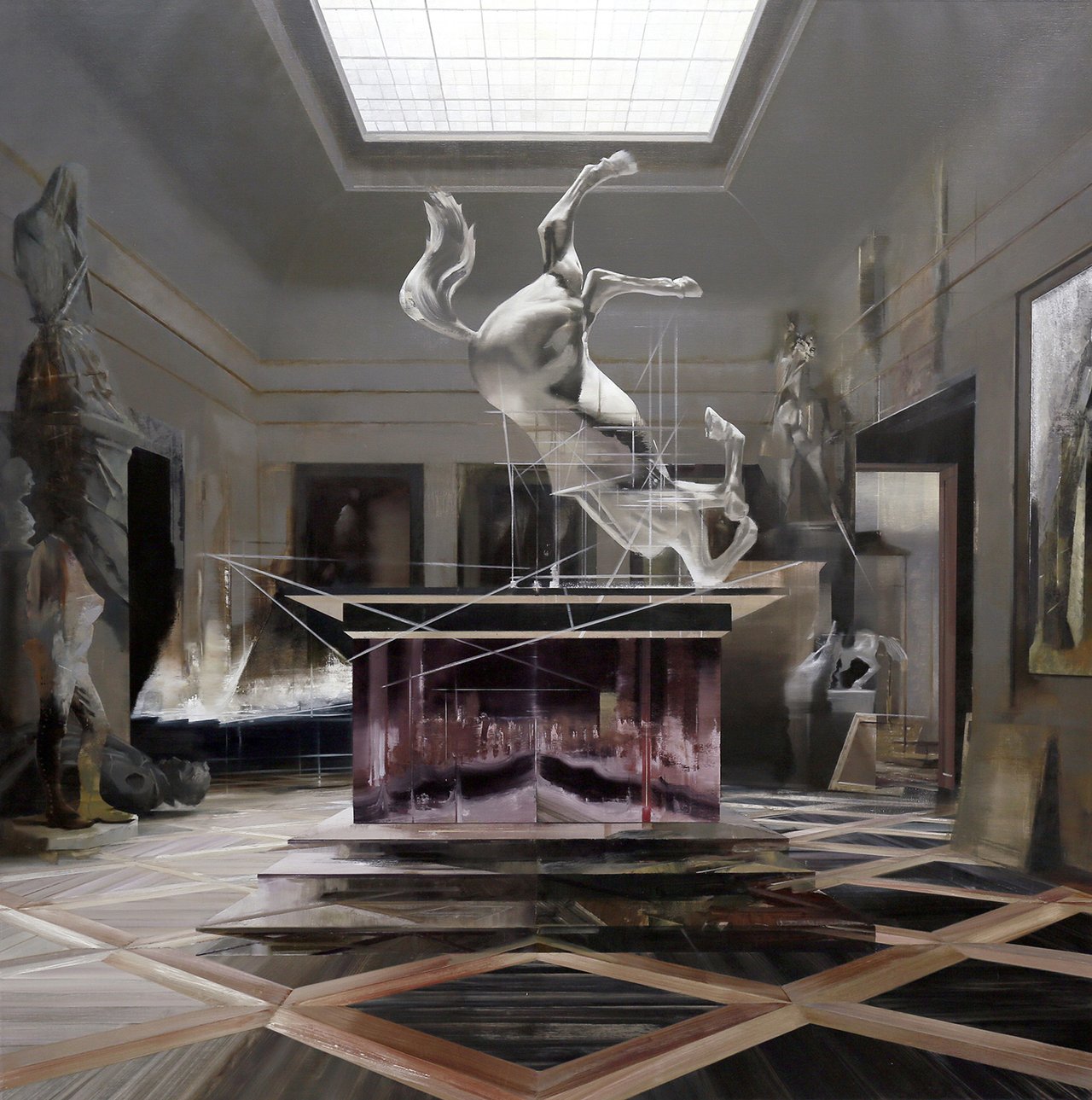
Tim Kent, Archive II, 2023. Courtesy of Tim Kent Studio
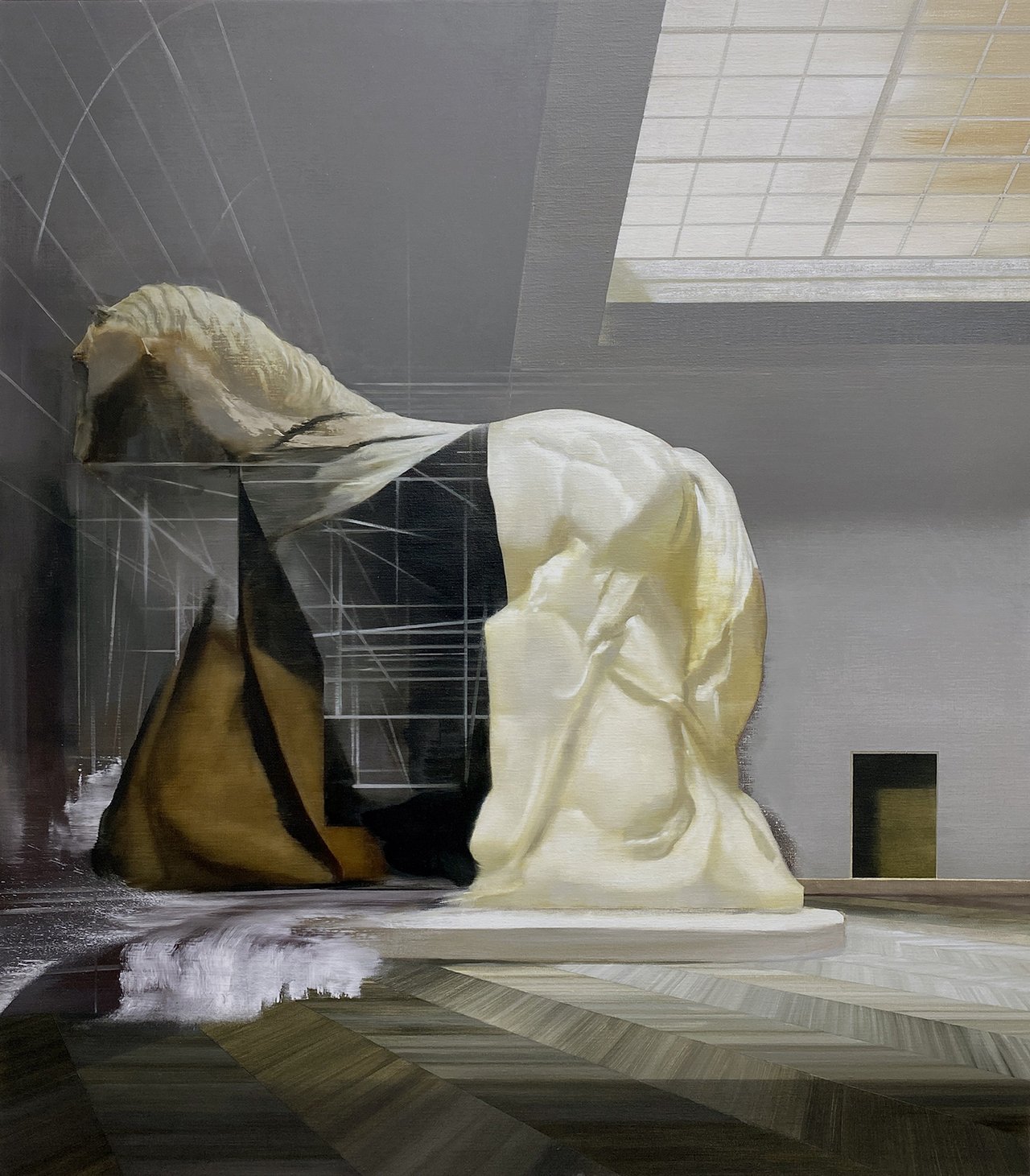
Tim Kent, Muniments II, 2023. Courtesy of Tim Kent Studio
AE: At a moment when Jackson Pollock was getting the plaudits for rarefying painting into something so abstract it was almost unfathomable, de Kooning brought the figure back with a vengeance.
TK: de Kooning had to grab little pieces of what was left of representation and stick them back in; it’s not his most beautiful work, but it’s definitely his most powerful.
AE: With this show, it feels like you’ve allegorized the narcotically compromised human, which makes me think of Giorgio de Chirico. It’s long been suspected that he was taking opiates when he painted his early metaphysical paintings — those famous empty cityscapes where the shadows are always too long for the time of day — and admitted he was trying to express “an immense museum of strangeness”.1
I can’t think of a better description of the world right now; it feels like metaphysical painting is alive and well, and has a role to play in making, if not sense, then nonsense of this absurd context we find ourselves in. Tim Kent, are you a metaphysical painter?
TK: I don’t set out to be intentionally, but I definitely feel drawn into that space because it gives me a classical reference point. At the same time, the amount of violence we’re used to now can only be expressed through this uncanny, uncomfortable, disjointed, contrary language that needs to be imposed; that might make me metaphysical. But I also think the idea of representing space carefully is itself uncanny, and makes us very uncomfortable, and I don’t know why.
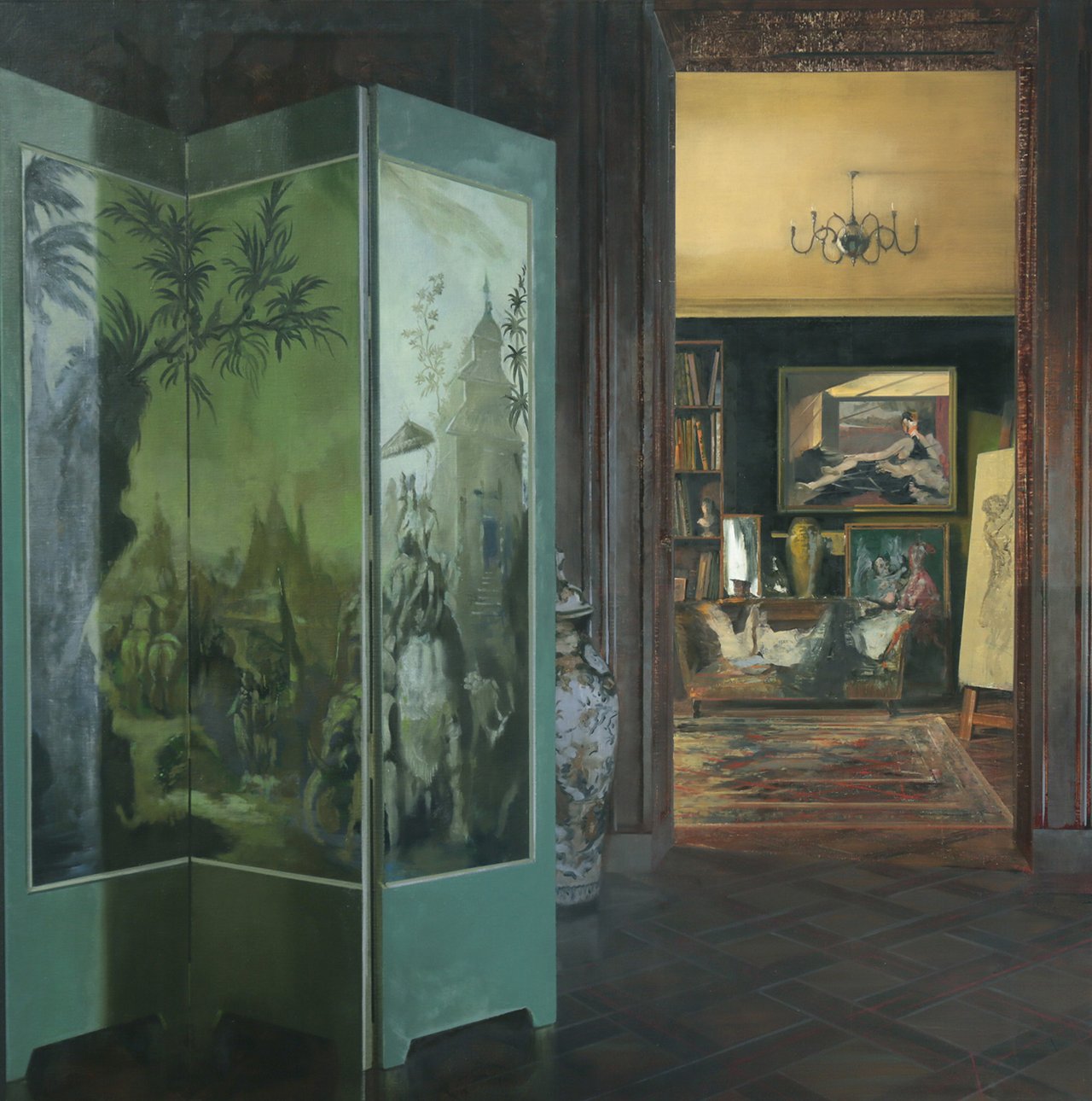
Tim Kent, The Lacquered Screen, 2024. Courtesy of Tim Kent Studio
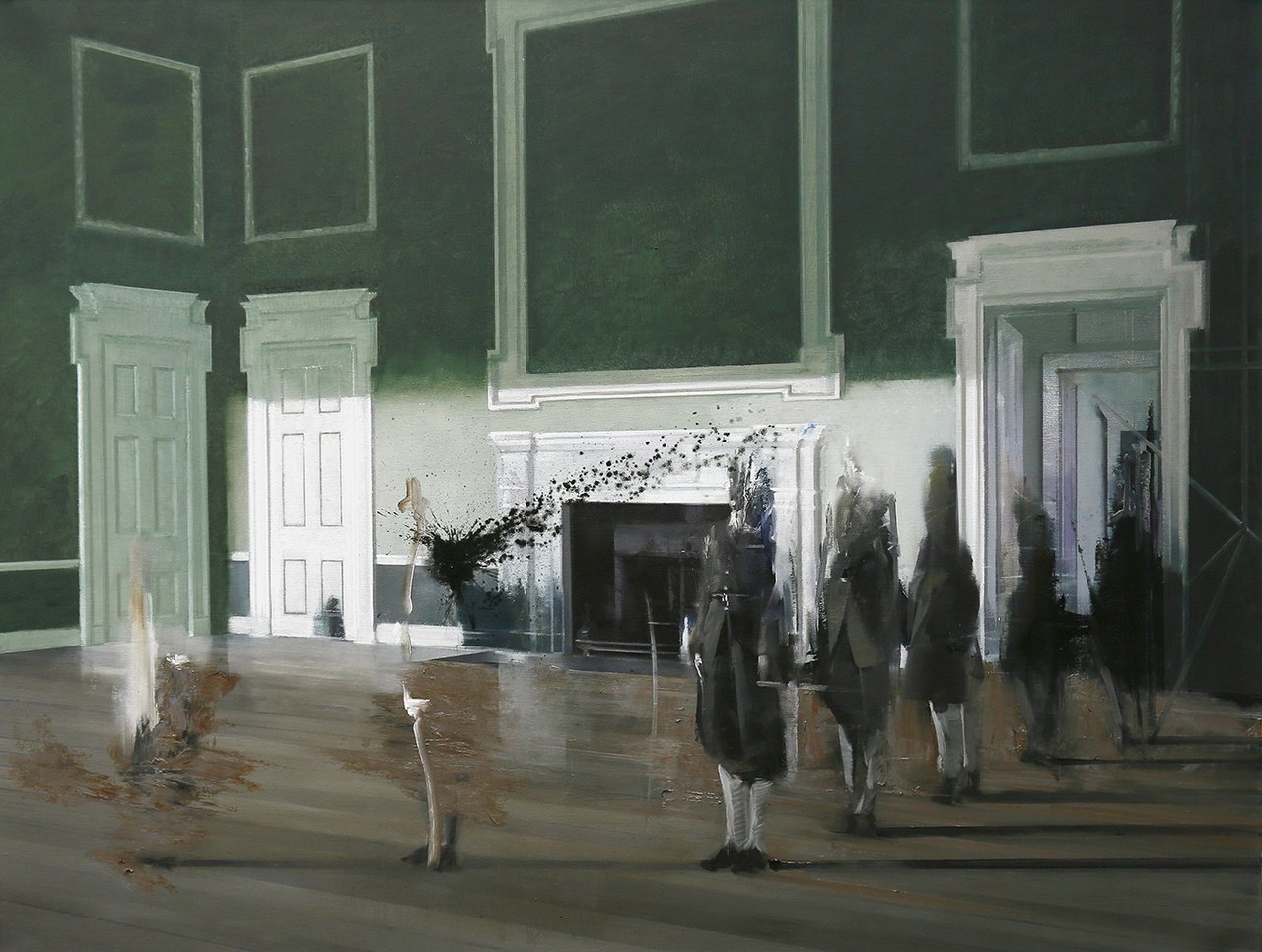
Tim Kent, Procession, 2024. Courtesy of Tim Kent Studio
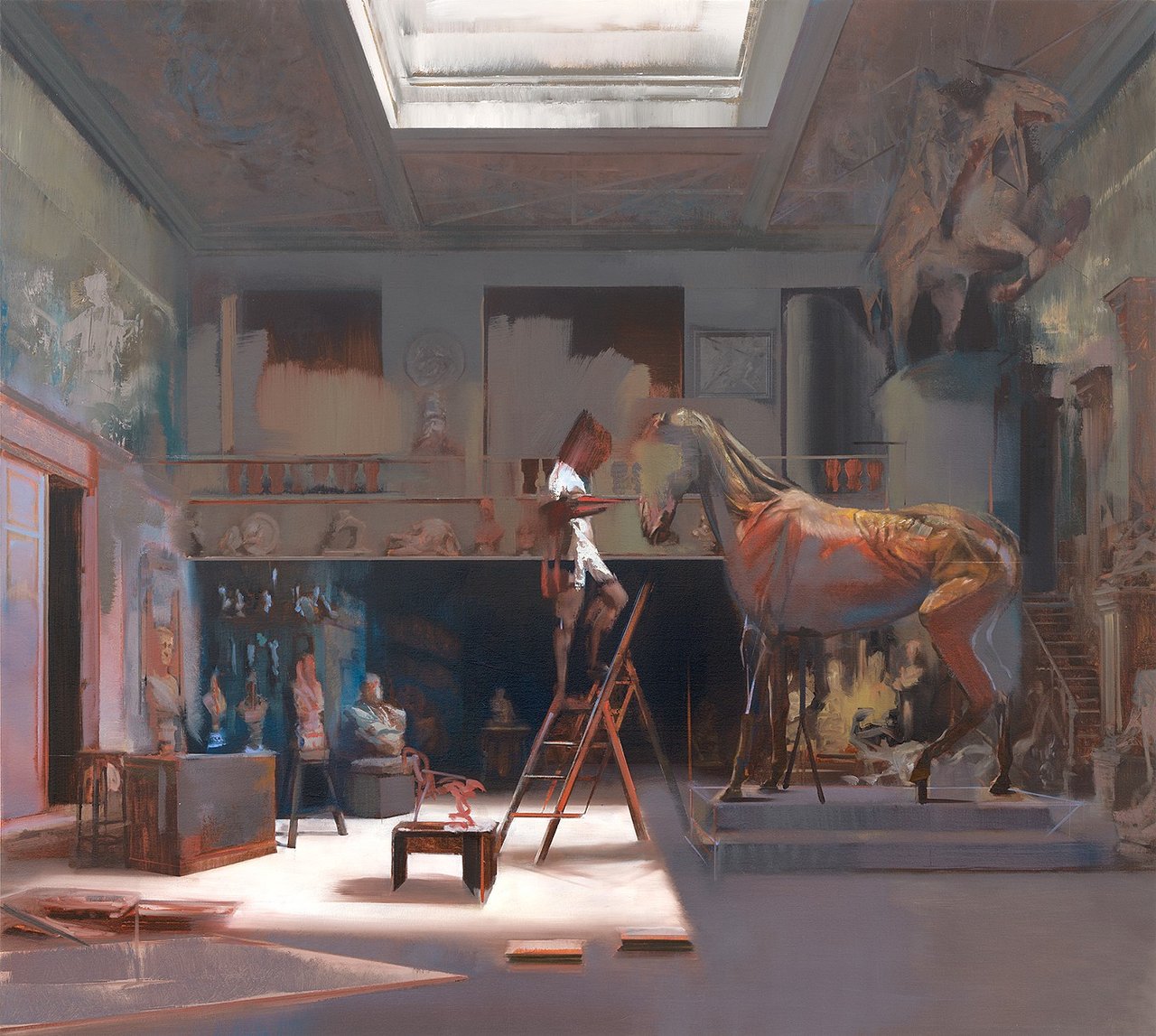
Tim Kent, Rendition, 2024. Courtesy of Tim Kent Studio
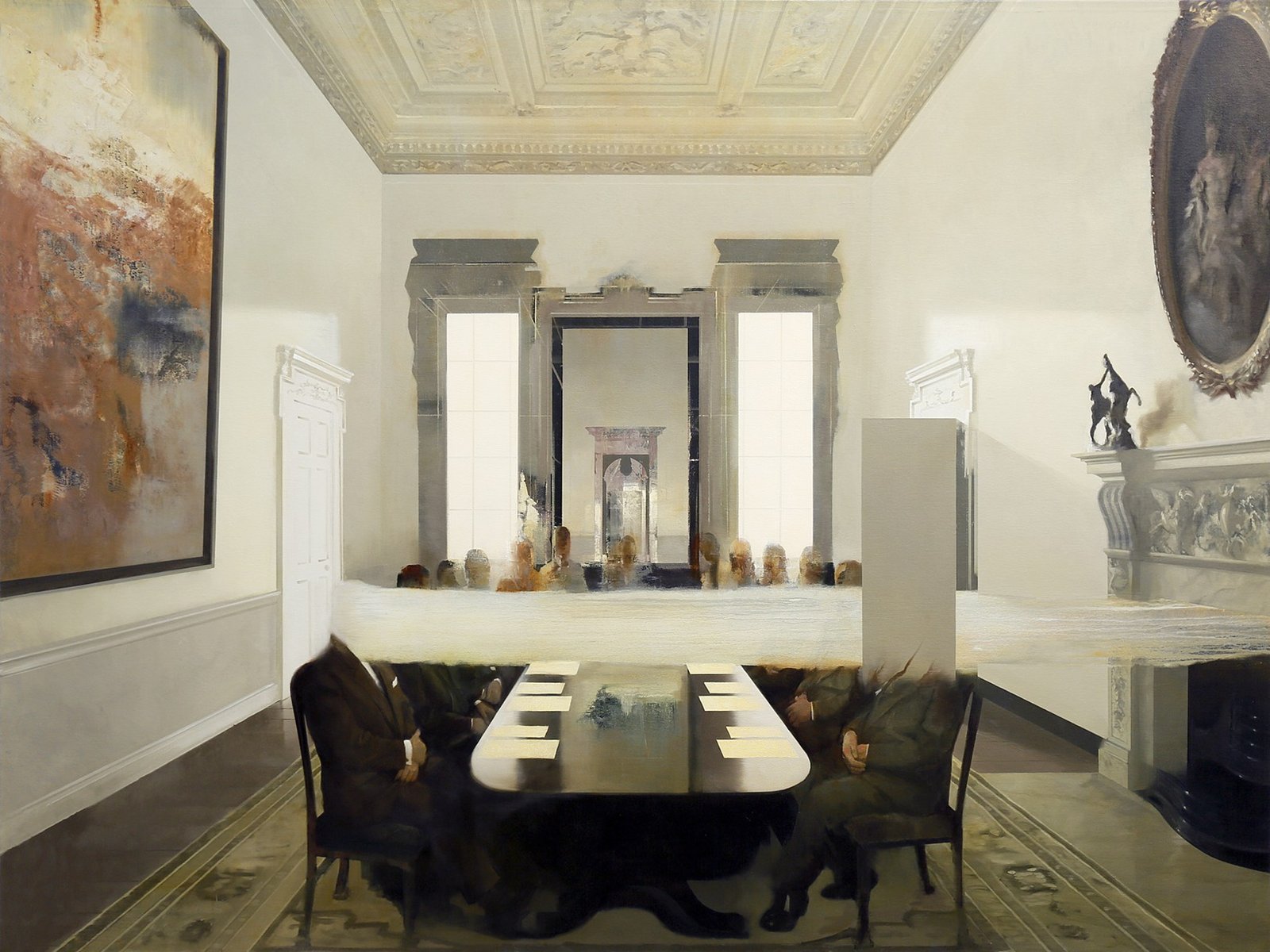
Tim Kent, By Careful Design, 2024. Courtesy of Tim Kent Studio
AE: In recent years, we’ve covered the work of many different generative artists who use code to generate images that sit comfortably next to modernist painting. But if generative art is an art of drawing up rules to generate novel and surprising outputs, I’m wondering what the minimum parameters are that allow a painter to produce the maximum number of possible emergent outcomes?
TK: You just need to be a bad enough painter to make a mistake — lord knows I make many — but I can look at a mistake and say “that’s interesting” and develop it into something else. It’s not so much the subject matter, which, if selected well, does its own work, but painting itself is recursive, where a little piece of information generates the next piece.
Often I’ll spend a long time developing a painting and realize that the best part is only about ten centimeters squared. That whole little piece can become an entirely new painting, so there’s a kind of fractal geometry to the production of a work. Once that fractal generation starts happening, I can’t leave that space because if I push stop, I have to start again or move back to an earlier position to regenerate momentum. As I get older, I’m realizing I need to spend more time with the work in general — to let the dialog happen between pieces, to let the finish happen, or not happen, and be okay with it.
One of the interesting things about making work by hand is that the physicality isn’t just the eyes and the hand, it’s the legs, the body, the space, the time it takes to create, fabricate, move, clean. All of that is part of a bigger game structure that goes into making paintings. With the digital, you don’t have that physicality.
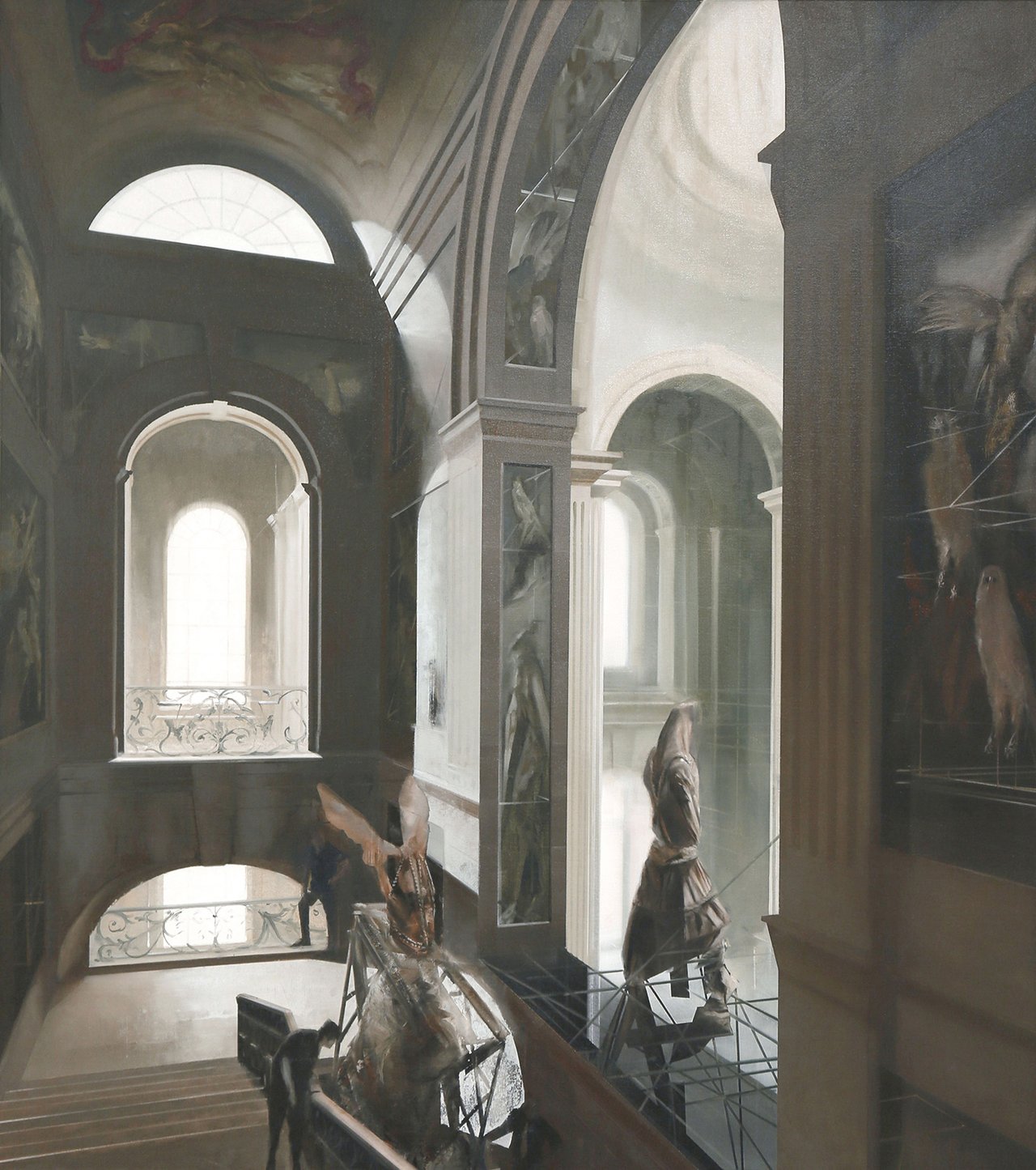
Tim Kent, Menagerie, 2024. Courtesy of Tim Kent Studio
AE: Would you describe your practice as a recursive system?
TK: Yes, all the time. When starting a new body of work, you have to put in the right inputs before beginning, so that by the time the program is running and the little machine Tim is working, the end product is the best it can be. You just have to be careful with your inputs.
AE: I know you come back a lot to the motif of the enfilade, which refers to a suite of rooms with doorways in line with each other, as well as a volley of gunfire. To me, no one communicates the potential violence of hermetic space quite like you do — and there’s often real violence, live action, in your paintings.
TK: Thank you, that’s a great compliment.
AE: Recently, I’ve been developing this idea for what I call dumb painting after hearing a number of contemporary artists using the word “dumb” repeatedly. My definition of dumb painting is painting struck dumb by a digital condition that converts paintings into digital data, destined to flow together in an undifferentiated manner alongside all images, texts, and videos in the latent space of an AI model. Of course, one could choose different language — Parker Ito prefers Dumb Art — but to me it was important to find a term for art that confronts the flattening of all cultural forms in the age of generative AI. Does that language of dumbness, or perhaps numbness, land with you at all?
TK: That’s a highly charged term, whether or not you intended it that way. But I do think you’re right. I think we’re at a numb spot, for sure, and with this accelerationism underway, it’s very hard not to simply watch and experience things, dumbly.
As to why I decided to make a show about rest and the nondigital, “Sojourn” is probably a dumb painting show to a great degree. I’ll give it to you. You can use the term “dumb painting” around me, it’s fine.
Tim Kent is a New York-based artist whose work examines how personal and collective histories are embedded in the spaces and cultural structures that determine our experience. His paintings often draw on his rich knowledge of art history, presenting psychologically charged interiors and plunging landscapes that often entangle neoclassical vocabulary with digital visualization. Kent has an MA from the University of Sussex at West Dean College and a BFA from Hunter College, New York. He started his career by rendering historical homes throughout England, which sparked his interest in the complex historical and psychological narratives held by architecture and design. Kent has exhibited widely across the United States and abroad, holding solo shows at JD Malat, London; Pilevneli Gallery, Istanbul; Hollis Taggart and Slag Gallery, New York; and Patrick Mikhail Gallery, Montreal. His work is included in numerous public and private collections, including the Museum of Contemporary Art Beijing; 21c Museum, Louisville; and the Rockwell Museum, Corning. Kent lives and works in Brooklyn.
Alex Estorick is the Founding Editor of Right Click Save.
1 G de Chirico, The Memoirs of Giorgio De Chirico, trans. M. Crosland, Cambridge, Mass.: Da Capo, 1994, 80.
No comments yet. Be the first to share your thoughts.