Digital Art Shows to See in London During Frieze Week
From Vera Molnar at the V&A South Kensington to Somerset House Studios’ anniversary presentation "3 Evenings" at Wapping Wall, the UK capital is home to a wide variety of art made with technology during the city’s largest art fair
The week of frantic art world activity in London, built around Frieze art fair, now in its 24th year, is rich this year in art made with technology, at galleries, event spaces, and contemporary art institutions. The digital and hybrid work on show ranges from commissions and artist presentations at the fair itself, to single-artist gallery shows, institutional monograph and group exhibitions, and a “3 Evenings” celebration of how Somerset House Studios has incubated artistic innovation in the city over the past 10 years, at the massive former power station at Wapping Wall.
V&A South Kensington is presenting the work of the inimitable Vera Molnar and the generative artists who have been inspired by her. Serpentine North is home to the majestic moving-image works of Amar Kanwar, while 180 Studios in the Strand welcomes back its deeply immersive space-embracing commission, Ryoji Ikeda’s DATA-COSM [n°1] where visitors lie on the floor to absorb the full impact of sound and vision.
The range of work on show and the multiple levels of presentation, coming just a month after the first Creative Intelligence festival at Southbank Centre which celebrated the city’s creative computing community as much as its institutional standard bearers, and leading curatorial voices, are a reminder of the multiple layers that make up a thriving urban art ecosystem in 2026.
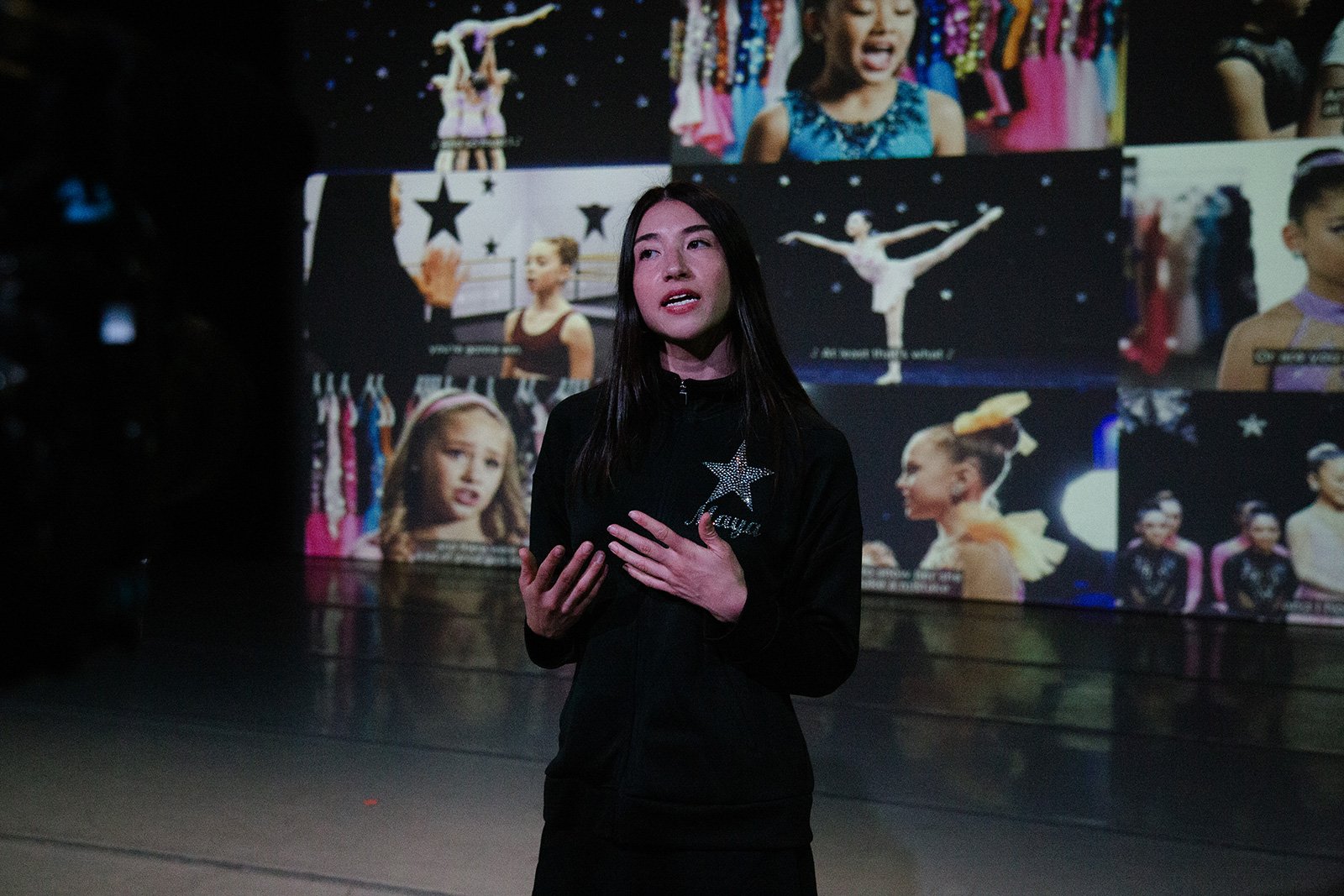
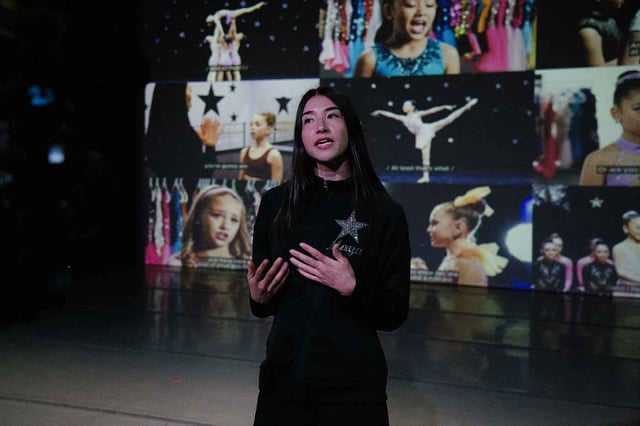
Maya Man, “StarQuest (Performance-Lecture)” (2026) co-presented by bitforms gallery, SOOT gallery, and the Future Humans program at the Berggruen Institute at L.A. Dance Project. At V&A South Kensington, the performance-lecture by Man, will be followed by a conversation between the artist and the curators Laura Herman and Micol Ap. Photography by Yuchi Ma
In 2025, Maya Man, the New York-based artist of internet-based identity culture developed a body of work, “StarQuest”, focused on competition dance culture in the US. That universe included a digital piece, StarQuest; a solo-show, “StarPower”, at bitforms gallery, New York, built out from the digital work; and “StarQuest (Performance-Lecture)”, which the artist has presented in New York City and Los Angeles, and now at V&A South Kensington.
The work on show at the bitforms exhibition included Coach’s Shimmer Warm-Up Jacket, 2026, whose name refers to the Shimmer dance studio that Man created as part of the back story for the young dancers in the digital work. It is the jacket that Man wears when performing the performance-lecture. The V&A performance will be followed by a conversation between the artist and the curators Laura Herman and Micol Ap.
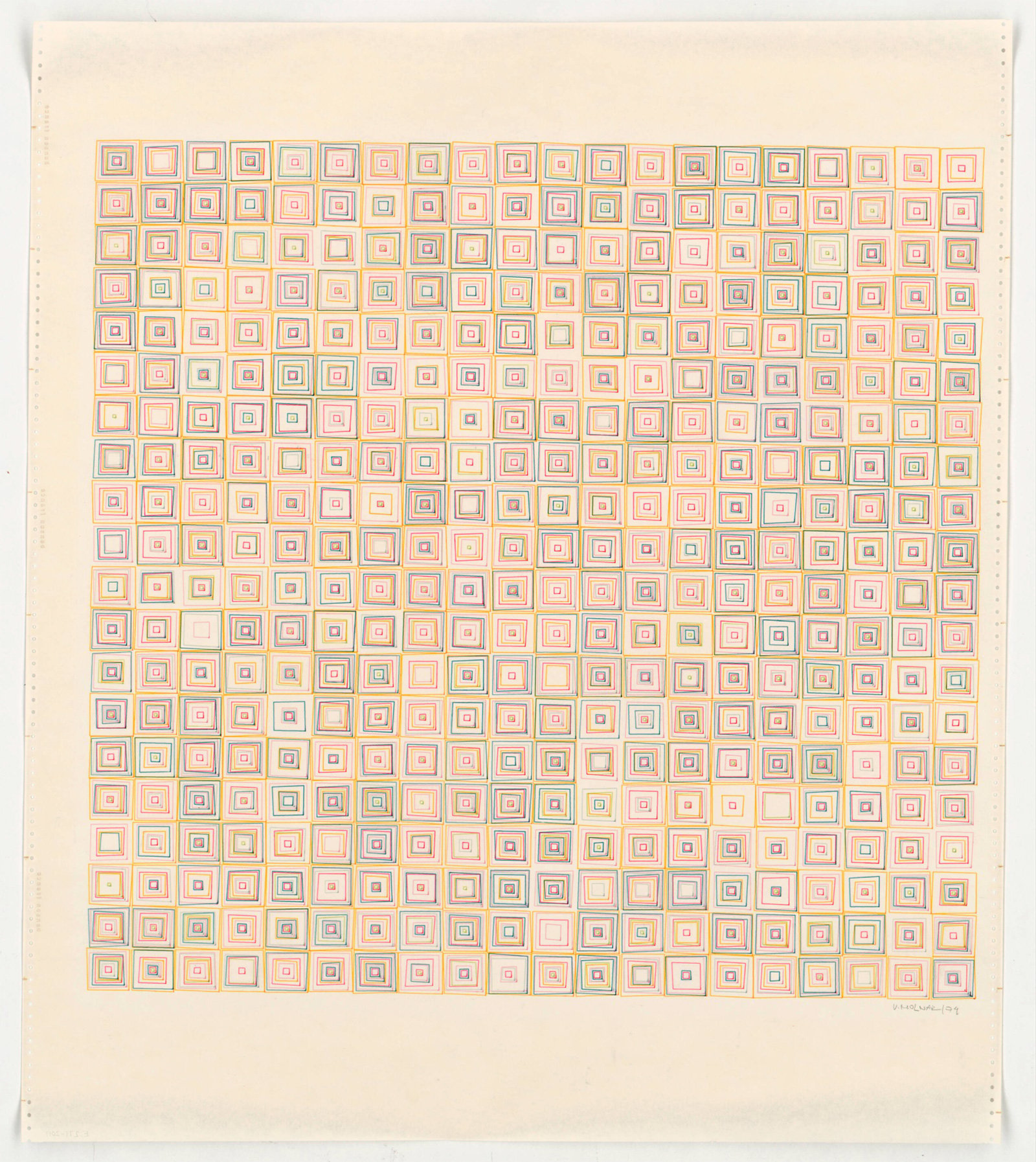
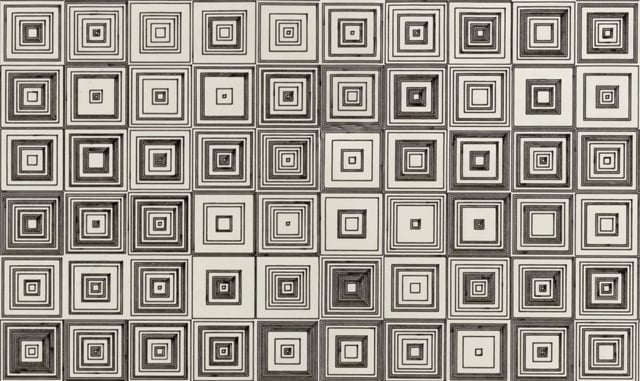
The pioneering artist Vera Molnar (1923-2023), an early adopter of the computer as a tool to make pictures, is given due honor at the V&A with a show of 50 of her works in company with that of generative artists who have come after her and felt the influence of her unique output. Those artists include Licia He, Casey Reas, William Mapan, and Harm van den Dorpel.
One of Molnar’s works on show is 1% de désordre (“1% of disorder”) (1976), a state of being, and subject, that she returned to repeatedly until the end of her life. As Zsofi Valyi-Nagy wrote at Right Click Save, when the magazine republished an interview with Molnarfollowing the artist’s death, Molnar was not interested in perfection, “but rather in imperfection — the insertion of randomness and disorder to disrupt the orderly grid or the symmetrical square”.
In that interview Molnar concluded with a description of her questing process as an artist: “It’s an amazing thing, to wake up in the morning, to make yourself a cup of tea or something, to start scribbling [mimes drawing by hand] without having any idea what it is you’re after. And then you try the same thing with a computer, and what you were dreaming of starts slowly to unfold. In this first step, you ask, ‘What am I looking for?’ and in the second step, ‘How do I bring that into the world?’”
“Julio Le Parc | Light. Colour. Action”, Tate Modern, London, until May 3, 2027
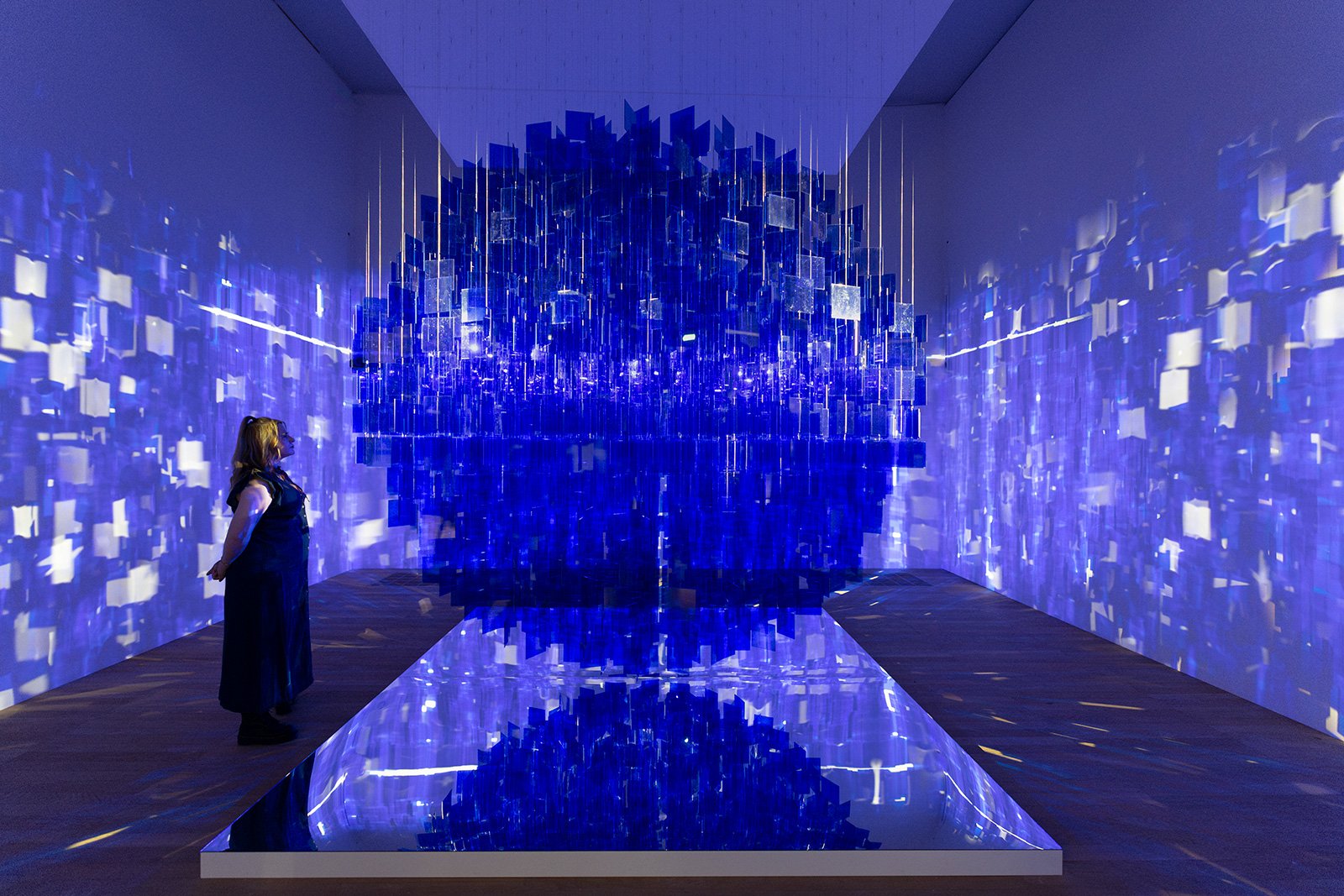
“When I close my eyes and think of [Julio] Le Parc’s work,” the artist Analivia Cordeiro wrote in Right Click Save following Le Parc’s death, “the image that comes to mind is of enlivening, awakening, colors: red, orange, yellow, blue. Nothing grey”. The installation of Le Parc’s light-filled, deeply pigmented, kinetic art at Tate Modern measures up to Cordeiro’s ideal.
The artist, who died just before the opening of his Tate Modern retrospective, had been much involved with its planning, at the end of a 15-year period in which his work was seen afresh by a new generation through substantial exhibitions in Paris, London, New York, and Buenos Aires. “People today see his work and they learn from it,” Cordeiro wrote, “because he has something to teach: how to make bright, strong, unforgettable work, using simplicity and purity.”
“Hyundai Commission: Tarek Atoui”, Tate Modern, October 13, 2026 to April 11, 2027
On October 13, Tate unveils its 11th Hyundai Turbine Hall Commission, a sound-filled, improvisatory work by the artist and electroacoustic musician Tarek Atoui using instruments activated by touch, breath and motors. “There is a different expectation of virtuosity between art and music spaces,” Atoui said in an interview with Tate leading up to the show’s opening.
“While you might expect to find a virtuoso musician in a concert hall, you might not expect that in a gallery, where people are presenting a different, more conceptual skill. With experience and hindsight, I believe each environment offers its own set of restrictions and advantages, but what is most important is that we keep the sense of experimentation, … that we are going to try something that may work or may not.”
“Amar Kanwar”, Serpentine North Gallery until January 31, 2027
Serpentine Galleries and its Arts Technologies team have presented a typically full and adventurous program in the first three quarters of 2026: a record-attendance-achieving show with the late David Hockney; the launch of a new public-facing approach from the museum’s digital archive; and the announcement of its inaugural cohort of Future Art Ecosystems R&D Fellows working on how artificial intelligence (AI) is reshaping culture, institutions.
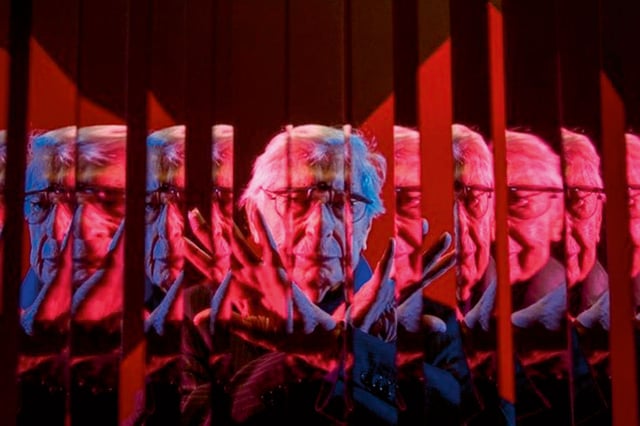
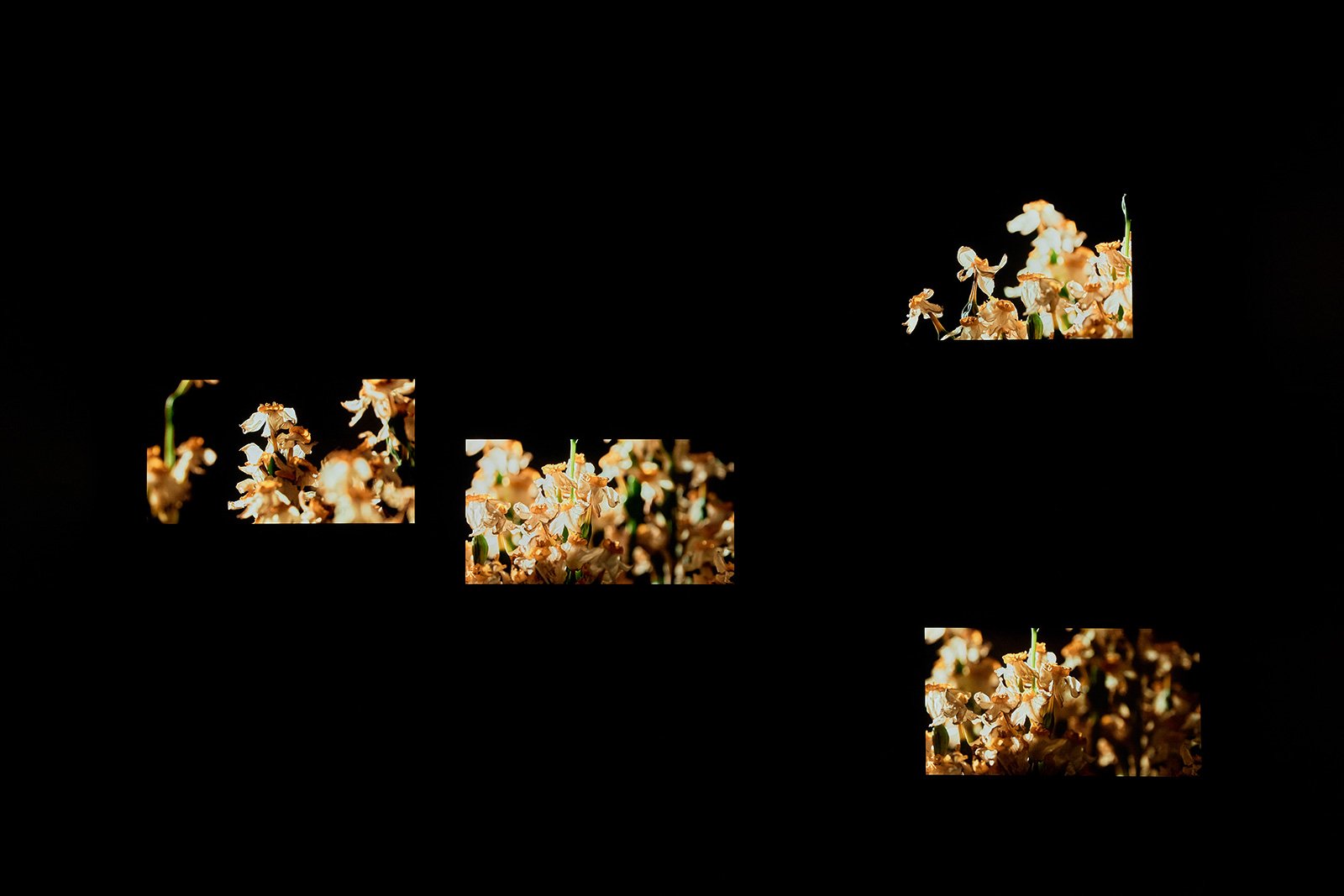
With the coming of Frieze Week, the hushed spaces of Serpentine North are home to the absorbing, grandly scaled, long-form lyrical, video works of Amar Kanwar. The work on show in darkened galleries include a multi-screen installation, The Charcoal Man (2026), which receives its premiere at Serpentine. The other films on show are Such a Morning (2017), and the multi-screen installation The Peacock’s Graveyard (2023).
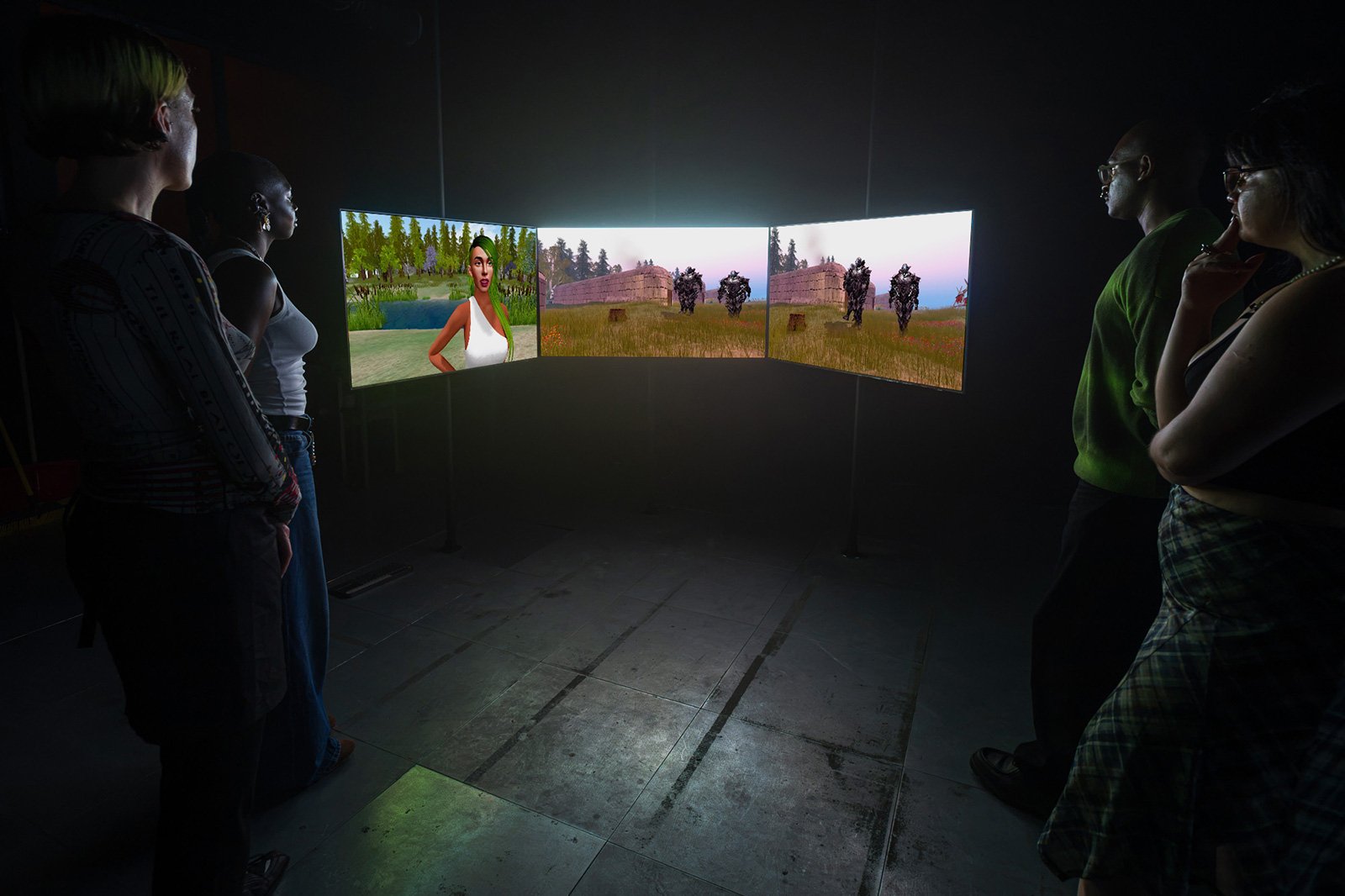
Installation view, “Slipstream”, arebyte Digital Art Centre, with work by Skawennati. Photography by Devika Bilimoria
“Slipstream”, arebyte Digital Art Centre, 25-27 Camden Rd, London NW1 9LN, until January 17, 2027
In recent years arebyte Digital Art Centre has become an essential part of London’s technology-adjacent art world, with imaginatively curated shows involving established and emerging artists in a building which houses a large array of artist studios and makes itself welcoming to the diverse community of the surrounding Camden Town area.
The latest group show at arebyte, curated by Pita Arreola, is “Slipstream”, presenting, in Arreola’s words “cultural heritage as a lens for imagining alternative, beyond-Western, futures”. The exhibition includes work from an international group of artists: Angeline Meitzler, Josèfa Ntjam, Natalie Paneng, Rebeca Romero, Kinnari Saraiya, Skawennati, and Wendi Yan. It forms part of the centre’s 2026/28 program “REBOOT: Recoding Reality”.
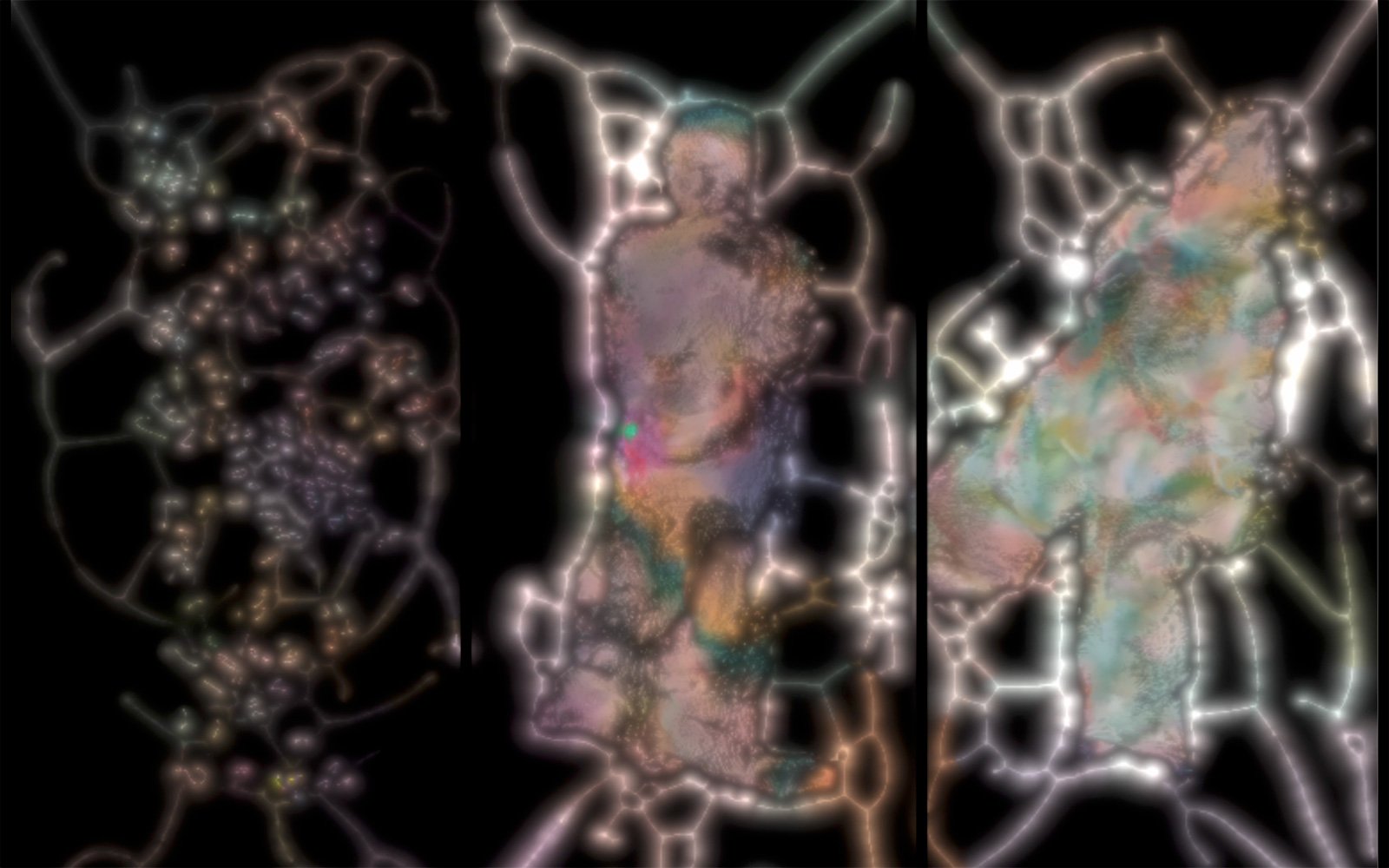
Xin Liu, (Still from) nom nom body landscape, 2026. Courtesy of the artist
“3 Evenings”, Somerset House Studios at 25 Wapping Wall, October 16-18, 2026
To celebrate the 10th anniversary of its work as an invaluable incubator of innovative art practice in London, Somerset House Studios is travelling down the Thames from its site by Waterloo Bridge to a former hydraulic power station at 25 Wapping Wall, for “3 Evenings”, an exploration of performance and technological innovation. In the cavernous spaces of the former power station, Studios artists will put on interactive and performance works as the guests of Glass Castle Foundation, a philanthropic organization which backs long-term projects for artists and audiences.
The featured artists include Ayoung Kim, Gary Zhexi Zhang, Klara Kofen and Cameron Graham, Gazelle Twin, Keiken, Earshot, Lawrence Lek, Ligia Lewis, Team Rolfes, and Xin Liu. At 25 Wapping Wall, Xin Liu is presenting nom nom body landscape, a new, interactive, iteration of nom nom (2025-26), a work examining distributed intelligence through the simulation of millions of interacting particles, that originated as an online residency commission from LAS Art Foundation and Google Arts & Culture.
“At a time of profound uncertainty, artists play a vital role in imagining alternative futures and challenging the status quo,” Marie McPartlin, Director of Somerset House Studios, said in an event statement. “So, in this landmark year, we scale up the Studios’ distinctive cross-disciplinary approach to expand the possibilities of artistic imagination for audiences in London and beyond.”
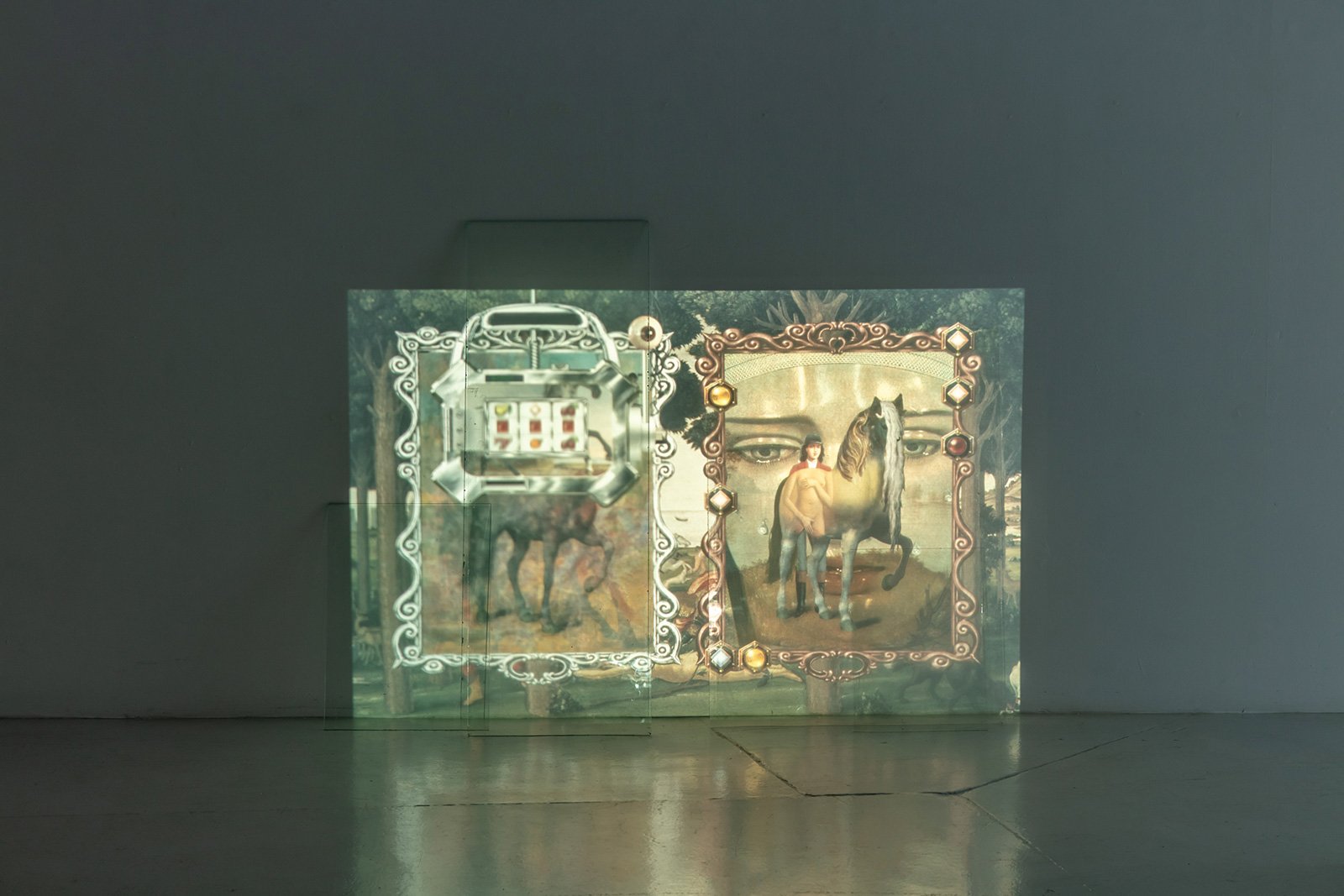
Installation view, Parker Ito, “Happiness is a Butterfly, Full Metal Bunny”, Rose Easton Gallery. Photography by Jack Elliot Edwards. Courtesy Rose Easton Gallery
The inimitable, multi-hyphenate artist Parker Ito — known for his NFT collections Drilady and Horses?7, as well as his association with the postinternet movement, Zombie Formalism, and the “Avant Gay NFT” scene — is showing a series of new paintings and sculptures that reflect his hybrid practice at Rose Easton Gallery.
Look out for Ito's forthcoming interview for Right Click Save in which he christens the "Dumb Art" movement.
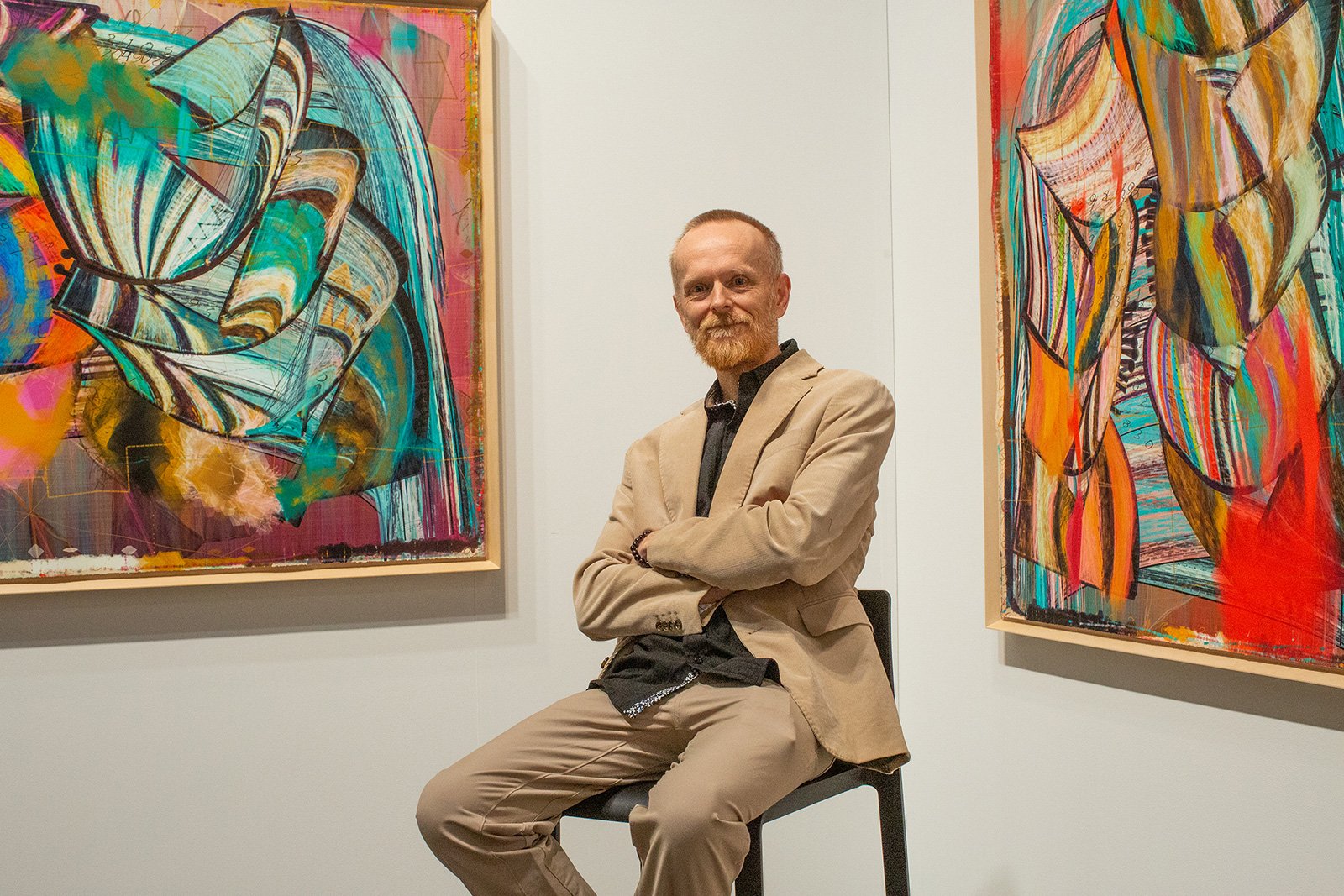
Harvey Rayner with print outputs of Algorithmic Synesthesia. Courtesy of the artist and Gallery Renaissance
Harvey Rayner, “Algorithmic Synesthesia”, Gallery Renaissance, 71 Broad Lane, London N15 4DJ, October 13 to November 13, 2026
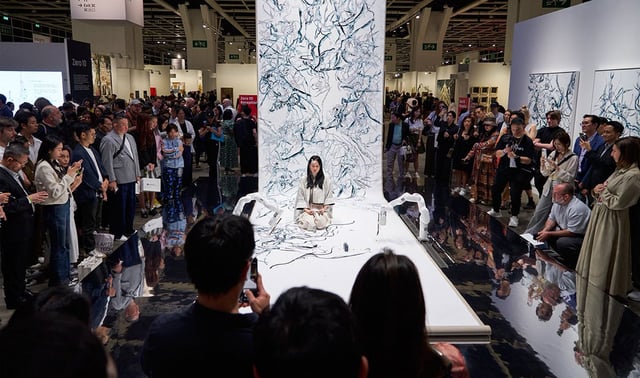
The artist Harvey Rayner is showing five 1/1 prints on cotton rag paper from his generative art series Algorithmic Synesthesia, at Gallery Renaissance, in Tottenham, north London. Rayner first showed Algorithmic Synesthesia, with the platform Art Blocks, at the Zero 10 initiative for art of the digital era at Art Basel Hong Kong in March 2026. The exhibition at Renaissance will include a video presentation running simultaneously across three large displays placed at different angles, designed to offer visitors an insight into Rayner’s working practice.
“We don't celebrate it enough,” Rayner said in an interview with Art Blocks for Art Basel Hong Kong 2026, “but the print is just as authentic an expression of static algorithmic art as a screen is. The algorithm at its core assigns color values to a surface—that surface can really be anything; but the modern printer has become a very evolved technology. The fidelity of a good print will surpass many if not all screens.”
Karin Sander, (Still from) 696 Encounters / 696 Begegnungen (2026). Courtesy of the artist and Annka Kultys
“Karin Sander”, Annka Kultys, London, October 9 to December 5, 2026. View by appointment with the gallery.
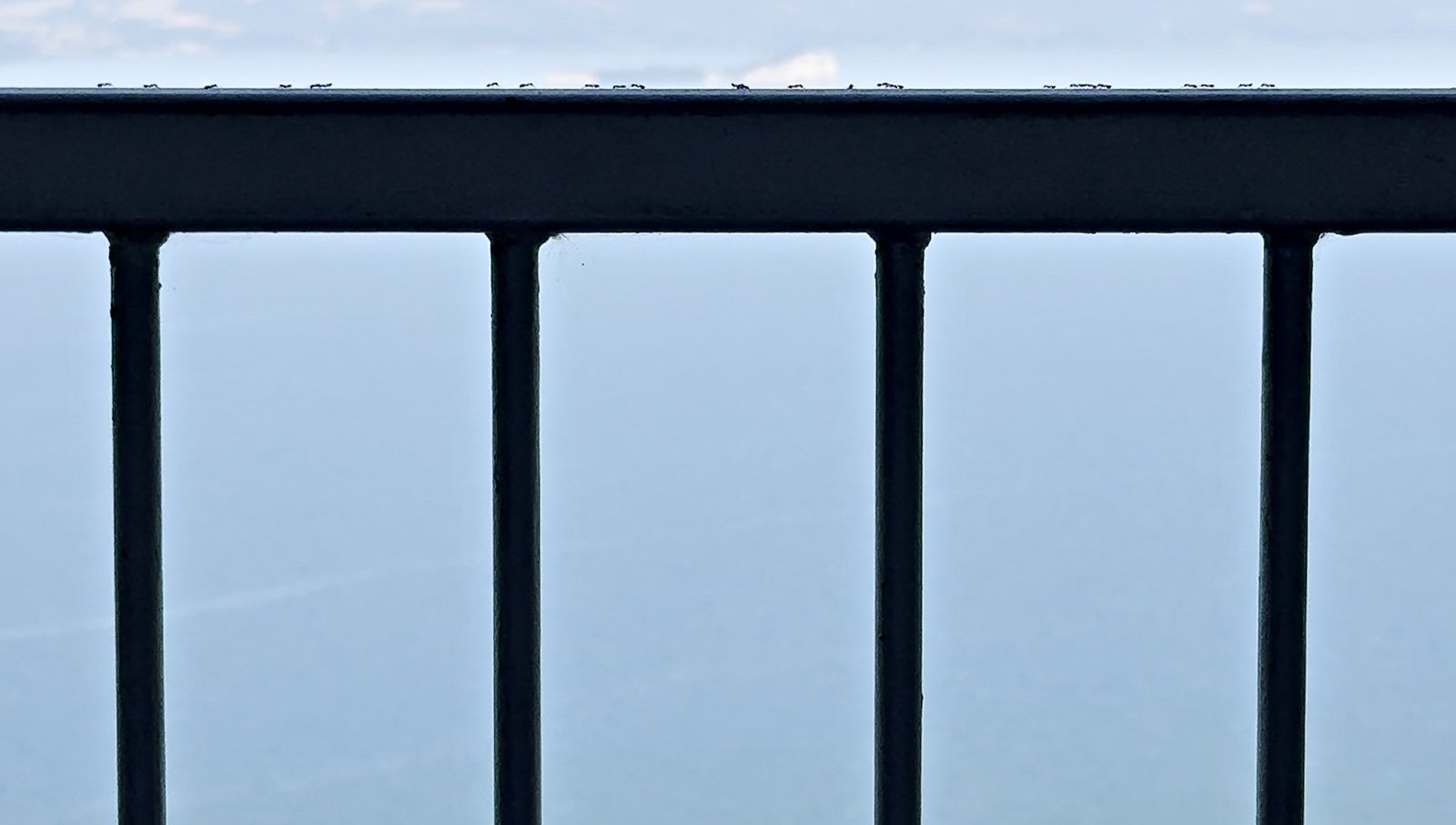
The Annka Kultys gallery, dedicated to digital, new media, and technology-based artistic practices, presents the conceptual artist Karin Sander’s video work 696 Encounters / 696 Begegnungen (2026) in an offline exhibition which can be viewed by arrangement with the gallery. In a five-minute video work devoted to a non-human ecosystem, Sander shows an ant colony moving across the top edge of an urban railing, accompanied by an atonal syncopated soundtrack. The music heightens the nearly comical but seemingly miraculous decentralized, self-organizing systems with which ants move at frantic speed in interwoven “encounters” without colliding with each other.
As part of its series of online and virtual reality exhibitions, Annka Kultys has also recently launched Qwen Stephanie Against Techfascism, a work from !Mediengruppe Bitnik (Domagoj Smoljo and Carmen Weisskopf). The Berlin-based duo, whose nom de plume is a reference to media art, work “on and with the internet”. “We are interested in the networks the internet enables, both social and technical,” they say. “For us, it is not only a subject but also a place of publication and a space where we feel at home.”
Ryoji Ikeda, DATA-COSM [n°1], 180 Studios, Strand, October 14 to December 20, 2026
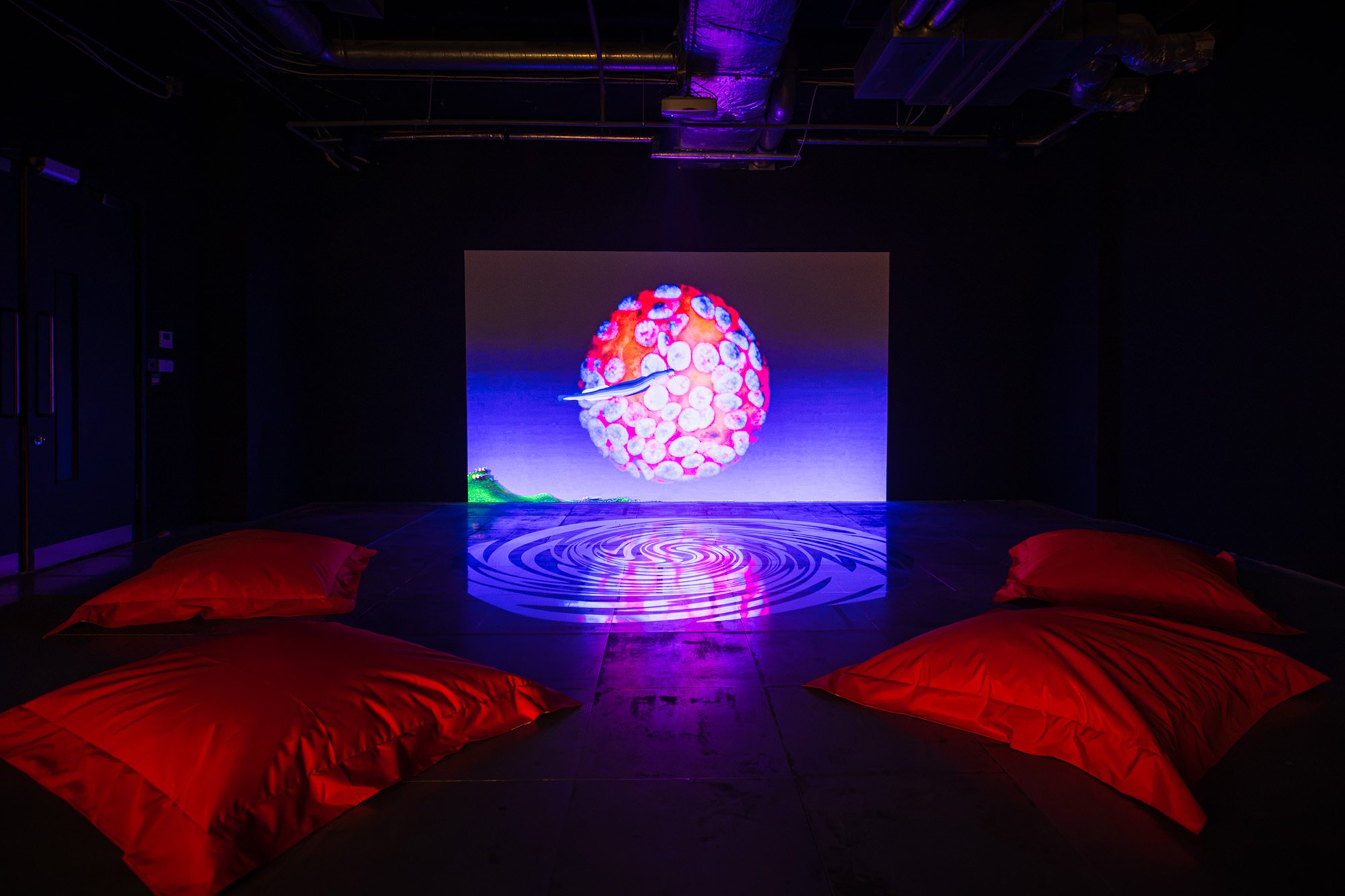
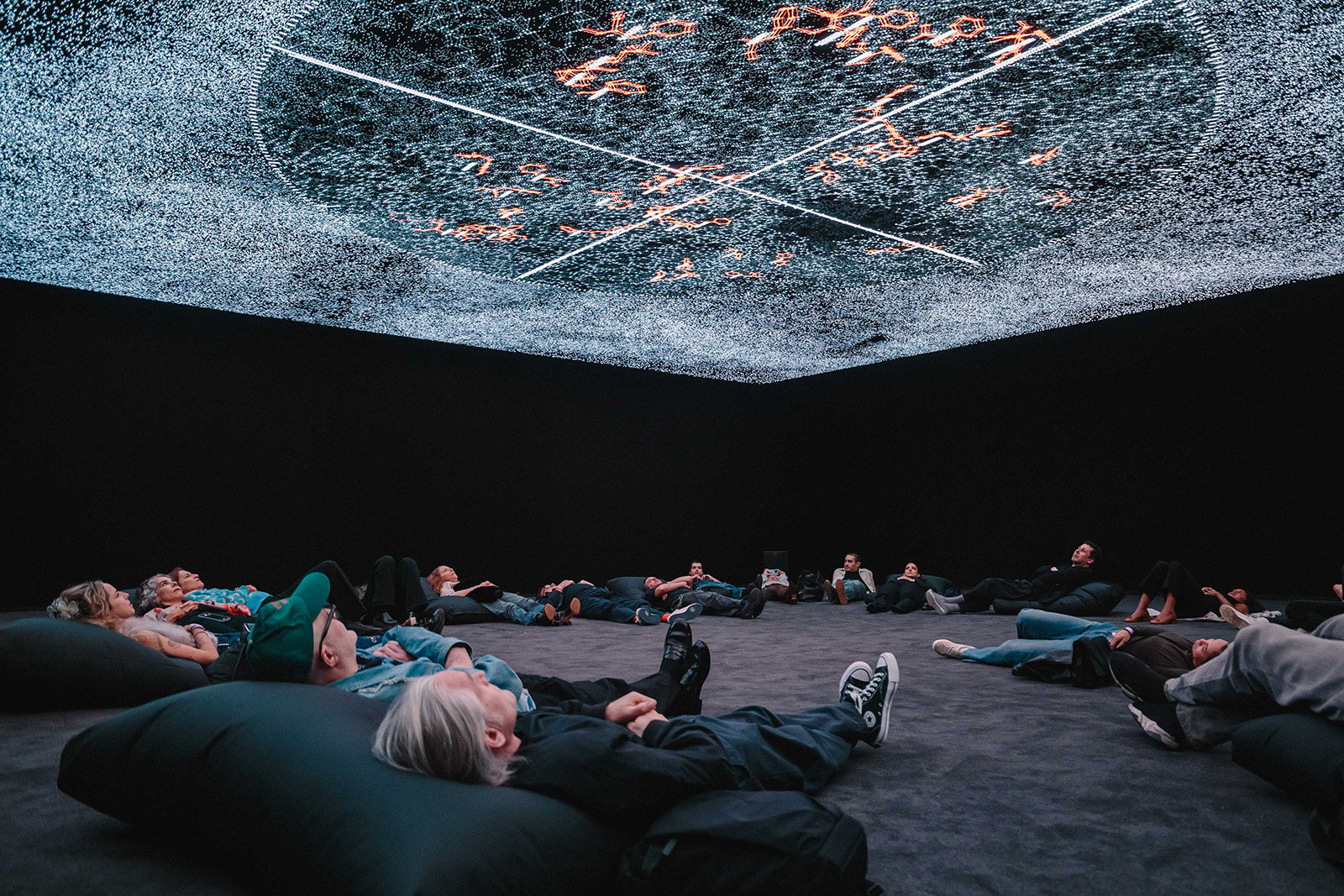
DATA-COSM [n°1], a site-specific audiovisual installation commissioned from the electronic composer and media artist Ryoji Ikeda, returns to 180 Studios, the high-tech hub in the Strand, central London, eight months after its first run in the space was extended to meet visitor demand.
The work is an immersive sensory experience, where visitors lie down on the floor, surrounded by the artist's soundscapes to view a giant LED screen on the ceiling above them. In DATA-COSM [n°1], Ikeda, a former artist in residence at CERN, in Geneva, plays audiovisually on massive datasets from nature, ranging from the minute scale of particle physics to the grand scale of astronomical phenomena. The work functions, 180 Studios says in a statement, as “a giant microscope, a scientific apparatus, a clinical device, a monitoring system, and a window to an infinitely vast space”.
Frieze London
Frieze London Artist Award | Theo Triantafyllidis, Feral Metaverse (Spider), 2026. October 14-18, 2026
The Athens-based artist Theo Triantafyllidis has created Feral Metaverse (Spider), 2026, as winner of the Frieze London Artist Award, co-commissioned and co-produced with Forma in collaboration with and sponsored by Google Arts & Culture. Fair visitors will be invited to climb on to the giant (and well padded) spider sculpture where they can combine physical interaction with the sculpture with multiplayer online game-playing.
Around the Frieze main fair, a number of galleries are offering technology-adjacent work on their stands. At Seventeen, in the Galleries section, Chino Moya is showing an LED video cube where visuals are organized by a "more-than-human logic”. On Xxijra Hii’s stand in the Focus section for emerging artists, visitors can find Yuli Serfaty: Who's a Good Girl , a CGI film that “treats machine training as a social script of obedience, read through feminist technoscience”. In the curated section The Code Universe, Spurs Gallery is presenting Payne Zhu's Anal Intelligence (2026), a 10-screen installation that "digests" algorithmic feeds from TikTok and Instagram before rendering the result in real time.